Diablo IV Build Guide: How to Create a Strong Character
A strong Diablo IV character starts with one simple question: what is your character supposed to do well? Some characters are built to clear large groups quickly. Some are built to destroy bosses. Some are designed for safe solo play. Some are made for speed farming. Some are built for pushing difficult endgame content. The mistake many players make is trying to build for everything at once before they understand the basics.
A good build is not a random collection of strong-looking skills and shiny items. A good build is a system. Your main skill needs support. Your gear needs to match your damage type. Your defense needs to keep you alive. Your resource generation needs to let you keep attacking. Your Legendary Aspects need to improve the way your build actually plays. Your Paragon choices need to strengthen your core plan instead of sending points in every direction.
This is why two players using the same class can feel completely different. One Sorcerer may clear enemies smoothly because every skill, stat, and Aspect supports the same damage style. Another Sorcerer may feel weak because the build mixes unrelated damage types, has no defense, and runs out of resource too often. One Barbarian may feel unstoppable because the build has strong weapons, defensive layers, and clear skill synergy. Another Barbarian may feel slow because the gear is outdated and the skill setup has no direction.
Diablo IV rewards focused character building. A focused character does not need to be perfect immediately. It only needs a clear identity. Once you know your build’s identity, every upgrade becomes easier to judge. You stop asking, “Is this item higher level?” and start asking, “Does this item make my build better?” That shift is what turns a weak character into a strong one.
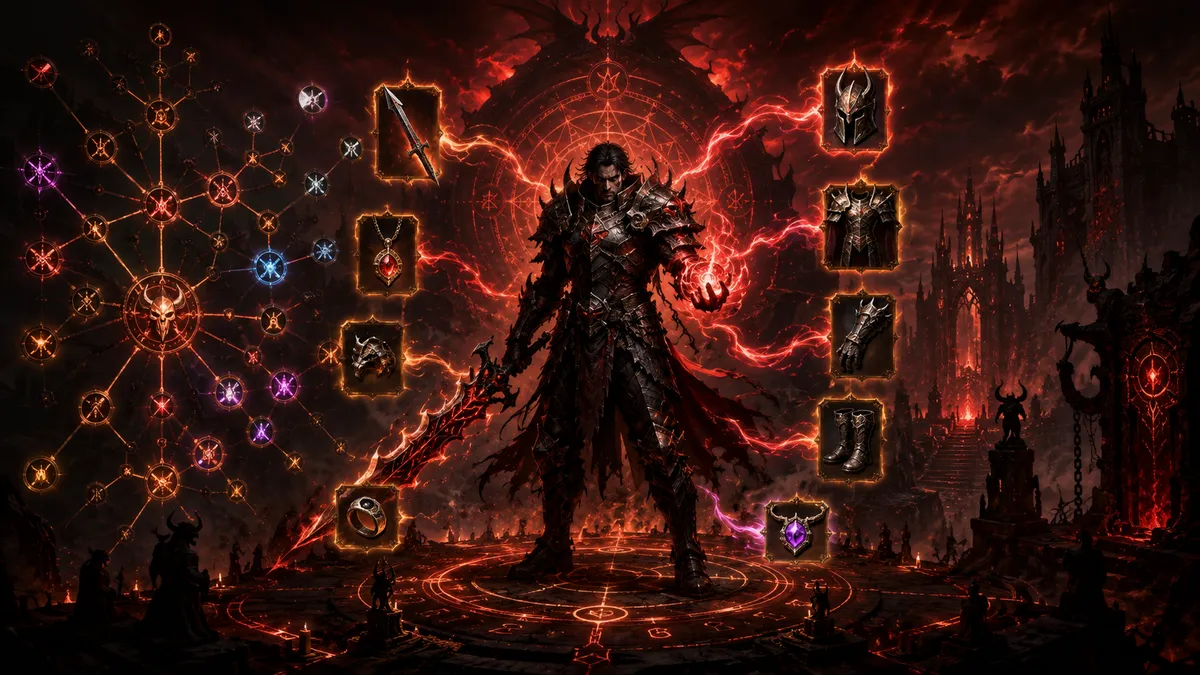
What Makes a Diablo IV Character Strong
A strong character is not only a character with high damage. Damage is important, but it is only one part of power. A character that deals huge damage but dies constantly is not strong for real gameplay. A character that survives everything but takes too long to kill enemies is also incomplete. Strength comes from balance.
Damage:
Your character needs enough damage to clear normal enemies quickly, defeat elites before they overwhelm you, and beat bosses without running out of resources. Damage comes from skills, gear affixes, Legendary Aspects, Paragon choices, class mechanics, Unique items, and endgame upgrades.
Defense:
Your character needs enough defense to survive mistakes. Diablo IV has many dangerous enemy attacks, boss abilities, elite effects, and ground hazards. If your build ignores defense, you may clear easy content quickly but struggle as soon as difficulty rises.
Resource Management:
A build that constantly runs out of resource feels weak even when the damage numbers are good. Resource generation, cost reduction, cooldown management, and skill rotation all affect how smooth your character feels.
Mobility:
Movement is both offense and defense. A faster character reaches enemies quicker, avoids danger better, clears dungeons faster, and spends less time walking between packs.
Synergy:
Synergy is what happens when your skills, gear, Aspects, Paragon, and stats support the same goal. This is the heart of every strong build.
Consistency:
A strong character should not feel powerful only once every few minutes. Your build should have reliable damage, reliable defense, and reliable resource flow during normal gameplay.
Scalability:
A good build should improve as you find better gear and unlock deeper systems. Some builds feel good early but stop scaling. Others are weak early but powerful later. The best build for your situation depends on whether you are leveling, entering endgame, or optimizing a finished character.
Start With One Clear Build Idea
The first step in creating a strong Diablo IV character is choosing one clear build idea. This does not mean you need to know every endgame detail immediately. It means you need a simple direction.
Bad Build Idea:
“I want to use every cool skill I find.”
Good Build Idea:
“I want to build around one main damage skill that clears groups quickly.”
Better Build Idea:
“I want a ranged lightning build that clears groups fast, has enough defense to survive mistakes, and uses mobility to stay safe.”
A clear build idea helps you make better decisions. When a new item drops, you can decide whether it supports your plan. When you gain a skill point, you know what kind of passive matters. When you unlock Paragon, you can choose nodes that match your damage type and survival needs.
Choose Your Main Damage Skill:
Every strong build needs a main source of damage. This may be a core skill, a cooldown skill, a summon-based setup, a damage-over-time effect, a spell, a melee strike, or a class-specific mechanic. Once you choose it, your build should support it.
Choose Your Combat Style:
Decide whether you want to fight from range, in melee, with minions, with fast mobility, with damage over time, with burst damage, or with a tankier style. Your combat style affects skill choices and gear priorities.
Choose Your Main Goal:
A leveling build should prioritize easy damage, area clear, survival, and low gear dependency. A bossing build may prioritize single-target damage and defensive cooldowns. A speed farming build needs movement and fast pack clearing. An endgame pushing build needs stronger defense and better scaling.
Do Not Build for Everything Too Early:
Beginners often try to make one build that is perfect for leveling, bosses, dungeons, endgame pushing, group play, and farming. That usually creates a weak mixed build. Start with one goal, then adjust later.
Pick the Right Class for Your Build Style
Your class controls your available skills, mechanics, weapons, and build identity. Every class can become strong, but each class supports different playstyles. Choosing the right class makes build creation easier.
Barbarian:
Barbarian is best for players who like physical melee combat, heavy weapons, shouts, and direct fighting. Strong Barbarian builds usually care about weapon upgrades, close-range survival, and maintaining pressure.
Druid:
Druid is best for players who like shapeshifting, nature magic, storm skills, earth skills, companions, or hybrid playstyles. Strong Druid builds usually need clear focus because the class has many directions.
Necromancer:
Necromancer is best for players who like minions, blood skills, bone magic, shadow damage, or safer solo gameplay. Strong Necromancer builds often work well when they focus on one identity instead of mixing every theme.
Rogue:
Rogue is best for players who enjoy speed, positioning, traps, ranged attacks, melee attacks, and burst damage. Strong Rogue builds usually reward active gameplay and good movement.
Sorcerer:
Sorcerer is best for players who want elemental magic, ranged damage, teleport-style mobility, barriers, and strong area clear. Strong Sorcerer builds need defensive planning because pure damage setups can feel fragile.
Spiritborn:
Spiritborn is best for players with access to the class who enjoy fast combat, Spirit Guardian themes, mobility, and aggressive gameplay. Strong Spiritborn builds usually benefit from keeping the early setup focused instead of trying every guardian style at once.
Paladin:
Paladin is best for players with access to the class who want a holy warrior style, strong defensive identity, and reliable combat flow. Strong Paladin builds usually balance damage with protection.
Warlock:
Warlock is best for players with access to the class who enjoy dark magic, forbidden power, and deeper spellcasting themes. Strong Warlock builds should start simple and expand as the player understands the class better.
The best class for your build is not always the class with the highest current damage ranking. It is the class that matches how you want to fight. A player who enjoys minions should not force Rogue. A player who loves speed may not enjoy a slow defensive build. A player who wants simple magic may prefer Sorcerer over a more complex caster.
Build Around One Main Damage Skill
One of the most important Diablo IV build rules is to build around one main damage skill. This does not mean you only press one button forever. It means your character has one main way to kill enemies, and the rest of the build supports it.
Why One Main Skill Matters:
When your build has one main damage skill, you can choose gear and passives more easily. You know which damage type matters. You know which skill tags matter. You know which Legendary Aspects matter. You know which Paragon choices matter. Your character becomes focused.
What Happens When You Use Too Many Damage Skills:
If you split your build across several unrelated damage skills, each one receives less support. You may have one fire skill, one frost skill, one lightning skill, one summon skill, and one melee skill, but none of them hits hard enough because your gear and passives are scattered.
Support Skills Are Different:
Using one main damage skill does not mean your other skills are useless. Your other skills should help you survive, move, generate resource, group enemies, apply effects, increase damage, or control dangerous monsters.
Example of a Focused Setup:
A focused build may use one main area damage skill, one resource tool, one defensive skill, one movement skill, one damage boost, and one utility skill. That is much stronger than using six unrelated attacks.
The Beginner Rule:
If you cannot explain your build’s main damage skill in one sentence, your build is probably too unfocused.
Understand Skill Synergy
Skills become stronger when they work together. This is called synergy. A skill by itself may be average, but with the right upgrades, passives, Aspects, gear stats, and class mechanics, it can become the center of a powerful build.
Skill Tags Matter:
Skills often belong to categories. They may be fire, frost, lightning, physical, shadow, blood, bone, poison, storm, earth, melee, ranged, core, basic, cooldown, ultimate, summon, or another class-specific type. Gear and passives often improve certain categories. Matching these correctly is one of the easiest ways to make a character stronger.
Passives Matter:
Passive skills often increase damage, defense, resource generation, critical chance, cooldown value, or survivability. Beginners sometimes ignore passives because active skills look more exciting, but passives can be the difference between a weak build and a smooth build.
Skill Upgrades Matter:
Many skills have upgrade choices that change how they work. One upgrade may improve damage. Another may improve resource generation. Another may add crowd control or survivability. Choose the upgrade that solves your build’s actual problem.
Do Not Pick Skills Because They Look Cool Only:
Visual style matters, but a strong build needs function. A skill should have a reason. It should kill enemies, support damage, generate resource, keep you alive, improve movement, or control threats.
Look for Repeated Themes:
If several skills and passives mention the same damage type, effect, or condition, that may be a build direction. A strong character usually stacks several effects around one theme.
Balance Damage and Defense
Many Diablo IV players make the same mistake: they build only for damage until they start dying, then they feel the class is weak. In reality, the build is incomplete. Defense is not optional. Defense is part of a strong character.
Damage Gets You Through Enemies:
Damage helps you clear faster and farm more efficiently. A build with weak damage feels slow and boring. You need enough offense to make content feel smooth.
Defense Keeps You in the Fight:
Defense prevents deaths, saves time, and lets you handle harder content. Every death interrupts progress. If you die often, your real clear speed is much lower than your damage numbers suggest.
Use Multiple Defensive Layers:
Do not rely on one defensive stat. A strong character usually combines maximum life, armor, resistances, damage reduction, barriers, Fortify-style effects, healing, mobility, crowd control, and good positioning depending on class and build.
Do Not Ignore Resistances:
Elemental and damage-type threats become more important as content gets harder. If one type of enemy attack destroys you, your defensive setup may have a gap.
Do Not Ignore Armor:
Armor is one of the most basic defensive layers. It helps reduce incoming damage and works alongside other defenses. Strong characters usually do not rely on damage alone.
Do Not Ignore Maximum Life:
Maximum life gives your defensive layers more value because it increases how much punishment you can survive before dying.
Movement Is Defense:
Dodging dangerous attacks is often better than trying to tank everything. Movement speed and mobility skills are defensive tools, not only convenience stats.
The Defensive Rule:
If your build dies too often, do not immediately change your main damage skill. First check your defensive skills, gear, resistances, life, armor, positioning, and difficulty setting.
Fix Resource Problems Early
A strong build feels smooth. If your character constantly runs out of resource, the build may technically have damage but still feel bad to play. Resource problems are one of the most common reasons a character feels weak.
Resource Is Your Build’s Fuel:
If your main damage skill costs resource, you need a way to keep using it. Running out after two attacks makes the build slow. Good resource flow keeps your damage consistent.
Use Basic Skills Properly:
Basic skills are not always exciting, but they can help generate resource, apply effects, or trigger bonuses. During leveling, basic skills often help keep your build running.
Look for Resource Passives:
Some passives improve resource generation, reduce costs, refund resource, or reward specific gameplay patterns. These can make a build feel much smoother.
Use Gear That Supports Resource Flow:
Certain affixes, Aspects, or Unique effects can help with resource. If your build feels starved, resource-related gear may be more valuable than another small damage increase.
Cooldown Builds Need Cooldown Management:
Some builds rely more on cooldown skills than resource spenders. These builds need cooldown reduction, skill rotation planning, and effects that help reset or reduce cooldowns.
Do Not Judge a Build Too Early:
Some builds feel resource-starved at low level but become smooth after passives, gear, or Aspects. If the build idea is strong, identify what it needs instead of abandoning it instantly.
Choose Legendary Aspects That Support Your Plan
Legendary Aspects are one of the most important parts of Diablo IV build creation. They can change how skills work, increase damage, improve survivability, solve resource problems, or create new build paths. A strong character uses Aspects with purpose.
Do Not Equip Aspects Randomly:
A Legendary item is not automatically good just because it is orange. If the Aspect does not help your build, it may be weaker than another item with better stats and a more useful power.
Prioritize Build-Defining Aspects:
Some Aspects directly improve your main damage skill or make your build function. These are usually the most important. If your build depends on a specific Aspect, getting it early can make a huge difference.
Use Defensive Aspects Too:
Damage Aspects are exciting, but defensive Aspects can be just as important. A strong build often uses a mix of offensive, defensive, utility, and resource support.
Match Aspect Slots Carefully:
Some slots can provide stronger values or better use for certain powers depending on the system. Do not place important Aspects randomly without thinking about where they bring the most value.
Update Aspects as You Progress:
Early Aspects may be enough for leveling, but endgame builds often need better-rolled powers or improved versions in your Codex. Keep checking whether your build-defining powers can be improved.
Avoid Duplicate Waste:
Using the same type of effect twice may not always give full benefit. Read your items and avoid wasting slots on powers that do not stack or do not help your current setup.
Understand Gear Affixes
Gear affixes are the stats on your items. A strong Diablo IV character does not only equip the highest item power or rarest item color. Strong characters use gear with affixes that match their build.
Main Damage Affixes:
Damage affixes should support your main skill, damage type, or combat condition. Critical chance, critical damage, vulnerable-related bonuses, overpower, damage over time, elemental bonuses, skill ranks, attack speed, lucky hit, and class-specific bonuses can all matter depending on the build.
Defensive Affixes:
Maximum life, armor, resistances, damage reduction, barrier support, Fortify support, healing, and defensive skill bonuses can all help your build survive harder content.
Utility Affixes:
Cooldown reduction, movement speed, resource generation, cost reduction, lucky hit chance, crowd control support, and skill ranks can make your build smoother even if they do not look like raw damage.
Do Not Chase Every Damage Stat:
Not every damage stat is useful for every build. A damage-over-time build may not care about the same stats as a critical burst build. A minion build may value different bonuses than a direct damage caster. A melee build may need different priorities from a ranged build.
Skill Ranks Can Be Powerful:
Extra ranks to an important skill can be a major damage or utility boost. If an item improves your main skill directly, pay attention.
Movement Speed Is Underrated:
Movement speed helps leveling, farming, dungeon clearing, boss dodging, and general comfort. It may not show as a damage number, but it improves how fast you complete content.
The Gear Question:
When an item drops, ask: does this improve my main damage, defense, resource flow, cooldowns, or mobility? If not, it may not be worth using.
Do Not Overvalue Item Power Alone
Item power and item quality matter, but they do not tell the whole story. Beginners often equip items only because the number is higher. That can work during early leveling, but it becomes a bad habit later.
During Leveling:
Higher item power is often useful because your gear becomes outdated quickly. Weapon damage and armor upgrades can matter a lot. During early levels, replacing weak old gear is usually smart.
During Endgame:
Affixes, Aspects, tempering, masterworking, Uniques, and stat synergy become more important. A higher item number with bad stats may be worse than a slightly lower item with perfect build synergy.
Weapons Are Special:
For many builds, weapon upgrades can strongly affect damage. If your build suddenly feels weak, check whether your weapon is outdated.
Jewelry and Utility Slots Matter Differently:
Rings, amulets, boots, gloves, chest pieces, and helmets often provide different types of value. Do not judge every item slot only by one number. Some slots are more important for defense, movement, cooldowns, or skill ranks.
Strong Builds Read Items Carefully:
A strong player does not keep every item, but they understand why an item is good or bad. That understanding saves time and improves power.
Use Uniques Carefully
Unique items can be exciting because they have special effects that may change your build. However, beginners often make the mistake of equipping every Unique item just because it is rare. A Unique is only good if it helps your build.
Build-Defining Uniques:
Some Unique items create or enable specific builds. If you find one that matches your class and main skill, it may be worth building around.
Wrong Unique Problem:
A Unique with an interesting effect can still be bad for your current setup if the stats or power do not support your build. Do not force your character around a Unique unless it actually improves your plan.
Do Not Plan Around Items You Do Not Have:
If you are leveling or just starting endgame, avoid choosing a build that only works after a rare Unique drops. Use a build that functions now, then switch later if the item drops.
Compare the Whole Item:
A Unique may have a powerful effect but weaker affixes for your current needs. Compare total value, not rarity.
Mythic and Chase Items:
Rare high-end items can be powerful, but they should not be the foundation of a beginner build. Treat them as long-term upgrades, not requirements for starting.
Use Paragon With a Purpose
Paragon is one of the biggest character power systems after leveling. It can add damage, defense, utility, glyph power, and class-specific bonuses. But Paragon can also become confusing if you spend points randomly.
Paragon Should Support Your Build:
Your Paragon choices should match your main damage skill, damage type, defensive needs, and class mechanic. Do not path toward nodes that sound strong but do not help your build.
Start With Important Clusters:
Look for groups of nodes that give bonuses your character actually needs. This may include damage, life, armor, resistances, resource support, cooldown value, or specific class bonuses.
Glyphs Matter:
Glyphs can provide major bonuses when placed correctly and supported by nearby stat nodes. A strong build uses glyphs that match its playstyle.
Do Not Chase Every Rare Node:
Some nodes look good but cost too many points to reach. Efficient pathing matters. Wasting points on long routes can weaken your build.
Defense Belongs in Paragon Too:
Paragon is not only for damage. If you are dying often, defensive Paragon choices can be more valuable than another small damage increase.
Review Paragon as Gear Changes:
As your gear improves, your Paragon needs may change. A build that needed more defense early may later shift toward damage. A build with resource problems may adjust once gear solves them.
Tempering and Masterworking for Stronger Builds
Tempering and Masterworking are important item progression systems for making your gear stronger. These systems are not something beginners need to perfect at level one, but they become important as your character moves into serious progression.
Tempering Adds Build Direction:
Tempering can add useful affixes that support your build. This is where you can push items closer to your ideal setup by adding stats that help damage, defense, utility, or class function.
Masterworking Improves Important Gear:
Masterworking increases the value of item affixes and helps push strong gear further. It is most valuable when used on items you expect to keep for a while.
Do Not Waste Heavy Upgrades on Bad Gear:
A common mistake is investing too much into gear that will be replaced soon. Before spending serious materials, make sure the item has the right affixes and supports your build.
Upgrade Priority:
Prioritize items that are central to your build. A weapon that carries your damage, an amulet with strong passives, or armor with excellent defensive stats may deserve investment before random pieces.
Endgame Crafting Is a Multiplier:
Tempering and Masterworking do not fix a completely unfocused build. They multiply the value of good gear. First get the right item foundation, then invest.
Do Not Chase Perfection Too Early:
Strong enough is good enough while progressing. Save perfection farming for later when your build is stable and your upgrade options become smaller.
Build for Your Current Stage of the Game
A strong Diablo IV build changes depending on where you are in progression. A leveling build, early endgame build, and high-end build do not always look the same.
Leveling Build:
A leveling build should be simple, fast, and low-maintenance. It should clear groups well, survive mistakes, and work without rare items. Do not use a build that requires perfect gear while leveling.
Early Endgame Build:
An early endgame build should start focusing on stronger Aspects, better affixes, defensive layers, and resource stability. This is where you begin replacing random leveling gear with more intentional pieces.
Mid-Endgame Build:
A mid-endgame build should improve Paragon choices, gear synergy, Uniques, tempering, masterworking, and activity-specific performance. You should begin asking whether your build is better for farming, bossing, or pushing.
High-End Build:
A high-end build focuses on optimization. Every item slot matters. Every affix matters. Paragon pathing matters. Defensive breakpoints, damage scaling, cooldowns, and resource flow become more important.
Seasonal Build:
A seasonal build may change depending on the current season’s mechanics. If a season adds bonuses or systems that support certain skills, those builds may become stronger during that season.
Do Not Skip Stages:
Many players try to copy a high-end build while still leveling. That can feel terrible because they do not have the gear, Paragon, or resources required. Build for the stage you are actually in.
Create a Strong Leveling Build
A strong leveling build helps you reach endgame without frustration. It does not need to be perfect. It needs to be efficient.
Use Area Damage:
Most leveling involves clearing groups. A build that only kills one enemy at a time will feel slow. Choose skills that hit multiple enemies or spread damage.
Keep a Defensive Skill:
Even during leveling, defense matters. Use at least one defensive skill or escape tool. It saves time by preventing deaths.
Use Mobility:
Movement skills and movement speed reduce travel time. This makes every dungeon, Helltide, quest, and event faster.
Do Not Depend on Rare Items:
A good leveling build should work with basic gear and common upgrades. If a build needs a specific Unique item, it is probably not a good leveling build unless you already have that item.
Upgrade Weapons Often:
For many classes, weapon upgrades are one of the fastest ways to improve leveling speed. Do not keep a weak weapon only because it has an interesting effect.
Do Not Overcraft Early:
Early gear is temporary. Upgrade only when needed, and save serious materials for better items later.
Keep the Build Simple:
Leveling is not the time to run a complicated setup that needs exact timing. Smooth, reliable damage is better.
Create a Strong Endgame Build
Endgame builds require more planning. At this stage, enemies hit harder, bosses last longer, and weak build decisions become more obvious.
Start With a Build Goal:
Decide whether your endgame build is for speed farming, bossing, dungeon pushing, open-world farming, or general all-purpose play. This affects every choice.
Improve Damage Scaling:
Endgame damage comes from stacking the right multipliers, skill ranks, class mechanics, Aspects, Paragon nodes, gear affixes, Uniques, and upgraded items. Random damage stats are not enough.
Improve Defensive Layers:
Endgame content punishes weak defense. Add maximum life, armor, resistances, damage reduction, barriers, Fortify-style effects, healing, mobility, and class defensive tools where your build needs them.
Solve Resource Completely:
A good endgame build should not constantly stop attacking because resource is empty. If it does, fix resource generation, cost reduction, cooldowns, or rotation.
Use Paragon Intentionally:
Endgame Paragon should be planned. Use glyphs and boards that match your build. Do not path randomly.
Upgrade Gear Gradually:
Do not wait for perfect gear before improving your character. Upgrade good pieces, replace bad pieces, and keep moving forward.
Test Against Real Content:
A build is not strong because it looks good in theory. Test it in the content you actually want to clear. If it dies, fix defense. If bosses take too long, fix single-target damage. If farming feels
slow, fix movement and area clear.
Damage Types and Scaling
Understanding how your build deals damage helps you choose better gear. You do not need to become a math expert, but you should know what your build is trying to scale.
Direct Damage:
Direct damage builds hit enemies with immediate attacks. They often care about skill ranks, critical chance, critical damage, attack speed, vulnerable effects, and damage bonuses that match the skill.
Damage Over Time:
Damage-over-time builds apply effects that deal damage over a duration. They may value different stats from direct hit builds. Critical stats may not always matter the same way, depending on the skill and current mechanics.
Overpower:
Overpower builds focus on powerful hits that scale with specific conditions and defensive resources. These builds need stats and mechanics that support overpower reliably.
Critical Builds:
Critical builds want consistent critical chance and strong critical damage scaling. They usually feel better when critical hits happen often enough to be reliable.
Minion Builds:
Minion builds need bonuses that actually help minions or support the character’s ability to control and empower them. Not every personal damage stat improves summons the way beginners expect.
Elemental or Themed Builds:
Fire, frost, lightning, shadow, poison, physical, blood, bone, storm, earth, holy, dark, and other damage themes should be supported by matching skills and gear.
Conditional Damage:
Some damage bonuses only work when enemies are vulnerable, stunned, slowed, burning, poisoned, close, distant, crowd-controlled, or affected by another condition. These can be powerful, but only if your build applies the condition reliably.
The Scaling Rule:
Only invest heavily in a damage stat if your build can actually use it often.
Crowd Control and Utility
Crowd control and utility are easy to ignore because they do not always show big damage numbers. However, they can make your build much stronger in real gameplay.
Crowd Control Keeps You Safe:
Slowing, stunning, freezing, pulling, knocking down, or controlling enemies can prevent damage before it happens. This is especially useful against large groups.
Crowd Control Can Increase Damage:
Some builds deal more damage to controlled enemies. If your build uses those bonuses, you need reliable ways to apply control effects.
Utility Skills Improve Smoothness:
Skills that group enemies, reset cooldowns, generate resource, apply vulnerability, improve mobility, or trigger class mechanics can be more valuable than another attack skill.
Do Not Overload Utility:
Utility is useful, but you still need enough damage and defense. A strong build balances all three.
Boss Limitations:
Some crowd control effects work differently against bosses. If your build depends heavily on controlling enemies, make sure it still works against boss encounters.
Mobility and Positioning
Mobility is one of the most underrated parts of a strong Diablo IV build. Faster movement improves almost everything.
Mobility Improves Farming Speed:
If you move faster between enemy packs, you complete activities faster. This matters in dungeons, Helltides, open-world events, and seasonal farming.
Mobility Improves Survival:
Many dangerous attacks can be avoided. A movement skill or higher movement speed can save your character more reliably than trying to tank everything.
Mobility Improves Boss Fights:
Bosses often use ground attacks, charges, area damage, or timing-based mechanics. Mobility gives you more room to react.
Do Not Use Mobility Randomly:
Save movement skills when danger is coming. If you use your escape skill only for damage or speed, you may not have it when you need to survive.
Movement Speed on Gear Matters:
Boots and other sources of movement speed can make your entire character feel better. Even if it does not increase your tooltip damage, it increases real efficiency.
How to Test If Your Build Is Strong
You can test your build with simple questions. You do not need complicated tools to know whether your character is improving.
Can You Clear Groups Quickly?
If normal enemy packs take too long, your area damage or damage scaling needs work.
Can You Kill Elites Safely?
If elites destroy you, your defense or crowd control may be weak. If elites take forever, your single-target damage may be too low.
Can You Beat Bosses Without Running Out of Resources?
Boss fights expose resource problems. If you spend most of the fight waiting, fix resource generation or cooldowns.
Can You Survive Mistakes?
A strong build does not require perfect play in normal content. If one small mistake kills you, add defense.
Can You Move Through Content Smoothly?
If your build feels slow between fights, improve mobility, cooldowns, or skill flow.
Can You Raise Difficulty Without Losing Clear Speed?
A good build should eventually climb difficulty. If higher difficulty makes everything slow, stay lower until your gear improves.
Does Every Skill Have a Purpose?
Look at your skill bar. If you cannot explain why a skill is there, replace or rethink it.
Common Build Mistakes to Avoid
Most weak Diablo IV characters are weak because of fixable mistakes. Avoid these and your build will improve quickly.
Mistake 1: Using Too Many Main Damage Skills:
One focused main damage skill is usually better than several unsupported attacks.
Mistake 2: Ignoring Defense:
Damage is exciting, but defense keeps you alive. Dead characters do not clear content.
Mistake 3: Equipping Every Legendary Item:
A Legendary item is only good if the Aspect and stats support your build.
Mistake 4: Copying Endgame Builds Too Early:
Endgame builds may require specific gear, Paragon, and upgrades. Use a leveling build until you are ready.
Mistake 5: Ignoring Resource Problems:
If you cannot use your skills consistently, your build will feel weak.
Mistake 6: Chasing Item Power Only:
Higher item power does not always mean better build value, especially later.
Mistake 7: Not Updating Gear:
Old gear can hold your build back. Replace outdated items when clear upgrades appear.
Mistake 8: Overinvesting in Bad Gear:
Do not spend serious materials on gear with poor affixes or weak synergy.
Mistake 9: Ignoring Mobility:
Slow characters farm slower and die more often to avoidable attacks.
Mistake 10: Refusing to Lower Difficulty:
If content is too slow, lower difficulty and farm upgrades. Efficient progress is better than struggling.
Practical Rules for Creating a Strong Character
These rules work for almost every Diablo IV class and build.
Rule 1: Build Around One Main Skill:
Your main damage skill should guide your gear, Aspects, Paragon, and stat choices.
Rule 2: Solve Defense Before Blaming the Class:
If you die often, check armor, resistances, life, defensive skills, movement, and difficulty.
Rule 3: Keep Resource Flow Smooth:
A build that cannot afford its own skills will always feel weak.
Rule 4: Choose Gear by Synergy, Not Just Rarity:
A rare-looking item with bad stats is not better than a normal upgrade that fits your build.
Rule 5: Use Aspects With Purpose:
Every Aspect should improve damage, defense, resource flow, mobility, or build function.
Rule 6: Do Not Copy Builds Blindly:
Understand why a build works before copying it. Otherwise, you may miss the items or mechanics that make it strong.
Rule 7: Build for Your Current Stage:
Leveling builds and endgame builds are not always the same. Use the right tool for your progress level.
Rule 8: Upgrade Good Items, Not Random Items:
Tempering and Masterworking are strongest when used on gear worth keeping.
Rule 9: Test in Real Content:
Your build should be judged by how it performs in the activities you actually play.
Rule 10: Use BoostRoom When You Want Faster Progress:
If farming, gearing, leveling, or endgame pushing becomes too slow, BoostRoom can help you move forward more efficiently.
How to Improve a Weak Character
If your Diablo IV character feels weak, do not delete it immediately. Most weak characters can be fixed by checking the right areas.
Step 1: Check Your Main Skill:
Do you have one main damage skill, or are you spreading points across too many attacks? Focus your setup.
Step 2: Check Your Weapon:
If your damage feels low, your weapon may be outdated. For many builds, this is one of the biggest issues.
Step 3: Check Your Legendary Aspects:
Do your Aspects improve your main skill, defense, resource, or mobility? If not, replace them.
Step 4: Check Your Defense:
If you die often, add life, armor, resistances, damage reduction, barriers, healing, or defensive skills.
Step 5: Check Your Resource:
If you cannot keep attacking, fix resource generation, cost reduction, cooldowns, or skill rotation.
Step 6: Check Your Difficulty:
If enemies take too long to kill, the difficulty may be too high for your current gear.
Step 7: Check Your Paragon:
Make sure your Paragon choices match your damage type and survival needs.
Step 8: Check Your Gear Affixes:
Do your stats support your build, or are they random? Replace items that do not help your plan.
Step 9: Check Your Mobility:
If you are dying to ground effects or moving slowly through content, improve movement.
Step 10: Get Help When Progress Stalls:
BoostRoom can help players who are stuck, undergeared, behind in seasonal progression, or unsure how to move into stronger content.
How BoostRoom Helps With Diablo IV Builds
Diablo IV build creation can be rewarding, but it can also take a lot of time. You may need to farm gear, unlock Aspects, level glyphs, improve Paragon, collect materials, test activities, and adjust your setup many times before your character feels strong. For busy players, this can become frustrating.
BoostRoom helps players who want smoother progress without wasting time on inefficient farming or confusing build decisions. Whether you are leveling a new character, entering endgame, farming gear, or trying to push harder content, BoostRoom can support your Diablo IV journey.
Leveling Support:
A build often does not feel complete until you reach higher levels. BoostRoom can help you progress faster so your character reaches the point where the build starts working properly.
Gear Farming Support:
Strong builds need the right items. BoostRoom can help reduce the time spent farming random content and move you closer to useful upgrades.
Endgame Progression:
Harder dungeons, bosses, seasonal activities, and difficulty tiers can expose weaknesses in your build. BoostRoom can help you push through content that feels too slow or frustrating alone.
Seasonal Catch-Up:
If you start a season late, your build may feel behind. BoostRoom can help you catch up and reach meaningful progression faster.
Build Confidence:
Sometimes your class is not the problem. Your build may only need better gear, stronger Aspects, improved defense, or a clearer progression route. BoostRoom helps players keep moving instead of getting stuck.
Best for Casual Players:
If you enjoy Diablo IV but do not have unlimited time to grind, BoostRoom helps you spend more time enjoying progress and less time repeating low-value activities.
Best Build Checklist
Use this checklist when building or fixing any Diablo IV character.
Main Skill:
Do you have one clear main damage skill?
Damage Type:
Do your gear, passives, and Aspects support your damage type?
Area Clear:
Can you kill groups quickly?
Single-Target Damage:
Can you defeat bosses and elites without the fight taking too long?
Defense:
Do you have enough life, armor, resistances, damage reduction, or class defensive tools?
Resource:
Can you use your main skill consistently?
Mobility:
Can you move quickly and avoid danger?
Aspects:
Do your Legendary powers support your build directly?
Gear Affixes:
Do your item stats match your build’s needs?
Paragon:
Do your Paragon choices support your damage and survival plan?
Crafting:
Are you tempering and masterworking gear that is actually worth investing in?
Difficulty:
Are you playing at a difficulty where you clear efficiently?
Progression Goal:
Is your build designed for leveling, farming, bossing, or pushing harder content?
BoostRoom Support:
Are you losing too much time grinding, gearing, or catching up when support could move you forward faster?
Final Advice for Creating a Strong Character
A strong Diablo IV character is not created by luck alone. Loot matters, but your decisions matter more. You need a clear build idea, one main damage skill, useful support skills, gear that matches your plan, Legendary Aspects that improve your playstyle, enough defense to survive, and enough resource flow to keep fighting. Once those pieces work together, your character will feel stronger even before you find perfect gear.
Do not chase every trend. Do not copy builds blindly. Do not equip items only because they are rare. Do not ignore defense. Do not waste materials on gear that does not fit your plan. Strong character building is about making every system point in the same direction.
If you are leveling, keep the build simple and fast. If you are entering endgame, improve gear synergy and defense. If you are pushing harder content, refine Paragon, upgrade important items, and test your build carefully. If progress feels too slow, BoostRoom can help with leveling, gearing, seasonal catch-up, dungeon progress, and endgame support.
The best build is not always the most complicated build. The best build is the one that helps you clear content smoothly, survive dangerous fights, and enjoy your class. Start with a clear plan, improve one weakness at a time, and your Diablo IV character will become stronger with every session.
FAQ
What is the most important part of a Diablo IV build?
The most important part of a Diablo IV build is having one clear main damage plan. Your skills, gear, Aspects, Paragon, and stats should support the same playstyle instead of being random.
Should beginners copy endgame builds?
Beginners can use endgame builds for inspiration, but they should not copy them blindly. Many endgame builds require specific gear, Paragon, Aspects, or upgrades before they feel good.
How do I know if my Diablo IV build is strong?
Your build is strong if it clears groups quickly, kills elites and bosses safely, survives mistakes, manages resources smoothly, and performs well in the content you are playing.
Why does my character feel weak even with Legendary items?
Legendary items are only strong when their Aspects and stats support your build. If the powers do not match your main skill or playstyle, they may not help much.
Should I focus on damage or defense first?
You need both. Damage helps you clear faster, but defense keeps you alive. If you die often, defense should become your priority.
What gear stats should I look for?
Look for stats that support your main damage skill, resource flow, defense, cooldowns, mobility, and class mechanics. The best stats depend on your build.
When should I start caring about Paragon?
Start caring about Paragon once it becomes available and your build direction is clear. Use Paragon to support your main damage type, defense, glyphs, and class needs.
Are Unique items always better?
No. Unique items are only better when their effect and stats help your build. A Unique that does not match your setup may be weaker than a well-rolled Legendary item.
When should I use Tempering and Masterworking?
Use these systems when you have gear worth improving. Avoid heavy investment in weak items that you will replace quickly.
Why do I keep running out of resource?
Your build may need more resource generation, cost reduction, cooldown support, passives, Aspects, or a better skill rotation.
Can one build do everything in Diablo IV?
Some builds are good all-rounders, but many builds are better at specific goals like leveling, speed farming, bossing, or pushing harder content. Build for your main goal first.
Can BoostRoom help me make my character stronger?
Yes. BoostRoom can help with leveling, gear farming, seasonal catch-up, dungeon progress, boss assistance, and endgame preparation so your character progresses faster.



