Diablo IV Solo Player Guide: Best Classes, Builds, and Activities
Diablo IV is very friendly to solo players when you understand how to build and progress correctly. You do not need a permanent party to enjoy the campaign, seasonal progression, open-world farming, dungeons, Helltides, Whispers, War Plans, Infernal Hordes, The Pit, or most boss farming. A strong solo character can level quickly, farm efficiently, collect gear, improve Paragon, upgrade Glyphs, target Uniques, and push deeper Torment levels without relying on anyone else.
Solo play does require a different mindset from group play. In a group, another player may provide damage, revive support, defensive utility, crowd control, or boss pressure. Solo, every weakness belongs to you. If your build has poor defense, you die. If your build has no mobility, you farm slowly. If your build has bad resource management, boss fights feel painful. If your build has only area damage and no single-target power, Lair Bosses and Pit bosses become frustrating. If your build has only damage and no survival, higher difficulty punishes you.
The good news is that Diablo IV gives solo players many tools. Mercenaries can join solo players as hired companions and can also provide Reinforcement abilities. Seasonal systems give structured rewards. Campaign skip helps experienced players start faster. War Plans help create a clear endgame route. The loot filter reduces item sorting time. Difficulty levels allow gradual progression. Helltides, Whispers, Nightmare Dungeons, Infernal Hordes, and The Pit all work well for solo farming when your build is ready.
The best solo class is not always the class with the highest damage. The best solo class is the one that gives you the best combination of damage, survival, mobility, resource flow, ease of play, and gear independence. A complicated build may be powerful on paper but feel bad for a casual solo player. A simple build with good defense can be much better for real progression.
For most solo players, the safest class choices are Paladin, Necromancer, Sorcerer, Spiritborn, Rogue, Warlock, Barbarian, and Druid, depending on personal playstyle and expansion access. Every class can solo, but some are easier to recommend for beginners, while others reward stronger mechanics or better gear.
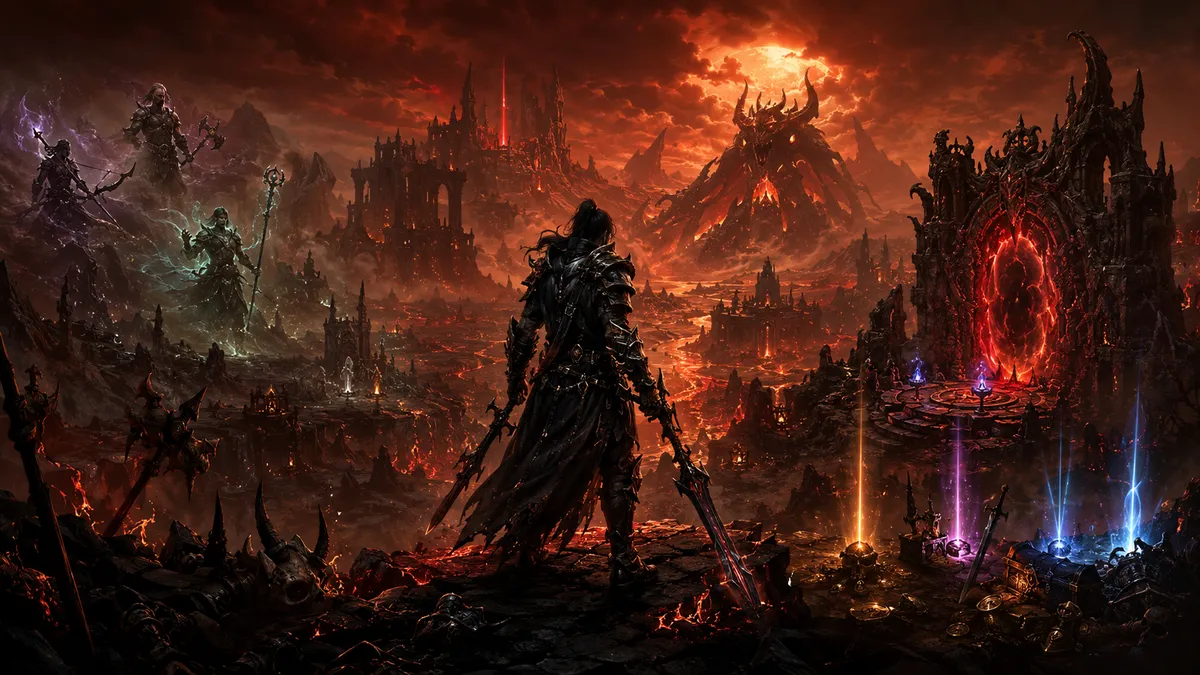
What Makes a Class Good for Solo Play
A good solo class needs more than damage. Solo play rewards balance. You need enough power to clear enemies quickly, but you also need enough defense to survive when no one else can save you.
Survivability:
Solo players need armor, resistances, maximum life, defensive cooldowns, barriers, healing, damage reduction, mobility, or minions. A class that survives mistakes is usually better for new solo players than a fragile class with high damage.
Damage:
Solo builds need both area damage and single-target damage. Helltides and dungeons require fast group clearing, while bosses require focused damage against one enemy.
Mobility:
Solo farming is faster when your class moves well. Mobility matters in Helltides, Whispers, dungeons, The Pit, War Plans, and open-world routes.
Resource Management:
A solo build that constantly runs out of resource feels weak. Good builds either generate resource smoothly or use skills that stay active without constant downtime.
Gear Independence:
Beginner solo builds should work without rare Uniques. A build that needs several specific drops before it feels good is better as an endgame goal than a first solo choice.
Ease of Play:
Solo players often benefit from simple rotations. If a build needs perfect timing, several buffs, exact positioning, and rare gear, it may not be the best first build.
Boss Comfort:
Solo players must defeat bosses without group damage. A good solo build needs enough single-target pressure and defense to survive longer fights.
Best Solo Classes in Diablo IV
All classes can solo, but they do not feel the same. Some classes are safer, some are faster, some are stronger in endgame, and some are better for experienced players.
1. Paladin:
Paladin is one of the best solo classes because it combines defense, holy damage, auras, shields, Oaths, healing-style support, and strong build variety. It is excellent for players who want a safe and steady class. Blessed Hammer, Blessed Shield, Auradin, Arbiter Disciple, and Zealot-style builds all give Paladin strong solo options.
2. Necromancer:
Necromancer is one of the most comfortable solo classes because minions can take pressure off the player. Minion Necromancer, Shadowblight, Blood Surge, Shadow Golems, and Reaper Summoner-style builds are strong choices for players who want safety and a slower, more controlled pace.
3. Sorcerer:
Sorcerer is a strong solo class for players who like magic, speed, barriers, mobility, and high damage. Ball Lightning, Charged Bolts, Blizzard, Hydra, Crackling Energy, and Static Field-style builds can be excellent, but Sorcerer players must respect defense because the class can feel fragile if built poorly.
4. Spiritborn:
Spiritborn is excellent for solo players who enjoy speed and active gameplay. Quill Volley, Payback, Infinite Evade Eagle, Touch of Death, and other guardian-based builds can farm quickly and push strong content. The class is less relaxed than Necromancer or Paladin, but it is very rewarding.
5. Rogue:
Rogue is one of the best solo classes for skilled players because it has strong mobility, strong damage, and excellent farming potential. Dance of Knives, Rapid Fire, Penetrating Shot, Twisting Blades, and Barrage-style builds can perform very well, but Rogue is more demanding than beginner-friendly classes.
6. Warlock:
Warlock is powerful for solo endgame when built correctly. Dread Claws, Hellfire Apocalypse, Abaddon Summoner, Blazing Abyss, and demon-focused builds offer strong damage and dark magic identity. Warlock can be excellent, but newer players should follow a clear build because the class can become complex.
7. Barbarian:
Barbarian can be a strong solo class because it is durable, physical, and powerful once geared. Whirlwind, Rend, Hammer of the Ancients, Upheaval, Double Swing, and other builds can do well. Barbarian may feel slower early than faster classes, but it becomes very strong with gear and Paragon.
8. Druid:
Druid is flexible and durable, with options such as Wolf Companion, Pulverize, Lightning Storm, Boulder, Tornado, Rabies Lacerate, and Shred. Druid is very capable solo, but some builds feel gear-dependent or slower to start, so it is best for players who enjoy shapeshifting, nature magic, and long-term scaling.
Best Solo Class for Beginners
The best solo class for beginners is usually Paladin or Necromancer. Both are forgiving, clear in identity, and comfortable without perfect mechanics.
Paladin for Beginners:
Paladin is safe because it has shields, auras, defensive skills, healing-style tools, and strong direct combat. A Blessed Hammer or Blessed Shield Paladin gives players simple damage and enough survival to learn Diablo IV systems without constant deaths.
Necromancer for Beginners:
Necromancer is safe because minions can help absorb enemy pressure. Minion builds are especially comfortable for players who want a less stressful solo experience.
Sorcerer for Beginners:
Sorcerer is good for players who want magic and faster clearing, but beginners need to build defenses properly. Barriers, mobility, resistances, and cooldown timing matter.
Spiritborn for Beginners:
Spiritborn can level quickly and feel powerful, but it is more active. Beginners should use a simple build like Quill Volley or Payback and avoid complicated guardian mixing early.
Best Simple Recommendation:
Choose Paladin if you want safety and direct combat. Choose Necromancer if you want minions and comfort. Choose Sorcerer if you want magic and speed. Choose Spiritborn if you want fast, active gameplay.
Best Solo Class for Returning Players
Returning players should choose a class that helps them relearn Diablo IV’s current systems without feeling too weak. Lord of Hatred and recent seasons changed progression, skill trees, itemization, loot filtering, and endgame structure, so old habits may not be enough.
Best Returning Player Choice: Paladin:
Paladin is a great return class because it is new, safe, and connected to Lord of Hatred’s skill and item systems. It lets returning players experience modern Diablo IV while still using a familiar holy warrior fantasy.
Best Returning Magic Choice: Sorcerer:
Sorcerer remains strong for players who enjoy spellcasting and fast farming. It is a good choice if you like elemental damage and active movement.
Best Returning Comfort Choice: Necromancer:
Necromancer is ideal if you want a slower, safer re-entry into the game. Minions and durable builds give time to relearn mechanics.
Best Returning Speed Choice: Spiritborn:
Spiritborn is excellent if you missed Vessel of Hatred or want a class that feels very different from the original launch classes.
Best Returning Endgame Choice: Warlock:
Warlock can be very strong in endgame, but it is better for players who are willing to learn a new class and follow a focused build.
Best Solo Class for Casual Players
Casual solo players need classes that work with limited time. The best casual solo class should be easy to level, easy to gear, and strong enough without perfect execution.
Best Casual Class: Paladin:
Paladin is excellent for casual players because it is forgiving. Defensive tools reduce frustration, and its build paths are easy to understand.
Best Casual Comfort Class: Necromancer:
Necromancer is great for relaxed solo play. Minions help clear enemies while the player focuses on positioning and objectives.
Best Casual Farming Class: Sorcerer:
Sorcerer can be fast and satisfying for casual farming, especially when using builds with strong area damage and mobility.
Best Casual Active Class: Spiritborn:
Spiritborn is good if you like fast gameplay, but it requires more attention than Necromancer or Paladin.
Casual Rule:
A casual solo class should feel good with normal gear, not only after perfect Uniques and Masterworking.
Best Solo Leveling Builds
Solo leveling builds should be simple, mobile, durable, and not too dependent on rare items. The goal is not to create the perfect endgame setup immediately. The goal is to reach strong progression quickly.
Blessed Hammer Paladin:
Blessed Hammer is one of the best solo leveling ideas because it has strong group clearing, classic Paladin identity, and good safety when paired with auras and defensive tools.
Minion Necromancer:
Minion Necromancer is one of the easiest solo leveling choices. Minions help absorb pressure, and the build works well for players who want a safer pace.
Hydra Sorcerer:
Hydra Sorcerer is comfortable because it lets you place damage and keep moving. It is good for players who want magic without standing still constantly.
Charged Bolts or Ball Lightning Sorcerer:
Lightning Sorcerer builds can clear quickly and feel strong when resource and defense are handled properly.
Quill Volley Spiritborn:
Quill Volley is one of the best Spiritborn leveling ideas because it gives fast clearing and flexible combat.
Payback Spiritborn:
Payback is strong for players who like grouping enemies and hitting them with heavy damage.
Dance of Knives Rogue:
Dance of Knives is a strong solo leveling option for players who enjoy movement and fast clearing.
Whirlwind Barbarian:
Whirlwind Barbarian is simple and strong for players who like melee farming and direct action.
Companion Druid:
Companion Druid is a comfortable leveling direction because allies and nature skills help with solo survival and steady clearing.
Dread Claws Warlock:
Dread Claws Warlock is a strong option for players who want dark magic and aggressive solo leveling.
Best Solo Endgame Builds
Solo endgame builds need more than leveling speed. They must handle high Torment, The Pit, Nightmare Dungeons, Infernal Hordes, bosses, and gear farming without support from other players.
Auradin Paladin:
Auradin-style Paladin is excellent for solo players who want a mix of damage, auras, defense, and smooth farming. It is comfortable because its power is not only tied to one fragile damage window.
Arbiter Disciple Paladin:
Arbiter Disciple Paladin is strong for endgame players who like powerful cooldown windows, mobility, and holy burst.
Blessed Hammer Paladin:
Blessed Hammer remains a strong solo idea when properly supported with gear, resource flow, and defense.
Shadowblight Necromancer:
Shadowblight Necromancer is a good solo endgame option because it combines damage over time, defensive play, and strong scaling.
Reaper Summoner Necromancer:
Summoner-style Necromancer is excellent for players who want minions and safer solo progression.
Ball Lightning Sorcerer:
Ball Lightning Sorcerer is a strong solo endgame build for players who like fast spellcasting and high damage.
Static Field Blizzard Sorcerer:
Blizzard-style Sorcerer builds can be comfortable because they control space and damage enemies while the player moves.
Rapid Fire Rogue:
Rapid Fire Rogue is strong for bossing and focused damage when played well.
Penetrating Shot Rogue:
Penetrating Shot Rogue gives strong ranged damage and good clearing potential for skilled solo players.
Quill Volley Spiritborn:
Quill Volley Spiritborn remains one of the most recognizable Spiritborn solo builds because of speed and flexible clearing.
Payback Spiritborn:
Payback is strong for players who like heavy impact and setup-based damage.
Whirlwind Barbarian:
Whirlwind Barbarian is a strong solo build for players who want simple melee farming and strong endgame scaling.
Wolf Companion Druid:
Wolf Companion Druid is a strong solo option because it gives extra support and damage from companions.
Hellfire Apocalypse Warlock:
Hellfire Apocalypse Warlock gives strong dark caster power for solo players who want endgame damage.
Abaddon Summoner Warlock:
Abaddon Summoner Warlock is excellent for players who like minion-style or demon-supported gameplay.
Best Solo Activities in Diablo IV
Solo players should focus on activities that give reliable rewards without requiring coordination. The best activities give experience, gear, materials, gold, Paragon progress, Glyph progress, boss materials, or seasonal rewards.
Helltides:
Helltides are one of the best solo activities because they give enemy density, Cinders, Tortured Gifts, gear, materials, Forgotten Souls, Blood Maiden opportunities, and Whisper overlap.
Tree of Whispers:
Whispers are excellent for solo players because they give clear objectives and reward caches. They also stack well with Helltides, dungeons, events, and boss kills.
Nightmare Dungeons:
Nightmare Dungeons are strong for solo players because they give gear, dungeon rewards, Obducite, Sigils, materials, and build testing.
The Pit:
The Pit is one of the best solo tests because it reveals whether your build has enough damage, defense, mobility, and boss pressure. It is also important for Glyph improvement.
Infernal Hordes:
Infernal Hordes are wave-based and can be played solo. They are useful for materials, gold, gear, Greater Affix items, and reward conversion through Burning Aether.
War Plans:
War Plans are excellent for solo players because they create structure. Instead of deciding randomly, you chain selected activities and collect rewards.
Lair Bosses:
Boss farming is important when your build needs specific Uniques or Mythic Unique chances. Solo players can farm bosses, but they should choose difficulty carefully.
World Bosses:
World Bosses are not fully solo in practice because other players usually join the event, but you do not need to form a party. They are useful for quick rewards, Scattered Prisms, and weekly value.
Kurast Undercity:
Undercity is useful for expansion players who want timed runs, reward targeting, and efficient progression.
Best Solo Progression Route
A strong solo route avoids random wandering. It gives you a clear path from character creation to endgame farming.
Step 1: Choose a Solo-Friendly Class:
Pick a class that matches your comfort level. Paladin and Necromancer are safest. Sorcerer and Spiritborn are faster. Rogue and Warlock reward better execution. Barbarian and Druid scale well with gear.
Step 2: Use a Leveling Build:
Do not start with a gear-dependent endgame build. Use a build that works without rare Uniques.
Step 3: Complete or Skip Campaign Based on Account Progress:
New players should complete the campaign once. Returning players with campaign skip can move directly into seasonal and endgame progression.
Step 4: Follow Seasonal Objectives:
Seasonal progression gives direction and rewards. Solo players should use it as a roadmap instead of ignoring it.
Step 5: Farm Helltides and Whispers:
These are the best early solo activities because they give gear, gold, materials, experience, and caches.
Step 6: Start Nightmare Dungeons:
Once your build feels stable, run Nightmare Dungeons for gear, materials, Sigil value, and build testing.
Step 7: Use The Pit for Glyph Progression:
Glyph improvements are important for endgame power. The Pit also tells you whether your build is ready for harder content.
Step 8: Farm Bosses With a Target:
Do not farm random bosses. Choose bosses that drop the Unique or material your build needs.
Step 9: Use War Plans for Structure:
When you have access, War Plans help chain activities and reduce downtime.
Step 10: Push Difficulty Gradually:
Raise difficulty only when your clear speed and survival remain strong.
Solo Mercenaries: Why They Matter
Mercenaries are one of the biggest advantages for solo players with Vessel of Hatred or Lord of Hatred access. A hired Mercenary can join you during solo play, while another Mercenary can be assigned as a Reinforcement.
Raheir for Defense:
Raheir is the best solo Mercenary when survival is the problem. He blocks, protects, and helps fragile characters survive dangerous moments.
Varyana for Speed and Melee Pressure:
Varyana is useful for melee solo builds that want faster clearing and enemy pressure. She fits Barbarian, Paladin, Rogue, Spiritborn, and other close-range builds.
Aldkin for Damage and Debuffs:
Aldkin is better when your character already survives well and wants more magical damage or enemy weakening.
Subo for Farming and Resource Support:
Subo is one of the best solo farming Mercenaries because he marks enemies, stays at range, and supports resource flow and route awareness.
Best Solo Setup for Beginners:
Raheir as the hired Mercenary with Subo as Reinforcement is a safe and practical setup. It gives defense plus utility.
Best Solo Setup for Farming:
Subo as hired Mercenary with Raheir or Varyana as Reinforcement can work well when your build is already safe.
Mercenary Rule:
Use Mercenaries to solve your weakness. Choose Raheir if you die, Subo if you need farming utility, Varyana if you want close-range speed, and Aldkin if you want extra offensive pressure.
Solo Leveling Tips
Solo leveling is fastest when you focus on simple power gains instead of perfect optimization.
Use a Build That Works Early:
Do not force an endgame build that needs multiple Uniques. Leveling builds should function with normal drops and basic Aspects.
Keep Weapons Updated:
Weapon damage matters heavily while leveling. Replace weak weapons quickly, even if the old one has a nice bonus.
Do Not Over-Enchant Leveling Gear:
Most leveling gear gets replaced quickly. Save expensive rerolls for later.
Use Helltides When They Are Valuable:
Helltides provide dense enemies, gear, materials, and Cinders. They are strong for solo leveling and early gearing.
Complete Whispers Naturally:
Whispers give caches and experience. Stack them with activities you already want to do.
Avoid Difficulty Pride:
Higher difficulty is only worth it if you clear quickly. If enemies take too long, lower difficulty and move faster.
Unlock Class Mechanics Early:
Some classes need class quests or mechanics to feel complete. Do not delay important unlocks like Spirit Hall for Spiritborn or Mercenary access through expansion progression.
Solo Endgame Tips
Solo endgame is about choosing the right activity for your current goal. Random farming is slower than planned farming.
Farm Gear in Helltides and Dungeons:
Helltides and Nightmare Dungeons are excellent for gear, salvage materials, Forgotten Souls, Obducite, and build testing.
Use The Pit to Test Build Strength:
If your build fails in The Pit, identify why. Is it damage, defense, mobility, boss damage, or resource flow?
Farm Bosses for Specific Items:
Lair Bosses are most useful when you know the Unique or Mythic Unique chance you are chasing.
Use Infernal Hordes for Materials and Rewards:
Infernal Hordes are good when your build has strong area damage and survivability.
Use War Plans to Reduce Downtime:
War Plans are excellent for solo players because they create a chain of useful activities.
Use the Loot Filter:
Solo players spend a lot of time managing drops. A loot filter keeps farming efficient.
Balance Damage and Defense:
Solo builds cannot rely on teammates to cover weaknesses. If you are dying, add defense. If bosses take too long, add single-target damage.
Best Solo Build Features
A good solo build has several key features. When choosing or creating a build, check these before committing.
Area Damage:
You need area damage for Helltides, Nightmare Dungeons, Infernal Hordes, Whispers, and general farming.
Single-Target Damage:
You need boss damage for Lair Bosses, Pit bosses, dungeon bosses, and endgame encounters.
Mobility:
Movement skills and movement speed reduce farming time and help avoid danger.
Defensive Cooldowns:
Solo players need a way to survive dangerous moments. This may be a barrier, immunity, damage reduction, healing, Unstoppable, block, dodge, Fortify-style effect, minions, or companion support.
Resource Stability:
If your build stops attacking too often, fix resource generation or cost reduction.
Simple Rotation:
A build with a simple rotation is easier for long solo sessions. Complicated builds can be powerful but may be tiring.
Gear Path:
The best solo builds have a realistic path from leveling gear to endgame gear. Avoid builds that feel useless until one rare drop appears.
Solo Boss Farming Tips
Boss farming is one of the harder solo activities because it tests single-target damage and survivability. A build that clears Helltides quickly may still struggle against bosses.
Choose the Right Boss:
Farm bosses that drop items your build actually needs. Do not spend keys on random bosses.
Prepare Defenses:
Bosses punish weak armor, low resistances, and bad positioning. Fix defense before pushing difficulty.
Use a Boss-Friendly Build:
Area damage is not enough. Add single-target scaling, cooldown timing, and resource stability.
Use Mercenary Support:
Raheir is excellent for learning bosses because defensive support helps prevent sudden deaths.
Do Not Push Difficulty Too Early:
A lower difficulty boss you can kill quickly is often better than a higher difficulty boss that takes too long or kills you repeatedly.
Clear Inventory First:
Boss farming creates many drops. Start with empty inventory and know what items you are targeting.
Boss Rule:
Solo boss farming is best when your build kills safely, your keys match your target, and your difficulty is realistic.
Solo Helltide Tips
Helltides are one of the best solo farming activities, but they are most efficient when you move with purpose.
Move Between Dense Events:
Do not wander through empty areas. Look for events, elite packs, Blood Maiden activity, and high-density routes.
Open Useful Chests:
Choose Tortured Gifts based on what you need: gear, materials, weapons, armor, jewelry, or mystery rewards.
Stack Whispers:
If Helltide objectives also give Whispers, prioritize them. This creates double reward value.
Do Not Die With Cinders:
Dying can waste progress. If you have enough Cinders for a valuable chest, open it before taking unnecessary risks.
Use a Speed Build:
Helltides reward movement, area damage, and fast clears.
Helltide Rule:
Solo Helltide farming is best when you chase density, open chests quickly, and stack objectives.
Solo Nightmare Dungeon Tips
Nightmare Dungeons are excellent for solo players because they test your build while rewarding gear and materials.
Choose Good Sigils:
Do not run every Sigil blindly. Bad affixes or slow layouts reduce efficiency.
Avoid Overclearing:
Complete the dungeon objective and kill valuable packs, but do not waste time chasing every minor enemy.
Use Defensive Tools for Dangerous Affixes:
If a dungeon affix punishes your build, either adjust your setup or salvage the Sigil.
Stack With Whispers:
A Nightmare Dungeon that also gives Whisper progress is more valuable.
Manage Inventory Between Runs:
Sell or salvage quickly, then start the next dungeon. Menu time lowers farming speed.
Dungeon Rule:
Solo Nightmare Dungeon farming is best when you choose fast layouts, useful affixes, and a difficulty you can clear smoothly.
Solo Pit Tips
The Pit is one of the best ways to test solo strength because it combines clear speed, elite damage, boss damage, survival, and time pressure.
Use The Pit as a Build Test:
If you fail, identify why. Did you run out of time? Did the boss kill you? Did elites take too long? Did resource problems slow you down?
Upgrade Glyphs:
Glyphs are important for endgame scaling. Solo players should not ignore them.
Do Not Push Too Far Too Early:
The Pit is meant to scale. Farm a level you can clear consistently before pushing higher.
Balance Speed and Boss Damage:
A build that clears packs quickly but fails the boss needs more single-target damage.
Use Defensive Mercenary Support:
Raheir can help when survivability is the issue.
Pit Rule:
Push for progress, but farm the tier where your rewards and clear speed stay efficient.
Solo Infernal Hordes Tips
Infernal Hordes can be very rewarding for solo players because they offer wave-based combat, Burning Aether, and reward choices.
Build for Area Damage:
Infernal Hordes reward builds that can clear many enemies quickly.
Do Not Choose Dangerous Offers Randomly:
Infernal Offers can increase rewards but also danger. Choose options your build can handle.
Watch Revives:
Solo players must respect limited revives. If you lose all of them, you lose reward access.
Use Aether Wisely:
Spend Burning Aether on the reward type you need most, such as materials, gold, gear, or other spoils.
Use Defensive Skills During Heavy Waves:
Do not save every cooldown forever. Use defense before dangerous waves overwhelm you.
Infernal Hordes Rule:
Solo Infernal Hordes are best when your build has area damage, survival, and smart reward choices.
Solo War Plans Tips
War Plans are excellent for solo players because they remove the biggest solo problem: not knowing what to do next.
Choose Activities You Clear Well:
Do not select activities your build struggles with. A good War Plan should keep momentum.
Stack Whispers When Possible:
Whisper overlap makes War Plans more rewarding.
Use Activity Chains for Goals:
If you need Obducite, include Nightmare Dungeons or material-focused activities. If you need boss items, include boss routes. If you need broad farming, include Helltides and dungeons.
Reduce Downtime:
The power of War Plans is not only rewards. It is the time saved between activities.
Adjust as Your Build Improves:
Early War Plans should be safe. Later War Plans can include harder content.
War Plan Rule:
Use War Plans to turn solo farming into a clear progression route.
Solo Self Found and Standard Solo Play
Standard solo play means you play mostly alone but can still trade, join events, or group when you choose. Solo Self Found is different. It is a stricter character state designed for players who want a true solo challenge.
Standard Solo Play:
Standard solo players can still use normal account systems, trade when allowed, use Party Finder when needed, and participate in shared world events. This is the best choice for most players.
Solo Self Found:
Solo Self Found is designed for players who want a stricter solo challenge. In the announced PTR rules, Solo Self Found characters are seasonal-only, cannot join parties or trade, share progress only with other Solo Self Found characters on the account, and return to Eternal at season end with normal grouping and trading restored.
Who Should Try Solo Self Found:
Solo Self Found is best for experienced players who enjoy earning everything themselves and do not mind losing access to group and trade convenience.
Who Should Avoid Solo Self Found:
New players, casual players, and players who want help from friends should start with normal Seasonal or Eternal solo play instead.
Solo Mode Rule:
Play standard solo if you want flexibility. Choose Solo Self Found only when you want a stricter challenge.
Best Solo Gear Priorities
Solo players should gear differently from players who always run in groups. Your gear must cover every weakness.
Weapon Damage:
Keep your weapon updated while leveling. Low weapon damage slows every activity.
Maximum Life:
Life gives room for mistakes and helps you survive unexpected damage.
Armor and Resistances:
These are critical in higher difficulty. Do not rely only on damage.
Main Skill Ranks:
Ranks to your main damage skill can be a major upgrade.
Resource Support:
Cost reduction, generation, cooldown recovery, and build-specific resource tools keep the build active.
Cooldown Reduction:
Cooldown reduction helps defensive skills, mobility skills, and burst windows.
Movement Speed:
Movement speed is one of the best solo farming stats because it saves time everywhere.
Damage Reduction or Defensive Effects:
Solo players should not ignore defensive affixes, barriers, Fortify-style effects, block, dodge, minion protection, or class-specific defense.
Common Solo Player Mistakes
Solo players often struggle because of planning mistakes rather than class weakness.
Mistake 1: Choosing a Build That Needs Rare Gear Too Early:
Use a leveling build first. Switch to endgame builds after you have the required items.
Mistake 2: Building Only Damage:
Damage feels good until you start dying. Solo players need defense.
Mistake 3: Building Only Defense:
Survival matters, but bosses still need to die. Balance is key.
Mistake 4: Ignoring Mobility:
Slow builds make every activity take longer.
Mistake 5: Ignoring Resource Problems:
A build that constantly waits for resource loses damage and momentum.
Mistake 6: Farming Random Activities:
Choose activities based on your goal: gear, gold, materials, Glyphs, boss items, or seasonal rewards.
Mistake 7: Pushing Difficulty Too Fast:
Higher difficulty is only better when you clear efficiently.
Mistake 8: Ignoring Mercenaries:
Mercenaries are extremely useful for solo players with expansion access.
Mistake 9: Not Using the Loot Filter:
Solo players waste a lot of time reading items. A loot filter saves time.
Mistake 10: Refusing Help When Stuck:
Solo play is fun, but progression can slow down. BoostRoom can help when you want faster leveling, gear, bosses, or endgame support.
Practical Rules for Solo Players
These rules help every solo player progress more smoothly.
Rule 1: Pick a Class That Matches Your Skill Level:
Beginners should choose comfort. Experienced players can choose speed or complexity.
Rule 2: Use a Leveling Build First:
Do not force a gear-dependent endgame build too early.
Rule 3: Balance Damage and Defense:
Solo characters must handle every problem alone.
Rule 4: Use Mercenaries:
Raheir, Subo, Varyana, and Aldkin can all solve different solo problems.
Rule 5: Stack Activities:
Combine Whispers, Helltides, dungeons, War Plans, and seasonal objectives.
Rule 6: Farm the Right Difficulty:
Use the highest difficulty where you still clear quickly and safely.
Rule 7: Use The Pit as a Test:
The Pit reveals whether your build is ready for harder content.
Rule 8: Farm Bosses With a Target:
Spend keys on bosses that drop items your build needs.
Rule 9: Upgrade Gear Efficiently:
Do not waste expensive upgrades on temporary items.
Rule 10: Use BoostRoom When Time Matters:
BoostRoom can help with leveling, gear farming, boss runs, seasonal catch-up, and endgame progress.
How BoostRoom Helps Solo Players
Solo play gives freedom, but it can also become time-consuming. You may need to level alone, farm gear alone, collect materials alone, push dungeons alone, kill bosses alone, unlock systems alone, and sort through item upgrades alone. That can be fun, but it can also become slow when your build reaches a wall.
BoostRoom helps solo players who want faster Diablo IV progress without wasting hours on inefficient farming. Whether you are new, returning, casual, or already in endgame, BoostRoom can support the parts of solo progression that usually take the longest.
Solo Leveling Support:
BoostRoom can help you level faster so your character reaches important systems, endgame activities, and stronger build stages sooner.
Gear Farming Support:
Solo players often need specific Aspects, Uniques, Greater Affix items, materials, and gear bases. BoostRoom can help make farming more efficient.
Boss Farming Support:
If your solo build struggles against Lair Bosses or you need target drops, BoostRoom can help with boss runs and preparation.
Dungeon and Pit Support:
Nightmare Dungeons and The Pit expose weaknesses in solo builds. BoostRoom can help players progress through harder content and build toward stronger rewards.
Helltide and Material Support:
Helltides, Infernal Hordes, and War Plans are valuable for solo players, and BoostRoom can help you farm them more effectively.
Seasonal Catch-Up:
If you start late in a season, BoostRoom can help you catch up with leveling, gearing, objectives, and endgame routes.
Casual Player Time-Saving:
If your playtime is limited, BoostRoom helps turn shorter sessions into visible progress.
Solo Player Checklist
Use this checklist when building a solo character.
Class:
Did you choose a class that matches your comfort level?
Build:
Are you using a leveling build before switching to an endgame build?
Damage:
Do you have both area damage and single-target damage?
Defense:
Do you have armor, resistances, life, barriers, healing, damage reduction, minions, or defensive cooldowns?
Mobility:
Can your build move quickly through activities?
Resource:
Can your build attack consistently without long pauses?
Mercenary:
Are you using the right Mercenary for your weakness?
Activities:
Are you farming activities that match your current goal?
Difficulty:
Are you clearing quickly and safely?
Loot Filter:
Are you using the loot filter to save time?
Boss Targets:
Do you know which boss drops the item you need?
BoostRoom:
Would support with leveling, gear, bosses, or endgame save you time?
Final Advice for Diablo IV Solo Players
Solo play in Diablo IV is not only possible. It is one of the best ways to experience the game. You can progress at your own pace, choose your own class, farm your own route, and build your character without waiting for anyone else. The key is choosing a class and build that can handle every part of the game alone.
For the safest solo experience, Paladin and Necromancer are the easiest recommendations. Paladin brings defense, auras, shields, and strong build variety. Necromancer brings minions, comfort, and controlled gameplay. Sorcerer is excellent for solo players who want magic and speed. Spiritborn is great for players who enjoy fast active combat. Rogue is powerful for skilled solo players. Warlock can be very strong for players willing to learn complex dark magic builds. Barbarian and Druid are durable and strong when geared, but some builds may need more patience early.
The best solo activities are Helltides, Whispers, Nightmare Dungeons, The Pit, Infernal Hordes, War Plans, Lair Bosses, World Bosses, and Kurast Undercity. Each activity has a purpose. Helltides give gear and materials. Whispers give reliable caches. Nightmare Dungeons give gear and upgrade materials. The Pit tests and improves endgame power. Infernal Hordes reward strong wave clearing. War Plans create structure. Bosses provide target farming. Undercity helps expansion players target rewards.
A strong solo player does not farm randomly. A strong solo player chooses one goal, farms the activity that supports it, uses the right difficulty, upgrades only good gear, uses Mercenaries wisely, and switches builds only when the gear is ready. If your solo progress slows down, check the real problem: damage, defense, mobility, resource flow, boss damage, gear quality, Paragon, Glyphs, or activity choice.
If you want faster progress without losing time to slow farming, BoostRoom can help with leveling, gear farming, Helltides, Nightmare Dungeons, boss runs, The Pit, seasonal catch-up, and endgame preparation. Solo play is about independence, but smart support can still help you reach the best parts of Diablo IV faster.
FAQ
Is Diablo IV good for solo players?
Yes. Diablo IV is very good for solo players. You can complete the campaign, level seasonal characters, farm Helltides, run Nightmare Dungeons, push The Pit, farm bosses, and complete most endgame content alone.
What is the best solo class in Diablo IV?
Paladin and Necromancer are the safest solo recommendations. Paladin is durable and flexible, while Necromancer is comfortable because minions help absorb pressure.
What is the easiest solo class for beginners?
Necromancer is one of the easiest because of minions. Paladin is also excellent because of shields, auras, and strong defenses.
What is the fastest solo class?
Rogue, Sorcerer, Spiritborn, and Paladin can be very fast depending on build and gear.
Is Sorcerer good for solo play?
Yes. Sorcerer is strong for solo farming and endgame, but it needs proper defenses because it can feel fragile if built poorly.
Is Rogue good for solo play?
Yes. Rogue is very strong for skilled solo players because it has excellent mobility and damage, but it is more demanding than Paladin or Necromancer.
Is Spiritborn good for solo play?
Yes. Spiritborn is fast and flexible, especially with builds like Quill Volley, Payback, Infinite Evade Eagle, and Touch of Death.
Is Warlock good for solo play?
Yes. Warlock can be very strong in solo endgame, especially with focused builds, but new players should follow a clear setup because the class can be complex.
What is the best solo leveling build?
Blessed Hammer Paladin, Minion Necromancer, Hydra Sorcerer, Quill Volley Spiritborn, Payback Spiritborn, Dance of Knives Rogue, Whirlwind Barbarian, Companion Druid, and Dread Claws Warlock are strong solo leveling ideas.
What is the best solo activity in Diablo IV?
Helltides and Whispers are the best early solo activities. Nightmare Dungeons, The Pit, Infernal Hordes, War Plans, and Lair Bosses become more important in endgame.
Do solo players need Mercenaries?
Mercenaries are not mandatory, but they are very helpful. Raheir is great for defense, Subo is great for farming utility, Varyana helps melee speed, and Aldkin adds offensive pressure.
Can solo players farm bosses?
Yes. Solo players can farm bosses, but they need enough single-target damage, defense, and the correct boss materials or keys.
Should solo players play Seasonal or Eternal?
Seasonal is best for fresh progression and current rewards. Eternal is best if you want to keep playing an older character without seasonal resets.
What is Solo Self Found?
Solo Self Found is a stricter solo character state announced for testing, where characters cannot party or trade and must progress alone. It is best for experienced players who want a challenge.
Can BoostRoom help solo players?
Yes. BoostRoom can help solo players with leveling, gear farming, boss runs, Helltides, Nightmare Dungeons, The Pit, seasonal catch-up, and endgame progression.



