Diablo IV Co-Op Guide: Best Activities to Play With Friends
Diablo IV is built around a shared world, repeatable activities, flexible character builds, and long-term progression. That makes co-op one of the most enjoyable ways to play. When you play with friends, every activity can feel smoother because different classes bring different strengths. One player can group enemies, another can clear packs, another can focus bosses, and another can provide defensive or support value. Even a casual two-player group can make the game feel more social, faster, and less repetitive.
Co-op is especially useful because Diablo IV has many systems that reward repeated farming. You may need gear, gold, materials, boss keys, Uniques, Mythic Unique chances, Glyph progress, seasonal objectives, Reliquary progress, War Plan rewards, or Dark Citadel cosmetics. Doing all of that alone can become tiring. With friends, the grind becomes easier to manage because you can split roles, plan routes, and keep each other moving.
The best co-op experience starts with choosing the right activity. Some activities are naturally better with friends. Dark Citadel is designed for team play and requires cooperation. Lair Boss farming is great in groups because players can coordinate materials, rotate summons, and clear faster. Helltides are excellent because groups can move between events, Blood Maiden fights, and chests quickly. Nightmare Dungeons and The Pit are good for build testing and progression. Infernal Hordes can be fun with friends because the wave pressure becomes more exciting and each player earns their own Burning Aether. War Plans are one of the best modern co-op systems because they let a group chain activities instead of wasting time deciding what to do next.
The main mistake players make in co-op is treating every activity the same. A campaign group should stay together and enjoy story progress. A Helltide group should move quickly and chase density. A boss farming group should prepare keys and target drops. A Nightmare Dungeon group should choose fast layouts and useful difficulty. A Dark Citadel group should communicate because the activity is designed around teamwork. A War Plan group should agree on goals before starting.
This guide breaks down the best co-op activities and shows how to make each one more efficient.
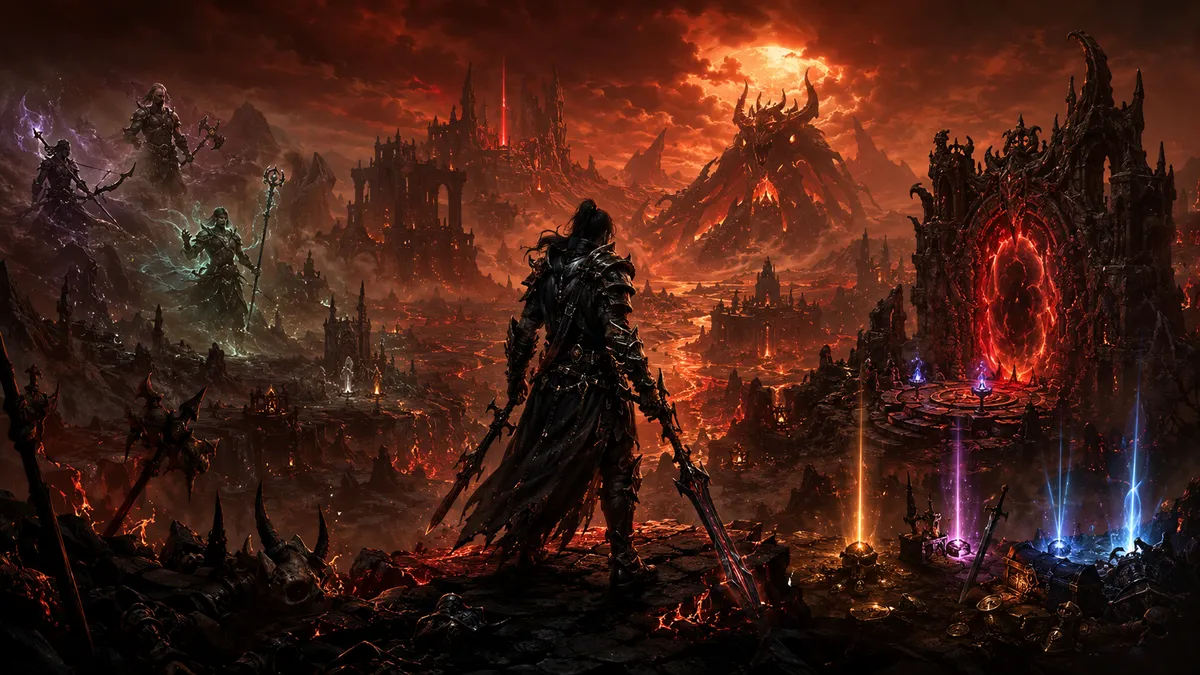
How Co-Op Works in Diablo IV
Co-op in Diablo IV lets players team up for campaign progress, open-world events, dungeons, bosses, Helltides, seasonal objectives, and endgame systems. You can play with friends directly, use Party Finder to locate groups, or use couch co-op on supported consoles.
Online Co-Op:
Online co-op lets players party together through Battle.net and supported platforms. This is the standard way most players group for dungeons, bosses, Helltides, War Plans, and seasonal farming.
Cross-Play:
Diablo IV supports cross-play, which means players on different platforms can play together. This is useful when friends are split between PC, Xbox, and PlayStation.
Cross-Progression:
Cross-progression lets players keep progress across supported platforms when using the correct account setup. This helps players who switch between platforms.
Couch Co-Op:
Couch co-op is available on consoles, letting two players play together on the same screen. It is especially useful for friends or family members who want to play from the same room.
Party Finder:
Party Finder helps players list or find groups for activities. It is useful when friends are offline or when you need extra players for harder content.
Shared World:
Even outside a formal party, Diablo IV’s world includes other players in towns, events, Helltides, World Bosses, Legion Events, and shared zones. Partying gives more control because you can coordinate goals.
Why Play Diablo IV With Friends
Playing with friends is not only more social. It can also make progression smoother, faster, and more enjoyable.
Faster Farming:
Groups can clear enemies faster, open routes faster, and chain activities with less downtime. This matters in Helltides, Nightmare Dungeons, War Plans, and boss farming.
Better Role Coverage:
One build may be weak at bosses but strong at clearing groups. Another may be durable but slower. Co-op lets different builds cover each other’s weaknesses.
Safer Progression:
A group can help recover from mistakes, especially in dungeons, boss fights, and difficult endgame content. You still need your own defenses, but co-op gives extra stability.
More Fun During Repetition:
Diablo IV involves repeated farming. Playing with friends makes farming feel less lonely and more rewarding.
Easier Boss Farming:
Groups can coordinate summoning materials, rotate boss runs, and clear Lair Bosses more efficiently.
Dark Citadel Access:
Dark Citadel is a co-op endgame activity that requires teamwork. It is one of the clearest reasons to group up.
Better Learning:
New players learn faster when playing with experienced friends. Builds, gear, difficulty, activities, and boss mechanics become easier to understand.
Party Finder Explained
Party Finder is one of the most important co-op tools in Diablo IV because it helps players find groups for specific activities. Instead of waiting for friends to be online, you can list or join a party based on what you want to do.
What Party Finder Does:
Party Finder lets players create or join groups based on activity type, location, playstyle, and goal. This is useful for casual runs, completion-focused farming, boss groups, Dark Citadel, dungeons, and other activities.
Best Uses for Party Finder:
Party Finder is especially useful for Nightmare Dungeons, Dark Citadel wings, Endgame Bosses, Codex of Power completion, Helltide activities, World Bosses, Legion Events, The Pit, Kurast Undercity, and Infernal Hordes.
Casual and Completionist Preferences:
A good Party Finder listing should make expectations clear. If you want relaxed farming, say so. If you want fast clears, say so. If you want boss material rotations, make that clear.
Party Finder Helps Late Starters:
If you start a season late, Party Finder can help you catch up by finding players running activities you need.
Party Finder Helps Boss Farming:
Boss groups are one of the best uses of Party Finder because players can share goals and coordinate materials.
Party Finder Rule:
Use Party Finder when your activity is easier, faster, or more rewarding with a group.
Couch Co-Op Tips
Couch co-op is one of the most comfortable ways to play Diablo IV with someone in the same room. It is perfect for casual leveling, campaign progress, Helltides, events, and relaxed farming.
Best Couch Co-Op Activities:
Campaign, side quests, Helltides, Whispers, dungeons, World Bosses, Legion Events, and early endgame farming are great couch co-op activities.
Choose Compatible Classes:
A couch co-op duo works best when both players can stay near each other. For example, Paladin with Sorcerer, Necromancer with Barbarian, Spiritborn with Rogue, or Druid with Warlock can all work, but the key is staying close enough to progress together.
Avoid Extreme Speed Differences:
If one player is much faster, the slower player may feel dragged along. Choose builds and difficulty that both players enjoy.
Communicate Inventory Stops:
Couch co-op can slow down if one player constantly checks items while the other wants to keep moving. Make town stops together.
Use Simple Builds:
Couch co-op is often more relaxed. Simple builds with clear damage and defense are usually better than complicated builds that require constant menu management.
Couch Co-Op Rule:
The best couch co-op pace is the pace both players enjoy, not the fastest possible route.
Best Co-Op Activity Overall: Helltides
Helltides are one of the best co-op activities because they are open, dense, rewarding, and easy to join. Friends can move together between events, Blood Maiden fights, elite packs, Tortured Gifts, and Whisper objectives.
Why Helltides Are Great With Friends:
Helltides reward movement and enemy density. A group can clear packs faster, complete events faster, and move between chest locations more efficiently.
Blood Maiden Farming:
Blood Maiden encounters are especially good in groups because they attract players, create dense fights, and produce useful loot. Friends can coordinate hearts, clear enemies, and collect rewards together.
Cinder Farming:
Groups can earn Cinders quickly by moving through high-density areas and events. Players should still open chests based on their own needs.
Whisper Overlap:
When Helltide objectives also count as Whispers, the group earns extra value. This is one of the best ways to stack rewards.
Material Farming:
Helltides are good for gear, Forgotten Souls, chests, Legendary salvage, and other upgrade materials. Groups make the farming loop smoother.
Best Group Style:
Stay together for events and Blood Maiden fights, but do not waste time wandering through empty areas. Move from density to density.
Helltide Rule:
Helltides are best in co-op when the group focuses on events, chests, Blood Maiden, Whispers, and fast movement.
Dark Citadel: Best True Co-Op Challenge
Dark Citadel is one of the most important co-op activities in Diablo IV because it is designed around teamwork. Unlike many activities that can be played solo or in groups, Dark Citadel requires players to cooperate.
Why Dark Citadel Matters:
Dark Citadel is a co-op endgame activity built for players who want coordinated challenges. It is not just a normal dungeon with more enemies. It asks players to work together.
Minimum Player Requirement:
Dark Citadel requires at least two players, but a full party of four is recommended for the best chance at success.
Best For Coordinated Groups:
Friends using voice chat or clear planning will usually have a better experience. The activity rewards communication and role awareness.
Weekly Rewards:
Dark Citadel offers weekly reward value and Citadel Coins that can be used toward exclusive cosmetics.
Best Group Composition:
A good Dark Citadel group should include strong area damage, boss damage, survivability, mobility, and at least one player with useful defensive or support value.
Party Finder Value:
Party Finder is very useful for Dark Citadel because you can search for players doing specific wings or goals.
Dark Citadel Rule:
Enter Dark Citadel with communication, patience, and a real group plan.
Lair Boss Farming With Friends
Lair Boss farming is one of the best co-op activities because it rewards preparation, target farming, and repeated clears. Many players group for bosses because it saves time and makes farming more efficient.
Why Boss Farming Is Better With Friends:
Boss fights become faster when multiple strong players contribute damage. Groups also make repeated runs feel less repetitive.
Material Coordination:
Players can coordinate who has keys or materials and decide which boss to farm. This is especially useful when everyone wants the same Unique or Mythic Unique chance.
Target Farming:
The best boss group chooses a target before starting. Do not spend materials randomly. Choose the boss that drops the item your group wants.
Difficulty Planning:
The group should farm the highest difficulty it can clear quickly. Slow boss kills are less efficient than faster clears at a slightly lower difficulty.
Inventory Management:
Boss farming fills inventories quickly. Clear bags before starting and agree on town breaks.
Party Finder Use:
Party Finder is excellent for finding boss groups, especially when looking for players who want to share summoning materials or run the same target.
Boss Farming Rule:
Boss farming is best with friends when everyone agrees on the target, difficulty, and material plan.
Nightmare Dungeons With Friends
Nightmare Dungeons are a classic co-op activity because they combine combat, objectives, elite packs, gear drops, materials, and build testing. They are also easy to chain with a group.
Why Nightmare Dungeons Work in Co-Op:
Groups clear faster, handle dangerous enemies more safely, and can cover different roles. One player may group enemies, one may burst elites, and one may handle boss damage.
Choose Good Sigils:
Do not run bad Sigils just because you have them. Slow layouts and dangerous affixes reduce efficiency.
Stay on Objective:
A common co-op mistake is splitting too much or overclearing. Follow the dungeon objective and keep the group moving.
Stack With Whispers:
A Nightmare Dungeon with Whisper progress is more valuable. The group gets dungeon rewards plus Grim Favor progress.
Obducite and Materials:
Nightmare Dungeons are useful for upgrade materials, gear testing, and salvage value. Co-op helps make repeated runs smoother.
Difficulty Matching:
Choose a difficulty where the whole group contributes. If one player carries too hard, others may not learn or enjoy the run.
Nightmare Dungeon Rule:
Run fast layouts, avoid bad affixes, stay on objective, and use dungeons to improve gear and builds together.
The Pit With Friends
The Pit is one of the best ways to test builds because it pressures clear speed, boss damage, defense, and movement. With friends, The Pit can become an efficient progression activity when the group is coordinated.
Why The Pit Is Good in Co-Op:
Groups can clear enemies faster, handle elites more safely, and combine damage types. It is a strong activity for players who want to test endgame performance.
Do Not Push Too High Too Soon:
A tier that is too high can waste time. Farm a tier the group can clear consistently before pushing.
Build Roles Matter:
Area damage helps clear the progress bar. Single-target damage matters for the boss. Defensive tools help prevent failed runs.
Boss Damage Is Important:
Many groups clear enemies quickly but slow down at the boss. Make sure at least one or two builds have strong single-target damage.
Use The Pit as a Test:
If the group fails, identify the issue. Was the clear too slow? Did players die? Was boss damage weak? Did resource problems slow the party?
Pit Rule:
Use The Pit to measure group strength, then farm the tier where rewards and clear speed feel efficient.
Infernal Hordes With Friends
Infernal Hordes are a strong co-op activity because wave-based combat becomes more exciting with friends. The group fights through enemy pressure, earns Burning Aether, and chooses rewards at the end.
Why Infernal Hordes Are Fun in Co-Op:
They are active, dense, and chaotic. Friends can cover each other during heavy waves, and different builds can handle different enemy types.
Burning Aether Is Individual:
Players earn Burning Aether individually, even when playing in a group. This means every player gets their own reward decision at the end.
Limited Revives Matter:
If players run out of revives, they can lose access to final rewards. Survival still matters, even in a group.
Choose Offers Carefully:
Infernal Offers can increase rewards but also increase danger. A group should choose options it can handle.
Best Build Types:
Area damage, crowd control, mobility, defensive cooldowns, and boss damage all matter. A group with only single-target builds may struggle with waves.
Reward Planning:
At the end, players can spend Aether based on personal needs, such as gold, materials, gear, or other rewards.
Infernal Hordes Rule:
Infernal Hordes are best with friends when the group balances wave clear, survival, and smart reward choices.
War Plans With Friends
War Plans are one of the best modern systems for co-op because they help a group create a playlist of activities. Instead of asking “What now?” after every run, the group can chain activities together.
Why War Plans Are Excellent in Co-Op:
Friends can choose activities together, complete them in sequence, and reduce downtime. This is perfect for groups that want structure.
Activity Choices:
War Plans can include Nightmare Dungeons, Helltides, Undercity, Lair Bosses, Infernal Hordes, and The Pit. This gives groups flexibility.
Whispers Can Overlap:
Whispers can double up with selected War Plan activities, increasing reward value.
Teleporting Between Activities:
War Plans help reduce travel and setup time by moving the group from one selected activity to the next.
Shared War Plan Progress:
Current PTR updates have included fully shared War Plan boards for parties, showing that group War Plan play is a major focus for co-op progression.
Best Group Use:
Create a War Plan based on what the group needs: materials, boss farming, Glyph progress, gear, gold, or seasonal objectives.
War Plan Rule:
War Plans are best with friends when everyone agrees on the goal before starting.
Kurast Undercity With Friends
Kurast Undercity is a strong co-op activity for players with Vessel of Hatred access because it is timed, reward-focused, and works well when players coordinate movement and damage.
Why Undercity Works in Co-Op:
The timer creates pressure, and a group can clear faster, complete events, build Attunement, and reach the final boss more reliably.
Tributes Matter:
Undercity rewards can be modified with Tributes. The group should know what reward type it wants before starting.
Do Not Scatter Randomly:
Undercity is time-limited, so players should move with purpose. Splitting too far can waste time if players miss objectives or fail to support each other.
Best Group Builds:
Mobility, area damage, elite damage, and boss damage are all valuable. Defensive tools matter because deaths waste time.
Good for Leveling Toward Endgame:
Undercity can help players progress toward endgame while targeting useful rewards.
Undercity Rule:
Run Undercity with a clear Tribute plan and fast group movement.
World Bosses With Friends
World Bosses are shared events that work well with friends because they are quick, social, and useful for rewards. You do not need a full private group, but joining friends makes the event easier to coordinate.
Why World Bosses Are Good in Co-Op:
They are quick events with useful rewards, including gear and socket-related value. They are also simple to join with friends.
Arrive Early:
World Bosses are timed events. Arriving early gives the group time to prepare, invite friends, and check gear.
Use Boss Builds When Needed:
If the group struggles, use more single-target damage and defensive skills.
Good for Casual Groups:
World Bosses are one of the easiest co-op activities because they do not require a long session.
Stack With Other Goals:
After the World Boss, the group can move into Helltides, Whispers, dungeons, or boss farming.
World Boss Rule:
World Bosses are best as quick group reward stops, not the entire session plan.
Legion Events With Friends
Legion Events are another strong casual co-op activity. They are fast, open-world events with waves of enemies and reward chests.
Why Legion Events Are Good:
They are easy to join, quick to complete, and good for players who want short co-op sessions.
Good for Leveling:
Legion Events can help leveling characters gain experience and loot while playing with friends.
Good for Group Warm-Up:
A Legion Event is a good way to start a session before moving into harder content.
Use Area Damage:
These events reward builds that clear groups quickly. Area damage and mobility are valuable.
Do Not Overbuild for Them:
Legion Events are not usually the hardest content. Use them for quick rewards and then move to a higher-value activity.
Legion Rule:
Legion Events are best as quick co-op stops between bigger farming goals.
Tree of Whispers With Friends
Whispers are excellent in co-op because they give the group clear objectives. Instead of wandering randomly, friends can complete tasks and earn caches together.
Why Whispers Are Good in Co-Op:
Whispers give direction. They guide the group toward dungeons, bosses, events, Helltides, and open-world objectives.
Stack With Other Activities:
The best co-op Whisper route overlaps with Helltides, Nightmare Dungeons, World Bosses, or other activities.
Good for Casual Players:
Whispers are easy to understand and do not require perfect builds. This makes them excellent for friends with different experience levels.
Reward Caches:
Whisper caches can provide gold, gear, materials, Sigils, and other useful rewards.
Avoid Slow Objectives:
Choose fast Whispers near the group’s current location or inside activities you already plan to run.
Whisper Rule:
Whispers are best in co-op when they are stacked with another activity, not farmed as a separate slow checklist.
Campaign Co-Op
Campaign co-op is one of the best ways for new players to experience Diablo IV together. It is slower than endgame farming, but it is fun, story-focused, and easy to follow.
Best For New Players:
Friends who are new to Diablo IV should consider completing the campaign together. It teaches systems, regions, bosses, and class basics.
Stay on the Same Story Step:
Campaign co-op works best when players stay aligned. If one player skips ahead or completes major steps alone, the group can become confused.
Avoid Rushing Too Hard:
Campaign co-op is not only about speed. Let new players learn skills, gear, vendors, and story flow.
Use Comfortable Classes:
Classes with good survival and simple builds are best for campaign co-op. Paladin, Necromancer, Sorcerer, Barbarian, Druid, Spiritborn, Rogue, and Warlock can all work when built properly.
Good Duo Style:
One durable class plus one high-damage class is a strong campaign setup. Paladin with Sorcerer, Necromancer with Rogue, Barbarian with Warlock, or Druid with Spiritborn can all feel good.
Campaign Rule:
Campaign co-op is best when the group prioritizes shared progress and fun over speed.
Seasonal Co-Op Progression
Seasonal play is excellent with friends because everyone starts fresh and works through rewards, Season Ranks, Blessings, Reliquaries, and endgame goals together.
Why Seasons Are Good With Friends:
A fresh season gives the group a common goal. Everyone levels, gears, and progresses at the same time.
Season Rank Objectives:
Seasonal objectives can be completed more smoothly with friends, especially when they involve dungeons, bosses, Helltides, or group-friendly tasks.
Season Blessings:
Seasonal progression unlocks bonuses that help farming, materials, gear, or other systems. Friends can plan routes around those bonuses.
Reliquary Progress:
Friends can farm activities together while earning Favor for seasonal rewards.
Late-Season Catch-Up:
Co-op helps players who start late. A friend group can speed up leveling, dungeons, Helltides, and boss farming.
Seasonal Rule:
In a season, co-op is strongest when friends agree on shared goals instead of splitting into unrelated farms.
Best Co-Op Class Roles
Every class can play co-op, but some roles naturally help groups. The best party is not four identical builds. Variety usually feels better.
Paladin:
Paladin is excellent in co-op because auras, shields, defense, holy damage, and group-friendly tools make it useful in many activities.
Necromancer:
Necromancer can bring minions, curses, shadow damage, blood builds, crowd control, and strong boss pressure depending on setup.
Sorcerer:
Sorcerer brings strong area damage, barriers, mobility, and elemental control. It is excellent for fast farming and dungeon clearing.
Spiritborn:
Spiritborn brings speed, mobility, guardian-based damage, and strong farming pressure. It is useful for Helltides and fast routes.
Rogue:
Rogue brings mobility, burst damage, ranged or melee pressure, and strong bossing potential. It is great for skilled players.
Barbarian:
Barbarian brings durability, melee pressure, shouts, and strong physical damage. It is good for players who want a front-line role.
Druid:
Druid brings flexibility, shapeshifting, storms, companions, durability, and group-friendly control.
Warlock:
Warlock brings dark magic, demon-focused builds, summoning options, fire pressure, and strong endgame damage potential.
Best Co-Op Class Combinations
The best co-op combinations cover each other’s weaknesses. A strong party usually has area damage, single-target damage, defense, mobility, and control.
Best Beginner Duo: Paladin and Necromancer:
This is safe, steady, and forgiving. Paladin can stand strong in combat while Necromancer adds minions and ranged pressure.
Best Speed Duo: Spiritborn and Rogue:
This duo moves quickly and clears fast. It is best for players who enjoy active gameplay.
Best Magic Duo: Sorcerer and Warlock:
This duo brings heavy spell pressure, area damage, and flashy combat. It needs good defensive planning.
Best Durable Duo: Paladin and Barbarian:
This duo is excellent for players who like direct combat and survivability.
Best Flexible Duo: Druid and Sorcerer:
Druid brings flexibility and durability while Sorcerer brings speed and damage.
Best Boss Duo: Rogue and Necromancer:
Rogue can bring focused damage while Necromancer adds minions, pressure, and control.
Best Four-Player Group:
A strong four-player group could include Paladin for support and durability, Sorcerer or Spiritborn for clearing, Rogue or Warlock for burst damage, and Necromancer or Druid for control and extra pressure.
Best Co-Op Builds by Activity
Different activities reward different build types. Choose builds based on what your group wants to farm.
Best for Helltides:
Fast area builds, mobility builds, aura builds, minion builds, and pull/grouping builds are excellent.
Best for Nightmare Dungeons:
Balanced builds with area damage, elite damage, mobility, and defense work best.
Best for Boss Farming:
Single-target builds, burst builds, debuff builds, and durable builds are best.
Best for Infernal Hordes:
Area damage, crowd control, defensive skills, and wave-clearing builds are strongest.
Best for The Pit:
Clear speed, boss damage, survivability, and resource stability matter most.
Best for Dark Citadel:
Coordinated builds with defense, mobility, boss damage, area damage, and support value are best.
Build Rule:
A co-op build should help the group activity, not only look good on a tier list.
How to Plan a Co-Op Session
A good co-op session starts before the first dungeon. Decide what the group wants, then choose the right activity.
Step 1: Choose the Goal:
Are you leveling, farming gold, collecting materials, pushing The Pit, farming bosses, completing season objectives, or running Dark Citadel?
Step 2: Choose Difficulty:
Pick the highest difficulty the group can clear quickly and safely. Do not choose a difficulty that makes the session slow.
Step 3: Prepare Inventory:
Clear bags before long dungeon chains, Helltides, or boss rotations.
Step 4: Prepare Materials:
For boss farming, make sure everyone knows who has keys or materials.
Step 5: Choose Party Roles:
Decide who has strongest boss damage, who clears packs, who brings support, and who handles movement or grouping.
Step 6: Use Party Finder if Needed:
If the group is missing players, use Party Finder to fill the party.
Step 7: Chain Activities:
Use War Plans or a simple route so the group does not waste time deciding after every run.
Co-Op Leveling Tips
Leveling with friends can be faster and more fun, but only if everyone stays close in pace.
Use Similar Difficulty:
The group should play where everyone contributes. If one player cannot survive, lower difficulty.
Do Not Rush New Players:
New players need time to learn skills, gear, and systems. A good group helps them understand instead of dragging them through content.
Stack Whispers and Helltides:
Whispers and Helltides are strong leveling activities because they give experience, gear, materials, and objectives.
Use Campaign Skip Wisely:
If everyone has campaign skip and wants fast seasonal progress, skip the campaign. If someone is new, campaign co-op can be better.
Share Build Advice Carefully:
Help friends improve without forcing them into a build they dislike.
Leveling Rule:
The best co-op leveling route keeps everyone progressing, geared, and engaged.
Co-Op Gear Farming Tips
Gear farming with friends is better when the group knows what everyone needs.
Know Your Target Items:
Before farming, each player should know which Aspects, Uniques, stats, or gear slots matter.
Farm Activities That Match Targets:
Use Helltides for slot-based loot and materials, bosses for target Uniques, Nightmare Dungeons for gear and upgrade materials, and War Plans for chained rewards.
Do Not Waste Drops:
Check items before selling or salvaging. Some drops may be useful for another build or trade value.
Coordinate Boss Targets:
If three players need the same boss drop, farm that boss first. If everyone needs different items, rotate targets.
Use Loot Filter:
The loot filter helps players identify upgrades faster and spend less time in town.
Gear Farming Rule:
Co-op gear farming is best when every run has a target.
Co-Op Boss Farming Tips
Boss farming is one of the most important co-op activities for players chasing specific Uniques, Mythic chances, or seasonal objectives.
Agree on Rotation:
If players are sharing materials, decide the rotation before starting. This avoids confusion.
Farm the Right Boss:
Do not waste keys on bosses that do not drop what the group needs.
Use Burst Windows:
Coordinate major damage skills, debuffs, and cooldowns for faster kills.
Avoid Difficulty Pride:
A group should farm the highest difficulty it clears efficiently, not the highest one it can barely survive.
Clear Inventory Often:
Boss farming produces many drops. Plan town breaks so the group does not lose momentum.
Respect Each Player’s Materials:
If someone is using valuable keys, make sure the run goal is clear.
Boss Rule:
Boss farming groups work best when materials, targets, and difficulty are agreed before the first summon.
Co-Op Helltide Tips
Helltide co-op is fast and rewarding when the group moves together.
Move Toward Events:
Events produce enemies, loot, and Cinders. They are better than wandering through empty paths.
Use Blood Maiden Efficiently:
Blood Maiden is a strong group activity. Friends can coordinate hearts and clear waves quickly.
Open Chests Before Risky Fights:
If players have enough Cinders for important chests, open them before taking unnecessary risks.
Stack Whispers:
Helltide Whispers add extra reward value.
Split Only When Safe:
Experienced groups may split to find events faster, but beginners should stay together.
Helltide Rule:
The best Helltide group farms density, events, Blood Maiden, and chests with minimal downtime.
Co-Op Nightmare Dungeon Tips
Nightmare Dungeons are better with friends when the group keeps a clean route.
Choose Sigils Together:
Avoid layouts or affixes that slow the group.
Follow Objectives:
Do not split randomly if objectives require coordination. Stay efficient.
Keep a Good Pace:
The fastest player should not run so far ahead that others miss loot or become frustrated.
Use Builds That Complement Each Other:
One player can clear groups, another can burst elites, and another can handle boss damage.
Salvage Bad Sigils:
Do not force slow or annoying dungeons if the group wants efficiency.
Dungeon Rule:
The best dungeon group clears quickly, stays on objective, and avoids bad Sigils.
Co-Op Dark Citadel Tips
Dark Citadel requires real teamwork, so it deserves more preparation than casual farming.
Use Voice or Clear Communication:
Even simple communication helps. Call out objectives, dangers, and role responsibilities.
Bring Balanced Builds:
Do not bring four fragile builds with no defense. A good group needs survivability, damage, and movement.
Learn Mechanics Together:
Dark Citadel is not only about damage. Pay attention to what the activity asks the group to do.
Be Patient:
The first runs may be slower. Treat them as learning runs.
Use Party Finder Carefully:
When listing for Dark Citadel, describe the wing, goal, and experience level.
Claim Weekly Rewards:
Dark Citadel has weekly reward value, so organized groups should include it in their weekly routine.
Dark Citadel Rule:
Dark Citadel is best when the group values communication over rushing.
Common Co-Op Mistakes
Many co-op problems come from poor planning rather than bad builds.
Mistake 1: No Shared Goal:
A group that does not agree on a goal wastes time.
Mistake 2: Wrong Difficulty:
Too easy can feel boring. Too hard slows progress. Choose efficient difficulty.
Mistake 3: Bad Boss Material Planning:
Boss groups should agree on materials and targets before starting.
Mistake 4: Ignoring Party Finder Details:
A vague listing attracts mismatched players. Clear listings create better groups.
Mistake 5: One Player Rushing Too Far Ahead:
Co-op should feel like a group activity, not one player carrying while everyone else follows.
Mistake 6: Too Much Town Time:
Inventory management is necessary, but constant stops hurt momentum.
Mistake 7: No Single-Target Damage:
Many groups clear packs quickly but struggle against bosses.
Mistake 8: No Defense:
Damage matters, but dead players slow the group.
Mistake 9: Ignoring Activity Rewards:
Choose activities based on what the group needs: gear, gold, materials, boss drops, or seasonal rewards.
Mistake 10: Refusing Help When Progress Slows:
If the group is stuck, BoostRoom can help with leveling, gear farming, boss runs, and endgame support.
Practical Rules for Playing With Friends
These rules make co-op smoother for every group.
Rule 1: Choose a Shared Goal:
Before starting, decide what the group is farming.
Rule 2: Match Difficulty to Clear Speed:
Fast and safe clears usually beat slow hard clears.
Rule 3: Use Party Finder When Needed:
Fill missing roles or find activity-specific groups.
Rule 4: Balance Builds:
Bring area damage, boss damage, defense, mobility, and utility.
Rule 5: Prepare Materials Before Boss Runs:
Do not start boss farming without checking keys.
Rule 6: Stack Rewards:
Combine Whispers, Helltides, War Plans, dungeons, and seasonal objectives.
Rule 7: Keep Inventory Stops Short:
Sell, salvage, stash, and return quickly.
Rule 8: Communicate in Hard Content:
Dark Citadel, high Pit, bosses, and difficult War Plans reward communication.
Rule 9: Respect Player Pace:
A good group keeps everyone involved.
Rule 10: Use BoostRoom When Time Matters:
BoostRoom can help groups with leveling, gearing, boss farming, seasonal progress, and endgame preparation.
How BoostRoom Helps Diablo IV Co-Op Players
Co-op makes Diablo IV more fun, but group progression can still be time-consuming. Friends may play at different speeds, miss different gear, need different boss drops, or struggle with different activities. One player may need leveling, another may need gear, another may need boss materials, and another may need help reaching higher difficulty. BoostRoom helps players close those gaps and get back to playing the best content together.
Group Leveling Support:
BoostRoom can help players level faster so friends can reach the same content range and play together more comfortably.
Gear Farming Support:
Groups are stronger when each player has a functional build. BoostRoom can help with gear farming, Aspects, materials, and upgrade routes.
Boss Farming Support:
Boss farming is one of the best co-op activities, and BoostRoom can help players prepare for boss runs, target drops, and repeated clears.
Helltide and Dungeon Support:
BoostRoom can support Helltides, Nightmare Dungeons, and other repeatable activities that help groups farm gear and materials.
Dark Citadel and Endgame Preparation:
Harder co-op content requires stronger builds. BoostRoom can help players prepare before entering difficult group activities.
Seasonal Catch-Up:
If one friend starts late, BoostRoom can help them catch up with leveling, gear, objectives, and seasonal progress.
Casual Player Time-Saving:
Busy players can use BoostRoom support to spend less time stuck in slow farming and more time enjoying co-op content.
Co-Op Checklist
Use this checklist before starting a group session.
Goal:
Are you leveling, farming gear, running bosses, doing Helltides, pushing The Pit, running Dark Citadel, or completing seasonal objectives?
Party Size:
Do you have enough players, or should you use Party Finder?
Difficulty:
Can everyone clear the chosen difficulty quickly and safely?
Build Roles:
Does the group have area damage, boss damage, defense, mobility, and support?
Materials:
Do players have boss keys, Sigils, Infernal Compasses, Tributes, or other activity items?
Inventory:
Did everyone clear bags before starting?
Activity Plan:
Are you using War Plans or a planned farming route?
Communication:
Does the group need voice or clear chat for this activity?
Rewards:
Does the activity reward what the group actually needs?
BoostRoom:
Would help with leveling, gear, bosses, or endgame preparation save time?
Final Advice for Diablo IV Co-Op Players
Diablo IV is excellent with friends because the game has so many activities that become smoother, faster, and more enjoyable in a group. Helltides are great for fast farming. Whispers give clear objectives. Nightmare Dungeons provide gear and materials. The Pit tests group strength. Infernal Hordes turn wave pressure into reward choices. Lair Bosses are excellent for target farming. World Bosses and Legion Events are quick social activities. Kurast Undercity rewards coordinated speed. War Plans give groups structure. Dark Citadel gives players a true co-op endgame challenge.
The best co-op group is not always the group with the highest damage. It is the group with a clear plan. Choose the activity, choose the difficulty, prepare inventory, coordinate materials, and make sure everyone understands the goal. If you are farming bosses, decide the target. If you are running Helltides, chase events and chests. If you are doing Nightmare Dungeons, choose good Sigils. If you are pushing The Pit, balance clear speed and boss damage. If you are doing Dark Citadel, communicate and be patient.
Class choice also matters. Paladin is excellent for group support and durability. Necromancer brings minions, control, and strong pressure. Sorcerer brings area damage and mobility. Spiritborn brings speed and aggressive farming. Rogue brings burst and movement. Barbarian brings durability and melee strength. Druid brings flexibility. Warlock brings dark magic, summons, and strong endgame damage. Every class can work in co-op when the build supports the activity.
If your group is slowed down by leveling gaps, weak gear, missing boss drops, low materials, or difficult endgame activities, BoostRoom can help. Co-op is about playing together, and the faster each player reaches a strong build, the more time the group can spend enjoying the best parts of Diablo IV.
FAQ
Is Diablo IV good for co-op?
Yes. Diablo IV is very good for co-op because players can team up for campaign progress, Helltides, Whispers, dungeons, bosses, Infernal Hordes, War Plans, Dark Citadel, and seasonal progression.
Does Diablo IV have cross-play?
Yes. Diablo IV supports cross-play, allowing players on supported platforms to play together.
Does Diablo IV have cross-progression?
Yes. Diablo IV supports cross-progression across supported platforms through the correct account setup.
Does Diablo IV have couch co-op?
Yes. Diablo IV supports couch co-op on consoles.
What is Party Finder in Diablo IV?
Party Finder is a tool that lets players list or find groups for activities such as Nightmare Dungeons, Dark Citadel, Endgame Bosses, Codex progress, and other group content.
What is the best co-op activity in Diablo IV?
Helltides are one of the best general co-op activities. Dark Citadel is the best true team-focused challenge. Boss farming is one of the best co-op activities for target rewards.
Is Dark Citadel soloable?
No. Dark Citadel requires at least two players and is recommended for a party of four.
What are the best classes for Diablo IV co-op?
Paladin, Necromancer, Sorcerer, Spiritborn, Rogue, Barbarian, Druid, and Warlock can all work. The best class depends on the group’s needs.
What is the best co-op duo in Diablo IV?
Paladin and Necromancer is one of the safest beginner duos. Spiritborn and Rogue is excellent for speed. Sorcerer and Warlock is strong for magic damage.
Are Helltides good with friends?
Yes. Helltides are excellent with friends because groups can clear events, farm Cinders, defeat Blood Maiden, open chests, and complete Whispers faster.
Are Nightmare Dungeons good in co-op?
Yes. Nightmare Dungeons are strong in co-op because groups can clear faster, handle elites more safely, and farm gear and materials together.
Are Infernal Hordes good in co-op?
Yes. Infernal Hordes are fun and rewarding with friends. Burning Aether is earned individually, so each player gets personal reward choices.
Are War Plans good with friends?
Yes. War Plans are excellent with friends because they let groups chain activities and reduce downtime between runs.
Can BoostRoom help with Diablo IV co-op progression?
Yes. BoostRoom can help with leveling, gear farming, boss runs, Helltides, Nightmare Dungeons, seasonal catch-up, Dark Citadel preparation, and endgame support.



