Diablo IV Tips and Tricks: Mistakes Every Player Should Avoid
Diablo IV is not difficult only because enemies become stronger. It becomes difficult because the game keeps adding layers to your character. At first, you choose a class and press skills. Then you start caring about Legendary Aspects, resource generation, defenses, mobility, gems, sockets, Tempering, Masterworking, Paragon, Glyphs, Uniques, boss materials, Helltides, Whispers, War Plans, seasonal objectives, Mercenaries, and loot filters. A player who ignores these systems can still move through early content, but that same player usually hits a wall in endgame.
Most Diablo IV mistakes happen because players treat one part of the game as the whole game. Some players only chase damage and forget defense. Some only chase gear score and ignore affixes. Some only copy a build and never learn why it works. Some only farm one activity even when another activity gives the material they need. Some only push difficulty because higher difficulty sounds better, even when their clear speed becomes terrible.
The best Diablo IV players are not always the players with the rarest items. They are the players who understand priorities. While leveling, they focus on speed, simple builds, and frequent gear upgrades. In early endgame, they stabilize their build, fix defenses, collect Aspects, and farm useful activities. In deeper endgame, they choose target farms, upgrade only strong items, use the loot filter properly, push difficulty gradually, and spend materials carefully. In seasonal play, they follow seasonal objectives early instead of waiting until the end.
This guide is built around common mistakes because mistakes are usually easier to fix than complicated optimization problems. You may not need a completely new class. You may only need better defenses. You may not need to farm for ten hours. You may only need to stop spending materials on bad items. You may not need a rare Mythic Unique. You may only need a correct Aspect, better resource flow, or a lower difficulty where you clear faster.
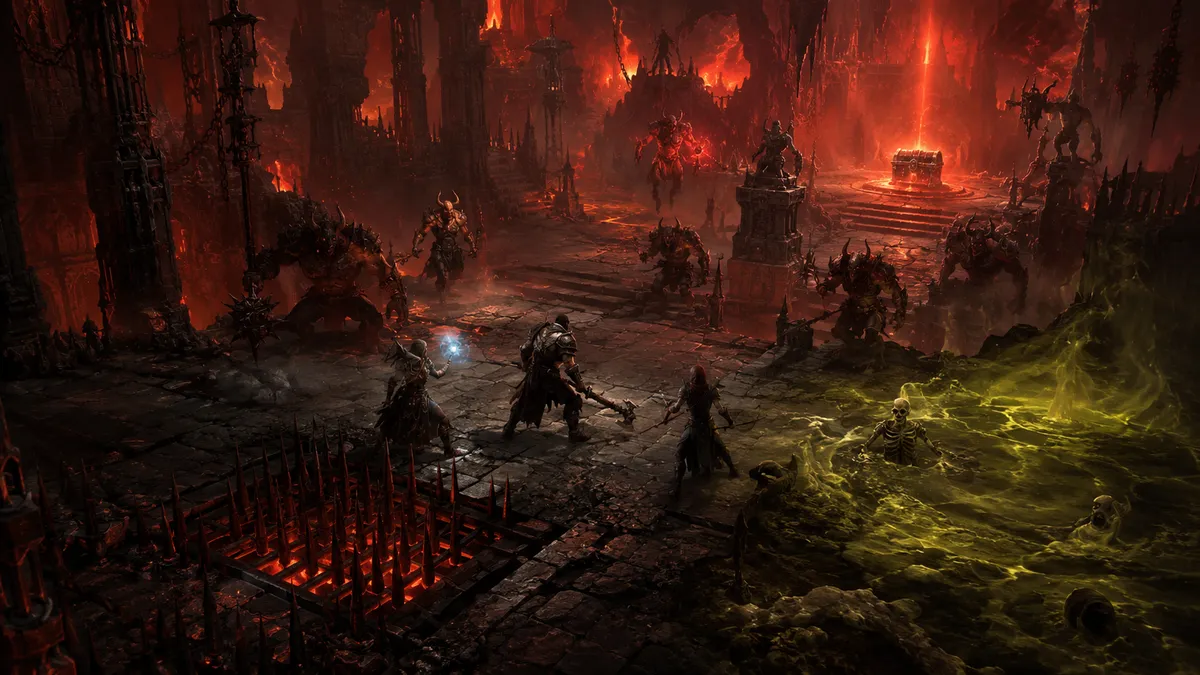
Mistake 1: Choosing a Class Only Because It Is Popular
One of the first mistakes players make is choosing a class only because it appears high on a tier list. Tier lists can be useful, but they do not know your playstyle, gear, experience level, or goals.
A class can be strong in endgame and still feel bad for a beginner. A build can rank high for The Pit but feel awkward while leveling. A class can be excellent for boss farming but slow for Helltides. A setup can be powerful with perfect gear but frustrating without the right Uniques.
Better Tip:
Choose a class based on how you want to play. Pick Paladin if you want holy power, shields, auras, and safety. Pick Necromancer if you want minions and controlled solo play. Pick Sorcerer if you want magic, barriers, and mobility. Pick Spiritborn if you want speed and active guardian gameplay. Pick Rogue if you like movement and precision. Pick Barbarian if you want direct melee power. Pick Druid if you enjoy shapeshifting and nature magic. Pick Warlock if you want dark magic, demons, and build variety.
A fun class you understand is usually better than a top-tier class you dislike.
Mistake 2: Copying an Endgame Build Too Early
Many players search for the strongest build and copy it immediately. The problem is that endgame builds often assume you already have specific Uniques, high-quality gear, Paragon support, Glyph upgrades, resource stats, Tempered affixes, and Masterworking progress.
When you copy an endgame build too early, it may feel weak because the build is incomplete. The guide may expect an item interaction you do not have. It may assume cooldown reduction you have not earned. It may rely on a Unique that changes the entire skill rotation. Without those pieces, the build may feel worse than a simple leveling build.
Better Tip:
Use a leveling build until your gear supports an endgame build. Leveling builds should work with normal drops, basic Aspects, and simple rotations. Endgame builds should be used when you have the items and systems that make them function.
The right progression is not “best build immediately.” The right progression is “easy build first, stronger build later.”
Mistake 3: Ignoring Defenses
Damage is exciting, but dead characters do no damage. One of the most common Diablo IV mistakes is stacking damage while ignoring armor, resistances, maximum life, barriers, damage reduction, block, dodge, Fortify-style effects, defensive cooldowns, and mobility.
This mistake usually appears when players enter higher difficulty. Everything feels fine until enemies start hitting harder. Then the player dies quickly and assumes the class is bad. In many cases, the real problem is poor defense.
Better Tip:
Before pushing harder content, check your defensive layers. Make sure your armor and resistances are reasonable for your difficulty. Add maximum life. Use defensive skills. Keep mobility on your bar. Choose Mercenary support if available. Do not remove every defensive option for one more damage skill.
A strong build balances damage and survival. A fragile build may clear easy content quickly, but it usually fails when the game starts testing you.
Mistake 4: Pushing Difficulty Too Early
Higher difficulty can give better rewards, but only if you clear efficiently. Many players push difficulty too early because they think harder always means better. This can slow progression badly.
If enemies take too long to defeat, your experience per hour drops. If bosses take forever, your farming becomes inefficient. If you die often, you lose time and may waste resources. A lower difficulty that you clear quickly can be more rewarding than a higher difficulty that turns every fight into a struggle.
Better Tip:
Farm the highest difficulty where you still clear quickly and safely. Move up after real power spikes, such as better weapons, stronger Aspects, improved defenses, Glyph upgrades, Masterworking, key Uniques, or better Paragon. Move down when enemies take too long or deaths become common.
Difficulty is a tool, not a badge of honor.
Mistake 5: Keeping Old Weapons Too Long
During leveling, weapon upgrades matter a lot. Some players keep an old weapon because it has a nice Legendary power or a familiar affix. This can make the entire character feel weak.
A weapon with lower damage can slow every fight. Even if the old weapon has a useful effect, the raw damage loss may be too large. This mistake is especially common while leveling because gear changes quickly.
Better Tip:
Replace weapons often while leveling. Do not become attached to a low-level weapon. If the old Legendary power is important, look for ways to keep the Aspect through the Codex or imprint system when it makes sense. Stronger weapon damage usually means faster leveling, faster farming, and smoother progression.
A good weapon upgrade can be more valuable than several small stat improvements.
Mistake 6: Judging Gear Only by Item Power
Item power matters, but it is not the only thing that matters. Many players equip an item only because the number is higher, even when the affixes are terrible for their build.
A higher item power item with useless stats can be worse than a slightly lower item with perfect affixes. A build that needs critical chance, resource support, or main skill ranks will not improve much from random stats that do not apply. Endgame gearing is about useful affixes, item quality, Aspects, Tempering, sockets, Masterworking, and build synergy.
Better Tip:
Ask what the item does for your build. Does it improve your main skill? Does it fix resource problems? Does it improve survival? Does it support your damage type? Does it have a Greater Affix that matters? Does it have a slot your build needs? Does it deserve Tempering or Masterworking?
Do not equip gear because the number is higher. Equip gear because it makes your build better.
Mistake 7: Wasting Materials on Temporary Gear
This is one of the most expensive mistakes in Diablo IV. Players often imprint, enchant, socket, Temper, and Masterwork gear that they replace shortly after. The item disappears, but the materials are gone.
Materials such as Obducite, Forgotten Souls, Veiled Crystals, Coiling Wards, Baleful Fragments, Abstruse Sigils, Scattered Prisms, Gem Fragments, and gold are too important to waste casually. Early upgrades are fine when they help you progress, but heavy investment should wait for gear with real value.
Better Tip:
Use light upgrades while leveling and early endgame. Save expensive upgrades for items with strong affixes, good build value, and long-term potential. Add sockets only to gear you expect to keep. Masterwork strong items first, perfect items later.
The best players do not only farm more materials. They waste fewer materials.
Mistake 8: Enchanting Bad Items Too Many Times
Enchanting can fix one bad affix on an otherwise good item. It should not be used to rescue a bad item with several weak stats. Many players spend huge amounts of gold and materials rerolling an item that was never worth saving.
The cost of repeated enchanting can rise quickly. This can drain gold, Veiled Crystals, Forgotten Souls, and other resources that would be better spent on stronger gear.
Better Tip:
Enchant items that are already close to good. Before rerolling, set a spending limit. If the item does not improve after a few attempts, stop. Wait for a better base. Enchanting should complete good items, not turn bad items into average items.
A bad item with one lucky reroll is still often a bad item.
Mistake 9: Ignoring Tempering and Masterworking
Tempering and Masterworking are important parts of modern Diablo IV gear progression. Ignoring them can leave a lot of power behind.
Tempering lets players add a selected affix from a Tempering recipe, making gear more focused. Masterworking improves item quality and affix values, making strong gear stronger. These systems are especially important in endgame because raw drops are only the beginning of gear progression.
Better Tip:
Learn which Tempering recipes matter for your build. Apply Tempering to gear that supports your main skill, damage type, defense, resource flow, or farming goal. Use Masterworking on strong items that will stay equipped. Do not ignore these systems once you enter serious endgame.
A good drop becomes a great item through smart upgrading.
Mistake 10: Not Using the Loot Filter
Diablo IV drops a lot of gear. Without a loot filter, players waste time reading items that will never help their build. This slows farming and makes inventory management frustrating.
The loot filter can hide, show, or color-code gear based on what you care about. It does not affect non-gear items such as reagents, gems, currency, or similar materials, but it can make gear sorting much faster.
Better Tip:
Set up a simple loot filter once your build has clear priorities. Highlight item types, affixes, Greater Affixes, or gear categories that matter. Do not make the filter too strict while learning, because you may hide useful upgrades. Tighten it later when you understand your build better.
A good loot filter does not make better items drop. It helps you find useful items faster.
Mistake 11: Selling Everything or Salvaging Everything
Gold and materials are both important. Selling everything makes you gold-rich but material-poor. Salvaging everything makes you material-rich but gold-poor. Both mistakes can slow progression.
You need gold for enchanting, repairs, upgrades, and crafting. You need materials for Tempering, Masterworking, imprinting, sockets, gems, and item improvement. The correct choice changes based on your current bottleneck.
Better Tip:
Sell items when gold is low and materials are healthy. Salvage items when Veiled Crystals, Forgotten Souls, Legendary salvage materials, or other upgrade resources are low. Keep switching based on need.
The best rule is simple: sell for gold, salvage for power.
Mistake 12: Ignoring Whispers
Tree of Whispers is one of the most reliable reward systems in Diablo IV. Some players ignore it because they see it as basic content, but Whispers give structure, caches, gold, gear, materials, Sigils, and progress that stacks with other activities.
The biggest value comes from overlap. A Helltide Whisper, dungeon Whisper, boss Whisper, or event Whisper lets you complete one activity while gaining another reward track.
Better Tip:
Keep Whispers active in the background. Prioritize fast objectives and stack them with Helltides, Nightmare Dungeons, bosses, or world events. Turn in Grim Favors regularly and choose caches based on what you need.
Whispers are not only beginner content. They are efficient because they stack with everything else.
Mistake 13: Farming Helltides Without a Plan
Helltides are excellent for gear, materials, Cinders, chests, Forgotten Souls, Blood Maiden farming, and Whisper overlap. The mistake is wandering randomly through low-density areas and missing the best rewards.
A good Helltide route focuses on enemy density, events, Blood Maiden activity, valuable chests, and objectives. A bad route wastes time moving through empty zones.
Better Tip:
Move from event to event. Join Blood Maiden fights when your build can handle them. Open Tortured Gifts based on what you need. Stack Helltide objectives with Whispers. Spend Cinders before taking unnecessary risks.
Helltides are strongest when you farm density, not empty roads.
Mistake 14: Dying With Valuable Helltide Progress
In Helltides, dying can cost time and reduce your farming efficiency. Players often push risky fights while carrying enough Cinders to open valuable chests. That can waste progress.
This mistake usually happens when players become greedy. They keep fighting instead of opening a chest, then die before converting their Cinders into rewards.
Better Tip:
When you have enough Cinders for a chest you need, open it before taking risky fights. If the area becomes dangerous, play safely until you spend your Cinders. Farming is about converting effort into rewards, not only killing enemies.
A chest opened now is better than Cinders lost later.
Mistake 15: Running Every Nightmare Sigil Blindly
Nightmare Dungeons can be great for gear, materials, Sigil loops, Obducite, and build testing, but not every Sigil is worth running. Some affixes are annoying for your build. Some dungeon layouts are slow. Some objectives cause too much backtracking.
Players waste time when they run every Sigil without checking whether the dungeon supports their goal.
Better Tip:
Choose Nightmare Sigils with fast layouts and manageable affixes. Salvage Sigils that slow your build too much. Stack Nightmare Dungeons with Whispers when possible. Use dungeons to test build strength, but do not force bad runs.
A good dungeon chain beats a random dungeon chain.
Mistake 16: Ignoring The Pit Until Too Late
The Pit is one of the best ways to test endgame strength. It reveals whether your build has enough area damage, boss damage, defense, mobility, and resource stability. Some players ignore it until they are stuck, then realize their Glyphs, Paragon, or build structure are behind.
Better Tip:
Use The Pit as a regular build test. Farm tiers you can clear consistently, then push higher when your build improves. If you fail a tier, identify the reason. Did you die? Did the boss take too long? Did elites slow you down? Did resource problems ruin uptime?
The Pit is not only a challenge. It is a diagnostic tool.
Mistake 17: Farming Bosses Without a Target
Boss farming is one of the best ways to chase specific Uniques and high-end drops, but many players spend materials randomly. They summon whichever boss is available without checking whether that boss drops anything useful for their build.
This wastes keys, time, and effort.
Better Tip:
Know your target before boss farming. Choose the Lair Boss or endgame boss that can drop the item your build needs. Prepare keys and materials before starting. Farm at the highest difficulty where kills are fast and safe.
Boss farming is not “kill everything randomly.” It is target farming.
Mistake 18: Fighting Bosses With a Pure Farming Build
A build that destroys Helltide packs may struggle against bosses. Group-clearing power is different from single-target damage. Many players enter boss fights with a speed farming setup and wonder why the boss takes too long.
Better Tip:
Adjust your build for bosses. Add single-target damage, resource stability, survivability, defensive cooldowns, and boss-friendly skill choices. Use a Mercenary setup that helps survival or resource flow when playing solo. Do not judge your entire class by how a farming build performs against a boss.
Different activities reward different build choices.
Mistake 19: Ignoring Resource Problems
Resource problems make any build feel weak. A Sorcerer without Mana, a Barbarian without Fury, a Necromancer without Essence, a Rogue without Energy, a Spiritborn without Vigor, a Paladin without Faith, a Druid without Spirit, or a Warlock without stable resource flow will feel clunky.
Many players respond by adding more damage, but the real issue is that they cannot use their main skills often enough.
Better Tip:
Fix resource generation, cost reduction, cooldown interaction, Basic skill support, gear affixes, passives, Paragon, Runewords, or Mercenary support. Test resource flow against bosses, not only packs. Boss fights expose resource weaknesses because there are fewer enemies and longer damage windows.
A build is only strong if it can keep attacking.
Mistake 20: Ignoring Mobility
Diablo IV rewards movement. Helltides, Whispers, Nightmare Dungeons, War Plans, The Pit, Infernal Hordes, and boss fights all become smoother when your character moves well.
Some players build strong damage but feel slow everywhere. They spend too much time walking, repositioning, backtracking, or chasing enemies.
Better Tip:
Use movement speed on boots and gear when possible. Keep a mobility skill when your class supports it. Use Evade intelligently. Do not remove every movement tool for minor damage gains. Farming speed is not only damage per hit. It is also how quickly you move between useful fights.
A slow build can be strong, but it usually farms worse than it should.
Mistake 21: Ignoring Mercenaries as a Solo Player
Mercenaries are extremely useful for players with access to Vessel of Hatred or expansion bundles that include it. A hired Mercenary can help solo players with defense, damage, resource support, enemy marking, crowd control, and utility. A Reinforcement Mercenary can also appear during a chosen trigger.
Many solo players unlock Mercenaries and then forget to optimize them.
Better Tip:
Use Raheir when survival is the problem. Use Subo when you want farming utility and resource support. Use Varyana when you want melee pressure and speed. Use Aldkin when you already survive well and want extra offensive pressure. Level Rapport and use Bartering through Pale Marks for additional value.
Mercenaries do not replace a build, but they can make a good build much smoother.
Mistake 22: Ignoring Seasonal Objectives Until the End
Seasonal systems often reward players for completing structured objectives. Waiting until the end of a season can create unnecessary pressure. You may realize too late that you missed easy objectives, seasonal rewards, Blessings, Reliquary items, or rank progress.
Better Tip:
Check seasonal objectives early. Let them guide your leveling and endgame route. Complete easy objectives while you naturally progress. Spend seasonal reward currencies and claim seasonal rewards before expiration. Use seasonal Blessings when available because they can improve your farming efficiency.
Seasonal progress is easiest when it happens naturally from the beginning.
Mistake 23: Ignoring Season Blessings and Reward Systems
Season Blessings, Smoldering Ashes, Reliquaries, Favor, Season Rank, and seasonal reward systems can support progression. Players who ignore them may miss free efficiency, cosmetics, materials, or power-related benefits.
Better Tip:
Open the seasonal menu regularly. Spend seasonal points or Blessing currencies as soon as they become useful. Choose Blessings based on your current goal, such as leveling, materials, Glyph progress, Whispers, or Masterworking. Claim rewards before the season ends.
Do not leave seasonal value sitting unused.
Mistake 24: Playing Eternal When You Actually Want Seasonal Rewards
Eternal Realm is good for long-term characters, but Seasonal Realm is where limited-time seasonal rewards and progression systems usually live. Some players create a character in the wrong realm and later realize they cannot access the seasonal content they wanted.
Better Tip:
Choose Seasonal Realm when you want fresh progression, seasonal objectives, seasonal rewards, Reliquaries, Season Rank, and current seasonal systems. Choose Eternal Realm when you want to continue long-term characters without seasonal resets.
The right realm depends on your goal.
Mistake 25: Ignoring Campaign Skip After Unlocking It
New players should complete the campaign once because it teaches the world, story, bosses, and basic systems. Returning players who already completed the campaign often waste time repeating it when their goal is fast seasonal progression.
Better Tip:
Complete the campaign once if you are new. After campaign skip is available, use it when you want faster leveling, seasonal progress, and endgame access. Repeat the campaign only when you actually want the story experience.
Campaign is great the first time. Skip is great when speed matters.
Mistake 26: Not Planning Paragon
Paragon is a major source of endgame power. Some players place points randomly, then wonder why their build feels weak. Paragon should support your main damage type, defenses, resource flow, Glyphs, and activity goal.
Better Tip:
Do not path randomly. Choose boards, nodes, and Glyphs that support your actual build. If you change builds, update Paragon. If your damage type changes, your old Paragon may no longer fit. If you are dying, add defensive value. If bosses are slow, add single-target support.
Paragon is not decoration. It is part of the build.
Mistake 27: Forgetting Glyph Progression
Glyphs can be a major power source. Ignoring Glyphs can make your build weaker than it should be, especially in endgame. Players sometimes upgrade gear but forget that their Paragon Glyphs are still underdeveloped.
Better Tip:
Use The Pit and current Glyph progression systems to improve the Glyphs your build actually uses. Focus on the most important Glyphs first. Do not upgrade random Glyphs for builds you are not playing.
A few upgraded Glyphs can make a build feel much stronger.
Mistake 28: Hoarding Too Many Items
Inventory and stash clutter can become a real problem. Players often keep every Unique, every Legendary, every possible build item, and every “maybe later” piece until they cannot find anything.
Hoarding slows progress because you spend more time sorting than playing.
Better Tip:
Keep items with real purpose. Save strong Greater Affix items, useful Uniques, key build pieces, high-value Aspects, and gear for builds you truly plan to play. Sell or salvage weak duplicates. Use the loot filter to reduce clutter before it reaches your stash.
A clean stash saves time every session.
Mistake 29: Forgetting Elixirs and Consumables
Consumables can improve experience, survivability, damage, resistances, resource flow, or activity efficiency. Many players ignore them completely, especially while leveling or pushing harder content.
Better Tip:
Use elixirs while leveling and farming. Use defensive or resistance consumables when entering difficult content. Use incense or group-friendly buffs when appropriate. Consumables are not only for elite players. They are simple tools that make progression smoother.
Free power sitting in your inventory is still wasted power.
Mistake 30: Using the Same Build for Every Activity
A single general build can handle much of the game, but specialized activities sometimes need adjustments. Helltides reward speed and area damage. Bosses reward single-target damage and survival. The Pit tests clear speed and boss pressure. Infernal Hordes reward wave clear and durability. Dark Citadel rewards coordination. War Plans reward flexibility.
Better Tip:
Keep a general farming setup, but adjust when necessary. Add boss damage for bosses. Add defense for high difficulty. Add mobility for farming. Add area damage for Helltides and Infernal Hordes. Do not rebuild everything constantly, but do not refuse small adjustments when content changes.
Smart adjustments beat stubborn builds.
Mistake 31: Farming Random Activities Without a Goal
Diablo IV has many activities. Helltides, Whispers, Nightmare Dungeons, The Pit, Infernal Hordes, Lair Bosses, Undercity, War Plans, World Bosses, Legion Events, seasonal objectives, and Mercenary systems all compete for time. Random farming can feel productive, but it often leaves you without the resource you actually need.
Better Tip:
Start every session with one goal. Need Obducite? Run Nightmare Dungeons, Infernal Hordes, Undercity, or War Plans that support Masterworking materials. Need Forgotten Souls? Farm Helltides and salvage Legendary items. Need a Unique? Farm the correct boss. Need gold? Stack Whispers and sell gear. Need Glyph progress? Run The Pit.
A focused hour is better than three random hours.
Mistake 32: Ignoring War Plans
War Plans help players chain activities together and reduce downtime. Players who ignore them may spend too much time deciding what to do next or traveling between disconnected activities.
War Plans are especially useful because they can include activities like Nightmare Dungeons, Helltides, Undercity, Lair Bosses, Infernal Hordes, and The Pit. They can also overlap with Whispers, making routes more rewarding.
Better Tip:
Use War Plans when you want structure. Choose activities based on your goal: materials, bosses, gear, Glyphs, gold, or seasonal progress. Adjust the plan as your build improves.
War Plans are not just convenience. They help turn farming into a route.
Mistake 33: Treating World Bosses as Your Main Farm
World Bosses are useful, quick, and worth doing when available, but they should not be your only progression plan. They are timed events, so waiting around for them can waste time if you ignore better repeatable activities.
Better Tip:
Do World Bosses when they are active and convenient, especially for rewards like gear and socket-related value. Between World Bosses, run Helltides, Whispers, Nightmare Dungeons, Infernal Hordes, The Pit, bosses, or War Plans.
World Bosses are good stops. They are not a complete farming route.
Mistake 34: Entering Infernal Hordes Without Enough Survival
Infernal Hordes can be rewarding, but the activity pressures players with waves of enemies and limited revives. Some players enter with too little defense and lose access to final rewards because they cannot survive long enough.
Better Tip:
Bring area damage, defensive cooldowns, mobility, and enough boss damage for the final encounter. Choose Infernal Offers carefully. Do not select danger increases your build cannot handle. Spend Burning Aether based on what you need most: materials, gold, gear, or other rewards.
Infernal Hordes reward strong builds, not reckless ones.
Mistake 35: Not Preparing for Boss Runs
Boss farming should be efficient. Many players start boss runs with full inventory, no clear target, missing materials, weak defenses, or the wrong build. This turns a simple farm into a slow mess.
Better Tip:
Before boss farming, clear inventory, check boss keys or materials, choose the target boss, choose a realistic difficulty, bring single-target damage, and use a defensive setup if learning. In groups, agree on rotation and material use before starting.
Boss runs should start with preparation, not confusion.
Mistake 36: Ignoring Co-Op and Party Finder When It Would Help
Solo play is fully viable, but some activities are easier, faster, or more fun with friends. Players sometimes refuse to group even when a group would save time for bosses, Dark Citadel, Nightmare Dungeons, Helltides, or seasonal catch-up.
Better Tip:
Use co-op when it helps your goal. Party Finder can help find groups for specific activities. Friends can make repeated farming less boring. Boss groups can improve efficiency. Dark Citadel requires cooperation. Solo pride should not block useful progress.
Playing solo is a choice. Getting help is also a valid strategy.
Mistake 37: Not Reading Patch and Season Changes
Diablo IV changes over time. Builds, rewards, crafting systems, materials, classes, seasonal mechanics, and endgame routes can shift from one season to the next. A player returning after months away may use outdated advice and struggle.
Better Tip:
When starting a new season or returning after a break, check current systems. Look at class changes, itemization changes, seasonal mechanics, reward changes, and activity updates. Do not assume old build guides are still correct.
A good returning player relearns before investing heavily.
Mistake 38: Forgetting That Faster Clears Beat Harder Clears
Many players judge progress by the highest difficulty they can technically survive. That is not always efficient. Farming is about rewards over time.
A build that clears a lower difficulty in three minutes may earn more than a build that clears a higher difficulty in twelve minutes. This applies to dungeons, Helltides, Infernal Hordes, boss farming, War Plans, and material routes.
Better Tip:
Track how fast you actually clear. Choose the difficulty that gives the best balance of rewards, safety, and speed. Push harder content for progress, but farm efficient content for resources.
Progression pushing and farming are not the same thing.
Mistake 39: Not Fixing the Real Problem
Players often blame the wrong thing. They say the class is bad when the gear is bad. They say the build is bad when the resource flow is bad. They say the boss is unfair when their resistances are low. They say farming is slow when their difficulty is too high. They say they need a Mythic Unique when they actually need a correct Aspect.
Better Tip:
When stuck, diagnose the real issue. Ask: Do I die too fast? Do enemies take too long? Do bosses take too long? Do I run out of resource? Is my weapon outdated? Are my resistances low? Is my Paragon wrong? Am I missing a build-defining Aspect? Am I farming the wrong activity?
Fixing the correct problem saves hours.
Mistake 40: Trying to Do Everything at Once
Diablo IV has many systems, and new or returning players can feel overwhelmed. Trying to master every system at once usually leads to confusion.
Better Tip:
Focus on one stage at a time. During leveling, focus on skills, gear upgrades, and simple activities. In early endgame, focus on Aspects, defenses, Helltides, Whispers, and Nightmare Dungeons. In deeper endgame, focus on boss targets, Masterworking, Paragon, Glyphs, War Plans, and activity specialization.
You do not need to master all of Diablo IV in one session. You need to make the next correct upgrade.
Best Beginner Tips to Avoid Mistakes
Beginners should keep Diablo IV simple. Most early mistakes come from overcomplicating the game too soon.
Choose a Comfortable Class:
Do not start with a class only because someone says it is the highest tier. Choose something you enjoy.
Use a Leveling Build:
Leveling builds are designed to work without rare items. Use them before switching to endgame setups.
Replace Gear Often:
Especially weapons. Do not keep old items too long.
Do Not Spend Heavily Early:
Avoid expensive enchanting, socketing, and upgrading on gear you will replace.
Follow Whispers and Helltides:
These activities give clear goals and strong rewards.
Learn One System at a Time:
Skills first, then gear, then Aspects, then Paragon, then crafting, then endgame optimization.
Best Returning Player Tips to Avoid Mistakes
Returning players should treat modern Diablo IV as a changed game, not the exact same game they left.
Check Current Systems:
Tempering, Masterworking, difficulty, loot filters, War Plans, seasonal systems, and endgame rewards have changed over time.
Do Not Trust Old Builds Blindly:
Old builds may still inspire you, but the details may no longer be correct.
Use the Loot Filter:
This is one of the biggest quality-of-life tools for modern farming.
Review Your Gear:
Old gear may not match current itemization standards. New drops may be better because of updated systems.
Start With a Stable Build:
Before chasing high-end builds, make sure your character has damage, defense, resource flow, and mobility.
Best Endgame Tips to Avoid Mistakes
Endgame players should stop farming randomly and start farming with specific goals.
Choose a Target:
Gold, Obducite, Forgotten Souls, Glyphs, Uniques, Mythic chances, gear bases, seasonal rewards, or boss materials.
Use the Correct Activity:
Helltides for broad loot and materials, Nightmare Dungeons for Obducite and gear, The Pit for testing and Glyph progress, Infernal Hordes for reward conversion, bosses for target drops, and War Plans for chaining.
Upgrade Only Strong Items:
Do not Masterwork weak gear just because you have materials.
Specialize When Needed:
Use different setups for bossing, speed farming, or pushing.
Stop Chasing Perfect Too Early:
Get strong first. Perfect later.
How BoostRoom Helps Players Avoid Wasted Time
Diablo IV mistakes often cost time. A weak build farms slowly. Wrong activities give the wrong materials. Bad boss preparation wastes keys. Poor gear slows progression. Late seasonal starts create pressure. BoostRoom helps players reduce wasted time by supporting the activities that matter most.
Leveling Support:
BoostRoom can help players reach stronger stages faster, especially when starting a new class or joining a season late.
Gear Farming Support:
Many mistakes come from weak gear or missing Aspects. BoostRoom can help players farm upgrades more efficiently.
Boss Farming Support:
Bosses are best when farmed with a target. BoostRoom can help with boss runs, preparation, and repeated farming.
Material Farming Support:
Helltides, Nightmare Dungeons, Infernal Hordes, and War Plans can be used to farm upgrade materials more efficiently.
Seasonal Catch-Up:
BoostRoom can help players catch up with seasonal objectives, gearing, leveling, and endgame progression.
Endgame Support:
The Pit, Nightmare Dungeons, War Plans, Helltides, and high difficulty content all become smoother when character progression is stronger.
Casual Player Time-Saving:
Players with limited time can avoid slow trial-and-error farming and focus on visible progress.
Practical Rules Every Diablo IV Player Should Follow
Rule 1: Choose Enjoyment First:
A class you enjoy is easier to progress than a class you hate.
Rule 2: Use Leveling Builds Before Endgame Builds:
Do not force a gear-dependent build too early.
Rule 3: Balance Damage and Defense:
A strong character must survive and deal damage.
Rule 4: Farm Efficient Difficulty:
Use the highest difficulty you clear quickly and safely.
Rule 5: Upgrade Only Worthy Gear:
Save expensive materials for items with real value.
Rule 6: Use the Loot Filter:
Less item clutter means faster farming.
Rule 7: Stack Activities:
Combine Whispers, Helltides, War Plans, dungeons, bosses, and seasonal goals.
Rule 8: Target Farm Bosses:
Do not spend materials randomly.
Rule 9: Fix the Real Weakness:
Damage, defense, resource, mobility, gear, or Paragon may be the true problem.
Rule 10: Use BoostRoom When Time Matters:
BoostRoom can help with leveling, gearing, bosses, materials, seasonal catch-up, and endgame progression.
Diablo IV Mistake Checklist
Use this checklist when your progress feels slow.
Class:
Are you playing a class you actually enjoy?
Build:
Are you using a build that works with your current gear?
Damage:
Do you have enough area damage and boss damage?
Defense:
Are your armor, resistances, life, and defensive skills strong enough?
Resource:
Can your build use its main skill consistently?
Mobility:
Can you move quickly through farming routes?
Gear:
Are your affixes useful, or are you equipping items only because item power is higher?
Materials:
Are you saving expensive upgrades for good items?
Loot Filter:
Are you using the loot filter to reduce item sorting?
Activities:
Are you farming the activity that gives the reward you need?
Difficulty:
Are you clearing fast enough for the difficulty to be worth it?
Season:
Are you completing seasonal objectives before the end?
BoostRoom:
Would support with leveling, gear, bosses, or endgame save time?
Final Advice: The Smartest Way to Improve in Diablo IV
The biggest Diablo IV mistake is not choosing the wrong class or missing one perfect item. The biggest mistake is playing without priorities. Diablo IV has too many systems to progress efficiently by doing everything randomly. The smartest players always know what they are trying to improve next.
While leveling, focus on a simple build, weapon upgrades, basic defenses, mobility, and easy rewards. In early endgame, focus on Aspects, Helltides, Whispers, Nightmare Dungeons, materials, and a stable gear base. In deeper endgame, focus on Paragon, Glyphs, Masterworking, boss targets, loot filtering, War Plans, and activity-specific build adjustments. In seasonal play, follow objectives early and claim rewards before they expire.
Do not push difficulty just because it sounds better. Do not copy an endgame build without the gear. Do not spend materials on temporary items. Do not ignore defenses. Do not farm random bosses. Do not ignore the loot filter. Do not hoard every item. Do not leave seasonal rewards untouched. Do not assume old information is still correct.
Every mistake has a simple fix: choose a clear goal, choose the right activity, use the right build for your gear, upgrade carefully, and progress step by step. Diablo IV becomes much easier when you stop fighting the systems and start using them together.
If progression feels slow, BoostRoom can help with leveling, gear farming, boss runs, Helltides, Nightmare Dungeons, The Pit, War Plans, seasonal catch-up, and endgame preparation, helping players spend less time stuck and more time enjoying the strongest parts of Diablo IV.
FAQ
What is the biggest mistake new Diablo IV players make?
The biggest mistake is usually copying an endgame build too early or pushing difficulty before the character has enough damage, defense, and resource support.
Should I follow a tier list when choosing a class?
Tier lists can help, but they should not be the only reason you choose a class. Pick a class that matches your playstyle and experience level.
Is it bad to use an endgame build while leveling?
It can be. Many endgame builds require specific gear, Uniques, Paragon, or resource support. Leveling builds are usually better until your character has the required pieces.
Should I sell or salvage gear in Diablo IV?
Sell gear when gold is your bottleneck. Salvage gear when materials are your bottleneck. The best choice changes depending on what you need.
When should I start Masterworking gear?
Start Masterworking when an item is strong enough to keep and supports your build. Avoid heavy Masterworking on temporary or weak items.
Is the loot filter worth using?
Yes. The loot filter saves time by helping you hide, show, or highlight gear based on what matters to your build.
Are Helltides worth farming?
Yes. Helltides are excellent for gear, materials, Forgotten Souls, Cinders, Tortured Gifts, Blood Maiden activity, and Whisper overlap.
Are Nightmare Dungeons still useful?
Yes. Nightmare Dungeons are useful for gear, materials, Obducite, Sigils, and build testing.
Why does my build feel weak against bosses?
Your build may have too much area damage and not enough single-target damage. It may also have resource problems, weak defenses, or poor boss uptime.
How do I know if my difficulty is too high?
Your difficulty is too high if enemies take too long, bosses feel slow, or you die often. Farm the highest difficulty you can clear quickly and safely.
Should I use Mercenaries?
Yes, especially as a solo player with expansion access. Mercenaries can add defense, utility, resource support, damage, or Reinforcement effects.
What should I do when I feel stuck?
Check your damage, defense, resource flow, mobility, gear, Paragon, Glyphs, activity choice, and difficulty. The problem is usually one of those areas.
Can BoostRoom help avoid progression mistakes?
Yes. BoostRoom can help with leveling, gear farming, boss runs, materials, Helltides, Nightmare Dungeons, The Pit, War Plans, seasonal catch-up, and endgame support.



