How Co-op Works in SONIC PICO PARK
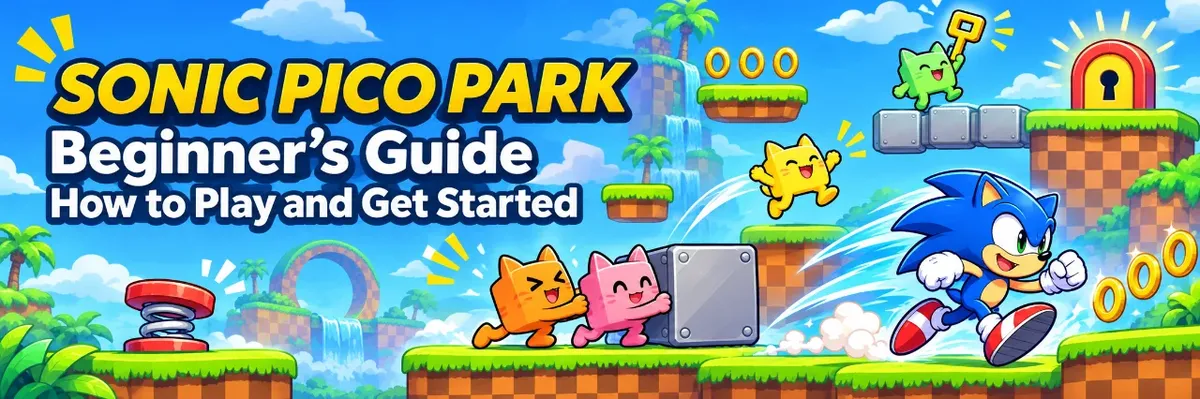
SONIC PICO PARK is built around cooperative puzzle-solving.
The basic objective is straightforward: every player must reach the Goal Plate at the end of the stage.
However, completing this objective requires the entire group to cooperate.
Some stages involve simultaneous movements, while others require teammates to occupy specific positions, activate mechanisms, or assist each other in crossing obstacles.
The difficulty comes from coordinating these actions successfully.
Every Player Must Reach the Goal
The most important rule is that the entire team must complete the stage together.
Reaching the goal first does not mean you have won.
If another teammate remains trapped behind an obstacle, your group still needs to help them.
This changes the way players should approach each level.
Instead of asking how quickly they can reach the finish, successful teams consider how every participant can reach it safely.
Sometimes that means waiting for another player.
In other situations, it requires returning to help someone or remaining near an important mechanism until everyone has passed.
Why Communication Matters More Than Speed
SONIC PICO PARK includes Sonic's iconic Spin Dash and other movement-based mechanics, but speed alone rarely solves an entire cooperative challenge.
Moving too early can ruin a synchronized jump.
Activating a switch at the wrong moment may leave another player stranded.
Even collecting a ring without considering who needs it can create problems in certain stages.
The best teams combine movement skills with effective communication.
Before attempting a challenging puzzle, discuss the objective and make sure everyone understands the plan.
A few seconds spent organizing the group can prevent numerous failed attempts.

Best SONIC PICO PARK Teamwork Strategies
Understanding the game's cooperative mechanics is only the beginning.
To progress consistently, your group needs a reliable approach to solving puzzles.
The following strategies work particularly well in World Mode.
1. Analyze the Level Before Moving
One of the most common mistakes is rushing forward immediately after entering a new stage.
Instead, examine the environment.
Look for switches, moving platforms, gaps, spikes, rings, springs, and other interactive objects.
Identify the Goal Plate and consider what prevents the team from reaching it.
If a wall blocks the route, determine whether it can be broken.
If a platform seems inaccessible, look for mechanisms that might move it.
Once your group understands the problem, creating a solution becomes considerably easier.
Best strategy: Spend a moment understanding the puzzle before anyone starts activating objects.
2. Assign Clear Roles to Teammates
Complicated puzzles frequently become easier when each participant has a specific responsibility.
One player might operate a switch, while another crosses a dangerous section.
Someone else may need to remain on a platform or use a character ability.
Assigning roles prevents everyone from attempting the same action while ignoring another essential task.
For example, imagine a puzzle involving a button-controlled platform.
Instead of having every player rush toward the platform, assign one teammate to activate the button.
The others can then cross while the mechanism remains active.
Afterward, the group can determine how the player controlling the button will reach the goal.
The exact solution depends on the stage, but the principle remains useful throughout the game.
3. Use a Countdown for Synchronized Actions
Some puzzles require players to jump, move, or release a Spin Dash at approximately the same moment.
Without coordination, these challenges can become frustrating.
A simple countdown solves many timing problems.
Before attempting the action, make sure every player is in position.
Then have one person count down.
For example:
"Ready? Three, two, one, jump!"
This method helps synchronize movements and reduces unnecessary mistakes.
Use the same countdown system throughout your session so everyone understands the timing.
4. Let One Player Explain the Strategy
Large groups can become chaotic when several players give instructions simultaneously.
One teammate may say to jump while another insists everyone should wait.
To avoid confusion, designate a temporary coordinator during complicated challenges.
This player's responsibility is to explain the plan and provide clear instructions.
The coordinator does not need to be the most experienced player.
They simply need to understand the group's intended solution and communicate effectively.
Once the challenge is completed, another teammate can take over if necessary.
5. Help Struggling Players Instead of Rushing Ahead
SONIC PICO PARK rewards shared progress.
If one person repeatedly struggles with a difficult jump, the solution is not necessarily to move ahead and wait at the finish.
Instead, determine why the jump is difficult.
Perhaps the player needs assistance from a flying character.
Maybe another teammate must remain in position to create a safe route.
Sometimes a simple explanation of the timing is enough.
Helping one player improve benefits the entire group.
Best Character Combinations for Co-op Gameplay
SONIC PICO PARK features characters from the Sonic universe alongside the recognizable PICO PARK mascots.
Every playable character can perform the Spin Dash, but certain characters also possess additional abilities.
These differences create opportunities for cooperative strategies.
Tails – Flight and Teammate Assistance
Tails is one of the most useful characters for cooperative platforming.
His flight ability allows him to reach positions that may be difficult for characters without vertical movement options.
He can also carry another player while flying, making him valuable when teammates need help crossing gaps or reaching elevated locations.
However, carrying additional characters has limitations.
Teams should avoid assuming that Tails can transport every participant through every obstacle.
Best teamwork strategy: Use Tails to assist teammates when flight offers a practical solution, while keeping the rest of the group's route in mind.
Knuckles – Gliding and Block Interaction
Knuckles brings different movement options.
His gliding ability can help with horizontal positioning, while his capacity to push certain blocks makes him useful in environmental puzzles.
When a level includes an object that requires a specific interaction, Knuckles may be able to contribute.
Coordinate his movement with teammates so that moving a block does not accidentally interfere with another part of the solution.
Best teamwork strategy: Give Knuckles responsibility for appropriate block interactions and use his movement abilities where they help the group.
Cream, Charmy, and Rouge – Additional Flight Options
Tails is not the only character capable of flying.
Cream, Charmy, and Rouge also possess flight abilities.
These characters can provide flexibility in stages involving vertical movement or teammate assistance.
Having more than one flying character may be useful in larger groups.
For example, instead of relying on a single player to help several teammates reach an elevated area, multiple flying characters can provide assistance.
However, not every stage requires flight, and team composition should reflect the current puzzle.
Sonic, Shadow, and Other Characters
Characters without flight can still contribute to successful puzzle-solving.
Every playable character has access to the shared Spin Dash mechanic, allowing the entire group to participate in momentum-based challenges.
The most important factor is understanding which actions the stage requires.
Rather than assuming that one character is always superior, consider the abilities your team needs for the current objective.
Can You Change Characters During a Level?
Yes, certain stages provide a way to switch to a required character.
When a puzzle needs an ability that your current group does not possess, a character-change door can appear.
This means players do not necessarily need to restart their session simply because they selected a different character earlier.
Recommended approach: Choose characters you enjoy, but remain flexible when the game introduces ability-specific challenges.
How to Coordinate the Spin Dash in Co-op Puzzles
The Spin Dash is one of the defining gameplay mechanics in SONIC PICO PARK.
Every playable character can use it, making it an essential skill for all teammates.
However, the ability works best when its timing and purpose are understood.
Understand Momentum Before Using It
The Spin Dash provides rapid acceleration.
It can be used to build speed, cross certain sections, and interact with obstacles.
Before attempting a complicated puzzle, practice how your character accelerates.
Pay attention to the distance traveled and the effect of releasing the move at different times.
Knowing how the Spin Dash behaves will make coordinated movement easier.
Use Spin Dash to Break Cracked Walls
Some stages contain walls that can be broken using sufficient momentum.
These obstacles are natural opportunities to use the Spin Dash.
If the wall requires cooperation, ensure that everyone understands where to stand and when to release their movement.
Avoid repeatedly dashing at an obstacle without examining why the attempt fails.
The issue may involve insufficient momentum, incorrect positioning, or a missing cooperative action.
Synchronize Multiple Spin Dashes
When several players need to accelerate together, preparation is important.
Have everyone move into the correct position before starting.
Agree on the direction of movement and use a countdown.
This is particularly useful when a puzzle requires multiple characters to interact with the same obstacle.
If one player consistently reaches the target too early, consider adjusting their starting position or timing.
Small changes can improve coordination significantly.
Do Not Spin Dash Through Teammates Without Planning
Unnecessary acceleration can cause problems.
A player moving at high speed may overshoot an intended position or disrupt a sequence that requires careful movement.
Before using the Spin Dash, consider whether the stage requires speed or precision.
Sometimes walking into position is the better option.
Ring Management – How to Protect Your Team
Rings are an important part of Sonic's identity, and SONIC PICO PARK incorporates them into cooperative puzzles.
In certain stages, rings provide protection against hazards.
This means collecting every ring as quickly as possible is not always the best strategy.
Give Rings to Players Who Need Protection
Imagine a puzzle where one teammate must remain near a dangerous mechanism while others cross an obstacle.
If that player is likely to take damage, it may be useful for them to carry a ring.
A team that distributes rings according to the challenge can improve its chances of success.
Before collecting limited rings, consider which teammate needs protection most.
Understand Ring-Based Puzzle Mechanics
Some puzzles use rings in ways that are more complicated than ordinary collection.
For example, a challenge may require the group to preserve access to a ring while crossing a dangerous section.
Others can involve damage protection and careful timing.
Do not automatically assume that collecting more rings is the primary objective.
Examine how the stage uses them and adjust the strategy accordingly.
Coordinate Hazard Crossings
If multiple players must pass a dangerous obstacle, discuss the order of movement.
Determine whether everyone needs protection or whether the stage requires a particular sequence.
Avoid sending multiple players into danger before understanding the mechanics.
Best strategy: Treat rings as a team resource whenever the puzzle depends on survival.
How to Solve Switch and Platform Puzzles
Switches and platforms are common elements in SONIC PICO PARK.
These challenges often require teamwork because activating one object affects another part of the environment.
Use a Dedicated Switch Operator
When a switch controls a platform, assign someone to operate it.
Other players should wait until the platform is correctly positioned.
Once the route becomes accessible, the designated players can move forward.
Do not abandon the switch until the group understands what happens when it is released.
Coordinate Moving Platforms
Some platforms respond to the number or movements of players standing on them.
In one type of challenge, the platform rises while the group stands together but lowers when players jump.
This makes simultaneous movement important.
Before jumping, make sure everyone understands the intended destination.
Agree on the timing, then execute the movement together.
If the attempt fails, identify whether the problem involved positioning, timing, or an incorrect understanding of the mechanism.
Maintain Safe Distance When Necessary
Not every puzzle rewards players for standing close together.
Certain challenges require characters to remain separated because their proximity affects the environment.
For example, standing too close can cause a platform to fall in some stages.
When this happens, the team should establish appropriate spacing.
Instead of moving as one crowded group, assign positions and maintain them until the obstacle has been crossed.
Use Players as Part of the Solution
Some PICO PARK-style puzzles involve characters helping others reach otherwise inaccessible areas.
Players may need to stand in specific locations to provide support or create a usable route.
In certain situations, another player's position can act as a barrier that helps someone build momentum toward a higher platform.
Think of each character as part of the puzzle, not simply as an individual trying to reach the goal.
Best Strategies for Two-Player Co-op
Playing SONIC PICO PARK with two people creates a different experience from organizing a larger group.
Communication is usually simpler because only two participants need to agree on a strategy.
However, each player may need to handle multiple responsibilities.
Divide the Work Equally
When a puzzle requires two different actions, assign one responsibility to each player.
For example, one player may activate a switch while the other prepares to cross.
Once the first part is complete, reassess the situation.
Do not assume the same person must handle every difficult task.
Switching responsibilities can reveal a better solution.
Use Character Abilities Strategically
For two-player sessions, a flying character can provide useful flexibility.
A combination such as Tails and Knuckles offers flight, gliding, and certain environmental interactions.
However, the game is designed to accommodate different character choices.
If a stage requires a particular character, use the available character-switching mechanic when provided.
Communicate Every Important Action
With only two people, short instructions are usually sufficient.
Announce when you are preparing to jump, activate a switch, or use the Spin Dash.
If your teammate is still moving into position, wait.
Two-player co-op often becomes much easier when both participants consistently explain their intentions.
Best Strategies for Four-Player Co-op
A four-player group offers a balance between flexibility and manageable communication.
The team can divide responsibilities while still keeping track of individual actions.
Use Two Pairs When the Puzzle Allows It
Some challenges can be approached by dividing the group into two smaller teams.
One pair might handle a mechanism while the other prepares to cross an obstacle.
This makes complicated sequences easier to organize.
However, not every puzzle benefits from dividing the group.
If everyone needs to act simultaneously, keep the team together and coordinate as one unit.
Balance Character Abilities
Consider selecting characters with different movement options.
Having at least one flying character can be useful in stages involving vertical movement.
Other players can focus on standard movement, Spin Dash timing, or the specific requirements of the puzzle.
Avoid treating a particular combination as mandatory.
The best setup is the one that fits your group's preferences and the mechanics of the current stage.
Establish One Clear Countdown
With four people, synchronized movement becomes more complicated.
Assign one person to provide countdowns.
Everyone else should wait for the agreed signal.
This reduces situations where players react to different instructions.
Best Strategies for Eight-Player Co-op
Eight-player multiplayer offers some of the most entertaining moments in SONIC PICO PARK.
However, larger teams create additional coordination challenges.
Even a simple puzzle can become difficult when eight players attempt to move simultaneously.
Establish a Team Leader for Difficult Sections
Choose someone to explain the plan when communication becomes chaotic.
This person should describe the objective, assign responsibilities, and provide timing instructions.
Other teammates should avoid issuing conflicting commands during execution.
A single coordinated attempt is often more effective than eight different strategies.
Assign Players to Smaller Groups
When possible, divide responsibilities among smaller groups.
For example, a few players might prepare one mechanism while others move into position elsewhere.
This can reduce crowding around interactive objects.
Make sure each smaller group understands how its task contributes to the overall solution.
Keep the Screen Organized
With eight characters moving simultaneously, it can become difficult to follow individual positions.
Avoid unnecessary jumping or running while the group is discussing a strategy.
Players who are not actively performing a task should remain in a safe location.
This makes it easier to identify important movements.
Use Clear Player Identification
Before attempting a complicated puzzle, make sure everyone can identify their own character.
During voice communication, refer to players by their names or chosen characters.
For example, asking Tails to prepare for a flight maneuver is clearer than telling an unspecified teammate to move.
Be Patient With Repeated Attempts
More players mean more opportunities for timing mistakes.
This is part of the game's appeal.
When a challenge fails, identify the specific problem and adjust the plan.
Avoid blaming individual teammates.
Constructive communication keeps the session enjoyable and makes improvement easier.
Advanced Teamwork Strategies for Difficult Levels
As your group progresses through World Mode, the puzzles become more varied.
Some require precise movement, while others combine several mechanics into one challenge.
Break Complex Puzzles Into Smaller Actions
Instead of attempting to solve the entire stage at once, identify its individual requirements.
A useful approach is to:
Locate the main obstacle.
Identify the mechanism that affects it.
Assign players to the necessary positions.
Execute the first action.
Reassess the environment.
Complete the next action together.
This method reduces confusion and makes mistakes easier to identify.
Prepare for Metal Sonic Chase Sequences
Some stages feature sequences involving Metal Sonic.
These sections can require the entire group to move quickly while coordinating switches and movement.
Unlike slower puzzles, chase sequences leave less room for lengthy discussions during execution.
The best approach is to agree on the plan before starting.
Identify which player will handle any necessary mechanism and where the others should move.
If the group fails, determine whether the problem involved movement timing, a missed switch, or someone falling behind.
Coordinate Dr. Eggman Encounters
Certain Dr. Eggman encounters also require teamwork.
One example involves a player standing on a button to activate a platform that allows another teammate to attack.
The player operating the button may face danger while performing that responsibility.
Ring management becomes particularly important in this type of encounter.
Instead of rushing toward the boss, determine which player needs protection and how the team can maintain access to the necessary platform.
Keep the mechanism active until the attacking player has completed the required action.
Learn When to Move Together and When to Separate
Some stages require the group to remain close together.
Others depend on maintaining distance.
Learning to recognize these differences is essential.
Look for environmental feedback.
If a platform responds negatively when players crowd together, experiment with spacing.
If a mechanism activates only when multiple players occupy it, coordinate your positioning.
Do not apply the same strategy to every puzzle.
Online Co-op Communication Tips
SONIC PICO PARK supports online multiplayer and cross-platform play.
This allows friends using different supported systems to participate in compatible online sessions.
However, online communication requires additional preparation.
Use Voice Chat for Difficult Puzzles
Voice communication is particularly useful when players must react quickly.
Explaining a complicated strategy through text during an active platforming sequence can be difficult.
A voice-chat service can help the group coordinate timing and movement.
Keep instructions short and avoid unnecessary interruptions when the team is performing a difficult action.
Account for Connection Delays
Online sessions may experience differences in responsiveness.
If synchronization feels inconsistent, avoid relying on unnecessarily narrow timing windows when a more controlled approach is available.
Allow players to confirm their readiness before important actions.
For sections requiring simultaneous movement, use a clear shared signal.
Confirm Everyone Understands the Plan
Do not assume silence means agreement.
Before beginning a complicated sequence, ask whether everyone is ready.
Players should be encouraged to request clarification rather than attempting something they do not understand.
This is particularly important when playing with people who are unfamiliar with the game.
Common Co-op Mistakes and How to Avoid Them
Even experienced groups make mistakes in SONIC PICO PARK.
Recognizing common problems can improve your team's consistency.
Rushing Toward the Goal
A player reaches the finish but leaves teammates behind.
Solution: Treat the level as a shared objective. Make sure everyone has a route to the Goal Plate.
Activating Switches Too Early
A mechanism changes before other players are ready.
Solution: Assign responsibility for the switch and use a countdown when necessary.
Collecting Important Rings Without Planning
A player takes a ring that another teammate may need for protection.
Solution: Examine the stage's hazard mechanics and distribute rings according to the puzzle.
Ignoring Character Abilities
Players repeatedly attempt a difficult movement sequence without considering flight, gliding, or other available interactions.
Solution: Review your character options and use abilities when they provide a practical advantage.
Giving Conflicting Instructions
Multiple people attempt to coordinate the group simultaneously.
Solution: Choose one temporary coordinator for complicated puzzles.
Repeating Failed Strategies
The team attempts the same sequence without understanding why it failed.
Solution: Identify the mistake, change one element, and try again.
How to Improve Teamwork in Endless Mode
World Mode is the main cooperative puzzle adventure, but Endless Mode also rewards communication.
In Endless Mode, the screen moves forward automatically as players attempt to survive and progress as far as possible.
This creates a different style of teamwork challenge.
Maintain Awareness of the Moving Screen
Because the environment continues advancing, players must remain aware of their positioning.
Falling behind or reacting too slowly can create problems.
Focus on maintaining steady movement while watching upcoming obstacles.
Communicate Hazards Quickly
There is less time to discuss complex strategies in Endless Mode.
Use short warnings when a difficult obstacle appears.
Clear communication helps teammates react without becoming distracted by lengthy explanations.
Prioritize Survival Over Unnecessary Risks
The objective is to keep progressing.
Avoid taking risks that provide little benefit to the group.
When several routes appear possible, favor the one your team can execute most reliably.
Successful Endless Mode runs depend on consistency, awareness, and coordinated movement.
How Battle Mode Changes Teamwork Strategies
SONIC PICO PARK also includes Battle Mode, which introduces competitive challenges.
Unlike World Mode, players may compete against one another rather than working toward a shared finish.
This means the strategies are different.
Ring Battle
Ring Battle rewards players for collecting and maintaining rings.
Players can lose rings when they encounter hazards, creating opportunities for opponents.
Effective strategies involve positioning, understanding the environment, and protecting your collection.
Spin Battle
Spin Battle challenges players to use movement and positioning to achieve the required result before the time limit ends.
Precision becomes important.
Instead of focusing entirely on maximum speed, learn how your movement affects your final position.
Sphere Battle
Sphere Battle draws inspiration from classic Sonic bonus-stage mechanics.
Players navigate areas containing colored spheres while avoiding dangerous routes.
Planning your path and anticipating other players' movements can make a significant difference.
Although Battle Mode emphasizes competition, the movement skills developed in World Mode remain useful.
Best Practices for Consistent Co-op Success
The strongest SONIC PICO PARK teams often follow the same basic principles regardless of the stage.
They communicate before acting, understand their available mechanics, and remain flexible when a strategy fails.
Create a Simple Team Routine
Before each difficult puzzle, establish a consistent process.
First, observe the environment.
Next, identify the objective and discuss the likely solution.
Then assign responsibilities and confirm everyone understands their role.
Finally, execute the plan using clear signals.
Following this routine makes complicated puzzles easier to manage.
Keep Instructions Short
Long explanations can become confusing, particularly during active gameplay.
Use direct instructions whenever possible.
Tell teammates where to stand, when to move, and which action to perform.
Save detailed discussion for moments when the group is safe.
Practice Synchronization
Some of the game's most difficult challenges require coordinated timing.
Use earlier stages to practice jumping and moving together.
The better your group becomes at synchronized actions, the easier later challenges will feel.
Stay Flexible
A strategy that works with two players may need adjustment with six or eight.
Similarly, a character ability that helps in one stage may be less important in another.
Adapt to the puzzle rather than relying on a fixed approach.
Celebrate Shared Progress
SONIC PICO PARK is designed around collective achievement.
Helping a teammate overcome an obstacle is part of the game.
Successful teams focus on improving together rather than determining who made the most mistakes.
Frequently Asked Questions About SONIC PICO PARK Co-op
How Many Players Can Play SONIC PICO PARK Together?
SONIC PICO PARK supports 2 to 8 players through local and online multiplayer.
Does SONIC PICO PARK Support Crossplay?
Yes. Players on different supported platforms can join compatible online sessions together.
What Is the Best Team Size?
Two players provide straightforward communication, while four players offer more flexibility for dividing responsibilities. Eight-player groups create a larger and often more chaotic cooperative experience.
There is no universally best team size.
What Is the Best Character Combination?
Having a flying character such as Tails can be helpful, while Knuckles provides gliding and certain block interactions.
However, different stages benefit from different abilities, and specific characters can be made available when needed.
Can You Complete Levels Without Voice Chat?
Yes, but communication becomes more challenging.
Voice chat is especially helpful for puzzles involving simultaneous movement or complicated sequences.
How Do You Coordinate Spin Dash?
Have players prepare in the correct positions, agree on the required movement, and use a shared countdown.
Adjust timing or starting positions if someone consistently arrives too early.
Are Rings Important in Co-op Puzzles?
Yes. Rings can provide protection against hazards and serve specific functions in certain puzzles.
Their distribution can affect the team's success.
What Happens If One Player Fails?
Failure can interrupt the group's attempt and require a stage or sequence to be repeated.
This makes cooperation and careful movement important.
Can You Change Characters During Puzzles?
Some stages provide character-switching doors when a particular ability is required.
What Is the Best Way to Beat Difficult Co-op Levels?
Analyze the puzzle, assign responsibilities, communicate clearly, and use synchronized movement when necessary.
If an attempt fails, identify the cause before trying again.
Final Thoughts – Mastering Teamwork in SONIC PICO PARK
SONIC PICO PARK proves that successful multiplayer gameplay is not always about moving faster than everyone else.
Its cooperative puzzles reward players who communicate effectively, understand their characters, and work together to overcome challenges.
The best strategies involve carefully observing each stage, assigning clear responsibilities, coordinating Spin Dashes, managing rings, and making effective use of special character abilities.
Smaller groups benefit from straightforward communication, while larger teams often need additional organization to prevent confusion.
As your team progresses through World Mode, remember that different puzzles require different approaches.
Some challenges demand speed, while others reward patience, precise movement, or careful positioning.
Learning when to cooperate closely and when to divide responsibilities is one of the most important skills in the game.
Whether you're playing locally with friends or joining an online group through cross-platform multiplayer, the key to success is making sure every teammate can reach the finish line.
Communicate clearly, adapt your strategy, and enjoy the cooperative challenges that make SONIC PICO PARK such a distinctive multiplayer adventure.