Nuke Guide CS2: CT Setups, T Execs, and Rotations
Nuke is a map that rewards structure more than chaos. Many players dislike Nuke because it feels confusing at first. The map has upper and lower bombsites, outside routes, vents, ramp, lobby, heaven, secret, mini, squeaky, hut, control room, decon, and fast rotation paths that can change the round quickly. But once you understand the map’s logic, Nuke becomes one of the most strategic and rewarding maps in CS2.
The most important thing to understand is that Nuke is not only about entering a bombsite. It is about controlling routes between the levels. A T-side team can start in lobby, pressure outside, send players secret, fake upper, hit ramp, drop vents, or split lower. A CT-side team can hold upper, rotate through heaven, fight outside, delay ramp, control secret, and use vents for fast movement. Because both bombsites are close vertically, the defense can rotate quickly, but only if the calls are clear.
Nuke is traditionally known as a CT-leaning map because defenders can rotate quickly and hold strong chokepoints. However, that does not mean T side is impossible. T side becomes much stronger when players stop rushing one doorway and start using map pressure. Outside smokes, lobby control, ramp pressure, vent drops, and late splits can force CTs to guess. The T side needs patience and coordination. The CT side needs information and discipline.
This guide focuses on real ranked and competitive-style matches. You do not need a professional five-player system to improve on Nuke. You need to know where each player should be, what each area controls, how rotations work, and how to use simple utility with purpose. A team that understands Nuke basics will beat a team that only runs into A every round.
BoostRoom helps CS2 players improve with more structure and confidence. Nuke is one of the best maps for players who want to become smarter teammates because positioning, communication, and rotations matter so much. If you want smoother progress, better map understanding, and more consistent ranked results, BoostRoom can help you focus on the habits that actually win rounds.
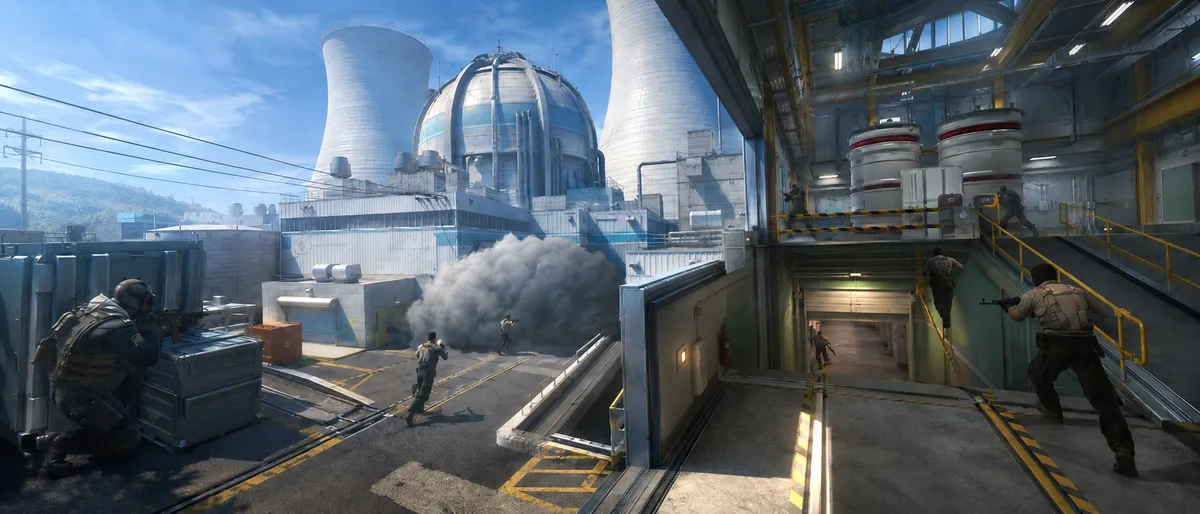
Why Nuke Is Different From Other CS2 Maps
Most CS2 maps have bombsites separated across horizontal space. Nuke is different because A is upstairs and B is downstairs. This vertical layout changes everything. A defender on upper can rotate down vents. A ramp player can fall to B. A T player can fake upper and drop lower. Sound can travel in confusing ways, and a single wrong rotation can open the other site.
The bombsites are stacked:
A site is on the upper level, while B is below it. This means rotations can be much faster than on maps like Mirage, Dust2, or Inferno. A CT player can move from A to B through vents, ramp, heaven, or lower routes. A T player can also use the stacked layout to fake one level and finish on the other.
Outside control is a separate win condition:
Outside is not only a path. It is a pressure zone. If Ts control outside and reach secret, they threaten lower. If CTs control outside, they can gather information, stop secret crosses, and keep T-side options limited.
Ramp is a rotation gate:
Ramp connects lobby pressure to lower routes. If Ts take ramp, they can move toward B or force CTs to rotate. If CTs hold ramp well, they reduce one of the most direct lower routes.
Lobby controls the start of many T plans:
Lobby connects to hut, squeaky, ramp, and vents. A T-side team with lobby control can threaten upper, ramp, or vent drops. CTs must respect this pressure.
Sound is harder to read:
Because Nuke has multiple levels, footsteps, utility, and action can be misleading. A sound near upper may not always mean an upper hit. A fake vent drop can pull rotations. A loud lobby presence can become a ramp hit. Communication matters more than guessing.
Nuke Map Structure Explained Simply
To play Nuke well, divide the map into five major zones: upper, lower, outside, lobby, and ramp. Each zone connects to the others in a specific way.
Upper site:
Upper is the A bombsite. Important areas include hut, squeaky, mini, main, rafters, heaven, site floor, vents, and back site positions. Upper can be attacked from hut, squeaky, mini, or vent pressure. CTs often defend it with one or two players supported by heaven or rotators.
Lower site:
Lower is the B bombsite. Important areas include ramp, control room, decon, double doors, single door, dark, toxic, secret, vents, and lower site positions. Lower is attacked through ramp, secret, vents, or decon-style routes.
Outside:
Outside includes yard, red, garage, secret, mini, credit card-style cover, and the open crossing area. This is one of the most important zones because it gives the T side access to secret and lower pressure.
Lobby:
Lobby includes the T-side indoor area that connects to hut, squeaky, ramp, and radio/trophy-style paths. Lobby control creates upper and ramp pressure. CT lobby pushes can punish careless Ts, but they are risky if overused.
Ramp:
Ramp connects lobby pressure to lower routes. It is also a major CT delay position. A ramp defender can gather information, slow a lower hit, fall back, or call rotations.
The Main Win Conditions on Nuke
Every Nuke round should have a win condition. A win condition is the area or idea your team wants to use to win the round.
T-side win condition 1: outside to secret:
The T side uses outside smokes or pressure to cross into secret. From secret, Ts can pressure lower, split B, force CT rotations, or fake lower and return upper.
T-side win condition 2: upper execute:
The T side takes lobby control, uses smokes and flashes, then hits A through hut, squeaky, and sometimes mini. This works best when utility blocks heaven, main, or key upper vision.
T-side win condition 3: ramp pressure:
The T side pressures ramp, forces the ramp defender back, then either commits lower or uses the pressure to pull rotations before finishing elsewhere.
T-side win condition 4: vent drop:
The T side creates upper pressure and drops vents quickly. This can become a fast lower play or a fake that forces CTs to react.
CT-side win condition 1: information:
CTs win Nuke by knowing where the pressure is coming from. Outside info, lobby info, ramp contact, and upper sound cues all guide rotations.
CT-side win condition 2: delay:
A CT does not always need to win the first fight. Sometimes the goal is to slow the T side long enough for rotations.
CT-side win condition 3: layered defense:
Nuke CT setups work best when players cover each other. A ramp player falls back while a lower player prepares. A heaven player supports upper. An outside player calls secret pressure. A good team does not defend as five disconnected players.
Basic CT Setup on Nuke
A simple CT setup gives coverage to upper, outside, ramp, and lower rotation. The exact setup changes by team style, enemy habits, and economy, but a balanced structure is the best starting point.
Standard CT structure:
One player watches outside, one player controls ramp, one player anchors upper, one player supports heaven/rafters or upper rotation, and one player plays lower or flexible rotation. This gives the team information across the major routes.
Upper anchor:
The upper anchor handles hut, squeaky, mini, and site pressure. This player needs patience because upper hits can be fast and chaotic. The goal is often to survive, delay, and call the exact entry path.
Heaven / rafters player:
This player supports upper and can rotate quickly. Heaven is powerful because it sees parts of upper and connects to CT rotations. However, it can be pressured by outside smokes, mini control, or strong upper utility.
Outside player:
The outside player watches yard pressure, secret crosses, garage movement, mini pressure, and outside smokes. This player gives crucial information because outside control changes the entire round.
Ramp player:
The ramp player delays ramp and calls lower pressure. This role is one of the most important CT jobs. A good ramp player knows when to fight, when to fall back, and when to call for help.
Lower / rotator:
The lower player or flexible rotator supports B, secret, ramp, and vent reactions. This player must listen carefully and avoid over-rotating too early.
CT Setup 1: Balanced Default
The balanced CT default is the best setup for ranked teams because it covers all important zones without gambling too hard.
Structure:
One outside, one ramp, two upper-related players, and one lower/flexible player.
Why it works:
It gives the defense enough information to react. Outside pressure is watched, ramp is controlled, and upper is protected against fast hits.
How to play it:
The outside player calls smokes, crosses, and secret pressure. The ramp player delays and survives. Upper players avoid dying alone. The lower player stays flexible until the T side reveals more.
Common mistake:
The biggest mistake is rotating both upper players too early. If one sound cue pulls everyone lower, Ts can return to A and win an empty site.
CT Setup 2: Outside Control Setup
This setup focuses on denying the T side an easy secret cross. It is useful when opponents keep using outside smokes and taking lower through secret.
Structure:
Two players support outside early, one ramp, one upper, and one flexible heaven or lower player.
Why it works:
Outside is one of the strongest T-side routes. If CTs deny outside, the T side loses a major part of its map control.
How to play it:
One player can hold from garage, secret-side areas, or outside cover, while a second player supports with utility or a safer angle. The goal is not always to take a fight. Sometimes the goal is to confirm whether Ts crossed secret.
Common mistake:
Do not overfight outside every round. If CTs repeatedly challenge outside in the same way, Ts can counter with smokes, flashes, and late lobby pressure.
CT Setup 3: Ramp Control Setup
Ramp control setup is useful when Ts repeatedly pressure ramp or when your team wants a stable lower defense.
Structure:
One dedicated ramp player, one support player close enough to flash or rotate, one outside, and two upper/lower flexible players.
Why it works:
Ramp is a key gate to B. If CTs hold or delay ramp, Ts have a harder time reaching lower directly.
How to play it:
The ramp player uses sound and contact to call pressure. If multiple Ts appear, the ramp player can use utility and fall back instead of fighting to the end. A support player can rotate through heaven, hell, or lower depending on the setup.
Common mistake:
The ramp player should not die immediately every round. A living ramp player gives information. A dead ramp player gives Ts an open path.
CT Setup 4: Upper Stack Setup
This setup is useful when Ts keep hitting A fast through hut and squeaky.
Structure:
Two or three players near upper, one ramp, one outside or flexible rotator.
Why it works:
Fast upper hits rely on overwhelming isolated defenders. More CT presence on upper can slow the hit and punish repeated rushes.
How to play it:
Use crossfires between hut, squeaky, site, rafters, mini, and heaven. Communicate which entrance is active. Do not all stare at the same door.
Common mistake:
If CTs stack upper too obviously, Ts may go outside secret or ramp. Use the setup as an adjustment, not as a permanent rule.
CT Setup 5: Passive Retake Setup
A passive setup is useful when your team is losing early duels. Instead of fighting every doorway, the CT side plays safer positions and retakes together.
Structure:
One player gathers outside information safely, one watches ramp passively, one holds upper from a safer angle, and rotators stay alive.
Why it works:
Nuke retakes can be strong because rotations are fast. If CTs stay alive and keep utility, they can retake upper or lower together.
How to play it:
Do not give away free openings. Call pressure early, save utility, and group for retakes. Force the T side to plant under pressure rather than giving them easy eliminations before the execute.
Common mistake:
Passive does not mean blind. If nobody gathers information, Ts can take the whole map for free.
Best CT Positions on Nuke
Strong CT positions are not only about hiding. They are about controlling information and creating crossfires.
Heaven:
Heaven is one of the strongest upper support positions. It can help against hut and squeaky entries, support site players, and rotate quickly. The danger is that heaven can be smoked or isolated.
Rafters:
Rafters give upper control and allow defenders to watch hut, site, or squeaky pressure. It is strong when paired with a site player.
Mini / main:
Mini connects outside to upper. A mini player can watch outside pressure and upper entries, but this position can be pressured from multiple angles.
Garage:
Garage is a classic outside information position. It lets CTs watch yard movement and react to secret pressure. It should be mixed with other outside positions so the T side cannot predict it every round.
Secret:
Secret can be powerful for stopping outside-to-lower plays. A CT in secret can punish Ts crossing outside or moving down to B, but the position becomes predictable if used too often.
Ramp:
Ramp is a control point, not just a hiding spot. The ramp player delays, gathers information, and decides whether to fight or fall back.
Lower site:
A lower player must understand decon, double doors, single door, control, dark, and secret pressure. Lower defense depends heavily on communication because Ts can arrive from several paths.
How CT Rotations Work on Nuke
Rotations are the most important part of CT Nuke. Because the sites are stacked, CTs can move quickly, but rotating too soon can lose rounds.
Upper to lower through vents:
Vents are a fast route from A to B. CTs can rotate down quickly, but Ts can also use vent drops. If vents are open or pressured, call it clearly.
Ramp to lower:
If ramp is lost, CTs often fall toward lower. A ramp player who survives can slow the lower hit and give teammates time.
Heaven to lower:
Heaven players can rotate through CT routes toward lower, but they must be careful not to abandon upper too early.
Outside to secret:
If the outside player confirms multiple Ts secret, lower defenders need to prepare. The rest of the CT side should decide whether to stack lower, hold upper, or retake later.
Avoid panic rotations:
One smoke outside does not always mean lower. One door opening does not always mean upper. One ramp sound does not always mean a full hit. Rotate based on confirmed information, not fear.
Basic T Default on Nuke
A T-side default on Nuke should create pressure in multiple areas while protecting against CT aggression. The T side wants to control lobby, watch outside, pressure ramp, and keep the defense uncertain.
Simple T structure:
Two players hold lobby pressure, one watches outside or prepares smokes, one controls ramp or radio area, and one lurks or supports. This gives the team options.
Lobby control:
Lobby is the base of many T plans. From lobby, Ts can hit hut, open squeaky, pressure ramp, or drop vents. Losing lobby control early makes T side much harder.
Outside pressure:
Outside pressure forces CTs to respect secret, garage, mini, and lower. Even if Ts do not commit outside, the threat can pull rotations.
Ramp pressure:
Ramp pressure challenges the CT ramp player and creates lower possibilities. It also forces CTs to decide whether to support ramp or stay upper.
Late decision:
A good T default does not rush the final call. Gather information, force utility, read rotations, then choose upper, lower, ramp, or outside.
T Execute 1: Outside to Secret
Outside to secret is one of the most important T-side plans on Nuke. It gives access to lower and forces the CT side to defend multiple levels.
Purpose:
Take outside control, cross to secret, and pressure lower.
How it works:
Use outside smokes to block key CT vision. Players cross toward secret while teammates hold lobby or outside flank pressure. Once secret is controlled, Ts can move lower, split B, fake lower, or wait for rotations.
Why it is strong:
It forces CTs to respect lower. If CTs over-rotate down, Ts can return upper. If CTs ignore secret, lower becomes weak.
Ranked tip:
Do not send all five players secret every time. Leave someone controlling lobby or watching for pushes so CTs cannot flank freely.
T Execute 2: Upper A Hit
Upper hits are simple in concept but need timing. If Ts enter hut and squeaky one by one, CTs can isolate them. If they enter together with utility, upper becomes much harder to hold.
Purpose:
Take A site through hut, squeaky, and sometimes mini pressure.
How it works:
Use smokes to block heaven, main, or key upper vision. Use flashes to support the entry. Players come through hut and squeaky at similar timing so CTs cannot focus on one doorway.
Why it is strong:
Upper hits punish CTs who over-focus outside or ramp. If the defense is spread thin, a fast upper execute can win space quickly.
Ranked tip:
Do not stop in the doorways. Nuke upper entries fail when players hesitate in hut or squeaky and block teammates behind them.
T Execute 3: Ramp Take to Lower
Ramp take is a reliable way to pressure lower without needing full outside control.
Purpose:
Force the ramp defender back and move toward B.
How it works:
Use flashes and utility to pressure ramp. Once the ramp defender is pushed away or eliminated, Ts move down toward lower, control key doors, and prepare for the plant.
Why it is strong:
Ramp gives a direct route to B and can split lower with secret or vent pressure.
Ranked tip:
After taking ramp, be careful of fast CT lower rotations. The ramp fight is only the first part. Lower still needs to be cleared.
T Execute 4: Vent Drop
Vent drops can be fast and disruptive. They work best when CTs are not prepared or when upper pressure hides the drop.
Purpose:
Use upper pressure to reach vents and quickly threaten lower.
How it works:
Players pressure hut or squeaky, break into upper, and one or more players drop vents. The drop can become a lower hit or a fake that pulls CTs away from A.
Why it is strong:
Vents connect the levels quickly. A well-timed vent drop can force CTs into panic rotations.
Ranked tip:
Do not drop vents alone without teammates creating pressure. A solo vent drop is easy to punish if CTs hear it and react calmly.
T Execute 5: Lobby Crunch
A lobby crunch is when Ts use lobby control to pressure multiple upper entrances at once. It is simple and useful in ranked.
Purpose:
Overwhelm upper defenders through hut, squeaky, and possibly mini timing.
How it works:
Ts group in lobby, prepare utility, then hit upper through multiple doors. The goal is to trade quickly and stop CTs from isolating one entrance.
Why it is strong:
Many ranked CT setups leave only one true upper anchor. A synchronized lobby hit can punish that.
Ranked tip:
Communication matters. Say exactly when to open squeaky, when to leave hut, and when to flash.
T Execute 6: Outside Fake to Upper
This is one of the best ways to punish CTs who rotate too quickly.
Purpose:
Show outside pressure, pull CTs toward secret or lower, then finish on upper.
How it works:
Throw outside smokes or show presence near yard. Make CTs believe secret pressure is coming. Meanwhile, lobby players stay ready. When CTs rotate lower, Ts hit upper.
Why it is strong:
Nuke rotations are fast, but that also means CTs can over-rotate. A fake outside can empty A if the defense panics.
Ranked tip:
A fake only works if it looks believable. Utility, sound, and timing must suggest real outside pressure.
T Execute 7: Ramp Fake to A
Ramp pressure can pull the ramp player down and force lower rotations. This creates an upper timing.
Purpose:
Make CTs think B is threatened through ramp, then hit A.
How it works:
Ts pressure ramp with noise, utility, or one player showing presence. CTs rotate lower or toward ramp. The main group returns to lobby and hits upper.
Why it is strong:
Ramp is a sensitive area for CTs. If the ramp player calls heavy pressure, teammates often rotate.
Ranked tip:
Do not overcommit the fake. If too many Ts go ramp and get stuck, the upper hit loses timing.
T Execute 8: Secret Split B
Secret split B is stronger than simply walking into lower from one route. It forces CTs to defend multiple lower entrances.
Purpose:
Attack B from secret and another route such as ramp or vents.
How it works:
One group crosses outside to secret. Another group pressures ramp or vents. When both groups are ready, they attack lower from different directions.
Why it is strong:
Lower CTs cannot focus on one doorway. They must watch secret, ramp, decon, control, and vents.
Ranked tip:
Wait until both groups are ready. If secret players enter too early, they can be isolated before ramp or vent pressure arrives.
How T Rotations Work on Nuke
T-side rotations are about keeping the CT side uncertain. Because Nuke has fast CT movement, Ts must use fakes and timing to punish over-rotations.
Lobby to upper:
This is the fastest simple finish. If CTs give lobby space, upper is always a threat.
Lobby to ramp:
Ramp is a good option when upper feels stacked or when the ramp defender is weak.
Outside to secret:
This is the main path to lower control. It is stronger with smokes and a player holding flank.
Secret back to upper:
If secret pressure pulls CTs down, Ts can return through outside or lobby timing and hit A.
Ramp back to lobby:
Ramp pressure can fake lower and then return upper. This works when CTs rotate quickly based on ramp contact.
Do not rotate silently forever:
Sometimes Ts waste too much time rotating with no pressure. A good rotation should be connected to information, utility, or a fake.
Outside Control on Nuke
Outside is one of the most important areas on Nuke because it connects T-side pressure to secret, mini, garage, and lower.
For T side:
Outside control gives access to secret and lower. It also pressures mini and forces CTs to watch multiple angles. Outside smokes are essential because crossing open yard without cover is risky.
For CT side:
Outside information tells the defense whether Ts are crossing secret, pressuring mini, or faking. A good outside player does not need to take every duel. Calling the cross can be enough.
Common T mistake:
Throwing outside smokes and then moving too slowly. If the smokes fade before the team crosses, the utility loses value.
Common CT mistake:
Fighting outside alone every round. Outside should be played with timing, utility, and support, not predictable solo peeks.
Ramp Control on Nuke
Ramp is one of the most important ranked battlegrounds on Nuke. It is easier to understand than outside, but still very strategic.
T-side ramp goal:
Push the ramp defender back, create lower pressure, and force rotations.
CT-side ramp goal:
Delay, gather information, and survive. The ramp defender should not feel forced to win every fight alone.
Why ramp matters:
If Ts take ramp, lower becomes vulnerable. If CTs hold ramp, Ts lose a direct path and must use outside, vents, or upper.
Best ranked rule:
Ramp control is valuable only if your team uses it. If Ts take ramp but wait too long without clearing lower or rotating, CTs can regroup.
Upper Site Rules on Nuke
Upper is chaotic because attackers can come from hut, squeaky, mini, and vents. Defenders need crossfires and clear calls.
For CTs:
Do not all watch the same entrance. One player should know hut, another should respect squeaky or mini, and support players should react from heaven or rafters.
For Ts:
Enter together. Upper hits fail when one player runs out hut, another waits in squeaky, and another is still holding lobby. Timing matters.
Heaven control:
Heaven is a major support position. If Ts block or pressure heaven, upper becomes easier to take.
Vent awareness:
Both sides must track vents. Ts can drop. CTs can rotate. Losing vent control can change the round quickly.
Lower Site Rules on Nuke
Lower is difficult because it has several entrances. A lower hit can come from ramp, secret, vents, decon, or control.
For CTs:
Call the route. “Secret,” “ramp,” and “vents” mean different things. Lower defenders need exact information to face the correct direction.
For Ts:
Do not enter lower from only one predictable path every round. Splits are much stronger because they divide the defense.
Post-plant positions:
After planting lower, Ts should spread into positions that match the plant. Secret, ramp, decon, control, and site corners can all matter depending on the situation.
Retake danger:
CTs can retake lower from multiple routes. Ts must expect heaven/vents, ramp, secret, and decon pressure.
Nuke Rotation Mistakes Beginners Make
Nuke punishes bad rotations more than many maps. Because the bombsites are close, players often rotate too early and leave gaps.
Mistake 1: Rotating from A to B after one sound:
A door opening or single footstep does not always mean the real hit. Wait for confirmed information.
Mistake 2: Leaving ramp alone too often:
If the ramp player has no support and dies early, lower becomes much harder to defend.
Mistake 3: Ignoring outside smokes:
Outside smokes usually mean the T side is trying to create secret pressure or fake it. CTs must communicate what they see and hear.
Mistake 4: Overstacking lower:
If all CTs rotate lower, upper may become free. Keep at least one player aware of A unless the lower hit is confirmed.
Mistake 5: T side committing too early:
Nuke T side becomes easier when you pressure multiple areas. Rushing one door every round makes the defense comfortable.
Mistake 6: Poor lobby control:
If Ts lose lobby control, CTs can gather information and flank. If CTs never check lobby, Ts can hit upper whenever they want.
Simple Nuke CT Round Plan
A good CT round plan should answer four questions: who watches outside, who holds ramp, who anchors upper, and who rotates lower?
Step 1: Assign outside responsibility.
One player must know whether Ts are crossing secret, pressuring garage, or ignoring yard.
Step 2: Assign ramp responsibility.
The ramp player calls contact and delays. A support player should know when to help.
Step 3: Keep upper stable.
Upper should not be empty unless the lower hit is confirmed. Someone must respect hut, squeaky, and mini.
Step 4: Rotate based on information.
Do not rotate because of fear. Rotate because outside saw secret, ramp lost control, vents dropped, or the bomb was spotted.
Step 5: Retake together.
If a site falls, group up and retake with utility. Nuke retakes are possible when players stay alive.
Simple Nuke T Round Plan
A good T round plan should create pressure before the final hit.
Step 1: Control lobby.
Lobby gives access to hut, squeaky, ramp, and vents. Keep CTs from pushing it freely.
Step 2: Show pressure somewhere else.
Use outside, ramp, or squeaky pressure to make CTs reveal their setup.
Step 3: Read the reaction.
If CTs stack outside, hit upper or ramp. If ramp is weak, take ramp. If upper is thin, execute A. If outside is open, go secret.
Step 4: Finish together.
Nuke attacks fail when players enter at different times. Choose the final site and move as a group.
Step 5: Set up post-plant quickly.
After planting, do not all hide in one place. Spread into positions that protect the bomb and watch rotation paths.
Nuke Utility Basics
This page is focused on setups, executes, and rotations, but utility is still essential on Nuke. Smokes, flashes, and in-game fire utility help teams move through dangerous areas and delay pushes.
Outside smokes:
These are essential for T-side secret crosses. Smokes that block garage, main, red, or secret vision can create safer movement outside.
Heaven smoke:
This helps upper executes by blocking a powerful CT support angle.
Main / mini smoke:
This can isolate upper defenders and make A hits easier.
Ramp smoke:
This can delay or fake ramp pressure depending on side and timing.
Squeaky / hut utility:
Utility at these entrances can slow upper hits or support them.
Lower retake utility:
Smokes and flashes for decon, double doors, single door, and control can help CTs retake B.
Best beginner rule:
Learn a small utility package first: outside smokes, one heaven smoke, one ramp smoke, and one upper flash. Add more lineups after those become comfortable.
Best Ranked Nuke Defaults
Ranked Nuke is often messy because teammates may not know full executes. Simple defaults are easier to coordinate.
T default: 2 lobby, 2 outside, 1 ramp support:
This gives pressure across the map. Lobby remains controlled, outside threatens secret, and ramp is watched.
T default: 3 lobby, 1 outside, 1 ramp:
This is good for upper pressure and late ramp options. It keeps the upper hit available while preventing CTs from pushing freely.
T default: outside-heavy secret control:
Two or three players prepare outside smokes and cross secret while others hold lobby. This creates lower pressure and forces CT rotations.
CT default: 2 upper, 1 outside, 1 ramp, 1 lower/flex:
This is the simplest balanced CT setup. It covers every major route without overcommitting.
CT default: 2 outside, 1 ramp, 1 upper, 1 heaven/flex:
This is useful against teams that rely on outside smokes and secret pressure.
CT default: 2 upper, 2 ramp/lower, 1 outside:
This is useful against teams that hit upper and ramp often but do not pressure outside well.
Nuke Communication Rules
Communication is everything on Nuke because the map has vertical layers and fast rotations.
Call the level clearly:
Say “upper” or “lower” when needed. A vague call can send teammates to the wrong site.
Call the route clearly:
“Ramp,” “secret,” “vents,” “hut,” and “squeaky” are not the same. Exact route calls help teammates rotate correctly.
Call numbers carefully:
“One outside” is different from “three crossed secret.” Avoid exaggerating. Bad information causes bad rotations.
Call utility:
If outside smokes land, say it. If heaven is smoked, say it. If ramp is smoked, say it. Utility reveals plans.
Call when you lose control:
If ramp is lost, say it immediately. If lobby is lost, say it. If secret is lost, say it. Lost control is not failure; silent lost control is failure.
Common Nuke Mistakes
Playing Nuke like a normal map:
Nuke is vertical and rotation-heavy. Standard map habits do not always work.
Ignoring outside control:
Outside decides many rounds. Ts need to pressure it, and CTs need information from it.
Over-rotating as CT:
Fast rotations are useful only when based on real information. Guessing loses rounds.
Entering upper one by one:
Upper hits require timing. Staggered entries are easy to stop.
Taking ramp but doing nothing:
Ramp control must become lower pressure, a fake, or a rotation punish.
Never using fakes:
Nuke is one of the best fake maps in CS2. If Ts never fake, CTs rotate confidently.
Dying with utility:
Nuke utility is too important to save forever. Use it to take space, delay, or retake.
No post-plant plan:
Planting is not enough. Ts need positions that protect the bomb from multiple retake routes.
Practical Rules for Playing Nuke Better
Rule 1: Always know who controls outside.
Outside pressure changes the entire round.
Rule 2: Ramp players should survive.
A living ramp player gives information and delays lower hits.
Rule 3: Upper needs layered defense.
Do not leave one player alone against hut, squeaky, mini, and vents every round.
Rule 4: T side should pressure before committing.
Use outside, ramp, lobby, or squeaky pressure to read the defense.
Rule 5: CTs should rotate from confirmation, not panic.
Nuke rewards calm information-based rotations.
Rule 6: Outside smokes need follow-up.
Do not throw smokes and then stand still until they fade.
Rule 7: Use fakes to punish fast rotations.
Nuke CTs rotate quickly, so make them doubt themselves.
Rule 8: Communicate the exact route.
“Lower” is useful, but “secret lower” or “ramp lower” is better.
Rule 9: Retake together.
Nuke retakes are possible when CTs stay alive and use utility together.
Rule 10: Keep improving one zone at a time.
Master lobby, then outside, then ramp, then lower rotations. Nuke becomes easier when learned in layers.
How BoostRoom Helps You Improve on Nuke
Nuke can feel overwhelming because there are many routes, rotations, and timing decisions. Players often lose Nuke not because they lack aim, but because they rotate too early, ignore outside, leave ramp unsupported, or enter upper with no timing. BoostRoom helps players focus on the structure behind winning rounds.
BoostRoom helps with map understanding:
Nuke becomes much easier when you understand the purpose of each zone. BoostRoom helps players think beyond random fights and focus on map control.
BoostRoom helps with ranked confidence:
When you know where to stand, when to rotate, and what information matters, Nuke feels less confusing. Confidence improves when the map has structure.
BoostRoom helps players become better teammates:
A player who calls outside smokes, supports ramp, understands upper pressure, and rotates correctly becomes valuable even without top fragging.
BoostRoom supports long-term CS2 progress:
Nuke teaches many important CS2 skills: communication, utility timing, map control, patience, and retake discipline. BoostRoom can help players build those habits more consistently.
FAQ
Is Nuke CT-sided in CS2?
Nuke is often considered CT-sided because defenders can rotate quickly, hold strong chokepoints, and use the vertical layout to their advantage. However, T side becomes much stronger with outside control, ramp pressure, lobby control, fakes, and coordinated executes.
What is the most important area on Nuke?
Outside is one of the most important areas because it gives the T side access to secret and lower pressure. Ramp and lobby are also extremely important because they control direct routes into the stacked bombsites.
What is the best CT setup on Nuke?
A simple CT setup is one outside player, one ramp player, one upper anchor, one heaven or rafters support player, and one lower or flexible rotator. This covers the main routes without overcommitting.
What is the best T default on Nuke?
A strong T default usually controls lobby, pressures outside, watches ramp, and waits before committing. The goal is to make CTs reveal their setup before choosing upper, lower, ramp, or secret.
How do you attack A site on Nuke?
Attack A by using lobby control, entering through hut and squeaky with timing, blocking key CT vision with utility, and trading quickly. Upper hits fail when players enter one by one or hesitate in doorways.
How do you attack B site on Nuke?
B can be attacked through ramp, secret, vents, or split pressure. The strongest B hits often combine multiple routes so CTs cannot focus on one entrance.
How should CTs rotate on Nuke?
CTs should rotate based on confirmed information. Outside secret crosses, ramp loss, vent drops, and bomb contact are strong rotation signals. One sound cue alone should not pull the whole defense.
Why is outside control so important on Nuke?
Outside control opens secret, lower pressure, mini pressure, and rotation confusion. If Ts control outside safely, CTs must respect lower and cannot stack upper comfortably.
What utility should I learn first on Nuke?
Start with outside smokes, a heaven smoke, a main or mini smoke, a ramp smoke, and simple upper or ramp flashes. These utility pieces support the most common Nuke plans.
Can BoostRoom help me improve on Nuke?
Yes. BoostRoom can help CS2 players improve map understanding, confidence, rotations, utility habits, and overall ranked progress on Nuke and other competitive maps.



