Football Manager 27 Match Preparation Guide – How to Win More Games
Winning consistently in Football Manager 27 requires more than having the strongest squad or downloading a popular tactic. The most successful managers understand their opponents, prepare their players for specific challenges, and adapt their strategies as matches unfold.
FM27 introduces a stronger connection between match preparation, tactical understanding, opposition analysis, and player performance through its new Tactical Effectiveness system.
Every fixture presents different challenges. A high-pressing opponent may leave space behind its defensive line, while a defensive team could force you to find creative ways through a compact formation.
Understanding these differences can help you make smarter decisions before kick-off.
Football Manager 27 also introduces Tactical Tweaks, improved match analysis, and a redesigned training approach that places greater emphasis on preparing for upcoming opponents.
This complete Football Manager 27 Match Preparation Guide explains how to analyze opposition teams, create effective game plans, improve Tactical Effectiveness, prepare set pieces, select the right players, and make intelligent in-match adjustments.
Whether you're managing a European powerhouse or fighting for survival with a lower-league club, these strategies will help you approach matches with greater confidence.

Why Match Preparation Matters in Football Manager 27
Match preparation has become a more important part of the management experience in FM27.
Previously, many managers relied heavily on a preferred formation, adjusting only when results became disappointing.
Football Manager 27 encourages a more flexible approach.
Your tactical system remains important, but how well your team understands the next opponent can also influence its ability to execute your instructions.
Understanding the New Tactical Effectiveness System
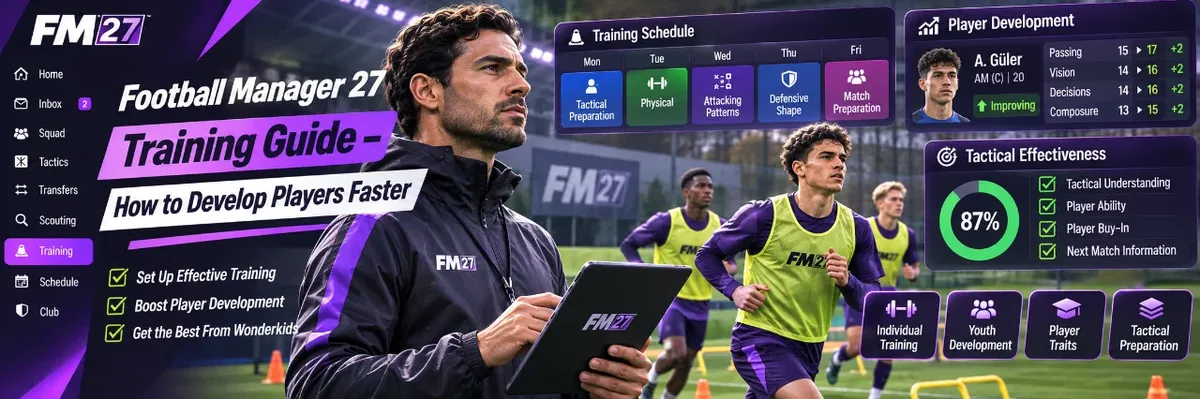
Tactical Effectiveness evaluates four key components.
Tactical Understanding measures how well players understand your instructions and their responsibilities.
Player Ability considers whether your squad has the attributes and positional suitability required to perform those instructions.
Player Buy-In reflects how willing your players are to embrace your managerial philosophy.
Next Match Information considers how much useful knowledge your club possesses about the upcoming opposition.
Together, these components provide a broader view of how effectively the team can carry out its tactical approach.
Strong preparation supports your tactical decision-making, but it does not guarantee a victory.
The opposition's quality, individual performances, and match events still influence results.
Match Preparation Is More Than Training
Preparing for a match involves several connected decisions.
You need to understand your opponent, select appropriate players, examine tactical weaknesses, organize relevant training, and establish a game plan.
After kick-off, you must also recognize when that plan is working and when adjustments are necessary.
The goal is to enter every match with a clear strategy rather than reacting blindly to events.
How to Scout Your Next Opponent in FM27
Opposition scouting is the foundation of effective match preparation.
Before deciding which formation to use, understand how the opposing team normally plays.
FM27 provides scouting and analysis tools that help managers investigate upcoming opponents.
Review Opposition Scouting Reports
Start with your opposition scouting information.
These reports can provide valuable insights into the opposing team's strengths, weaknesses, preferred tactical approach, and player qualities.
Look for recurring patterns rather than isolated statistics.
For example, an opponent may rely heavily on attacking through its left flank.
Another team might build possession patiently through central midfield.
Understanding these tendencies can help you identify where your team should concentrate its attention.
However, remember that reports are limited by your club's available scouting knowledge.
A familiar domestic opponent may be easier to analyze than an unfamiliar team from another country.
Identify the Opposition's Main Strengths
Look at the players and tactical relationships that make your opponent dangerous.
A team with rapid forwards may attempt to exploit space behind your defenders.
An opponent with strong central midfielders could dominate possession if you allow them too much freedom.
Another club might create most of its chances through crosses and aerial attacking play.
Your preparation should consider which of these strengths poses the greatest threat to your own system.
Trying to eliminate every possible danger simultaneously may create an unnecessarily complicated tactical plan.
Find Weaknesses You Can Exploit
Opposition scouting is equally valuable when identifying vulnerabilities.
A slow defensive line may struggle against forwards attacking space.
A team using aggressive attacking full-backs could leave opportunities on the counter-attack.
A narrow defensive system might concede space in wide positions.
The important question is whether your squad possesses the qualities needed to exploit those weaknesses.
A weakness isn't automatically useful if your players cannot take advantage of it.
How Next Match Information Works in FM27
Next Match Information is one of the four components of Tactical Effectiveness.
It reflects the quality of your knowledge about the upcoming opponent.
Sports Interactive connects this system with opposition scouting, analysis, and existing knowledge of opposing players.
Improve Your Opposition Knowledge
Ensure your scouting responsibilities are appropriately assigned.
Opposition reports are more useful when produced by capable staff with relevant knowledge.
Strong Performance Analysts can also contribute valuable information about opposing teams.
Check whether the relevant scouting and analysis reports are being delivered.
If you manage a smaller club with limited resources, prioritize obtaining reliable information about the most important threats.
Familiar Opponents vs Unknown Teams
Your club may already possess extensive knowledge of domestic rivals.
Repeated meetings and established scouting coverage can make preparation easier.
However, facing an unfamiliar international opponent may produce less detailed information.
In these situations, avoid making overly specific assumptions.
A balanced starting approach allows you to observe the opponent before introducing major adjustments.
Don't Confuse Information With Certainty
A detailed scouting report can improve your decisions, but it cannot predict every tactical change.
An opposing manager may use an unfamiliar formation or change responsibilities during the match.
Use opposition information to build your initial plan, then adapt according to what actually happens.
Good preparation gives you a starting advantage in understanding the challenge—not a guaranteed solution to every situation.
How to Set Up Match Preparation Training in FM27
Football Manager 27 significantly changes the emphasis of senior-team training.
Instead of concentrating primarily on attribute development through the previous Units system, training now focuses more on preparing players to execute a tactical plan.
This makes your upcoming opponent an important consideration.
Train the Behaviors Your Team Needs
Start by identifying the tactical requirements of the next fixture.
If your opponent uses aggressive pressing, your players may need greater confidence when building possession under pressure.
If you're facing a team with technically gifted attackers, defensive organization may deserve more attention.
A club planning to press high up the pitch should prepare the collective movements required for that approach.
FM27's revised training system provides options for working on tactical behaviors, including pressing and low-block defending.
Prepare Your In Possession Approach
Consider what your team needs to accomplish when it controls the ball.
Against a compact defensive opponent, you may want to emphasize coordinated attacking movements and passing progression.
Against a high defensive line, your strategy might involve attacking space more directly.
The chosen preparation should reinforce the style you intend to use.
However, don't radically change your entire attacking philosophy for every opponent.
Players still benefit from familiarity with a consistent system.
Prepare Your Out of Possession Approach
Defensive preparation should reflect the opponent's main attacking threats.
A team with dangerous wide players may require disciplined wide defensive coverage.
An opponent that attacks through central midfield could require greater compactness between defensive units.
A counter-attacking team may benefit from rehearsing an organized defensive structure before transitioning forward.
The objective is to make sure players understand the responsibilities required when possession is lost.
Prepare Your Set Pieces
Set pieces deserve attention because they offer opportunities to score without needing to dominate open play.
Review attacking and defensive corner responsibilities.
Identify suitable delivery takers and aerial targets.
Consider the opposition's relevant strengths and weaknesses.
However, don't assume every set-piece routine needs a complete redesign before each match.
A familiar, well-organized approach may be more useful than an unnecessarily complicated variation.
Understand the Difference Between Editions
On PC and Mac, FM27 provides match-oriented team training and improved preparation messages that allow managers to set relevant preparation types.
FM27 Console has a specifically documented Match Preparation feature with up to three sessions covering In Possession, Out of Possession, and Set Pieces.
The available controls differ between editions, so use the preparation tools provided by your version rather than assuming all interfaces are identical.
Choosing the Right Formation for Your Next Match
Your preferred formation should generally remain the foundation of your tactical approach.
However, certain opponents may require adjustments.
Rather than searching for a supposedly unbeatable formation, concentrate on the tactical relationships most relevant to the upcoming match.
Preparing Against a 4-3-3
A 4-3-3 often provides three central midfield positions and two wide attacking players.
Your preparation should consider whether you can compete in central areas without exposing the flanks.
If your own formation uses only two central midfielders, examine whether they receive enough support.
A supporting attacking midfielder or a forward contributing to build-up may help.
However, don't automatically change formation simply because the opponent uses three midfielders.
Your existing structure may already provide suitable coverage.
Preparing Against a 4-2-3-1
A 4-2-3-1 often creates dangerous opportunities through the central attacking midfielder.
Look at the spaces between your defensive midfield and back line.
If the opponent's attacking midfielder repeatedly receives possession in dangerous areas, consider adjusting your central defensive responsibilities.
Also monitor the opposing wide attackers and the movement of their full-backs.
Preparing Against a Back Three
Teams using three central defenders may rely on wing-backs for much of their attacking width.
This can create opportunities in the spaces they leave behind.
However, attacking these areas requires suitable speed and movement from your own players.
You must also consider how to defend against the opposition's advanced wide players.
A back-three system isn't automatically vulnerable.
Its effectiveness depends on the roles and tactical instructions selected.
Keep Your Defensive Structure Balanced
Regardless of the opponent, avoid leaving large unprotected spaces when your team attacks.
If both full-backs advance and several midfielders move forward, counter-attacking opportunities may appear.
Your In Possession system should provide adequate protection for the moment possession is lost.
Understanding Tactical Complexity Before Kick-Off
Football Manager 27 introduces Tactical Complexity, a measurement of how demanding your tactical instructions are.
This creates an important consideration when preparing for different opponents.
Why Simple Plans Can Be Effective
A straightforward tactical system may be easier for players to understand.
This can be particularly useful for lower-league teams or squads with limited tactical familiarity.
For example, a compact defensive structure combined with direct attacking transitions may be more realistic than an elaborate high-pressing system involving constant positional rotations.
However, simple tactics still need to suit your players.
When Complex Plans Make Sense
More sophisticated tactical systems may offer additional ways to control matches.
However, they also demand greater understanding and player suitability.
An elite squad with technically gifted and tactically intelligent players may be capable of executing more complicated responsibilities.
A less experienced team might require additional preparation.
Avoid introducing numerous new instructions immediately before an important match unless you have a compelling reason.
Prepare Alternative Tactical Plans
FM27 allows managers to prepare up to three tactical plans.
Your primary tactic will usually be the most familiar.
However, developing one or two alternatives can provide valuable flexibility.
For example, a possession-focused team could maintain a more defensive alternative for matches against stronger opponents.
A compact counter-attacking side might prepare a more attacking variation for situations where it needs to chase a goal.
The key is preparing alternatives before they're needed.
How to Select Your Best Starting Eleven
Choosing the strongest lineup isn't simply about selecting the eleven players with the highest attributes.
Match preparation requires considering tactical suitability, physical condition, and the opposition.
Review Player Condition
Fitness is particularly important in FM27.
The match engine places greater emphasis on Stamina, repeated sprinting, and the physical demands of player movement.
A tired footballer may struggle to execute intense pressing or repeated attacking runs.
Review condition and medical information before making selections.
A slightly less talented but fully prepared player may sometimes be a better option than an exhausted star.
Consider Tactical Suitability
A player can possess excellent overall ability while struggling with a particular responsibility.
For example, a technically strong midfielder may not provide sufficient defensive coverage in a physically demanding role.
Select footballers who can perform both their In Possession and Out of Possession responsibilities.
Consider how their attributes complement the players around them.
Choose Players for Specific Threats
Certain opponents may require particular strengths.
Against a physically powerful striker, aerial ability and defensive positioning may be valuable.
Against rapid forwards, defensive mobility becomes more important.
A team defending deep may require additional attacking creativity.
These considerations should influence team selection without completely overriding your overall tactical philosophy.
Think About Your Substitutes
The bench should provide tactical alternatives.
A fast attacking player may become useful against tired defenders.
A defensively reliable midfielder could help protect a narrow lead.
An additional striker may provide another option when chasing a goal.
Consider what problems your substitutes might solve rather than simply selecting the next highest-rated players.
How to Use Opposition Instructions in FM27
Opposition instructions allow managers to tailor defensive behavior toward particular opponents.
However, excessive adjustments can increase Tactical Complexity.
Use opponent-specific instructions selectively and only when they serve an identifiable purpose.
Focus on Dangerous Players
Start by identifying the opposition's most influential footballers.
A creative midfielder might be responsible for most attacking progression.
A dangerous winger may consistently create opportunities through individual dribbling.
Your preparation should consider how to reduce their influence.
However, defending one player too aggressively can create space elsewhere.
Consider the effect on your overall defensive structure.
Target Tactical Weaknesses
If an opponent struggles under pressure, a more aggressive approach may be appropriate.
If their wide defenders leave large spaces during attacks, your team could look to exploit those channels.
The exact instructions should depend on scouting information and the players available.
Avoid applying identical opposition instructions to every team.
Don't Overcomplicate the Plan
More instructions don't automatically produce better defending.
FM27's Tactical Complexity system rewards consideration of whether your squad can execute the chosen approach.
A small number of meaningful adjustments may be more useful than an extensive collection of contradictory instructions.
Match Preparation Against Different Playing Styles
Opponents using different football philosophies require different considerations.
Rather than copying one tactical response for every match, identify the main problems presented by each style.
Against High-Pressing Teams
High-pressing opponents attempt to recover possession quickly.
They may commit several players forward when challenging your build-up.
This can leave space behind their pressing structure.
If your players possess suitable passing ability and composure, controlled progression may help bypass pressure.
Alternatively, a more direct passing approach could exploit the spaces behind the press.
However, direct passing isn't automatically effective.
Your forwards need the movement and physical qualities required to receive those deliveries.
Against Deep Defensive Blocks
Deep defensive teams often protect central spaces and limit opportunities behind their defensive line.
Rapid counter-attacks may be less effective when the opponent rarely advances.
Instead, look for ways to stretch the defensive structure.
Wide attacking movement and carefully coordinated runs into the penalty area can create opportunities.
FM27 includes additional Player Instructions relating to how attackers enter the box, including attacking different areas and arriving later.
Use these options when they suit your players.
Against Counter-Attacking Teams
Counter-attacking opponents often wait for mistakes before attacking quickly.
The biggest danger may arise immediately after your team loses possession.
Avoid sending every available player forward without considering defensive coverage.
Maintain suitable support behind the attacking unit.
Also review whether your defensive line can handle direct passes into space.
Against Possession-Based Teams
Possession-focused opponents may attempt to dominate midfield and create openings through sustained passing.
Your response depends on your squad's strengths.
An athletic team might attempt to disrupt build-up through coordinated pressing.
A weaker team could prefer compact defensive organization before attacking the available spaces.
The objective isn't necessarily to have more possession.
It's to create better opportunities while limiting the opponent's most dangerous patterns.
How to Prepare Set Pieces in FM27
Set pieces are often overlooked when managers concentrate exclusively on open-play tactics.
However, corners and free kicks can provide important goalscoring opportunities.
They may be particularly valuable for teams that struggle to create chances against stronger opposition.
Attacking Corners
Review your strongest aerial players.
Jumping Reach, Heading, Strength, and movement-related attributes may help determine which footballers are suitable targets.
Select delivery takers according to relevant technical abilities.
Consider which areas of the penalty box your players can attack effectively.
However, don't leave your entire defense exposed simply to increase attacking numbers.
Defensive Corners
Identify the opposition's main aerial threats.
Make sure your defensive responsibilities are suitable for the available players.
Concentration, positioning, marking, and aerial ability can influence outcomes.
Review the balance between protecting dangerous areas and preparing for potential counter-attacks.
Free-Kick Preparation
Different free-kick situations require different qualities.
Direct shooting opportunities emphasize Free Kick Taking and appropriate technical attributes.
Wide deliveries may require Crossing and suitable aerial targets.
Don't automatically use the same player for every type of free kick.
Select responsibilities according to the strengths of your squad.
Analyze Set-Piece Results
After matches, consider whether your routines are creating useful opportunities or leaving defensive vulnerabilities.
A routine that produces little attacking threat may require changes.
However, one unsuccessful attempt doesn't prove the entire approach is ineffective.
Look for patterns across multiple fixtures.
How to Read FM27 Match Statistics
Football Manager 27 expands matchday information, making it easier to evaluate how your team is performing.
The refreshed Match UI includes additional data, Heat Maps, and Action Zones.
These tools can help identify tactical problems that aren't immediately obvious from the scoreline.
Use Expected Goals Carefully
Expected Goals, commonly called xG, provides an estimate of chance quality.
A team producing several low-quality attempts may accumulate a similar xG total to one creating fewer but better opportunities.
This information can help distinguish between problems with chance creation and finishing.
However, xG is not a guarantee of future results.
It should be used alongside actual match observations.
Analyze Heat Maps
Heat Maps help show where players are operating during matches.
They can reveal whether a winger is receiving possession in useful areas or whether a midfielder is positioned too far from the attacking unit.
For example, if your striker rarely receives support, inspect the positioning of nearby midfielders.
A tactical adjustment may be more useful than simply replacing the forward.
Understand Action Zones
Action Zones provide information about where match activity takes place.
If the opposition consistently attacks one side, investigate whether your defensive structure is providing enough coverage.
If your team spends considerable time in advanced areas without creating chances, examine whether possession is translating into dangerous opportunities.
Review Passing Patterns
Passing information can help identify problems with progression.
A team may complete a high percentage of passes without threatening the opposition.
Another side may struggle to move possession beyond midfield.
Consider whether players have appropriate passing options.
Don't interpret possession statistics in isolation.
How to Use Tactical Tweaks to Win More Matches
One of FM27's most significant additions is Tactical Tweaks.
These allow managers to make selected tactical adjustments directly from the matchday interface.
Instead of repeatedly opening the full Tactics screen, you can respond more quickly to developing situations.
Play With Greater Urgency
When your team needs a goal, increasing urgency may help create more immediate attacking opportunities.
However, this can also increase the risk of rushed decisions.
Use it when match circumstances justify the change.
Adjust Passing Directness
If your team struggles to progress through midfield, more direct passing may provide an alternative.
This can be especially useful when your forwards have space to attack.
However, longer passing may reduce possession control.
Evaluate whether your players can successfully execute the adjusted approach.
Exploit Wide Areas
If the opposition protects central spaces effectively, wider attacking play may create new opportunities.
FM27 provides Tactical Tweaks that can influence width.
You can also swap wide players between flanks to create different attacking challenges.
However, the players must be suitable for the new responsibilities.
Reduce Pressing Intensity
Aggressive pressing can become physically demanding.
If your team is protecting a lead or struggling with fatigue, reducing pressing intensity may be appropriate.
This doesn't necessarily mean abandoning your defensive organization.
It means adjusting the physical demands placed on players.
Monitor Active Tweaks
Tactical Tweaks remain active until removed.
A change introduced while chasing a goal may no longer be appropriate after your team takes the lead.
Review active adjustments when the match situation changes.
The most effective Tactical Tweak is one that addresses a specific problem without creating a larger weakness elsewhere.
How to Use Team Shouts During Matches
Team Shouts are separate from Tactical Tweaks.
While Tactical Tweaks adjust instructions, Shouts influence the emotional state of players.
FM27 improves the Shouts system with more contextual feedback.
Choose Shouts Based on the Situation
A confident team controlling possession may respond differently from one struggling after conceding.
Avoid using the same shout automatically in every situation.
Consider the score, player body language, and overall performance.
Watch Player Reactions
FM27 provides improved feedback through the dugout feed and squad bar.
These can help you understand how players respond to your communication.
Different personalities may react differently to encouragement or criticism.
Use that information when choosing future interactions.
Don't Use Shouts to Fix Structural Problems
A motivational message won't automatically resolve poor defensive positioning.
If opponents repeatedly create opportunities through the same area, investigate the tactical problem.
Shouts can support your players emotionally, but they shouldn't replace appropriate tactical adjustments.
How to Make Better Half-Time Decisions
Half-time offers an opportunity to evaluate your original match plan.
Rather than changing everything based on the score, examine how the match is actually developing.
When You're Winning but Under Pressure
A narrow lead doesn't necessarily indicate tactical control.
If the opposition is consistently creating dangerous chances, consider whether your defensive structure requires improvement.
You may need additional midfield coverage or a more conservative adjustment.
However, becoming excessively defensive can invite further pressure.
Aim to address the main threat while preserving an attacking outlet.
When You're Losing Despite Creating Chances
If your team creates good opportunities but fails to convert them, the original tactic may still be functioning effectively.
Avoid assuming that every missed chance requires a formation change.
Consider whether individual performance, chance quality, or fatigue is contributing to the problem.
A targeted substitution may be more appropriate than a complete tactical overhaul.
When Your Team Cannot Progress the Ball
If possession repeatedly breaks down, investigate the available passing options.
Are midfielders receiving adequate support?
Are your forwards too far away from the players supplying them?
Is the opponent pressing effectively?
A small adjustment to positioning or passing behavior may improve progression.
How to Use Substitutions Effectively in FM27
Substitutions influence both physical performance and tactical flexibility.
FM27's match engine gives Stamina greater importance, particularly for players required to make repeated sprints.
Replace Fatigued Players
A player who has worked intensely throughout the match may struggle to maintain the same physical output.
This is especially relevant for wing-backs, pressing forwards, and other demanding roles.
Consider whether a fresh replacement can maintain the required intensity.
Introduce Tactical Alternatives
Substitutions can change how your team attacks or defends.
A rapid winger might provide opportunities against tired defenders.
A more defensively reliable midfielder could help protect central spaces.
A physically strong forward may provide another route toward goal.
These changes should reflect the match situation.
Don't Judge Substitutions Only by Goals
A substitute can make a positive impact without scoring.
Improved defensive coverage, better ball retention, or additional attacking movement may all contribute to the team's performance.
Evaluate whether the substitution solves the problem it was intended to address.
How to Protect a Lead in Football Manager 27
Protecting a lead requires balance.
Many managers respond by immediately changing to an extremely defensive approach.
However, allowing the opposition to dominate possession without resistance can create unnecessary pressure.
Maintain a Reliable Defensive Shape
Ensure your midfield and defensive units remain connected.
Avoid leaving large spaces between players.
If your full-backs are advancing aggressively, consider whether a more conservative approach would provide better protection.
Preserve an Attacking Outlet
Your team still needs a way to relieve pressure.
A fast forward or technically reliable attacker can provide a useful passing option.
Without any attacking outlet, the opposition may repeatedly recover possession and launch new attacks.
Manage Physical Condition
Fatigue can become particularly important during the latter stages of a match.
Substituting exhausted players may help maintain defensive organization.
Avoid relying on footballers who can no longer perform the physical demands of their responsibilities.
How to Come Back From Behind in FM27
Trailing in a match creates pressure, but panic rarely produces effective decisions.
The objective is to increase your attacking threat without unnecessarily destroying the team's balance.
Identify Why You're Losing
A team can trail because of individual errors, poor finishing, tactical weaknesses, or simply strong opposition play.
The appropriate response depends on the cause.
If your team creates good chances, a complete tactical change may not be necessary.
If you cannot reach dangerous areas, your attacking structure may need adjustment.
Increase Attacking Support
Consider whether your striker receives enough support.
An attacking midfielder or additional forward may provide more options.
However, avoid committing every player forward without considering counter-attacking risks.
Use Tactical Tweaks Selectively
Greater urgency, more direct passing, and adjustments to attacking width can provide different solutions.
Choose the option that addresses the opposition's defensive structure.
Monitor whether the change improves your attacking performance.
Keep Your Players Focused
Use appropriate Shouts when they suit the situation.
Avoid creating unnecessary frustration through repeated criticism.
Your tactical decisions and communication should support one another.
How to Analyze Matches After the Final Whistle
Match preparation doesn't end when the referee blows the final whistle.
Post-match analysis helps managers improve future decisions.
Compare Expectations With Reality
Review the original match plan.
Did the opposition use the expected formation?
Were the anticipated attacking threats important?
Did your team exploit the weaknesses identified through scouting?
Understanding where your expectations were accurate can improve future preparation.
Identify Recurring Problems
One poor result may not justify a major tactical change.
However, repeated problems deserve attention.
If your team consistently concedes from wide attacks, investigate its defensive coverage.
If possession rarely becomes dangerous chances, review attacking movement.
Look for patterns rather than reacting emotionally to individual matches.
Use the Data Hub
The Data Hub provides information that can support longer-term decisions.
Compare performance statistics across multiple matches.
Consider chance creation, passing progression, defensive effectiveness, and player contributions.
These insights can help determine whether a tactical problem is persistent.
Turn Analysis Into Preparation
Use the findings from the previous match to inform the next one.
For example, if your team repeatedly struggles against aggressive pressing, consider whether build-up preparation needs greater attention.
If defensive transitions are the main problem, examine the balance of your attacking structure.
The objective is continuous improvement.
Common FM27 Match Preparation Mistakes
Even experienced managers can undermine their teams through avoidable preparation errors.
Ignoring Opposition Reports
A preferred tactic may be effective, but opponents present different challenges.
Use scouting information to understand the next fixture.
However, avoid assuming every report provides complete knowledge.
Changing Formations Too Frequently
Constantly changing tactical systems can limit player familiarity.
Maintain a recognizable primary approach while developing suitable alternatives.
Overcomplicating Instructions
FM27's Tactical Complexity system makes excessively demanding plans more difficult for certain squads.
Choose instructions that your players can realistically execute.
Selecting Exhausted Players
A fatigued star may struggle to perform consistently.
Review physical condition and consider appropriate rotation.
Ignoring Set Pieces
Set pieces provide additional scoring opportunities.
A team that focuses exclusively on open play may overlook a useful source of goals.
Making Too Many In-Match Changes
Introducing several changes simultaneously can make it difficult to understand which adjustment affects performance.
Make targeted decisions and evaluate the result.
Treating Possession as Victory
Dominating possession doesn't automatically mean your team is creating better opportunities.
Examine chance quality and attacking progression.
Failing to Learn From Defeats
A disappointing result can provide useful information.
Review what happened and decide whether the problem requires tactical, personnel, or preparation changes.
Football Manager 27 Match Preparation FAQ
How Do You Win More Matches in FM27?
Improve opposition scouting, prepare a suitable tactical approach, select players according to fitness and role suitability, and use match data to identify problems.
FM27's Tactical Effectiveness system also encourages preparation that supports player understanding and readiness.
No strategy guarantees victory.
What Is Match Preparation in Football Manager 27?
Match preparation involves training, opposition analysis, tactical planning, and selecting an approach for the upcoming fixture.
The exact controls vary between the PC/Mac, Console, and other editions.
What Is Next Match Information?
Next Match Information is one of the four components of Tactical Effectiveness.
It reflects the quality of your knowledge about the upcoming opponent, including scouting and analysis information.
How Do You Improve Next Match Information?
Employ suitable scouting and performance analysis staff, ensure opposition reports are delivered, and review the available information.
Detailed knowledge of opposing players can also contribute.
Should You Change Tactics Before Every Match?
Not necessarily.
A consistent primary system helps players develop Tactical Understanding.
Make adjustments when the opposition presents specific challenges rather than changing formations automatically.
What Is the Best Match Preparation Training?
The most appropriate training depends on your next opponent and intended tactical approach.
For example, teams planning to press aggressively may prioritize collective pressing preparation.
A defensive underdog may benefit from work on maintaining a compact structure.
Do Opposition Instructions Matter in FM27?
They can help managers adapt to specific opponents.
However, their effectiveness depends on the tactical situation and your players.
Excessive instructions can increase Tactical Complexity.
What Are Tactical Tweaks?
Tactical Tweaks are an FM27 feature that allows managers to make selected team and individual adjustments directly during matches.
They can affect areas such as urgency, passing directness, width, and pressing intensity.
What Is the Difference Between Tactical Tweaks and Shouts?
Tactical Tweaks change footballing instructions.
Shouts influence players emotionally and provide feedback through body language and staff observations.
How Do You Improve Tactical Effectiveness?
Develop Tactical Understanding through preparation, select suitable players, maintain positive Player Buy-In, and improve opposition knowledge.
The four components work together.
How Many Tactics Can You Prepare?
FM27 allows managers to train up to three tactical plans.
Your primary system generally becomes more familiar than alternatives.
Is Match Preparation Important for Lower-League Teams?
Yes.
However, lower-league managers should be mindful of limited resources and player ability.
A clear, manageable approach may be more effective than complicated instructions.
Final Thoughts – Master FM27 Match Preparation
Football Manager 27 places greater emphasis on the decisions made before and during matches.
The introduction of Tactical Effectiveness connects opposition knowledge, tactical understanding, player suitability, and leadership more closely to the management experience.
Meanwhile, the revised training system gives managers additional ways to prepare their teams for specific challenges.
Opposition scouting should be the starting point of every important match plan.
Understand how the other team attacks, identify its main threats, and look for weaknesses your own players can realistically exploit.
Select footballers capable of executing your chosen strategy.
Prepare relevant tactical behaviors and set pieces.
During matches, use the improved data tools to evaluate whether your approach is working.
Tactical Tweaks provide additional options when you need to respond to an opponent's changes, while updated Shouts can help you manage the squad's emotional state.
However, successful preparation isn't about changing everything after every setback.
Consistency, tactical understanding, and clear decision-making remain important.
After the final whistle, examine the performance and use those findings to improve your next game plan.
The best Football Manager 27 managers don't simply react to the opposition. They understand the challenge, prepare a clear strategy, and make informed adjustments when circumstances change.
Scout intelligently, prepare effectively, and trust the evidence presented by your players and match analysis.
Every great victory begins with a great game plan.