How Transfers Work in Football Manager 27
Transfers remain one of the most important aspects of football management.
Every club must balance immediate competitive needs with long-term development and financial stability.
In FM27, you can approach recruitment through the Player Database, scouting assignments, Recruitment Focuses, TransferRoom, staff recommendations, and agent offers.
Each method serves a different purpose.
For example, the Player Database allows you to identify specific footballers using search filters, while Recruitment Focuses help your scouting department search for suitable players.
TransferRoom provides another way to communicate your requirements to other clubs.
Once you identify a player, you can investigate their availability and begin negotiations.

Understanding the Recruitment Hub
The Recruitment area acts as the main destination for transfer activity.
From here, managers can review player recommendations, organize scouting, manage recruitment priorities, and access important transfer information.
FM27 improves navigation by placing relevant actions directly within the Recruitment interface.
You can access recruitment advice, adjust transfer and scouting budgets, create a Recruitment Focus, change scouting coverage, and delegate staff responsibilities.
This reduces the need to navigate repeatedly between unrelated screens.
The objective is to give managers better oversight of their entire recruitment operation.
What's New in FM27 Recruitment?
Football Manager 27 adds several improvements to the existing system.
Scouting reports now integrate Tactical Effectiveness information, helping managers assess how well potential signings might fit their tactical approach.
The Player Database also provides additional information about Out of Possession roles.
Staff advice has been expanded, including recommendations during transfer and loan negotiations.
Your Director of Football can provide more guidance about fees and payment structures.
FM27 also revises certain AI transfer behaviors, young-player priorities, and the presentation of agent offers.
Together, these changes aim to create a more informed recruitment experience.
Step 1 – Analyze Your Squad Before Signing Players
One of the biggest mistakes in Football Manager is purchasing players before understanding what the current squad needs.
A successful transfer strategy begins with an assessment of your existing footballers.
Review Your Squad Depth
Start by examining every position in your preferred formation.
Identify which positions already have reliable starting players and which lack adequate backup options.
For example, a team using a 4-3-3 might possess excellent central midfielders but lack a dependable left-back.
Signing another expensive midfielder may improve overall squad quality without addressing the biggest weakness.
Your recruitment priorities should reflect actual needs.
Consider injuries, versatility, age, and the amount of competitive football each player can reasonably handle.
Use the Squad Planner
The Squad Planner provides a useful overview of your team's positional options.
It can help identify areas where the squad lacks depth or where future replacements may be required.
For example, you might have three central defenders available but discover that two are approaching the end of their contracts.
That could make recruitment more urgent than the current squad list initially suggests.
The objective is to identify problems before they become emergencies.
Identify Players You Can Sell
Recruitment isn't only about bringing footballers into the club.
You may also need to sell players who no longer fit your tactical plans.
Consider whether certain squad members have excessive wages, limited playing time, or overlapping responsibilities.
Selling an unnecessary player can create additional financial flexibility.
However, avoid removing too many players from one position without arranging suitable replacements.
A successful transfer window should improve the balance of your squad, not simply increase the number of players you own.
Step 2 – Set Your Football Manager 27 Transfer Budget
Your transfer budget determines how much money is available for signing players.
However, it's important to distinguish the transfer budget from the wage budget.
Both influence which footballers you can realistically recruit.
Transfer Budget vs Wage Budget
The transfer budget generally covers the fees involved in purchasing players from other clubs.
The wage budget determines the amount available for player salaries.
A club might have enough money to pay a transfer fee but insufficient wage capacity to meet the player's contract demands.
This creates situations where an apparently affordable signing becomes impossible.
Before targeting expensive players, review both budgets.
Adjust Your Budget Allocation
FM27 allows managers to adjust the balance between their transfer and wage budgets, subject to club restrictions.
If you have more transfer money than you need, shifting some flexibility toward wages may help complete a signing.
Alternatively, a team with comfortable wage capacity but limited transfer funds may benefit from adjusting the allocation in the opposite direction.
However, budget adjustments don't create additional wealth.
They simply change how the available resources are distributed.
Consider the Total Cost of a Transfer
A transfer fee is only one part of a signing's total cost.
You may also need to consider wages, signing bonuses, agent fees, performance bonuses, installment payments, and additional clauses.
For example, a player with a relatively modest transfer fee might demand extremely high wages.
Another footballer could require a larger fee but accept a more manageable salary.
Evaluate the entire financial commitment rather than concentrating exclusively on the initial payment.
Protect Your Future Budget
Avoid exhausting your transfer funds on one signing unless the player represents an exceptional opportunity.
Unexpected injuries, contract renewals, and other squad needs may arise later.
Maintaining financial flexibility allows you to respond to those situations.
For rebuilding clubs, disciplined spending is often more valuable than making one spectacular transfer.
Step 3 – How to Scout Players in Football Manager 27
Scouting helps managers identify suitable transfer targets and gather information about their abilities.
FM27 provides several approaches to discovering players.
Use the Player Database
The Player Database is one of the most useful recruitment tools.
It allows managers to search for footballers using different criteria.
You can narrow your search by position, age, nationality, contract status, attributes, and other available information.
For example, if you need a young defensive midfielder, you can focus on players who meet that positional requirement.
From there, investigate attributes relevant to your tactical system.
This method is especially useful when you already know what type of player you want.
Search by Attributes
Attribute-based recruitment can help identify players who suit specific responsibilities.
A possession-oriented central midfielder may need strong Passing, First Touch, Technique, Decisions, and Composure.
A high-pressing forward may benefit from Work Rate, Stamina, Acceleration, and suitable mental attributes.
A central defender operating in a high defensive line may require adequate recovery speed alongside good defensive positioning.
Avoid searching for the highest-rated attributes without considering how they work together.
A footballer with exceptional passing ability may still struggle if the defensive responsibilities of their position exceed their capabilities.
Review Scout Reports
Scout reports provide information about a player's strengths, weaknesses, suitability, and potential transfer considerations.
They can also help you understand whether a footballer is likely to improve your squad.
FM27 adds Tactical Effectiveness information to these reports.
That gives managers additional insight into whether a potential signing matches the selected tactical approach.
This is particularly useful when comparing several players with similar overall ability.
Understand Scouting Knowledge
Your club won't necessarily possess complete information about every player.
Scouting coverage, staff quality, database settings, and existing knowledge influence the information available.
A player you've never scouted may have incomplete attribute information.
Additional scouting can help reduce uncertainty.
However, even detailed reports remain assessments rather than guarantees of future performance.
Step 4 – Create Recruitment Focuses in FM27
Recruitment Focuses allow managers to direct scouting staff toward particular types of players.
Instead of manually searching every league, you can establish requirements and let the recruitment team investigate suitable candidates.
How Recruitment Focuses Work
Open the Recruitment area and access Recruitment Focuses.
From there, define the type of footballer you're looking for.
A focus can target a particular position, age range, or geographical area.
You can also specify relevant In Possession and Out of Possession roles.
For example, you might want a young right-back capable of supporting possession while maintaining strong defensive responsibilities.
Your scouts can then search for candidates matching those requirements.
Set Clear Recruitment Priorities
Avoid creating excessively broad scouting objectives.
A search for every young player in the world may produce numerous suggestions that aren't useful.
Instead, focus on the squad's actual weaknesses.
For example, a team lacking defensive depth could prioritize young central defenders who suit its preferred defensive line.
A club with limited resources might prioritize affordable players approaching the end of their contracts.
Clear requirements make scouting reports easier to evaluate.
Choose Suitable Scouting Regions
Different regions provide different recruitment opportunities.
Major European leagues may contain established talent but often require significant transfer spending.
Smaller leagues can offer opportunities to find players before their reputations increase.
However, regional knowledge and scouting coverage remain important.
Managers should also account for work permits, registration rules, and international transfer restrictions.
A promising player isn't useful if your club cannot legally register them for the intended competition.
Avoid Overly Restrictive Searches
Specific recruitment focuses can produce better results, but excessive restrictions may limit the number of candidates.
For example, searching for a teenager with elite attributes, low wage demands, and immediate first-team ability may produce very few suitable players.
Start with the essential requirements.
If your scouts struggle to find candidates, consider relaxing less important conditions.
Step 5 – Use TransferRoom to Find Better Deals
TransferRoom is one of Football Manager's most useful modern recruitment systems.
Its expanded integration was introduced in FM26 and continues to provide important transfer-market tools in FM27.
The feature allows clubs to communicate their recruitment requirements and identify opportunities involving other teams.
TransferRoom Requirements Explained
Requirements allow you to communicate the type of player you want to sign.
You can specify positional requirements, relevant roles, expected playing time, age preferences, and transfer type.
For example, you might advertise that your club is searching for a young central defender capable of becoming a regular starter.
Other clubs can respond with footballers who may match your needs.
Your Director of Football can then present recommendations based on the responses.
You can investigate those players through scouting, approach their representatives, or begin transfer discussions.
When Should You Use Requirements?
Requirements are especially useful when you know the type of player you need but haven't identified a specific target.
They can also reveal players who might not appear on your initial shortlist.
However, the offers you receive won't necessarily represent the best available signings.
Always compare the recommendations against your scouting information and tactical requirements.
TransferRoom Pitch Opportunities
Pitch Opportunities help managers sell or loan players.
Rather than simply offering your footballers to random clubs, you can examine the requirements other teams have advertised.
If one club is searching for a striker and you have an unwanted forward, you may be able to approach that club with a suitable proposal.
This creates a more targeted way to generate transfer interest.
Selling Players Through TransferRoom
You can also offer players to other clubs through TransferRoom.
This may help generate interest in footballers who are no longer part of your plans.
However, making a player available doesn't guarantee that another club will submit an acceptable bid.
The player's wages, reputation, contract, and willingness to move remain important considerations.
TransferRoom is most valuable when used alongside scouting and squad planning, rather than as a replacement for them.
Step 6 – Understand Tactical Effectiveness When Recruiting
Tactical Effectiveness is one of FM27's most significant new features.
It links tactical preparation, player quality, squad relationships, and opposition information.
For recruitment, the most important consideration is whether a potential signing can perform the responsibilities required by your tactical system.
Player Ability and Tactical Fit
A highly rated footballer may not suit your formation.
For example, a technically gifted midfielder might perform well as a playmaker but struggle when required to protect defensive areas.
Similarly, a fast winger could provide excellent attacking movement while lacking the attributes required for intense defensive pressing.
FM27's scouting information helps managers assess these differences.
Look beyond overall quality and consider the player's suitability for both phases of play.
In Possession Roles
In Possession roles determine what players do when your team controls the ball.
A recruitment target might need to support build-up, provide attacking width, create passing options, or attack space.
The required attributes depend on the role.
If your tactic depends on a midfielder distributing possession under pressure, prioritize the technical and mental qualities associated with that responsibility.
Out of Possession Roles
Out of Possession responsibilities are equally important.
FM27 provides more scouting information about the defensive duties players may perform.
For example, an attacking full-back might be excellent in possession but struggle to recover into defensive positions.
This could create problems in a system requiring aggressive pressing and a high defensive line.
When scouting, consider whether the player can execute both sets of responsibilities effectively.
Player Buy-In and Personality
Tactical Effectiveness also considers Player Buy-In.
This reflects how willingly players embrace the manager's tactical philosophy.
Player personalities and squad dynamics therefore deserve attention during recruitment.
A technically outstanding signing may still create challenges if they struggle to adapt to the team environment.
Consider the player's personality, leadership qualities, and likely influence on the dressing room.
Don't Ignore Adaptation Time
Not every player will become fully effective immediately after joining.
Some may need time to understand the tactical system and establish relationships with teammates.
When recruiting, distinguish between players capable of making an immediate impact and those who require further development.
This is especially important for clubs facing demanding short-term objectives.
Step 7 – How to Negotiate Transfer Fees in FM27
Once you've identified your preferred player, the next stage is negotiating with their club.
This can be one of the most challenging parts of recruitment.
A successful negotiation needs to balance your budget against the selling club's expectations.
Research the Player's Value
Before submitting an offer, review the available valuation and scouting information.
Consider the player's age, contract length, ability, reputation, and importance to their current club.
A young starter with several years remaining on their contract may be considerably more expensive than an older squad player approaching the end of their agreement.
A player's estimated value isn't necessarily the amount the selling club will accept.
Use it as one piece of information rather than a guaranteed price.
Make a Reasonable Opening Offer
An extremely low offer may be rejected immediately.
However, paying the full asking price without exploring alternatives can also waste resources.
A sensible approach is to begin with an offer supported by the available scouting information and the club's circumstances.
Leave room for negotiation while avoiding proposals that are unlikely to be taken seriously.
Use Installment Payments Carefully
Installments allow transfer fees to be distributed across future payments.
This can help managers complete deals when their immediate transfer budget is limited.
For example, a hypothetical €20 million transfer might involve €10 million immediately and the remaining €10 million through future installments.
However, installments don't eliminate the cost.
They create future financial commitments.
Before using them, consider whether your club can realistically afford those obligations.
Performance-Related Add-Ons
Some negotiations allow additional payments based on future achievements or appearances.
These clauses can help bridge the difference between your offer and the selling club's expectations.
For example, a club might accept a lower guaranteed fee if the deal includes extra payments after the player reaches certain appearance milestones.
However, such conditions can become expensive when the player performs successfully.
Use them carefully and consider the realistic likelihood of each condition being triggered.
Sell-On Clauses
Sell-on clauses give the selling club a share of a future transfer, subject to the agreed calculation method.
These clauses can make an offer more attractive to a club that expects the player to increase in value.
However, they may reduce your future financial return.
A clause based on a percentage of the next transfer fee can have a very different financial impact from one based on the profit made.
Always inspect the exact clause before agreeing.
Use Director of Football Advice
FM27 expands the advice available during transfer negotiations.
Your Director of Football can provide additional guidance about fees and payment structures.
This information may help you evaluate whether an offer is sensible.
However, staff recommendations shouldn't replace your own financial assessment.
The final decision should reflect your club's needs and long-term strategy.
Step 8 – How to Negotiate Player Contracts
Agreeing a transfer fee doesn't guarantee that the player will join.
You must also satisfy the footballer's contractual expectations.
This stage can be especially challenging when signing established stars or highly rated youngsters.
Discuss Playing Time Expectations
Players may expect different roles within the squad.
Some will want to become regular starters, while others may accept rotation or development opportunities.
Be realistic about the playing time you can provide.
Promising an important role to several players in the same position can create future dressing-room problems.
Only make commitments you intend to fulfill.
Negotiate Weekly Wages
Wages are often one of the largest long-term costs associated with recruitment.
Before making an offer, compare the player's expectations with your existing salary structure.
A new signing earning significantly more than established players may create financial pressure.
Consider whether the player is valuable enough to justify the expense.
Examine Signing Bonuses
Signing bonuses can help convince a footballer to accept a contract.
However, a large initial payment can reduce the financial advantage of a relatively inexpensive transfer.
Review the total package rather than focusing only on wages.
Consider Appearance and Performance Bonuses
Contracts may include bonuses for appearances, goals, clean sheets, or other achievements.
These conditions can help structure a deal around future contributions.
However, they also create additional costs.
A player who performs extremely well could trigger several payments.
Before agreeing, consider the likely financial consequences.
Release Clauses
A release clause may allow another club to sign a player if certain conditions are met.
These conditions vary by contract and competition.
A low release clause can create problems if your player becomes significantly more valuable.
However, some players may insist on one before agreeing to join.
Evaluate whether the clause represents an acceptable compromise.
Contract Length
Younger players may justify longer contracts when they possess significant development potential.
Older players may be better suited to shorter agreements.
Long contracts can protect valuable assets but also create financial obligations if a player declines or fails to perform.
The right contract length depends on age, ability, finances, and the player's expected role.
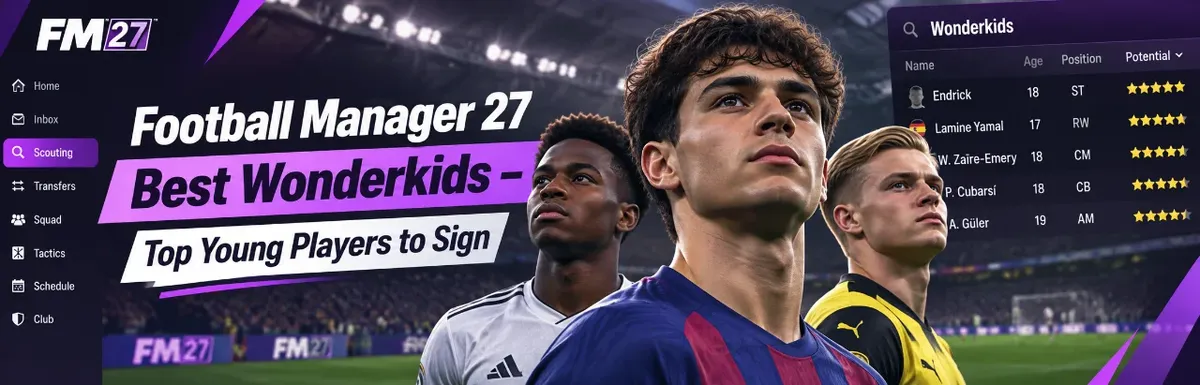
Step 9 – Signing Wonderkids in Football Manager 27
Wonderkids are among the most attractive transfer targets in FM27.
However, recruiting young players requires a different approach from signing established professionals.
Scout Potential and Current Ability
A teenager with high potential may still be unsuitable for immediate first-team football.
Review their current attributes and evaluate how much development they require.
Don't assume every highly rated youngster will reach their maximum potential.
Development depends on numerous factors, including training, playing opportunities, and individual characteristics.
Look for Tactical Compatibility
FM27 encourages managers to recruit players who fit their chosen philosophy.
A young defender with excellent passing ability may be attractive to a possession-focused team.
A physically gifted forward might suit a direct attacking system.
Consider whether the prospect can eventually become effective in the required role.
Playing Time Matters More in FM27
FM27 adjusts how some young players evaluate transfer opportunities.
Sports Interactive specifically highlights greater consideration of playing time when young footballers assess a move.
The promise to treat a club as a stepping stone also carries more weight in relevant contract discussions.
This can create opportunities for smaller clubs.
A promising youngster may prefer a realistic pathway toward regular football rather than immediately joining an elite team where playing opportunities are limited.
However, don't promise regular playing time unless you can provide it.
Consider Development Loans
Some wonderkids may benefit from loan moves after signing.
Choose destinations where the player has a realistic chance of participating regularly.
Review the receiving club's competitive level, facilities, and intended role.
A suitable development environment is more important than simply sending the player to the most prestigious available club.
Step 10 – Using Loan Transfers in FM27
Loans can be extremely valuable, particularly for smaller clubs.
They provide opportunities to strengthen the squad without committing to a full permanent transfer.
Loaning Players Into Your Club
A loan may allow you to use a player whose permanent transfer fee would be unaffordable.
This is particularly useful for newly promoted teams or clubs competing with limited budgets.
However, loans may still involve wages, monthly fees, or other conditions.
Evaluate the overall cost before agreeing.
Negotiate Wage Contributions
The parent club may request that you pay a percentage of the player's wages.
The amount can depend on the player's quality, reputation, and the clubs involved.
A financially stronger parent club may sometimes accept a greater contribution if the loan provides valuable playing time.
However, this is never guaranteed.
Include Future Transfer Options
Some loan deals may allow permanent purchase arrangements.
These can be valuable when you're uncertain about a player's suitability.
An agreed future purchase option can provide flexibility if the player performs well.
However, a mandatory future payment creates a more significant commitment.
Always distinguish between optional and compulsory terms.
Loaning Out Your Own Players
Loaning out young players can help their development.
Before accepting an offer, examine the receiving club's expectations.
Regular playing opportunities are important.
Consider whether the player is likely to perform in a suitable position and competitive environment.
FM27 also improves the presentation of reports about young footballers on loan, providing more useful information about their progress.
Step 11 – Finding Transfer Bargains and Free Agents
Not every successful transfer requires a large budget.
Some of the best recruitment opportunities come from understanding contract situations and searching less competitive markets.
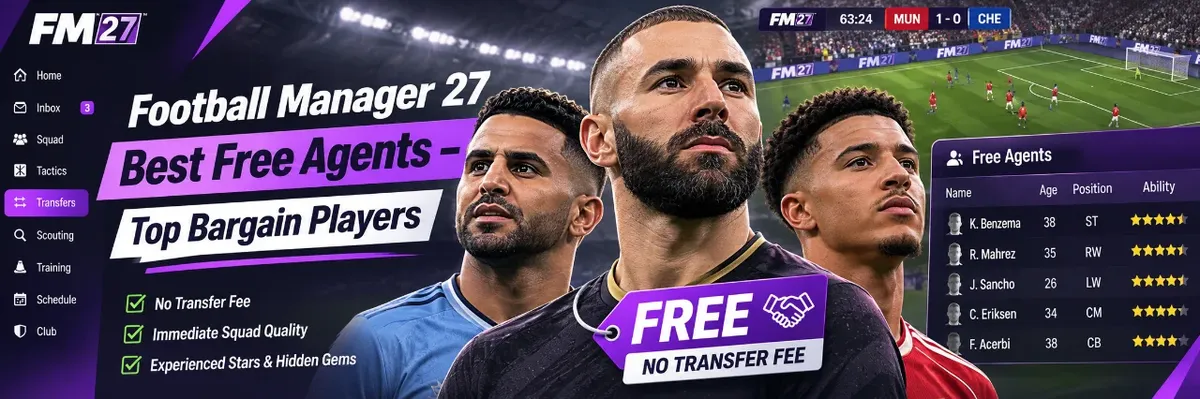
Search for Free Agents
Free agents can be particularly useful for clubs with limited transfer budgets.
They don't require a traditional transfer fee paid to another club.
However, wages, signing bonuses, agent fees, and other contract costs may still apply.
Evaluate the complete financial commitment.
An expensive veteran may cost more over a contract than a younger player purchased for a modest fee.
Target Expiring Contracts
Players approaching the end of their contracts may become more accessible.
Their clubs could be willing to negotiate rather than risk losing them without a transfer fee.
Depending on competition rules, players may also become eligible for pre-contract agreements.
Always check the relevant regulations before attempting to negotiate.
Scout Smaller Leagues
Smaller leagues can provide opportunities to discover talented players before they become widely recognized.
However, avoid assuming that every footballer outside a major league represents a bargain.
Scouting knowledge, transfer restrictions, adaptability, and league quality all influence the risk.
Look for players whose attributes match your tactical requirements and whose overall financial cost remains manageable.
Look for Unwanted Players
Players who aren't part of their club's plans may become available at more attractive prices.
Monitor transfer-listed players and relevant agent offers.
However, don't assume every available player will accept your club's contract terms.
A footballer may still have substantial salary expectations.
Use Data to Identify Undervalued Talent
Statistics can help identify players who perform effectively despite limited reputations.
For example, a central midfielder may possess strong passing data relative to their competition.
A defender could consistently perform well in aerial challenges or defensive actions.
These numbers are useful, but context matters.
A player dominating a weaker league may struggle when facing stronger opponents.
Combine performance data with scouting reports and tactical suitability.
Step 12 – How to Sell Players for Better Value
A successful recruitment strategy also requires effective selling.
Selling unnecessary footballers can create room for new signings, reduce wages, and provide additional transfer funds.
Identify Surplus Players
Start by reviewing players who are unlikely to receive sufficient playing time.
Consider their contracts, wages, and tactical suitability.
A high-earning substitute who rarely contributes may be more valuable to the club as a transfer sale.
However, maintain enough squad depth to handle injuries and competitive demands.
Use Pitch Opportunities
TransferRoom's Pitch Opportunities feature allows you to identify clubs searching for players.
This can help you approach teams that may genuinely need someone from your squad.
A targeted approach may be more productive than repeatedly offering players without considering the receiving clubs' requirements.
Offer Players to Clubs
You can also make players available through TransferRoom and other transfer interactions.
However, offering someone for sale doesn't guarantee interest.
A player's wages, reputation, and willingness to move may prevent a deal.
Consider the realistic market for the player.
Don't Undervalue Important Players
Selling a useful first-team footballer can create an unexpected problem.
Before accepting an offer, consider how difficult and expensive it would be to recruit a replacement.
A large transfer fee isn't necessarily attractive if the squad becomes significantly weaker.
Consider Future Financial Clauses
Sell-on arrangements and other clauses may provide future value.
However, their usefulness depends on the player's development and subsequent transfers.
Don't rely on speculative future payments when making essential short-term budget decisions.
Step 13 – How FM27 Transfer Deadline Day Works
Football Manager 27 restores greater emphasis on Transfer Deadline Day.
The feature aims to create a more dramatic conclusion to transfer windows.
More Visible Agent Offers
Agent Offers are available through the Recruitment area during transfer windows.
Their activity generally increases toward the deadline.
This can provide additional opportunities to discover available players.
However, an agent recommendation doesn't automatically mean the player represents good value.
Compare any late opportunity against your recruitment priorities.
Keep Your Shortlist Ready
Deadline-day decisions can become rushed.
A useful strategy is to maintain several options for each important position.
If your primary target becomes unavailable, you can investigate an alternative without restarting the scouting process.
Avoid leaving essential recruitment until the final moments.
Review Registration Requirements
A completed transfer doesn't always mean the player can immediately participate.
Competition registration rules, work permits, and squad limitations may still apply.
Check these requirements before submitting a late offer.
Avoid Panic Buying
A disappointing result or unexpected injury can make expensive signings appear attractive.
However, rushing into a poor contract may create problems lasting several seasons.
Consider whether a loan, short-term replacement, or existing squad member can solve the issue.
A disciplined transfer decision is often more valuable than a dramatic last-minute announcement.
Best FM27 Recruitment Strategy for Different Club Budgets
Different clubs require different approaches to the transfer market.
A European powerhouse can pursue targets unavailable to a lower-league team.
However, effective recruitment principles remain similar.
Elite Clubs
Elite clubs should prioritize players capable of improving the starting lineup or providing valuable squad depth.
Tactical fit remains important even when the budget is substantial.
A technically gifted superstar may be less useful than a slightly lower-profile player who performs the exact responsibility your team needs.
Mid-Table Clubs
Mid-table clubs often benefit from value-focused recruitment.
Look for players who can improve weak positions without consuming the entire budget.
Combining experienced signings with younger prospects can provide a balance between immediate performance and future development.
Newly Promoted Clubs
Newly promoted teams should prioritize survival and squad stability.
A reliable defender or defensive midfielder may provide greater value than an expensive attacking player.
Loans and free transfers can also support recruitment when budgets are restricted.
Lower-League Clubs
Lower-league managers often need to focus on affordable contracts and immediate suitability.
Trials, free agents, and loans may be particularly valuable.
Avoid overly complicated recruitment requirements if your scouting department has limited resources.
Youth Development Clubs
Youth-focused teams should consider long-term potential and realistic playing opportunities.
The objective is to develop footballers into important contributors or valuable transfer assets.
Don't sign numerous youngsters without sufficient coaching, facilities, or development opportunities.
Common Football Manager 27 Transfer Mistakes
Even experienced managers can make costly recruitment errors.
Avoiding these mistakes can help create a more sustainable squad.
Signing Players Based Only on Reputation
A famous footballer isn't automatically the correct choice.
Review current attributes, physical condition, tactical fit, and contract expectations.
An underrated player who matches your system may perform better than a recognizable star.
Ignoring Tactical Effectiveness
FM27 places greater emphasis on players' ability to execute specific roles.
Recruiting without considering In Possession and Out of Possession suitability may create problems.
Scout according to your tactical requirements.
Overspending on Wages
A transfer can look affordable because of a relatively low fee while creating significant salary commitments.
Monitor the complete contract package.
Protect your club's long-term financial flexibility.
Signing Too Many Players
Large recruitment windows can disrupt squad balance and create competition for limited playing opportunities.
Prioritize quality and suitability rather than unnecessary squad expansion.
Ignoring Personality
Player personality and team relationships can influence squad dynamics.
A talented footballer may still struggle to fit into the dressing room.
Use scouting information to evaluate more than technical ability.
Selling Before Securing Replacements
Selling a useful player can create a sudden weakness.
Before approving an important departure, consider whether a suitable replacement is available.
A profitable sale isn't necessarily beneficial if it damages your team's ability to compete.
Football Manager 27 Transfer Guide FAQ
How Do You Scout Players in FM27?
Open the Recruitment area and use the Player Database, scouting assignments, and Recruitment Focuses.
You can search for players according to positions, attributes, age, and other available criteria.
Scout reports provide additional information about suitability and potential transfer costs.
What Is the Best Way to Find Transfer Bargains?
Look for free agents, transfer-listed players, expiring contracts, and undervalued footballers from smaller leagues.
Compare their full financial costs and tactical suitability before making an offer.
What Is TransferRoom in Football Manager 27?
TransferRoom is a recruitment system that allows clubs to communicate transfer requirements and offer players to other teams.
Requirements support incoming recruitment, while Pitch Opportunities help identify potential buyers or loan destinations.
Is TransferRoom New in FM27?
No. TransferRoom's expanded Requirements and Pitch Opportunities features were introduced in FM26.
FM27 builds on those systems with improved recruitment information, advice, and navigation.
How Does Tactical Effectiveness Affect Transfers?
Tactical Effectiveness provides information about how well players may fit your tactical system.
Scout reports can help you assess positional suitability and whether a signing is likely to require further adaptation.
Can You Sign Players for Free in FM27?
Yes. Free agents may be signed without paying a transfer fee to another club.
However, wages, signing bonuses, agent fees, and additional contract expenses may still apply.
How Do You Negotiate Cheaper Transfer Fees?
Research the player's availability and value, make sensible offers, and consider appropriate payment structures.
Installments and performance clauses may help make negotiations more flexible, but they also create future costs.
Are Loan Deals Worth Using?
Loans can be valuable for strengthening a squad without committing to a permanent transfer.
However, managers should examine wages, loan fees, playing-time expectations, and any future purchase conditions.
Can You Sell Players Through TransferRoom?
Yes. TransferRoom allows you to offer footballers to other clubs and investigate Pitch Opportunities.
However, clubs aren't guaranteed to submit acceptable offers.
Do Young Players Prefer More Playing Time in FM27?
FM27 adjusts how some young players evaluate transfer opportunities, placing greater importance on playing time.
This may create opportunities for smaller clubs that can offer realistic first-team development.
How Do You Avoid Overspending?
Set recruitment priorities, compare multiple candidates, review total contract costs, and maintain enough budget flexibility for future needs.
Avoid signing footballers solely because they're famous or highly rated.
Final Thoughts – Master the FM27 Transfer Market
Football Manager 27 makes recruitment more connected to your overall managerial philosophy.
Scouting, tactics, player development, negotiations, and financial planning all influence how successfully you can build a competitive squad.
The improved Recruitment interface makes important information easier to access, while Recruitment Focuses and TransferRoom provide additional ways to identify suitable footballers.
Tactical Effectiveness adds another layer of decision-making by encouraging managers to consider how well potential signings fit their preferred system.
Improved staff advice and more detailed transfer information also help managers approach negotiations with greater confidence.
However, the most successful FM27 transfer strategy isn't about signing the most expensive players or completing the highest number of deals.
It's about understanding your squad, identifying weaknesses, finding suitable footballers, and negotiating contracts that support the club's long-term ambitions.
Use scouting to discover opportunities.
Use recruitment focuses to investigate specific needs.
Use TransferRoom to communicate with other clubs.
Use tactical information to assess whether a player will perform effectively.
And use disciplined negotiations to protect your finances.
Whether you're recruiting a world-class superstar, discovering an unknown wonderkid, or signing a free agent to strengthen a lower-league squad, every transfer should have a clear purpose.
Build intelligently, negotiate confidently, and create a Football Manager 27 squad capable of winning today and dominating tomorrow.