How Player Roles Work in Football Manager 27
Football Manager 27 uses a two-phase tactical system.
Each player has an In Possession role and an Out of Possession role, allowing you to define their responsibilities when your team controls the ball and when the opposition has possession.
This system was introduced in FM26 and remains the foundation of FM27 tactical management.
In Possession Roles Explained
In Possession roles determine how players behave when your team has the ball.
They influence positioning, passing options, attacking movement, and the spaces players attempt to occupy.
For example, an Inside Wing-Back may begin in a conventional full-back position before moving centrally as possession develops.
A Wide Forward can stretch the opposition while also threatening the penalty area with attacking runs.
A Midfield Playmaker may concentrate on creating passing options and progressing possession through central areas.
The important question is how these roles complement one another.
Two players attempting to occupy the same attacking space can make your system less effective.
Meanwhile, players moving into complementary positions may create useful passing triangles and attacking overloads.
Out of Possession Roles Explained
Out of Possession roles determine how footballers position themselves and behave when defending.
They can influence pressing, covering space, tracking opposition runners, and maintaining the team's defensive structure.
For example, a Pressing Full-Back may move forward to challenge an opponent's wide player.
A Holding Full-Back provides a more conservative alternative, protecting defensive space.
A Screening Defensive Midfielder concentrates on protecting passing lanes in front of the defense.
These behaviors allow managers to create a specific defensive identity without relying entirely on their attacking formation.
FM27 No Longer Uses the Traditional Duty System
An important change inherited from FM26 is the removal of the older Attack, Support, and Defend duties.
Instead of selecting a role and then choosing one of those duties, you assign distinct responsibilities for each phase of play.
This provides greater freedom when creating tactical structures.
For example, a player may contribute aggressively to attacks while performing a more conservative defensive responsibility.
However, not every role combination is automatically effective.
Your selected footballers must possess the necessary attributes and positional familiarity.
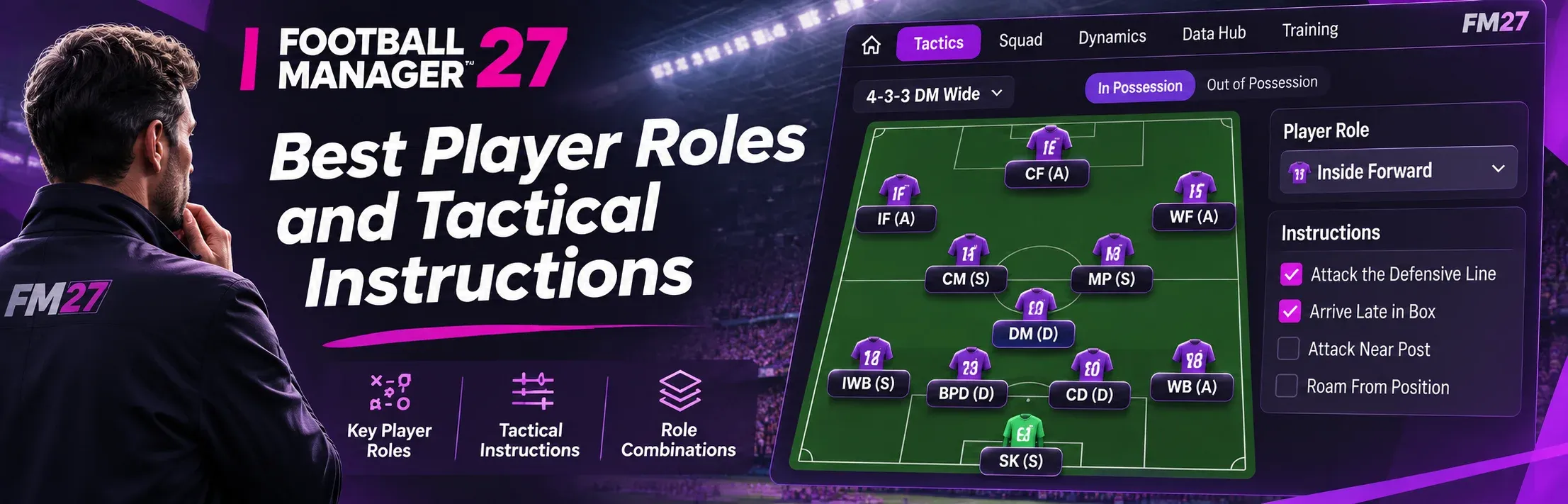
Best Goalkeeper Roles in Football Manager 27
Goalkeepers influence both defensive organization and the beginning of attacking moves.
The right role depends on your formation, defensive line, and preferred method of distributing possession.
Ball-Playing Goalkeeper
The Ball-Playing Goalkeeper is a useful In Possession option for teams that want their goalkeeper involved in build-up.
This role can suit possession-oriented systems where defenders and midfielders create short passing options.
Useful attributes include Passing, First Touch, Composure, Decisions, and relevant goalkeeping qualities.
However, don't select a Ball-Playing Goalkeeper simply because you want to imitate an elite possession team.
If your goalkeeper lacks the technical ability required, risky distribution can create dangerous turnovers.
Best for: Possession football, controlled build-up, and technically strong squads.
No-Nonsense Goalkeeper
The No-Nonsense Goalkeeper provides a more straightforward alternative.
This can suit teams that prioritize defensive security and direct distribution rather than complicated possession patterns.
A lower-league club with technically limited defenders may benefit from keeping its initial build-up relatively simple.
However, longer distribution still requires suitable receiving players.
Your striker or midfielders must be capable of competing for the ball.
Best for: Direct football, lower-league teams, and simple build-up structures.
Sweeper Keeper
Sweeper Keeper is an Out of Possession role that supports a more proactive defensive approach.
It can be particularly useful when your team uses a higher defensive line and needs a goalkeeper capable of responding to balls played behind the defenders.
Relevant qualities include anticipation, decisions, positioning, and suitable physical and goalkeeping attributes.
A goalkeeper who rarely leaves the penalty area may struggle with these demands.
Line-Holding Goalkeeper
The Line-Holding Goalkeeper offers a more conservative defensive alternative.
This role can complement teams that defend deeper and prefer the goalkeeper to remain closer to goal.
It's particularly appropriate when the defensive structure limits the space available behind the back line.
Recommended combination: Ball-Playing Goalkeeper In Possession with Sweeper Keeper Out of Possession for suitable high-line possession teams.
Best Centre-Back Roles in FM27
Central defenders are responsible for preventing goals, but their In Possession duties can significantly influence attacking structures.
The best combination depends on whether your team wants to build patiently, use direct passing, or create numerical advantages through defensive movement.
Ball-Playing Centre-Back
A Ball-Playing Centre-Back can contribute to possession by progressing the ball from deeper areas.
This type of defender is particularly useful when your team wants to build attacks through controlled passing.
Important attributes include Passing, Composure, Decisions, Anticipation, Positioning, and appropriate defensive qualities.
However, using multiple defenders with ambitious passing responsibilities can create unnecessary risk when opponents press aggressively.
Choose players whose abilities justify the role.
Overlapping Centre-Back
The Overlapping Centre-Back is one of the newer roles introduced with the modern tactical system.
It gives managers additional opportunities to involve defenders in attacking movements.
This can be particularly interesting in a three-centre-back structure where the outside defenders have room to advance.
However, these movements must be supported by the players around them.
If a central defender advances while nearby midfielders and wing-backs also leave their defensive positions, your team may become vulnerable during transitions.
Best for: Three-centre-back systems with appropriate defensive coverage.
Stopping Centre-Back
Stopping Centre-Back is an Out of Possession role that encourages more aggressive defensive engagement.
The player may step forward to challenge opponents before they can develop an attack.
Useful attributes include Tackling, Aggression, Strength, Anticipation, and Decisions.
However, stepping out of the line can leave space behind.
That creates a need for suitable defensive support.
Covering Centre-Back
Covering Centre-Back provides a more cautious defensive responsibility.
Instead of stepping forward aggressively, the player focuses more on protecting space and reacting to attacking movement.
Pace, Anticipation, Positioning, and Marking are valuable qualities.
Pairing a stopping defender with suitable covering support can create a more balanced defensive relationship.
However, the combination should still reflect the number of defenders and the overall shape.
Recommended approach: Use one defender capable of challenging opponents while ensuring the remaining defensive structure protects the space created.
Best Full-Back and Wing-Back Roles in FM27
Full-backs are among the most tactically important players in modern Football Manager.
They can provide attacking width, move into central midfield, support pressing, or remain deeper to protect against counter-attacks.
FM27 gives managers greater control over these movements through separate roles and instructions.
Inside Wing-Back
The Inside Wing-Back moves toward central areas as your team progresses possession.
Sports Interactive's official tactical explanation demonstrates how the role can begin in a traditional defensive position before moving into defensive midfield.
This creates additional central passing options.
It can also allow midfielders to move into more advanced attacking positions.
However, moving a full-back centrally may leave less natural width on that side.
You'll need another player to provide the appropriate wide attacking support.
Useful attributes: Passing, First Touch, Decisions, Positioning, Composure, and relevant defensive qualities.
Best for: Possession football and positional-play systems.
Advanced Wing-Back
The Advanced Wing-Back provides a more aggressive wide attacking option.
This role can be useful when your team wants to stretch the opposition and create opportunities through the flanks.
Strong Stamina, Acceleration, Crossing, Work Rate, and suitable movement attributes are important.
However, FM27's match engine places greater emphasis on repeated sprinting and fatigue.
A wing-back who constantly attacks may struggle physically during demanding fixtures.
Playmaking Wing-Back
The Playmaking Wing-Back offers another way to create possession from wide defensive positions.
Rather than focusing exclusively on reaching crossing positions, the role can support progression and creative passing.
This makes technical attributes particularly important.
A player with strong passing and decision-making may be more suitable than someone whose main strength is speed.
Pressing Full-Back
The Pressing Full-Back is an Out of Possession role designed to engage opponents more aggressively in wide areas.
This can support a high-pressing system.
However, moving forward creates space behind the full-back.
You may need a central defender or nearby midfielder to provide additional coverage.
Holding Full-Back
The Holding Full-Back provides a more conservative defensive option.
It can protect wide and central defensive spaces while other teammates engage opponents.
This makes it a useful partner for more aggressive roles elsewhere.
Recommended combination: An attacking wing-back on one side with a more conservative full-back on the opposite flank can provide a balanced starting point.
Best Defensive Midfielder Roles in Football Manager 27
Defensive midfielders help connect attacking possession with defensive security.
A suitable role can provide stability, support pressing, or create additional passing options.
Deep-Lying Playmaker
A deep playmaking role suits technically capable midfielders who can progress possession from deeper areas.
Passing, Vision, First Touch, Composure, and Decisions are valuable attributes.
The player should also possess enough defensive understanding to perform their assigned position.
A playmaker who regularly abandons defensive responsibilities may expose the central defenders.
Screening Defensive Midfielder
The Screening Defensive Midfielder is a defensive role focused on protecting the area in front of the back line.
Rather than repeatedly pressing opponents, the player concentrates on maintaining position and restricting passing lanes.
This can be extremely useful in formations containing aggressive full-backs or advanced midfielders.
Best for: Maintaining central defensive balance.
Pressing Defensive Midfielder
The Pressing Defensive Midfielder provides a more aggressive option.
This role can move forward to support a high press and challenge opposing midfielders.
The player needs appropriate Work Rate, Anticipation, Aggression, and defensive awareness.
However, an aggressive press may create gaps behind the midfielder.
Consider pairing this role with another footballer capable of protecting central spaces.
Dropping Defensive Midfielder
The Dropping Defensive Midfielder offers another defensive solution.
When defending deeper, the player can move toward the back line and provide additional central protection.
This can be useful when your wide defenders contribute aggressively in other phases.
It is especially interesting for managers creating systems that change their defensive structure throughout a match.
Best Central Midfielder Roles in FM27
Central midfielders influence passing, pressing, attacking movement, and defensive balance.
The ideal combination usually involves complementary responsibilities rather than assigning every player an attacking role.
Midfield Playmaker
The Midfield Playmaker is one of the roles introduced with the modern tactical overhaul.
It can provide a creative passing option in central areas.
The player should possess strong technical and mental attributes.
Passing, Vision, Decisions, First Touch, and Composure are particularly useful.
However, creativity alone doesn't guarantee a balanced midfield.
Your other players need to support the playmaker with suitable movement and defensive responsibilities.
Wide Central Midfielder
The Wide Central Midfielder offers movement toward wider areas during possession.
This can create interesting combinations with full-backs and wingers.
For example, a midfielder moving toward the flank may create an additional passing option while another teammate attacks a more central space.
However, the movement must complement the rest of the formation.
If several players drift into the same area, central midfield coverage may become weak.
Pressing Central Midfielder
The Pressing Central Midfielder provides an aggressive Out of Possession responsibility.
The player can move forward to engage opponents and support collective pressing.
This role benefits from Work Rate, Stamina, Anticipation, and appropriate defensive attributes.
However, the player needs sufficient support behind them.
Screening Central Midfielder
The Screening Central Midfielder provides a more disciplined defensive alternative.
Rather than pressing aggressively, the player focuses on maintaining useful positioning and reducing central passing opportunities.
This role can complement more adventurous midfield teammates.
Wide Covering Central Midfielder
The Wide Covering Central Midfielder moves toward wide defensive spaces when necessary.
This can be particularly useful when a winger remains high rather than recovering defensively.
The midfielder helps protect the flank and support the full-back.
However, shifting wide creates a potential vulnerability through the middle.
Recommended combination: Pair an aggressive or creative midfielder with another player responsible for maintaining defensive balance.
Best Winger and Wide Forward Roles in FM27
Wide attacking players influence the width, movement, and goalscoring potential of your team.
FM27 offers several ways to use them.
Traditional Winger
A traditional Winger provides width and opportunities to attack defenders from wide areas.
This role may suit players with strong Dribbling, Crossing, Acceleration, Pace, and Decisions.
It's particularly attractive when your striker benefits from deliveries into the penalty area.
However, not every team should rely on crossing.
The effectiveness of the role depends on the quality of your wide player and the movement of the attacking teammates.
Inside Forward
The Inside Forward can move toward central attacking areas.
This can create shooting opportunities or combinations with the striker.
Players operating on the opposite flank to their stronger foot may benefit from certain attacking movements.
However, cutting inside reduces the natural width on that side.
An overlapping full-back or another wide-supporting player may be useful.
Wide Forward
The Wide Forward is a modern attacking role that combines aspects of a winger and central forward.
Sports Interactive describes the role as holding width while threatening the defense through dangerous attacking runs.
Unlike a more traditional creative winger, the Wide Forward places greater emphasis on goalscoring movement.
Important attributes include Off the Ball, Acceleration, Composure, and appropriate technical qualities.
This role can be especially useful when your team wants additional goals from wide positions.
Wide Outlet Winger
Wide Outlet Winger is an Out of Possession role that keeps an attacking player high and wide.
Instead of regularly recovering to help the full-back, the winger remains available for counter-attacks.
This creates a useful transition option.
However, it also reduces defensive coverage on that flank.
A Wide Covering Central Midfielder may provide the necessary support.
Tracking Winger
The Tracking Winger offers a more defensive alternative.
This role contributes to wide defensive coverage and can help protect the full-back.
It may be useful when your team faces dangerous opposition wingers.
However, the additional defensive workload can reduce how frequently the player remains available in advanced positions.
Recommended combination: A Wide Forward or Inside Forward In Possession, paired with an appropriate Out of Possession role based on whether you want aggressive counter-attacks or greater defensive security.
Best Attacking Midfielder Roles in Football Manager 27
Attacking midfielders connect midfield possession with the forward line.
Their responsibilities can significantly influence how your team creates opportunities.
Creative Attacking Midfielder
A creative attacking midfielder can operate between opposition defensive lines and provide passing options for the forwards.
Useful attributes include Vision, Passing, Technique, Decisions, and First Touch.
The player must also recognize when to move into space and when to support the team's existing structure.
Avoid selecting an advanced creative player if your midfield cannot reliably deliver possession into dangerous areas.
Shadow Striker
A Shadow Striker-style attacking role emphasizes forward movement and attacking space near the striker.
This can create an additional goalscoring presence.
However, the midfielder's forward runs may leave fewer supporting options behind the attack.
Consider whether your deeper midfielders can compensate.
Central Outlet Attacking Midfielder
The Central Outlet Attacking Midfielder is an Out of Possession role that keeps the player available in central attacking areas.
This can support quick transitions.
However, the player contributes less to deeper defensive organization.
Your midfield needs sufficient coverage behind them.
Tracking Attacking Midfielder
A Tracking Attacking Midfielder contributes more to defensive recovery.
This can help create a compact midfield structure when facing strong opposition.
The choice depends on whether your tactical plan prioritizes maintaining an advanced counter-attacking option or strengthening defensive coverage.
Best Striker Roles in FM27
A successful attack needs a striker who complements the rest of the team.
Different roles suit different player profiles.
Centre Forward
The Centre Forward provides a relatively flexible attacking reference point.
Depending on the player's attributes and instructions, they can participate in build-up, threaten defensive spaces, and finish attacking moves.
This may be a useful starting role when your striker has a balanced attacking profile.
Deep-Lying Forward
The Deep-Lying Forward provides additional support during possession.
Rather than remaining exclusively near the opposing defensive line, this player can contribute to combinations with midfielders and other attackers.
Useful attributes include First Touch, Passing, Decisions, Technique, and appropriate movement.
However, the team needs runners capable of exploiting the spaces ahead.
Target Forward
The Target Forward offers a more physical attacking option.
It can suit teams using direct passing or frequent deliveries into the penalty area.
Strength, Jumping Reach, Heading, and appropriate technical qualities are important.
However, direct football shouldn't mean launching every pass toward the striker without supporting movement.
The player still needs nearby teammates capable of collecting second balls and creating attacking opportunities.
Poacher
The Poacher emphasizes goalscoring movement and opportunities around the penalty area.
Off the Ball, Finishing, Composure, and Anticipation are valuable qualities.
This role may be attractive when the team already creates sufficient opportunities and needs someone to finish them.
However, the striker could become isolated if supporting players remain too far away.
Channel Forward
The Channel Forward is another modern role.
It emphasizes attacking channels and creating movement around opposition defenders.
This can be useful when your team has players capable of delivering passes into space.
Acceleration, Pace, Off the Ball, and Anticipation can support the role.
However, the exact effectiveness depends on the opposition's defensive line and the passing quality of teammates.
False Nine
The False Nine offers a different attacking approach.
Instead of remaining exclusively in advanced central areas, the forward can contribute to deeper attacking combinations.
This may create opportunities for wingers or midfielders to attack the space ahead.
However, the system needs suitable runners.
If every attacker moves toward the ball, the team may struggle to threaten the penalty area.
Best overall approach: Select your striker based on the opportunities your tactical system creates, not simply their reputation or goalscoring statistics.
Best FM27 Player Role Combinations
Individual roles become more effective when they complement the movements of nearby teammates.
The following combinations are practical tactical examples, not guaranteed winning presets.
Inside Forward + Attacking Wing-Back
An Inside Forward moving toward central attacking areas can create space for a wing-back to advance outside them.
This provides two different attacking threats.
The winger attacks more central positions, while the wing-back provides width.
However, the defensive structure needs protection when both players move forward.
Wide Forward + Wide Covering Midfielder
A Wide Forward can provide dangerous attacking movement.
When paired with a Wide Outlet Winger responsibility Out of Possession, the player may remain high for counter-attacks.
A Wide Covering Central Midfielder can help compensate for the reduced defensive support.
This is one of the role relationships discussed in Sports Interactive's official tactical content.
Pressing Defender + Covering Defender
A more aggressive central defender can attempt to disrupt attacks early.
A covering teammate provides security behind them.
This relationship can help create defensive balance.
However, the rest of the defensive shape must also be considered.
Pressing Midfielder + Screening Midfielder
A Pressing Central Midfielder may advance to challenge possession.
A Screening Central Midfielder can provide more conservative positioning.
This offers a balance between pressure and defensive protection.
However, the partnership still needs to suit the players' positions and attributes.
Deep-Lying Forward + Attacking Wide Players
A Deep-Lying Forward can contribute to possession while wide attackers move into dangerous spaces.
This can create attacking combinations and opportunities to exploit gaps in the defensive line.
However, sufficient penalty-area presence is essential.
If every attacker moves toward the ball, you may struggle to convert possession into goals.
Best FM27 Tactical Instructions for Possession Football
Possession football aims to control the match through coordinated passing, movement, and positioning.
A 4-3-3 DM Wide or 4-2-3-1 DM Wide can provide a useful starting structure.
Passing Directness
A shorter passing approach may support controlled possession.
However, the players need appropriate First Touch, Passing, Composure, and Decisions.
Avoid choosing the shortest possible passing option automatically.
Sometimes a more progressive pass is necessary to exploit space.
Tempo
A moderate tempo can help maintain control while providing opportunities to advance possession.
A higher tempo may create more urgency but can also increase mistakes.
The correct setting depends on player ability and opposition pressure.
Attacking Width
Width influences how your team stretches opposing defensive structures.
A wider approach can create space between opposition defenders.
A narrower approach may support central combinations.
Use the Visualiser to examine how your players actually occupy the pitch.
Creative Freedom
Creative freedom can influence how much flexibility players have when making attacking decisions.
Technically gifted footballers may benefit from greater freedom.
However, inexperienced players might perform more consistently with clearer responsibilities.
Progress Through and Build-Up Strategy
FM27 includes instructions governing how the team progresses possession and responds to pressure.
Choose these settings according to your players' technical abilities and the opposition.
The goal is to create reliable routes from defense into dangerous attacking areas.
Best FM27 Tactical Instructions for Gegenpress
Gegenpress focuses on recovering possession quickly and maintaining pressure on the opposition.
A 4-3-3 DM Wide provides a useful starting point.
However, aggressive pressing requires suitable physical and tactical qualities.
High Press
A high pressing approach attempts to disrupt opponents closer to their goal.
This can create dangerous attacking opportunities.
However, it also requires coordinated movement.
If your forwards press while the midfield remains too deep, opponents may exploit the gap.
Defensive Line
A higher defensive line can help reduce the distance between midfield and defense.
However, it creates space behind the back line.
Your defenders need sufficient mobility, positioning, and anticipation.
Avoid using an extremely high line simply because it appears in a popular tactic.
Counter-Press
Counter-Pressing encourages the team to challenge quickly after losing possession.
It may be effective with athletic players who understand pressing responsibilities.
However, repeated sprinting and high physical demands can contribute to fatigue.
FM27 places greater emphasis on Stamina, making this a particularly important consideration.
Trigger Press
Pressing intensity should match your squad's abilities.
More aggressive instructions may produce additional pressure but also create defensive risks.
Choose a level your team can maintain consistently.
Best FM27 Tactical Instructions for Counter-Attacks
Counter-attacking football focuses on recovering possession and exploiting spaces before the opposition can reorganize.
A balanced 4-4-2, 4-3-3, or suitable deeper formation may provide a useful foundation.
Maintain Defensive Organization
Start with a compact defensive structure.
Your players need to protect central spaces while retaining useful attacking outlets.
A mid-block can be a sensible starting approach for some underdogs.
However, the correct defensive line depends on opposition movement and your defenders' abilities.
Attacking Transition
A Counter-Attack instruction can support quicker attacking movement after possession is recovered.
However, your forward players need suitable attributes.
Pace, Off the Ball, Decisions, and effective passing can all be important.
Use Direct Passing Selectively
More direct passing may exploit the space behind an advanced opposition defense.
However, constantly attempting long passes against a deep defensive block may produce poor results.
Adapt your passing approach to the situation.
Preserve Attacking Outlets
A Wide Outlet Winger or suitable forward outlet can provide an immediate passing option during transitions.
However, keeping attacking players high may reduce defensive coverage.
Balance the counter-attacking threat against the need to protect dangerous areas.
FM27 New Penalty-Area Attacking Instructions
Football Manager 27 introduces additional Player Instructions that influence how attackers enter the penalty area.
These are among the most important FM27-specific tactical additions.
Arrive Late in the Box
An instruction encouraging a player to arrive later can create attacking runs after defenders become occupied by other threats.
This may suit intelligent midfielders who can recognize opportunities to attack space.
Off the Ball and Anticipation are particularly relevant.
However, the movement must complement the runs of your forwards.
Attack the Defensive Line
Players can also be instructed to attack the defensive line more directly.
This may be appropriate for mobile attackers capable of threatening spaces around defenders.
The effectiveness depends on their movement, acceleration, and decision-making.
Attack the Near Post
Near-post movement can create opportunities from appropriate deliveries.
A forward with suitable anticipation and movement may benefit.
However, forcing multiple players toward the same area could make attacking patterns predictable.
Attack the Far Post
Far-post movement can create a different threat.
This may be useful when wide players deliver crosses toward the opposite side of the penalty area.
The receiving player's positioning and aerial ability can be important.
Attack Central Areas
Central attacking movement may help create opportunities near the penalty spot and other dangerous zones.
However, overcrowding central areas can reduce available space.
Consider how many players are already attacking those positions.
Best approach: Combine different attacking movements so players provide multiple threats rather than occupying identical spaces.
How to Use Tactical Tweaks in Football Manager 27
FM27 introduces Tactical Tweaks, allowing managers to make adjustments directly during matches.
These can influence team and individual instructions without requiring the full Tactics screen.
Increase Attacking Urgency
When chasing a goal, increasing urgency may encourage more immediate attacking play.
However, rushed decisions can reduce possession quality.
Use it when the match situation justifies additional risk.
Go More Direct
More direct passing may help exploit space behind defenders or move possession forward quickly.
However, the approach depends on the receiving players.
If your forwards cannot win the ball or attack the available space, the change may be ineffective.
Exploit Width
When opponents protect central areas effectively, greater width may create different attacking opportunities.
However, width alone doesn't guarantee chances.
Your wide players must deliver useful passes or create dangerous movement.
Reduce Pressing
If players are becoming fatigued, reducing pressing demands may help preserve condition.
This can be particularly valuable during demanding matches.
However, the team still needs a coherent defensive structure.
Swap Wingers
FM27 allows wide players to change flanks through Tactical Tweaks.
This can present different challenges to opposing full-backs.
However, positional suitability matters.
A player comfortable attacking from one flank may be less effective on the other.
Avoid Contradictory Tweaks
Tactical Tweaks remain active until removed.
Some adjustments can conflict with others.
Review your active changes when the match situation changes.
Don't assume adding more instructions will automatically improve performance.
How Tactical Effectiveness Changes FM27 Player Roles
Tactical Effectiveness is one of FM27's major new systems.
It evaluates how successfully your squad can execute its tactical philosophy.
Four components influence this measurement.
Tactical Understanding
Players need time to learn their assigned responsibilities.
A complex tactical system involving significant positional movement may require additional preparation.
Avoid changing roles unnecessarily if the squad is still adapting.
Player Ability
The selected players must possess suitable attributes for their responsibilities.
A technically limited defender may struggle as an ambitious ball-playing option.
A slow full-back may struggle with repeated aggressive pressing.
Choose roles according to the available squad rather than assuming every player can perform every responsibility.
Player Buy-In
Player Buy-In measures how willing the squad is to embrace the manager's tactical vision.
Managerial reputation, leadership, personalities, and relationships contribute to this system.
A positive dressing-room environment can support the wider tactical project.
Next Match Information
Opposition scouting and analysis provide information about the upcoming opponent.
This helps managers prepare a suitable approach.
For example, a team facing dangerous wide attackers may need additional defensive coverage on the flanks.
However, preparation should reflect reliable scouting information rather than unsupported assumptions.
Understanding Tactical Complexity in FM27
Tactical Complexity evaluates how demanding your selected positions and instructions are.
It creates a relationship between tactical ambition and the abilities of your squad.
Why Too Many Instructions Can Hurt Performance
A complicated approach may require greater tactical understanding.
For example, combining aggressive pressing, intricate positional movements, and numerous opposition-specific instructions can create substantial demands.
A lower-league squad may struggle to execute that plan consistently.
The problem isn't necessarily that the footballing idea is poor.
The players may simply lack the qualities or preparation required.
When to Simplify Your Roles
If Tactical Effectiveness is weak, inspect whether the selected roles are appropriate.
Consider reducing unnecessary movements or simplifying team instructions.
A more straightforward tactical structure may allow players to perform reliably.
However, simplicity should not mean removing every useful tactical feature.
Retain instructions that serve a clear purpose.
When to Increase Complexity
As your squad improves and becomes more familiar with your preferred style, additional instructions may become practical.
For example, a possession-based team might gradually introduce more advanced attacking movement.
A pressing team could develop a more sophisticated defensive structure.
The objective is to improve the system as player ability and understanding develop.
Best FM27 Player Roles for a 4-2-3-1
The 4-2-3-1 is one of the most flexible formations in Football Manager 27.
It provides attacking width, central creativity, and two deeper midfield positions.
The following approach is an editorial starting blueprint rather than a fixed preset.
Recommended Attacking Structure
Use a goalkeeper capable of distributing possession according to your chosen playing style.
Your central defenders should provide defensive reliability, with at least one comfortable progressing possession if you want controlled build-up.
Consider an attacking wing-back on one side and a more conservative full-back on the other.
In midfield, pair a creative or progressive player with someone responsible for maintaining defensive balance.
The attacking midfielder should support the striker through passing, movement, or goalscoring runs.
On the flanks, a Winger may provide width while an Inside Forward or Wide Forward threatens central areas.
A Centre Forward or Deep-Lying Forward can provide the central attacking reference.
Recommended Defensive Structure
Avoid leaving both flanks exposed.
If one winger remains high as an outlet, provide additional coverage through midfield or the full-back.
A Screening Defensive Midfielder can help protect central areas.
Choose a pressing level that matches your squad's physical abilities.
Common 4-2-3-1 Problem
The lone striker can become isolated.
If this happens, examine the movement of the attacking midfielder and wide forwards.
The solution may involve improving support rather than replacing the striker.
Best FM27 Player Roles for a 4-3-3
The 4-3-3 offers strong opportunities for midfield control and coordinated attacking movements.
It can support possession football, Gegenpress, and balanced transitional styles.
Recommended Midfield Balance
Use a defensive midfielder capable of protecting central spaces.
The two central midfielders should have complementary responsibilities.
One might support attacking progression, while the other maintains a more conservative position.
Avoid asking all three midfielders to abandon the center simultaneously.
Recommended Wide Roles
An Inside Forward on one side can create a central goalscoring threat.
A Winger or Wide Forward on the opposite side can provide a different attacking pattern.
Full-back responsibilities should complement those movements.
For example, an attacking wide defender may provide width when the winger moves inside.
Recommended Defensive Roles
A pressing midfielder can support aggressive pressure.
However, a Screening Defensive Midfielder may be needed to protect the back line.
The wide players should also have Out of Possession responsibilities appropriate to the team's defensive approach.
Common 4-3-3 Problem
An aggressive system can expose the defensive midfielder during counter-attacks.
If opponents repeatedly attack through central spaces, investigate the positions of your full-backs and advanced midfielders.
Best FM27 Player Roles for a 4-4-2
The 4-4-2 remains a useful option for managers who want clear defensive responsibilities and a two-striker partnership.
It may be particularly appealing in lower-league careers.
Recommended Striker Partnership
Combine complementary forwards.
A Target Forward can provide a physical reference point.
A Channel Forward or another mobile attacker may exploit spaces around defenders.
Alternatively, a Deep-Lying Forward can contribute to attacking combinations.
Avoid using two strikers who constantly make identical movements.
Recommended Midfield Roles
The two central midfielders need to protect the middle of the pitch.
A creative midfielder can provide passing quality, while the other maintains defensive balance.
Wide midfielders should support both the full-backs and attacking transitions.
Recommended Defensive Approach
A compact Out of Possession shape may provide a useful foundation.
However, a two-player central midfield can struggle against opponents who create numerical superiority in the middle.
Consider whether one forward or wide midfielder should provide additional support.
How to Fix Common FM27 Role Problems
Even a carefully designed tactical system can produce unexpected results.
The key is identifying which relationships are causing problems.
Your Striker Is Isolated
Examine the distance between the striker and supporting players.
A Deep-Lying Forward may help connect possession, but only if other footballers attack the available space.
Alternatively, an attacking midfielder could provide more advanced support.
Your Wingers Don't Create Chances
Review whether the wide players have enough space to operate.
An Inside Forward may struggle if multiple teammates occupy the same central areas.
A traditional Winger may produce ineffective crosses when no suitable targets are available.
Consider the movements of the full-backs, central midfielders, and striker.
You Concede Too Many Counter-Attacks
Examine how many players advance simultaneously.
Aggressive wing-backs and attacking midfielders can create defensive vulnerabilities.
Consider using more conservative roles or additional central coverage.
The objective is maintaining an effective defensive structure during attacking transitions.
Your Midfield Cannot Retain Possession
Check the passing options available to the player with the ball.
If midfielders repeatedly move away from possession, progression may become difficult.
A more conservative midfielder or playmaking role could provide useful support.
However, the solution depends on the opponent's pressing behavior.
Your Players Become Exhausted
Review pressing intensity and the physical demands of individual roles.
Aggressive wing-backs, pressing midfielders, and high-energy forwards may require substantial stamina.
Consider adjusting workloads and using appropriate squad rotation.
Common Football Manager 27 Player Role Mistakes
Several mistakes can reduce tactical effectiveness.
Using Too Many Aggressive Roles
A team filled with attacking players may create opportunities but leave insufficient defensive protection.
Balance forward movement with appropriate coverage.
Ignoring Out of Possession Responsibilities
An excellent attacking role doesn't automatically provide a suitable defensive role.
Evaluate what each player does when your team loses possession.
Copying Roles Without Checking Attributes
A popular role combination may not suit your squad.
Use role suitability ratings and individual attributes to determine whether players can perform the required responsibilities.
Assigning Contradictory Instructions
Players may struggle when their individual instructions conflict with the team's wider approach.
Review the complete tactical structure rather than treating every instruction separately.
Changing Too Many Roles After One Defeat
One poor result doesn't necessarily mean your tactic is ineffective.
Use match analysis to identify recurring problems before making significant changes.
Ignoring Tactical Complexity
A complicated system may be difficult for inexperienced players to execute.
Build gradually and ensure your squad understands its responsibilities.
Football Manager 27 Player Roles FAQ
What Are the Best Player Roles in FM27?
There is no universally strongest role.
Inside Wing-Back, Wide Forward, Midfield Playmaker, Screening Defensive Midfielder, Channel Forward, and other specialist roles can all be useful when paired with suitable players and complementary responsibilities.
Are In Possession and Out of Possession Roles Different?
Yes.
Each player receives separate responsibilities for attacking and defending.
This allows managers to create different structures depending on which team has possession.
Is Inside Forward Good in FM27?
Yes. The Inside Forward can provide a dangerous attacking option by moving toward central areas.
However, the team needs suitable width and passing support.
What Is the Best Role for a Striker?
The correct role depends on the player's attributes and how your team creates opportunities.
A Deep-Lying Forward supports combinations, a Target Forward offers a physical option, and a Channel Forward threatens spaces around defenders.
What Is the Best Defensive Midfielder Role?
A Screening Defensive Midfielder is useful for protecting central spaces.
A Pressing Defensive Midfielder provides more aggressive defensive engagement.
A deeper playmaking responsibility can help progress possession.
Is an Inside Wing-Back Better Than a Wing-Back?
Not necessarily.
An Inside Wing-Back supports central possession, while a more conventional or advanced Wing-Back can provide width.
The best choice depends on your formation and surrounding roles.
What Is Tactical Complexity?
Tactical Complexity measures how demanding your positions and instructions are.
More complicated systems can require greater player ability and tactical understanding.
What Is Tactical Effectiveness?
Tactical Effectiveness evaluates how well your squad can execute your tactical philosophy.
Its four components are Tactical Understanding, Player Ability, Player Buy-In, and Next Match Information.
Are Attack, Support, and Defend Duties Still in FM27?
The traditional duties were removed with the tactical overhaul introduced in FM26.
FM27 continues using separate In Possession and Out of Possession roles.
How Do You Change Player Instructions During a Match?
You can adjust instructions through the Tactics interface.
FM27 also introduces Tactical Tweaks, allowing certain adjustments directly during matches.
What Are the Best FM27 Instructions for Gegenpress?
A high press, coordinated defensive positioning, and Counter-Pressing can provide a foundation.
However, the selected instructions must match the squad's stamina, physical ability, and tactical understanding.
Should You Copy Popular FM27 Tactics?
Community tactics can provide useful ideas, but they aren't guaranteed to perform identically in every career.
Adapt role combinations and instructions to your players.
Final Thoughts – Master FM27 Player Roles and Tactical Instructions
Football Manager 27 offers tremendous flexibility when creating a footballing philosophy.
The combination of separate In Possession and Out of Possession roles allows managers to control how players attack, defend, press, and transition between different phases of play.
Specialist roles such as Inside Wing-Back, Wide Forward, Midfield Playmaker, Pressing Defensive Midfielder, and Channel Forward provide numerous opportunities to create distinctive tactical structures.
However, no single role is guaranteed to outperform every alternative.
The most important consideration is how your players work together.
A Wide Forward needs suitable attacking support.
An aggressive full-back requires defensive coverage.
A creative midfielder needs teammates who provide passing options and protect the spaces behind them.
FM27's Tactical Effectiveness system reinforces the importance of player ability, understanding, and preparation.
Meanwhile, Tactical Complexity encourages managers to balance sophisticated ideas against what their squad can realistically execute.
The new penalty-area instructions provide additional control over attacking movement, while Tactical Tweaks allow managers to respond more directly during matches.
The best Football Manager 27 tactic isn't simply the one with the most attacking roles or the greatest number of instructions. It's the system that creates effective relationships between your players.
Start with a clear formation.
Assign complementary roles.
Review how players move in both phases.
Train your preferred system and use match data to identify weaknesses.
Make targeted adjustments rather than rebuilding everything after a disappointing result.
Above all, remember that tactical success depends on turning individual responsibilities into collective performance.
Master your player roles, create a balanced tactical identity, and turn your Football Manager 27 squad into a team capable of challenging for trophies.