Ancient Guide CS2: Best Defaults and How to Take Mid
Ancient is a map where structure matters. It is not enough to run into A Main, rush B every round, or hope that one strong aimer wins every opening fight. The map is built around important control zones that decide how easy or difficult the rest of the round becomes. Mid, Donut, Cave, A Main, B Lane, and Temple-style rotation routes all shape the match.
The most important area is Mid. Mid connects the map, opens routes toward Donut and A, creates pressure toward CT rotations, and gives the T side more ways to finish the round. If the T side controls Mid, CTs cannot easily stack one site. If the CT side controls Mid, Ts lose flexibility and often become forced into direct site hits. That is why strong Ancient teams fight for Mid with utility, timing, and support instead of treating it like a random duel area.
Ancient also rewards good defaults. A default is not a slow round where nobody does anything. A default is a structured starting plan that spreads players across the map, denies CT aggression, takes useful space, and gives the team options. On Ancient, a good T default usually pressures Mid, holds A Main or A-side space, watches B/Cave aggression, and keeps rotations possible. A good CT default covers Mid, protects Cave, watches A Main, and keeps enough flexibility to rotate.
The biggest mistake many ranked players make on Ancient is choosing a bombsite too early with no information. They group outside A Main, get blocked by utility, and waste the round. Or they rush B through a narrow path, get delayed, and never adjust. Ancient becomes much easier when your team understands how to default first, then choose the final hit based on what the CTs give you.
BoostRoom helps CS2 players improve by building better habits instead of relying only on aim. Ancient is a perfect map for structured improvement because good positioning, communication, utility timing, and Mid control can instantly make your matches feel more organized. If you want better ranked progress and more confidence on tactical maps, BoostRoom can help you focus on what actually wins rounds.
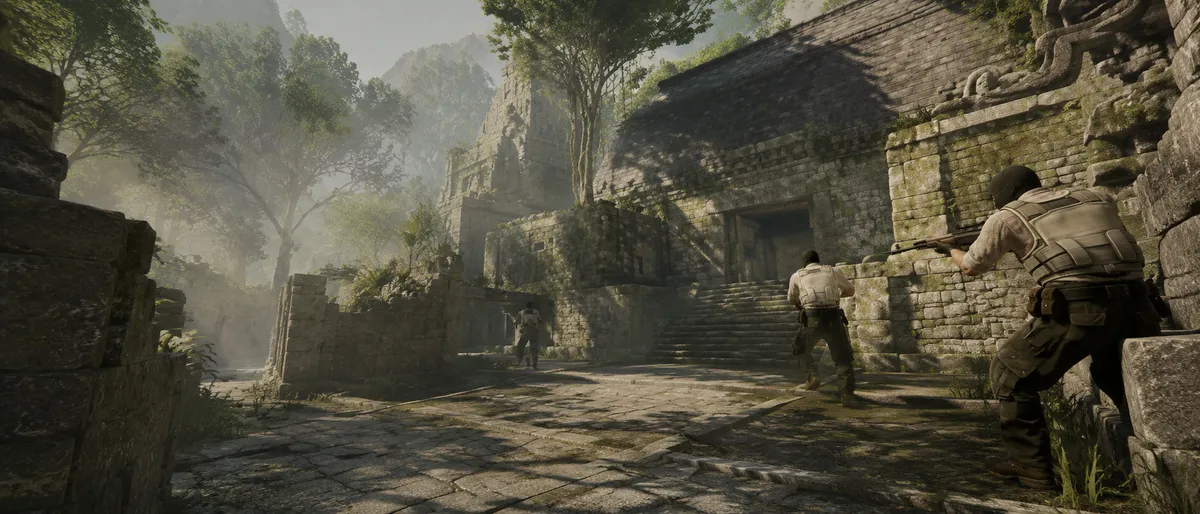
Why Ancient Is So Different From Other CS2 Maps
Ancient looks simple when you first load into it, but the map becomes deeper once you understand how many routes connect through Mid. Unlike maps where one lane clearly dominates the round, Ancient has multiple pressure points that interact with each other. Taking one area often changes the value of another area.
Mid is the central connector:
Mid gives access to Donut, which leads toward A. It also gives information about CT movement and can pull defenders away from bombsites. If Ts control Mid, they can split A, fake pressure, or punish rotations.
Cave is a major B-side pressure point:
Cave is one of the most important areas near B. If Ts control Cave, B defenders lose comfort and must worry about a stronger B hit. If CTs control Cave, they can delay, gather information, and sometimes support Mid pressure.
A Main and Donut work together:
A attacks become stronger when Ts pressure from both A Main and Donut. A Main alone is easier to stop. Donut alone can be isolated. Together, they force CTs to look in multiple directions.
B hits need timing and utility:
B has tight entrances and strong defensive positions. Running in without utility or trades is risky. B attacks are stronger when Cave control, B Lane pressure, flashes, and site-clearing are coordinated.
CT rotations can be fast but risky:
CTs can rotate through Temple, CT, Donut, and site paths, but bad rotations create openings. If CTs over-rotate away from one site, Ancient’s split routes can punish them quickly.
Ancient Map Structure Explained Simply
To play Ancient well, divide the map into several key zones. You do not need to memorize every small callout immediately, but you should understand what each major zone does.
Mid:
Mid is the main battleground. It connects T-side pressure to Donut and A splits. It also gives CTs valuable information if they hold it. Winning Mid does not always mean getting kills. Sometimes it means denying the other team space.
Donut:
Donut connects Mid to A. It is one of the most important rotation and split points on Ancient. If Ts take Donut, A defenders must worry about pressure from behind or from the side. If CTs hold Donut, they can protect A and help control Mid.
A Main:
A Main is the direct T-side route toward A site. It is important for A pressure, but it is dangerous if used alone. A Main players need support from Donut, flashes, or utility to avoid being isolated.
A Site:
A site can be defended from site positions, Temple, Donut, and CT rotation routes. It becomes difficult for CTs when Ts attack from both A Main and Donut.
Cave:
Cave is a key B-side control point. It can be used for B pressure, Mid support, or defensive information. Teams that ignore Cave often lose control of B-side timing.
B Lane:
B Lane is a route toward B site and connects to pressure around Cave and site entry. It is important for B executes and contact plays.
B Site:
B site has tight entries and strong defender positions. Attackers need flashes, spacing, and trades to enter cleanly. Defenders need to delay and avoid dying too early.
Temple / CT routes:
Temple and CT-side rotation paths connect defenders between sites. These areas become important in retakes and late-round rotations.
The Main Win Conditions on Ancient
A win condition is the main idea your team uses to win a round. On Ancient, win conditions are usually about map control rather than pure rushing.
T-side win condition 1: Mid control into A split:
Ts take Mid, move into Donut, pressure A Main, and hit A from two directions. This is one of the strongest Ancient ideas because A defenders cannot focus on only one entrance.
T-side win condition 2: Cave control into B pressure:
Ts take Cave or deny CT control around B, then hit B with flashes and trades. This works especially well when CTs over-focus on Mid or A.
T-side win condition 3: Default pressure into late site hit:
Ts spread across the map, force CT utility, deny pushes, then choose A or B late. This is useful in ranked because it stops CTs from stacking correctly.
T-side win condition 4: Mid fake into B:
Ts show Mid pressure, force CTs toward Donut or A rotation, then hit B while the defense is split.
CT-side win condition 1: Deny Mid early:
CTs use utility, positioning, and crossfires to stop Ts from taking free Mid. Even delaying Mid control can disrupt the T default.
CT-side win condition 2: Hold Cave and B information:
If CTs know B is safe or contested, they can rotate smarter. Cave control helps the CT side avoid guessing.
CT-side win condition 3: Survive and retake together:
Ancient bombsites can be retaken if CTs stay alive and use utility. Dying one by one before the site hit is much worse than falling back and retaking with teammates.
Best T-Side Default on Ancient
A good T-side default on Ancient should protect against CT aggression while building pressure toward Mid and one extremity. The goal is to avoid giving CTs free information.
Basic T default structure:
One or two players pressure Mid. One player holds A-side space. One or two players watch B/Cave aggression. The final player supports whichever area needs help.
Why this works:
This structure stops CTs from pushing freely. It also lets the T side decide later whether to split A, hit B, or fake one side and finish elsewhere.
Mid player responsibility:
The Mid player should not run forward alone. Their job is to take space with utility, watch for CT aggression, and create a route toward Donut.
A-side player responsibility:
The A-side player holds A Main or A-side pressure. This prevents CTs from pushing for free and keeps the A split option alive.
B/Cave player responsibility:
The B-side player watches for CT pushes, contests Cave when needed, and keeps B pressure available. This player should not die alone early without trade potential.
Support player responsibility:
The support player helps the area where the team wants control. On some rounds, they flash Mid. On others, they help Cave. Sometimes they join A Main for a faster site finish.
Best CT-Side Default on Ancient
A CT-side default on Ancient should cover Mid, Cave, A Main, and both bombsites without over-rotating. The CT side wants information, not random fights.
Basic CT default structure:
One player supports Mid, one player controls or watches Donut, one player holds A or A Main pressure, one player anchors B, and one player supports Cave or rotates between B and Mid.
Why this works:
This structure gives the CT side information across the map. If Ts take Mid, CTs know. If Ts pressure Cave, CTs know. If Ts group A Main, CTs know.
Mid player responsibility:
The Mid player delays T control and avoids dying for free. They may use utility, hold a safer angle, or fall back after gathering information.
Donut player responsibility:
The Donut player protects the connection between Mid and A. This role is crucial because losing Donut can make A much harder to hold.
A player responsibility:
The A player watches A Main pressure and coordinates with Donut. If A Main and Donut are both threatened, they must call support quickly.
B anchor responsibility:
The B anchor holds site pressure and communicates Cave or Lane contact. Their goal is to delay and survive, not fight five players alone.
Cave support responsibility:
The Cave support player helps deny B pressure, contests Cave when possible, and rotates based on Mid or B information.
How to Take Mid on Ancient as T Side
Taking Mid on Ancient should be structured. It is not just about running forward. CTs often have strong early timing, utility, and angles, so Ts need to use smokes, flashes, spacing, and trades.
Step 1: Decide the Mid plan before the round starts.
Do not improvise after everyone has already moved. Decide whether you are taking Mid fast, taking Mid slowly, faking Mid, or only holding for CT aggression.
Step 2: Use utility to block strong CT vision.
Mid becomes much safer when CT vision is reduced. Smokes can block key Mid angles, while flashes can force CT players off early peeks.
Step 3: Take space with two players, not one.
A solo Mid player is easy to isolate. Two players can trade, clear angles, and punish CT aggression more reliably.
Step 4: Watch Donut pressure.
Mid control is not complete if Donut is ignored. CTs can use Donut to fight back, gather information, or stop the A split.
Step 5: Clear close angles carefully.
Ancient Mid has areas where CTs can play close or off-angle. Do not sprint through without checking.
Step 6: Leave someone holding the space.
Taking Mid and then abandoning it gives CTs a chance to retake it. If Mid is important to the round, keep a player watching pushes and rotations.
Step 7: Convert Mid into a plan.
Mid control should lead to something: A split through Donut, fake pressure, CT rotation punish, or a delayed B hit. Mid control with no follow-up is wasted.
Fast Mid Take on Ancient
A fast Mid take is useful when CTs are playing passive, when your team has good spawns, or when you want to pressure Donut before CTs settle into their setup.
Purpose:
Take early Mid space before CTs can fully set up, then threaten Donut or force rotations.
How it works:
Ts use early utility, flashes, and quick movement to reach Mid safely. One player supports with a flash, another clears close pressure, and a third may hold for aggression from another route.
Why it is strong:
Fast Mid control can surprise CTs and force them into defensive positions. It also gives Ts early map control and creates pressure on A.
When to use it:
Use it when CTs are not fighting Mid aggressively, when they are overstacking B or A, or when you want to build a quick A split.
Common mistake:
Fast does not mean careless. If players run through Mid with no flash, no smoke, and no trade spacing, CTs can punish the rush easily.
Slow Mid Take on Ancient
A slow Mid take is often better in ranked because it gives your team time to read CT utility and avoid early mistakes.
Purpose:
Force CTs to reveal utility, deny early aggression, and take Mid with less risk.
How it works:
Ts hold for pushes first. They wait for CT grenades, listen for movement, and slowly build control with utility. Once the dangerous early timing passes, they move into Mid with support.
Why it is strong:
Slow Mid control punishes impatient CTs. Many ranked CTs push or over-peek if they do not see immediate pressure. A slow default can catch them.
When to use it:
Use it when CTs are aggressive, when your team keeps losing opening fights, or when you want a safer route into the late round.
Common mistake:
Do not play too slowly without gaining space. If the clock gets low and your team still has no Mid, no Cave, and no site control, the round becomes difficult.
Mid to Donut Control
Donut is the reward for Mid control. If Ts take Mid but never pressure Donut, CTs can still defend A comfortably.
Why Donut matters:
Donut connects Mid to A and gives Ts a powerful split route. When Donut is threatened, A defenders must worry about both A Main and Donut.
How Ts should take it:
Use a smoke or flash to pressure Donut safely. Do not walk into Donut alone without knowing where CTs are. A teammate should be ready to trade.
How CTs defend it:
CTs should not give Donut for free every round. A Donut player can hold, delay, fall back, or call for support. The goal is to stop Ts from splitting A too easily.
Best T-side follow-up:
After taking Donut, either split A with A Main players, fake A pressure and rotate, or hold Donut to punish CT rotations.
Common mistake:
Many Ts take Mid, move into Donut, and then hesitate. Once you have Donut and A Main pressure, the team should make a clear decision.
Mid Control Into A Split
The Mid-to-A split is one of the strongest T-side plans on Ancient because it attacks A from two directions.
Basic plan:
One group pressures A Main. Another group takes Mid and moves through Donut. When both groups are ready, they hit A together.
Why it works:
A defenders cannot comfortably hold A Main if Donut pressure is coming. Donut players can punish site defenders, rotation players, and CTs trying to hide behind the site structure.
Utility needed:
Smokes and flashes should block or disrupt key CT vision. A Main players need support before crossing into site, while Donut players need help clearing the connector area.
Timing rule:
A Main and Donut players must attack together. If A Main enters too early, CTs can focus there. If Donut enters too early, they can be isolated.
Ranked tip:
Before the execute, make a simple call: “Wait Donut, hit together.” This one call can prevent the most common A split mistake.
Mid Control Into B Pressure
Mid control does not always have to end at A. Sometimes Mid pressure is useful because it pulls CT attention away from B.
Basic plan:
Ts show Mid pressure, force CTs to respect Donut or A split, then shift pressure toward B/Cave. This can create a timing where B has fewer defenders or weaker utility.
Why it works:
CTs often rotate toward Mid when they feel Donut is threatened. If Ts then hit B with Cave or Lane pressure, the B anchor may be isolated.
How to sell the pressure:
Mid players should make the CTs believe A split is possible. This can be done with presence, utility, sound, or a player holding Donut.
B-side follow-up:
B players should be ready to enter with flashes and trades. Mid pressure alone does not win B if the B group is not prepared.
Common mistake:
Do not fake Mid so loudly that your B players are still far away. The fake and hit must be connected by timing.
A-Side Default on Ancient
A-side defaulting is about keeping A Main pressure alive while the rest of the team controls Mid or B. A Main is important, but it is not enough by itself.
A Main hold:
One player can hold A Main to stop CT pushes and keep A pressure available. This player should avoid dying alone early.
A Main pressure:
If your team wants to pressure A, use utility to force defenders back. Do not dry walk into stacked angles.
A split preparation:
A Main becomes much stronger when Mid players are close to Donut. The A Main player should wait until the Donut group is ready.
Late A lurk:
A player can hold A Main quietly while teammates pressure Mid or B. If CTs rotate away, the lurker can create late pressure.
Common mistake:
Do not put too many players A Main every round with no Mid control. CTs will use utility, delay the choke, and rotate comfortably.
B-Side Default on Ancient
B-side defaulting is about Cave, Lane, and anti-push control. B can be powerful, but it is dangerous when attacked without support.
Cave control:
Cave is one of the most important B-side areas. Taking Cave makes B attacks easier and can also affect Mid pressure.
B Lane pressure:
B Lane pressure forces the B anchor to respect a possible hit. It can also bait CT utility and create late-round openings.
Anti-push holding:
One T should often be aware of CT aggression. Ancient CTs may push for information when they feel no pressure.
B execute preparation:
A B hit should include flashes, spacing, and clear angle clearing. Rushing through tight entrances without utility is risky.
Common mistake:
Many teams hit B with all players stacked in one narrow path. Good B attacks use timing, trades, and utility to avoid getting stopped by one defender.
CT Mid Defense on Ancient
CTs cannot ignore Mid. If Ts take Mid for free every round, CTs are forced into uncomfortable site holds and late rotations.
Early Mid pressure:
CTs can use utility or positioning to delay Ts from taking Mid quickly. The goal may be to fight, but it can also be to slow them.
Donut support:
A Donut player helps protect Mid and A. This player should communicate when Mid is lost or when Ts are moving toward Donut.
Do not over-peek alone:
Mid is important, but a CT dying alone in Mid gives Ts a huge advantage. Fight with support or fall back when needed.
Use information smartly:
If Mid is quiet, call it. If Ts use utility Mid, call it. If Donut is threatened, call it early. Information helps the whole CT side rotate properly.
Retake Mid when possible:
If Ts take Mid early but do not hold it well, CTs can retake with flashes or coordinated pressure. Do not retake alone without a plan.
CT A Defense on Ancient
A defense depends heavily on A Main, Donut, and Temple/CT support. A becomes hard to hold if CTs lose both A Main pressure and Donut control.
A Main player:
The A Main defender watches direct pressure. They should use utility to slow attackers and avoid being isolated.
Donut player:
The Donut player protects against Mid splits. If Donut falls, A defenders must immediately adjust.
Site player:
The site player should play positions that allow delay and survival. Their job is not always to take the first duel. Staying alive can make retakes possible.
Temple / rotation player:
A rotation player can support from deeper positions and help retake. This player should avoid rotating away too early without confirmation.
Best rule:
A is strongest when CTs know whether the pressure is coming from A Main, Donut, or both. Exact calls matter.
CT B Defense on Ancient
B defense is about Cave control, delay utility, and staying alive. B can fall quickly if the anchor dies with no information.
B anchor:
The B anchor watches direct site pressure and delays the execute. This player should avoid taking unnecessary early duels alone.
Cave support:
Cave support is extremely valuable. If CTs control Cave, B attacks become harder for Ts. If Cave is lost, the B player must adjust.
Utility layering:
Do not throw all defensive utility instantly every round. Layer smokes and flashes so Ts lose time and confidence.
Retake setup:
If B falls, CTs can retake through multiple routes, but they need teammates. Solo retakes usually fail.
Common mistake:
B defenders often fight too early and die before rotations arrive. A better habit is to delay, call numbers, and survive.
Ancient Rotations Explained
Rotations on Ancient depend on Mid control. When Mid is controlled by Ts, CT rotations become more dangerous. When Mid is controlled by CTs, defenders can rotate with more confidence.
CT rotation from B to A:
If A is under pressure, B players may rotate through CT routes. However, if B-side information is weak, rotating too early can leave B open.
CT rotation from A to B:
If B pressure is confirmed, A players can rotate, but they must check whether A Main or Donut is still threatened.
T rotation from A to B:
If A utility stops the hit or CTs stack A, Ts can rotate back through spawn-side routes or Mid depending on control.
T rotation from B to A:
If B is heavily defended, Mid and Donut control can open a late A split. This is why keeping Mid pressure matters.
Mid control rotation rule:
The team that controls Mid usually rotates with more confidence. The team that loses Mid must be careful about timing and flanks.
Ancient Utility Basics
This guide focuses on defaults and Mid control, but utility is still essential. Ancient becomes much harder when players ignore smokes, flashes, and in-game fire utility.
Mid smoke:
Mid smokes help reduce CT vision and make it safer to take space. They are important for both fast and slow Mid plans.
Donut smoke or pressure utility:
Donut utility helps Ts split A and stops CTs from freely holding the connector. It also helps isolate A defenders.
Cave molotov or clearing utility:
Cave control often requires utility because CTs can play strong close positions. Clearing Cave safely makes B pressure stronger.
A Main support utility:
A Main smokes and flashes help Ts enter A without facing every defender angle at once.
B Lane flash:
B entry flashes help attackers move through tight site entrances. They are important because B defenders often hold close angles.
CT delay utility:
CTs should use utility to slow Mid, Cave, A Main, or B Lane pressure. The goal is often to buy time, not to force a fight.
Retake utility:
Smokes and flashes are valuable in retakes. Dying with utility unused is one of the easiest ways to lose close rounds.
Best Ancient T-Side Defaults for Ranked
Ranked teams need defaults that are simple enough to communicate. You do not need a professional setup. You need a repeatable structure.
Default 1: Mid-focused default:
Two players pressure Mid, one holds A Main, one watches Cave/B, and one supports Mid. This is strong when your team wants Donut and A split options.
Default 2: B-pressure default:
Two players pressure Cave or B Lane, one holds Mid, one watches A Main, and one supports B. This is useful against CTs who over-stack Mid.
Default 3: A-split default:
One or two players hold A Main while two players take Mid toward Donut. The final player watches for pushes or supports utility.
Default 4: slow anti-push default:
Spread across the map, hold for CT aggression, let CTs waste utility, then choose the final site late. This works well against impatient ranked teams.
Default 5: fake Mid into B:
Show Mid utility and presence, keep a player near Donut or Mid, then shift the main group toward B. This punishes CTs who rotate too quickly.
Best Ancient CT Setups for Ranked
CT setups should change based on enemy habits. If Ts always take Mid, fight Mid differently. If they rush B, strengthen Cave and B. If they split A, protect Donut.
Setup 1: balanced default:
One Mid, one Donut/A support, one A, one B anchor, and one Cave/B support. This is the safest ranked starting setup.
Setup 2: Mid control setup:
Two players help deny Mid early, one protects A Main, one anchors B, and one supports Cave or rotates. This is useful against Mid-heavy Ts.
Setup 3: B-heavy setup:
Two players support B/Cave, one watches Mid, one plays A, and one flexes. This is useful against teams that repeatedly hit B.
Setup 4: A-heavy setup:
Two players support A/Donut, one plays Mid, one anchors B, and one flexes. This punishes repeated A splits.
Setup 5: passive retake setup:
Play safer, avoid early deaths, gather information, and retake together. This is useful when your team keeps losing opening duels.
How to Play Ancient in Solo Queue
Ancient can be difficult in solo queue because teammates may not know defaults or utility. The best solution is to simplify your calls.
Call one plan at a time:
Say “take Mid first,” “hold for pushes,” “split A through Donut,” or “pressure Cave.” Short calls work better than long explanations.
Use utility for teammates:
A simple flash for Mid or B can help random teammates win fights. You do not need everyone to know advanced lineups.
Do not assume perfect coordination:
If teammates are not ready, avoid complicated splits. Use simple pressure and play off information.
Hold important space:
If nobody is watching Cave, A Main, or Mid, take responsibility. Solo queue rounds often fall apart because nobody holds the map.
Communicate what is lost:
If Mid is lost, say it. If Cave is lost, say it. If Donut is open, say it. Simple information prevents bad rotations.
Common Ancient Mistakes
Ignoring Mid:
Teams that ignore Mid become predictable. CTs can stack sites and rotate easily.
Taking Mid without follow-up:
Mid control should lead to Donut pressure, A split, fake pressure, or rotation control. Taking Mid and doing nothing wastes the round.
Rushing B through one path every round:
B rushes can work sometimes, but repeated dry B hits are easy to stop.
Letting CTs push for free:
If no one holds A Main, Cave, or Mid, CTs can gather information and flank.
Over-rotating as CT:
One sound cue is not enough to abandon a site. Ancient rewards calm rotations based on information.
Dying alone in Donut:
Donut is important, but isolated players are easy to trade. Take it with support.
No utility for site hits:
Ancient sites have strong defensive positions. Smokes and flashes are needed to create fair fights.
No retake discipline:
CTs often lose retakes by entering one by one. Group, use utility, and clear angles together.
Practical Rules for Playing Ancient Better
Rule 1: Mid control creates options.
If your team controls Mid, you can split A, fake, rotate, or pressure CT movement.
Rule 2: Donut is the key to A splits.
A Main hits are much stronger when Donut is pressured at the same time.
Rule 3: Cave control changes B rounds.
If Ts control Cave, B becomes more realistic. If CTs control Cave, B hits become harder.
Rule 4: Do not rush without information every round.
Ancient rewards defaults. Use the map before choosing the final site.
Rule 5: CTs should delay, not donate fights.
Staying alive and calling information is often better than taking a risky opening duel.
Rule 6: Use utility before entering tight areas.
Mid, Cave, A Main, and B entries all become safer with utility support.
Rule 7: Split attacks are stronger than one-lane attacks.
A from A Main plus Donut is stronger than A Main alone. B with Cave pressure is stronger than a dry rush.
Rule 8: Watch for CT aggression.
Ancient CTs often push for information. Punish this with slow defaults and careful holds.
Rule 9: Communicate lost control.
If Mid, Donut, Cave, or A Main is lost, the whole team must know.
Rule 10: Learn Ancient in layers.
Start with Mid, then Donut, then Cave, then site executes, then retakes. The map becomes easier when learned step by step.
How BoostRoom Helps You Improve on Ancient
Ancient is one of the best maps for players who want to improve beyond basic aim. The map rewards smart defaults, Mid control, communication, and timing. Many players lose Ancient not because they cannot shoot, but because they do not know what space matters or how to turn map control into a round win.
BoostRoom helps with structured improvement:
Instead of guessing every round, players can focus on clear habits: take Mid properly, protect Cave, pressure A Main, use Donut in A splits, and rotate based on information.
BoostRoom helps with ranked confidence:
When you understand the map, ranked feels less random. You know what to call, where to stand, when to rotate, and how to support teammates.
BoostRoom helps players become more useful teammates:
A player who understands Ancient defaults can have impact even without top fragging. Good utility, smart calls, and reliable positioning make the whole team stronger.
BoostRoom supports long-term CS2 progress:
Ancient teaches important CS2 skills: map control, patient defaults, utility timing, split attacks, retake discipline, and communication. BoostRoom can help players build those skills more consistently.
FAQ
Is Ancient hard to learn in CS2?
Ancient can feel hard at first because Mid, Donut, Cave, and site routes are very important. Once you understand the map’s control zones, it becomes much easier to play with structure.
What is the most important area on Ancient?
Mid is the most important area because it connects to Donut, A splits, rotations, and late-round map control. Teams that control Mid have more options.
How do you take Mid on Ancient as T side?
Take Mid with utility, flashes, and at least two players who can trade. Do not run into Mid alone. After taking Mid, pressure Donut or use the control to fake and rotate.
Why is Donut important on Ancient?
Donut connects Mid to A. If Ts control Donut, they can split A with A Main pressure. If CTs control Donut, they can protect A and limit T-side options.
What is the best T-side default on Ancient?
A strong T-side default usually includes Mid pressure, A Main control, Cave or B awareness, and one support player. This keeps the team flexible and prevents CTs from pushing for free.
What is the best CT setup on Ancient?
A balanced CT setup covers Mid, Donut/A, A Main, B site, and Cave support. CTs should avoid over-rotating and should use utility to delay T-side control.
Should beginners focus on A or B on Ancient?
Beginners should focus on understanding Mid first, because Mid control helps both A and B plans. After that, learn A splits through Donut and B pressure through Cave.
Why do my T-side Ancient rounds feel stuck?
Your team may be choosing a site too early without defaulting. If you do not control Mid, Cave, or A Main properly, CTs can stack and delay easily.
What utility should I learn first on Ancient?
Start with Mid smokes, Donut pressure utility, Cave-clearing utility, A Main support flashes, and B entry flashes. A few reliable grenades are better than many lineups you cannot remember.
Can BoostRoom help me improve on Ancient?
Yes. BoostRoom can help CS2 players improve map understanding, defaults, utility habits, communication, and ranked confidence on Ancient and other competitive maps.



