How Beginner Progression Works in Aion 2
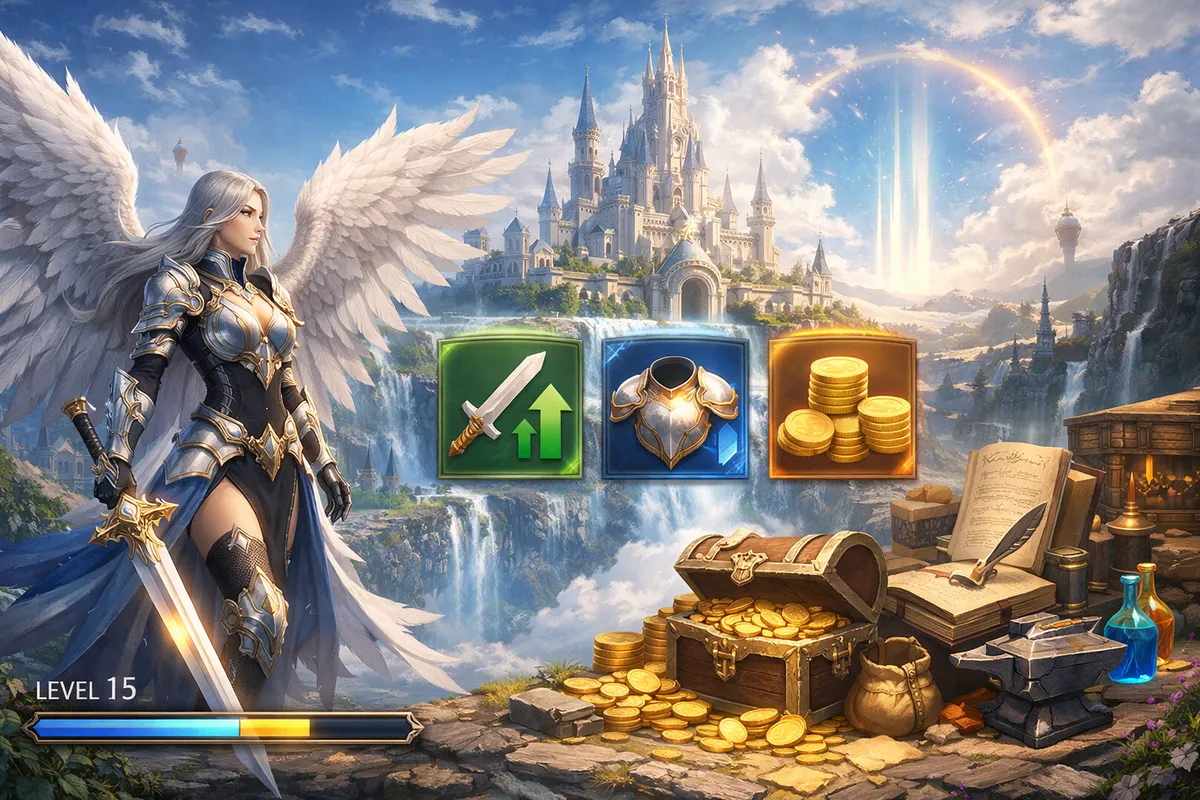
Progression in Aion 2 isn’t just “gain levels.” Real progress is a triangle:
- Levels unlock skills, content, and stronger item tiers.
- Gear determines how fast you clear, how safe you feel, and how quickly you can move into harder content.
- Kinah funds upgrades, consumables, crafting, and market purchases so your gear doesn’t stall.
Most beginners get stuck because they push one corner of the triangle and ignore the others:
- Level too fast with weak gear → story bosses and tougher mobs become slow or punishing.
- Gear-chase too early → you burn currency upgrading pieces you replace soon.
- Ignore Kinah habits → you can’t afford the upgrades that would speed up leveling.
Your goal is simple: keep all three moving forward steadily.
Your First Day Checklist (The “No Regrets” Start)
If you want a smooth first day, don’t overthink it. Focus on the foundations:
- Commit to a main role (damage, tanking, healing, support) that fits how you like to play.
- Set up basic hotkeys and UI comfort early so you don’t build bad habits.
- Follow the main story path until your pace naturally slows.
- Loot everything, sell regularly, and avoid hoarding “maybe useful later” junk.
- Upgrade only what improves kill-time (usually your weapon first).
- Take your first solo challenge or early dungeon run when quest pacing dips.
This puts you ahead of most players because it prevents the two biggest time-losses: messy combat setups and empty wallets.
Leveling Strategy That Stays Fast Without Burning You Out
“Fast leveling” isn’t about playing non-stop. It’s about removing wasted minutes. Use this leveling loop:
- Main quests first (they’re designed to push you through the intended progression path).
- Side quests only when they stack (same area, same mobs, same travel route).
- Solo content or a dungeon spike when your quest pace slows or your gear feels behind.
- Short town reset (sell, repair, quick upgrades, restock), then repeat.
If you do this, you won’t feel like you’re grinding for no reason—you’ll always know why you’re doing the next activity.
Quest Routing and Travel Efficiency (The Hidden XP Booster)
Beginners lose huge time to travel and backtracking. Fix that with three rules:
- Batch objectives: If a zone has 3 quests that want the same mob type, don’t do them separately. Accept all, complete all, turn in together.
- Route-based side quests: Take side quests that sit on your path, not ones that pull you across the map.
- Turn-in timing: Don’t run back to town after every quest. Turn in when you have a reason—full bags, repairs, or multiple completions.
If Aion 2 offers dungeon-related teleport or convenient travel options in your version, treat it like a progression tool: less walking means more leveling, more drops, and more Kinah opportunities.
Solo Content That Helps Beginners Progress Consistently
Aion 2 has dedicated solo activities (as shown in official previews) such as Nightmare Dungeon, Seal Dungeon, Garrison, and Awakening Battle. These matter for beginners because they offer structured goals when the open world feels slow or crowded.
Here’s how to use solo content for progression without turning it into a chore:
- Use solo content to stabilize your character: If your questing starts to feel slow or risky, solo challenges can provide rewards that smooth your next upgrades.
- Prioritize consistency over “perfect runs”: A clean clear that you can repeat is better than a risky high-speed attempt that fails and wastes time.
- Treat solo content like practice: It teaches you positioning, cooldown timing, and survival habits that make dungeons easier later.
A beginner-friendly mindset is: solo content = steady progress + skill improvement, not “I must max this immediately.”
Dungeons as Gear Spikes (When to Run Them and Why)
Dungeons should feel like a reward, not a trap. The right dungeon at the right time can jump your power dramatically; the wrong dungeon spam can waste hours.
Use dungeons when:
- You feel your kill-time slowing in quests.
- Your current gear tier is falling behind.
- You want a concentrated session with predictable rewards.
- You can run with a stable group (fewer wipes, faster clears).
Avoid dungeon spam when:
- You’re undergeared and dying often (it becomes a repair-and-walk simulator).
- Your group is disorganized and wiping repeatedly.
- You’re skipping your economy habits (you’ll exit broke and still not upgraded).
Progression tip that works in every MMO: one clean dungeon run beats three messy ones.
Gear Basics: What to Upgrade First (And What to Delay)
Beginners waste most of their resources on the wrong upgrades. Fix it by following the upgrade order that actually speeds progression.
1) Weapon first (almost always)
Your weapon is your kill-time. Faster kills mean faster leveling, safer pulls, and more loot per hour.
2) Survivability second (only if needed)
If you’re dying or constantly forced to stop and heal, upgrade the pieces that reduce downtime.
3) Everything else last
Accessories, minor armor upgrades, and “pretty good” enhancements can wait until you’re on gear you’ll keep longer.
A simple checkpoint system helps:
- Small upgrades while leveling (enough to stay comfortable).
- Meaningful upgrades when you enter a new difficulty bracket or when drops replace multiple pieces.
- Big investments only when your gear tier will last through multiple content steps.
Stats for Beginners: Choose What Makes Your Character Feel Better
Exact best-in-slot stats depend on class and patch, but beginner progression usually improves fastest when you prioritize:
- Damage reliability: helps kill-time and reduces potion usage.
- Sustain tools: reduces downtime between fights.
- Mobility or control: helps you avoid bad pulls and survive surprise damage.
- Defensive stability: only as much as needed to stop deaths.
If you’re unsure, test one thing: time-to-kill vs. time-to-recover. The better stat choice is the one that reduces both.
Enhancement and Enchanting: The Safe Beginner Method
Upgrades are where beginners either become efficient… or go broke.
Use the “safe method”:
- Decide your upgrade target before you start (example: “I’m upgrading weapon to a comfortable level, then stopping”).
- Upgrade in steps, not emotion (“just one more try” is how progress dies).
- Don’t over-invest in gear you’ll replace soon.
- Treat upgrades as a budgeted project, not a gamble.
If your version includes multiple enhancement systems (gear upgrades plus skill upgrades), prioritize the one that improves your real gameplay fastest:
- Faster clears? Upgrade damage or core skill impact.
- Too squishy? Upgrade survivability and defensive options.
- Too slow traveling or pulling? Improve movement tools and consistency.
Consumables That Actually Matter While Leveling
Beginners often overbuy consumables and starve their upgrade budget. Here’s a cleaner approach:
- Carry basic recovery items so you don’t stop after every fight.
- Use damage or utility consumables only when they save time, like story bosses, dungeon bosses, or tougher elites.
- Avoid luxury spending early: if it doesn’t speed leveling or prevent deaths, it’s optional.
A great beginner rule: if a consumable doesn’t save you time, it’s costing you time (because you must earn that Kinah back later).
Kinah Fundamentals: How to Stop Being Broke
Kinah problems usually come from habits, not bad luck. Build these habits and you’ll feel stable fast:
- Sell regularly: full bags slow you down and cause wasted travel.
- Stop hoarding: if you haven’t used an item in days and it has value, sell it.
- Avoid impulse upgrading: upgrades should be planned, not emotional.
- Always fund the next step: keep enough Kinah for repairs, basic consumables, and your next meaningful upgrade.
The best beginner mindset is: Kinah is fuel, not a trophy. You don’t need to be rich—you need to be consistent.
Trading and Market Basics (Beginner-Friendly and Low Risk)
In official previews, Aion 2 has highlighted player-to-player trading using in-game currency rather than premium currency in its trade system. That’s good news for beginners because it means you can focus on playing the game and building value through normal progression.
To use markets without turning it into a second job:
- Pick 3 “always useful” categories you’ll watch and sell (materials, consumables, upgrade components—whatever your version supports).
- Sell in batches: it saves time and often sells more consistently than single-item spam.
- Don’t gamble your whole wallet: market flipping is powerful, but beginners should treat it as “bonus income,” not the core plan.
- Avoid risky deals: anything that feels shady, rushed, or too good to be true is usually a trap.
Your goal is not to outsmart the entire economy. Your goal is steady income that funds your upgrades.
Gathering and Crafting: The Beginner Way (Profit + Power Without Grind)
Crafting and gathering can be a beginner’s best friend because they create progress while you travel:
- Gather naturally as you move through zones instead of “dedicated gathering sessions” that burn time.
- Craft items that either:
- replace something you are currently wearing, or
- sell reliably to fund upgrades.
If you want a simple system:
- Gather when it’s on-route.
- Craft only when you have a purpose (power spike or profit plan).
- Sell what you don’t use immediately.
This keeps crafting as a progression tool instead of a resource sink.
Inventory Management: The Loot Rules That Save Hours
Inventory chaos is one of the biggest hidden progression killers. Use a basic loot policy:
- Keep: items tied to your next upgrade, core crafting mats you actively use, and high-value items that sell consistently.
- Sell: anything valuable you don’t need for your next planned upgrade.
- Dismantle: low-value gear that feeds useful materials (if your systems support it).
- Discard: low-value clutter that has no upgrade path and no market value.
Do this at the end of every session:
- Sell trash
- Repair
- Store upgrade materials
- List sellables
- Then log off
It sounds small, but it prevents you from wasting the first 20 minutes of your next session cleaning up yesterday’s mess.
A Simple Daily and Weekly Routine for Beginners
A routine keeps you progressing even on busy schedules.
Daily goals (pick 2–3):
- Main quest progress
- One solo activity that gives consistent rewards
- One dungeon run if you have time and a good group
- Sell and reset economy
Weekly goals (pick 1–2):
- A gear spike target (weapon upgrade, set piece, or key accessory)
- A content unlock goal (new dungeon tier, tougher solo mode, or PvP readiness)
- One crafting milestone that supports your income or survivability
The key is not doing “everything.” The key is doing the right few things consistently.
Common Beginner Mistakes That Slow Progress
Avoid these and you’ll immediately feel faster than most new players:
- Upgrading too early: burning Kinah on gear you replace quickly.
- Ignoring the weapon: slow kill-time makes everything feel worse.
- Doing side quests randomly: travel time destroys leveling speed.
- Overbuying consumables: you don’t need expensive items for every pull.
- Dungeon spamming with bad groups: repeated wipes cost more than they pay.
- No market habit: if you never sell, you’ll always feel poor.
- No plan: progress becomes emotional instead of strategic.
Fixing even two of these mistakes can feel like a major power boost.
Practical Rules
- Weapon first when leveling feels slow; survivability upgrades only when deaths or downtime become a problem.
- Batch quests and avoid backtracking; side quests must stack with your route.
- Use solo content for steady rewards and mechanical practice, not as endless grind.
- Run dungeons for gear spikes, not as a substitute for all other progression.
- Sell every session and keep your wallet stable so upgrades don’t stall.
- Upgrade with a budget and stop at your planned breakpoint—no emotional enchanting.
- Pick weekly goals (one gear spike + one content unlock) and let everything else support them.
BoostRoom Promo
If you want a smoother first week in Aion 2, BoostRoom helps beginners build a clean progression plan: what to focus on, what to skip, and how to reach your next gear breakpoint faster. Whether you need coaching on leveling efficiency, guidance on smart upgrades, or help planning dungeon progress with your class and schedule, BoostRoom is built for players who want real progress without wasting time.
FAQ
How do I level fast in Aion 2 without grinding nonstop?
Follow a loop: main quests → route-based side quests → solo content or a dungeon spike when pace slows → sell/repair/reset → repeat. The speed comes from removing wasted travel and downtime, not from endless hours.
What should I upgrade first: weapon or armor?
Weapon first in most cases. Upgrade armor only when you’re dying often or forced to stop constantly to recover.
How do I avoid wasting Kinah early?
Don’t over-upgrade gear you’ll replace soon. Keep upgrades small and targeted until you reach a tier you expect to keep longer.
What’s the simplest way to make steady Kinah as a beginner?
Loot everything, sell regularly, and identify a small set of items or materials that consistently sell on your market. Consistency beats lucky drops.
Should I focus on crafting while leveling?
Yes—but selectively. Gather while traveling and craft only when you’re making a real power spike or a reliable seller. Don’t craft “just to craft.”
When should I start running dungeons seriously?
When your quest pace slows or your gear starts feeling behind. Dungeons are best used as progression spikes, not constant spam with random groups.
How do I stop feeling underpowered?
Measure your kill-time. If it’s slow, upgrade weapon or damage tools. If you’re dying, upgrade survivability. If you’re always out of resources, fix your consumable spending and Kinah routine.
Do I need to understand the economy to progress?
Not deeply. You only need two habits: sell regularly and avoid reckless spending. Everything else is optional.



