What “Winning Your First PvP Fight” Really Means
A beginner “win” isn’t always wiping a full crew. In Marathon, you’re allowed to define your first PvP win in a way that accelerates learning and protects your stash:
- Win Type A (Clean elimination): you down and eliminate an enemy Runner and keep your kit.
- Win Type B (Forced disengage): you crack shields, force them to retreat, and you keep your route and your loot.
- Win Type C (Trade up): you lose the fight but take valuable gear/resources with you (or protect a teammate’s extraction).
- Win Type D (Survive + extract): you take a fight, reset, and still extract with meaningful value.
If you’re brand new, your first goal should be Win Type B consistently: crack, pressure, survive, reset. That builds confidence without forcing risky pushes. Once you can do that, full wins start happening naturally.
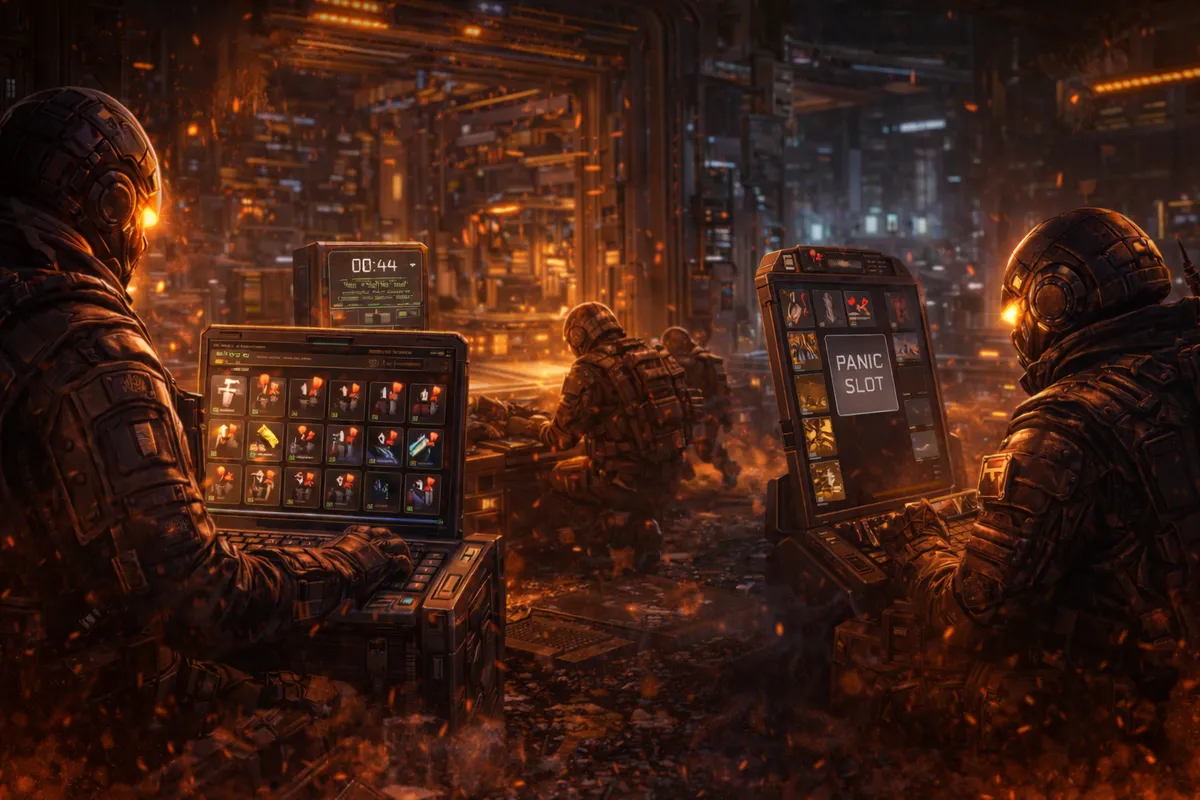
The 5-Step Checklist (Copy This Before You Queue)
Here’s the whole system in one place. Each step is explained in detail below.
- Control first contact: hear them first, see them first, tag them first.
- Take an advantage peek: cover + angle + first burst, then move.
- Spend one tool to create space: smoke/bubble/frag/scan—one purposeful use.
- Convert the advantage quickly: down → finish safely OR force the reset and take position.
- Secure the profit: post-fight protocol (clear → heal → loot fast → rotate → exfil).
If you only follow these steps for your next 10 fights, you’ll improve faster than players who “just fight more.”
Before Step 1: The Beginner Kit That Wins Fights Without Ruining Your Vault
Your first PvP win is much easier when your kit is predictable. You don’t need the rarest gun—you need a loadout that covers ranges and survives mistakes.
Minimum beginner PvP kit
- Mid-range primary: something stable that can win a lane and clear AI without panic recoil.
- Close-range backup: SMG/shotgun/strong sidearm for door fights and sudden pushes.
- Healing for two resets: one reset is rarely enough in Marathon fights.
- One space-maker tool: smoke is the simplest “save my run” utility.
- One pressure tool (optional): frag or a denial/disruption tool if you use it confidently.
Two rules that prevent gear fear
- Bring a kit you can afford to lose three times.
- Don’t bring “dream gear” into fights you haven’t learned to reset yet.
A consistent cheap kit lets you take fights without shaking, which leads to better decisions, which leads to more wins.
Step 1 — Control First Contact: Hear, See, Tag
Most beginner losses happen before the fight even starts. You walk into a lane, get shot first, panic, and the rest of the fight is just damage control. Step 1 is how you stop that.
Your job in the first two seconds
- Identify where they are (left/right, top/mid/low, close/mid/far).
- Identify how many (one, two, three).
- Identify what they’re doing (pushing, holding, rotating, looting, reviving).
You don’t need perfect information. You need enough to avoid walking into a crossfire.
How to win first contact without special abilities
- Stop short in cover before entering a new room, stairwell, or open lane.
- Listen for the “busy sounds”: AI fights, footsteps, reloads, revives, gadget deploys.
- Slice angles instead of wide-swinging. Show a tiny part of your body first to gather info.
- Take one safe look, then decide. Don’t stand there “thinking” while exposed.
The tag that changes everything
Your first bullet doesn’t need to be a kill shot. It needs to be a tag that forces a reaction:
- You confirm they’re real (not AI).
- You make them heal, reposition, or bubble.
- You buy time for your next move.
If you consistently tag first, your survival rate jumps because you’re no longer fighting uphill.
Beginner audio discipline
When you hear footsteps:
- If they’re close, stop looting immediately and reposition.
- If they’re above/below, assume a staircase push is coming.
- If you hear multiple sets, assume a full crew and play safer.
Winning first contact is mostly not being surprised.
Step 2 — Take an Advantage Peek: Cover, Angle, First Burst
Beginners often lose because they take “fair” peeks. A fair peek is a coin flip. In Marathon, coin flips are expensive.
An advantage peek has three ingredients
- Cover you can return to instantly
- An angle where you see them before they see you
- A plan to move after your burst
Your first PvP win will usually come from one good peek—not ten messy ones.
The 3 peeks beginners should use
- Micro-peek: show almost nothing to confirm position.
- Shoulder bait: quick movement to bait a shot, then punish their recovery.
- One-and-done peek: shoot a burst, then immediately reposition.
The 1 peek that gets beginners deleted
- Wide swing into unknown.
- If you don’t know exactly where they are, wide-swinging is basically asking to be beamed.
The “first burst” rule
Your first burst should be controlled and short:
- Burst long enough to crack or force cover.
- Then stop and move.
- If you hold the trigger while standing still, you become predictable, and the enemy’s teammate will line up the trade.
Reposition is part of the peek
After you shoot:
- move one step left/right, or
- change height (crouch/stand), or
- back up to a different piece of cover
If you re-peek the same angle immediately, you’re teaching the enemy exactly where to aim.
Step 3 — Spend One Tool to Create Space
A tool is anything that changes the fight’s geometry or timing:
- smoke
- bubble shield
- frag/area denial
- scan/drone intel
- movement ability (grapple, burst mobility, etc.)
- healing burst tools (if your shell provides them)
Beginners lose because they either:
- never use tools (die with full pockets), or
- use everything at once (win one moment, then die to the next push).
Your goal is one purposeful tool use per fight.
The best beginner tool uses
- Smoke for reposition: not to hide in, but to cross to better cover.
- Bubble for reset: heal/reload/revive, then reposition (don’t live inside it).
- Frag to force movement: throw where they must move, not where they were five seconds ago.
- Scan to decide: use intel tools right before a commitment (push, cross, exfil).
The “tool timing” rule
Use tools before you’re one shot.
If you wait until you’re cracked and panicking, you often die mid-animation or get rushed while you’re vulnerable.
How to choose the right tool in the moment
Ask: “What do we need right now?”
- Need to escape/reset → smoke or bubble
- Need to force them off an angle → frag/denial
- Need to stop a revive or push → close-range pressure + utility
- Need to avoid a trap → scan/drone then rotate
One tool used correctly often replaces five seconds of panic shooting.
Step 4 — Convert the Advantage: Down, Finish Safely, or Force the Reset
Most beginner teams throw fights after gaining advantage because they don’t know what “conversion” looks like. They crack one enemy, then everyone sprints forward, and the enemy’s teammate farms them.
Conversion means turning your advantage into something permanent:
- a down
- a safe finish
- a better position
- a successful disengage with loot protected
The safest conversion pattern
- Crack or tag
- Take the better position (close distance safely or cut their retreat)
- Down one
- Decide instantly: finish safely OR hold the body and force the teammate to make a bad push
- Reset and prepare for third party
When to finish
Finish when at least two are true:
- you have cover while finishing
- their teammate can’t instantly trade you
- you need the finisher for information/pressure (depending on your shell traits)
- you can finish quickly and then reposition
When not to finish
Don’t finish if:
- you’re in the open
- you hear another team arriving
- the teammate has a clear angle
- your health is low and you need to heal first
A common beginner mistake is treating “finish” as automatic. In Marathon, a risky finish can throw the whole run.
The “don’t chase” rule
If the enemy retreats and you don’t have a clean cut-off angle, don’t chase through unknown rooms or open lanes. Chasing is how you get baited into:
- shotguns behind doors
- knife bursts in tight hallways
- third-party pinches
- losing your advantage while sprinting
If you’re ahead, make them come to you—or rotate out and keep your loot safe.
Step 5 — Secure the Profit: Post-Fight Protocol and Exit
This is the step most players skip, and it’s the step that turns “I won my first PvP fight” into “I extracted and got stronger.”
Right after a fight, your team is at maximum risk:
- low ammo
- low health
- high adrenaline
- backpacks open
- loud area attracting third parties
So you need a strict post-fight protocol.
Post-fight protocol (always the same)
- Clear (3–5 seconds): check entrances, stairs, and likely third-party lanes.
- Heal + reload: don’t loot while low.
- One loots, others watch: never all loot at once.
- Quick strip only: take heals, ammo, utility, key items, and your best upgrades first.
- Rotate out: leave the fight area before the next squad arrives.
- Extract on schedule: if your bag is now valuable, stop gambling.
The “loot time cap”
In hot areas, your looting window should be short. If you find yourself sorting and swapping for a long time, you’re basically announcing: “Please third party us.”
Extraction is part of winning the fight
If you win a fight and then die at exfil, you didn’t win—you just delayed the loss. Treat exfil like a contested objective:
- stop short, listen
- activate, then reposition
- hold angles
- leave immediately when complete
That’s how fights turn into progress.
How to Win Your First Fight as a Solo
Solo PvP wins are different because you can’t rely on revives and trades. Your win condition is often “win the moment, then leave.”
Solo conversion rules
- Take fights only when you have two advantages: position + info, or info + exit plan, or position + exit plan.
- Never chase deep into unknown interiors.
- If you crack someone and they retreat, use that moment to extract value or reposition, not to sprint into their teammate.
Solo “first fight” plan
- Tag first, then reposition.
- Use one tool to create space (smoke is the solo MVP).
- Down one if it’s clean—otherwise disengage.
- Loot fast, rotate out, extract.
The solo secret is simple: your first PvP win doesn’t need to be a wipe. It can be a clean pick and an extract.
How to Win Your First Fight as a Squad
Squads win first fights by doing one thing beginners often skip: roles.
Use a simple role split:
- Entry: takes the first angle and starts pressure
- Anchor: watches flank and prevents trades
- Flex: supports with utility and rotates to cut off retreats
The fastest squad win pattern
- Entry tags and cracks
- Flex uses one tool to force movement
- Anchor holds the exit lane
- Squad collapses on the isolated target
- Squad resets and extracts before third parties arrive
The #1 squad rule
Only one person loots at a time. Two people watch. This one rule alone can double your successful extracts after fights.
Shell-Specific Mini-Tips for Your First PvP Win
Different shells win their first fight in different ways. Use these quick tips so your kit identity works for you.
Recon
- Use scans to prevent ambushes and turn fights into planned engagements.
- After scanning, reposition—don’t stand where enemies expect you to be.
- Use your drone/pressure tools to force movement, then punish exits.
Thief
- Win by choosing fights and taking value fast.
- Use grapple for positioning and escapes, not for blind charges.
- Your best first PvP win is often a quick pick during chaos, then a fast extract.
Vandal
- Keep fights short. Vandal loses money when it chases too long and attracts third parties.
- Use disruption to split enemies, then finish quickly or disengage.
- Manage your movement resources so you still have an exit when the fight turns messy.
Destroyer
- Take space carefully and win angle trades with cover tools.
- Your job is to create a safe pocket for your team to heal and reload.
- Don’t overextend—winning one corner is more valuable than sprinting into open lanes.
Assassin
- Fight unfair. Use denial tools to break line-of-sight and reset.
- Don’t sit in smoke; use smoke to move to a new angle.
- Your first win often comes from a clean ambush and a fast exit.
Triage
- Your first win is often “we didn’t die.” Sustain wins longer fights and prevents collapse.
- Heal early, not late.
- Protect revives and keep the team stable so you can convert advantages safely.
Common Beginner Mistakes That Lose the First Fight
Fix these, and your first win will come quickly.
Mistake: Fighting from the middle of a room
Fix: always fight from cover and edges. The center is where you get crossfired.
Mistake: Wide swinging unknown doors
Fix: micro-peek and slice angles.
Mistake: Holding one angle too long
Fix: shoot, then reposition. Don’t teach them your location.
Mistake: Saving tools “for later”
Fix: spend one tool early to create space. Dying with full utility is the worst trade.
Mistake: Chasing into unknown corridors
Fix: hold the exit lane or rotate to cut them off instead.
Mistake: Everyone loots at once
Fix: one loots, others watch. Every time.
Mistake: Winning the fight but losing the run
Fix: after a win, rotate out and extract on a milestone. Don’t stay for “one more box.”
A 10-Minute Training Routine to Win Your First PvP Fight Faster
If you want your checklist to become automatic, practice these drills.
Drill 1: First contact discipline (3 minutes)
In a match, every time you enter a new area, stop short in cover for one second and listen. This prevents surprise deaths.
Drill 2: One-and-done peeks (3 minutes)
Every time you shoot from an angle, you must move before shooting again. This fixes repeat-peek deaths fast.
Drill 3: One tool per fight (2 minutes)
In your next fight, commit to using exactly one tool on purpose. Not five. Not zero.
Drill 4: Post-fight protocol (2 minutes)
After any fight, force your squad to clear → heal → one loots/two watch → rotate. Even once per session makes a huge difference.
Do this for a few sessions and you’ll feel your fights become calmer and more controllable.
BoostRoom
If you want to win PvP fights faster in Marathon, the biggest upgrade isn’t a gun—it’s a system. BoostRoom helps you build repeatable habits for first contact, peeking, utility timing, and post-fight discipline so your wins turn into extracted loot.
BoostRoom can help you with:
- personalized coaching on the 5-step checklist for your shell and playstyle
- squad comms and role structure so your team converts cracks into wins
- VOD reviews to spot the exact moment fights go wrong (bad peek, late tool, greedy loot)
- route and extraction timing discipline so you stop dying after you “won”
- confidence-building rebuild plans so you can take fights without gear fear
The goal is simple: win more fights, keep more loot, and progress faster.
FAQ
How do I win my first PvP fight if my aim is bad?
Win with decisions: tag first, use cover, take advantage peeks, spend one tool to create space, and don’t chase. You can win early fights by forcing better situations, not by pure mechanics.
What’s the best beginner utility for PvP?
Smoke is the most universal beginner tool because it helps you reposition, disengage, cross lanes, and stabilize extraction.
Should I always push when I crack someone’s shields?
No. Push only if you have an exit plan and you can avoid being traded. Often the correct play is taking a better position and forcing them to move again.
How do I stop dying right after I win a fight?
Use the post-fight protocol: clear → heal/reload → one loots/two watch → rotate out. Most post-fight deaths are third parties punishing slow looting.
What if I down someone but their teammate holds the body?
Don’t ego-push. Hold an off-angle, force them to move with utility, or rotate to cut off their retreat. Winning in Marathon is often about making the other team take the risky step.
How do solos win PvP fights against squads?
Solos win by isolating one target, taking short fights, and disengaging before the trade. Your goal is clean value, not long wars.
What’s the biggest mistake beginners make in PvP?
Taking fair fights. If you can’t explain why your peek or push is advantaged, you’re probably gambling.



