Why “Future Meta” Is About Systems, Not Tier Lists
The most future-proof builds are built around systems Bungie keeps reinforcing through updates:
- Visibility and information shouldn’t be free (thermals got limited at range; scan counterplay exists).
- Resets shouldn’t be automatic (bubble shields got rarer and less durable; melee “cheap deletes” got toned down).
- Movement exploits get clipped (unbounded mobility tech gets removed).
- Endgame power gets monitored (dominant endgame weapons get nerfed if they warp the game).
So the builds that scale are the ones that keep working even when:
- your favorite weapon’s damage shifts,
- an attachment gets adjusted,
- or a “must-pick” item becomes rarer.
If you want to feel ahead of the curve, build around what patches keep rewarding: smart resets, safe rotations, and predictable conversion.
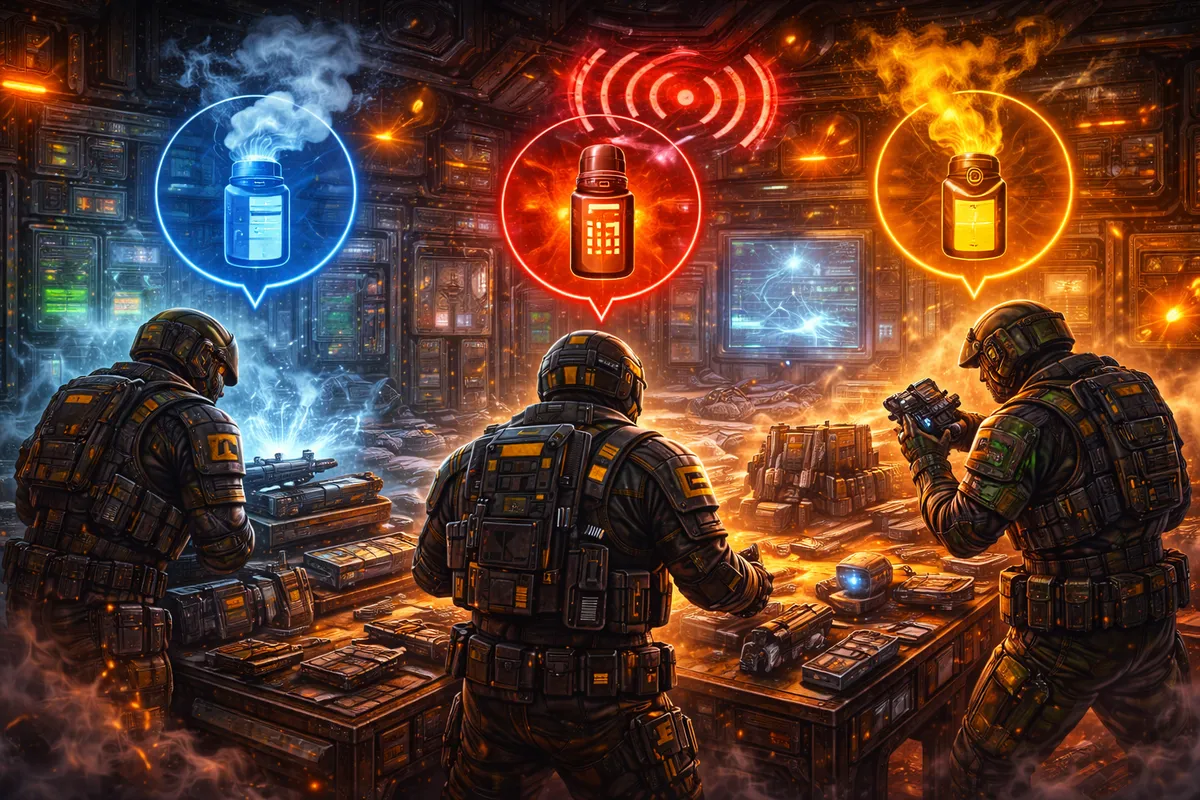
The Patch Direction That Matters for Builds
Here are the biggest balance patterns that should shape what you practice:
- Thermal highlight distances were reduced by weapon class, so “free target acquisition at long range” is less reliable. That increases the value of clean optics, recoil control, and smoke crossings.
- Bubble Shield became rarer and less durable, meaning you can’t build your entire survival plan around “dome and chill.”
- Knife lunge and PvP melee scaling were reduced, meaning “panic melee breaks” are less reliable as a universal close-range solution.
- Recon is getting buffed (Echo Pulse differentiating AI vs Runners, reduced scan tell, more aggressive tracker drone). That increases the value of Signal Jammers, anti-scan movement, and anti-drone routing.
- Endgame outliers get nerfed (example: a major 35% damage nerf to a dominant endgame weapon). This signals that Bungie wants endgame rewards to be strong—but not “auto-win.”
Translation: future meta is moving toward utility, discipline, and role-based kits.
The “Meta-Proof” Build Checklist
Any build that scales through updates should answer these questions:
- Can I create a safe action window (heal, reload, revive, loot) under pressure?
- Can I deny the enemy’s safe action window (stop revives, stop door pushes)?
- Can I fight at two ranges (or can I control the fight into my range)?
- Can I handle information pressure (scans, sensors, thermals)?
- Can I extract reliably when the lobby converges?
- Can I rebuild this kit without going broke?
If your build answers all six, it will survive almost any patch cycle.
The Core Future Meta Skill: “Reset First”
The future meta rewards players who reset faster and safer than everyone else.
A reset is any “hands busy” moment:
- healing
- reloading
- reviving
- looting
- using terminals
- opening high-value containers
- activating exfil
Most players die during resets. Strong players build kits that make resets safe, and they practice the behavior until it’s automatic.
That’s why “smoke-first,” “denial-first,” and “anti-scan-first” builds are the best future investments. They don’t care which gun is 3% better this week—they care that you live long enough to extract.
Build Archetype 1: The Smoke-First Reset Kit
This is the single best build to practice if you want long-term consistency. It’s future meta because smoke remains useful no matter what gets buffed.
What it solves
- Safe heals and reloads
- Safe revives
- Safe lane crossings
- Safer exfil warmups
- PvE pressure management (smoke can drop UESC aggro, creating a true reset window)
Core concept
You treat smoke like a “reset coupon,” not a hiding spot.
- You smoke the enemy’s sightline, then move.
- You smoke to create time, then spend that time on healing/reloading/repositioning.
Ideal pairing
- One mid-range weapon you can control consistently
- One close-range answer for sudden pushes
- Smoke + one fight-control tool (EMP or denial)
How to practice
- In every fight, your first goal is to create a safe window.
- If you take damage and you’re exposed, smoke first, then heal.
- At exfil, smoke the long angle watching the circle, not the center.
Why it scales with updates
Even if thermals, scans, and damage values shift, smoke always disrupts sightlines and timing. It’s a reset mechanic disguised as a grenade.
Build Archetype 2: The Anti-Scan Kit
With Recon buffs and the natural rise of information tools in endgame lobbies, anti-scan play is an investment that will pay off more with each season.
What it solves
- Echo Pulse collapses
- Sensor-based ambushes
- Drone pressure turning into free kills
- Predictable exfil collapses
Core concept
You deny conversion. Recon knowing you exist isn’t the problem; Recon converting that info into a clean kill is the problem.
Your anti-scan toolkit
- Signal Jammer (timed proactively, not reactively)
- Smoke (break line-of-sight and long angles)
- One denial tool (chem/heat/mines) to stop pushes through choke points
How to practice
- Jam before risky crossings, exfil approaches, or entering a contested POI.
- Use “two-turn routes” after any scan pressure: break line of sight, then break prediction.
- Change elevation whenever possible—drones and pushes become harder to coordinate.
Why it scales with updates
As scans improve, counterplay tools become more valuable. Anti-scan builds don’t rely on a particular damage model; they rely on denying certainty and punishing overcommit.
Build Archetype 3: The Door-Denial Control Kit
Doorway control is one of the most patch-proof mechanics in any extraction shooter. Doors don’t get nerfed. Chokepoints don’t get nerfed.
What it solves
- Aggressive pushes
- Third-party collapses
- Revive attempts
- Exfil dives
Core concept
You don’t win by “more damage.” You win by controlling where the enemy is allowed to stand.
Tools that fit the archetype
- Chem/heat grenades for area denial
- Mines for predictable approach routes
- Sensors for early warning
- A stable mid-range weapon to punish the forced wide swing
How to practice
- Any time you need to heal, deny the push lane first.
- After you down an enemy, deny the revive lane instead of sprinting in.
- At exfil, deny the most direct entry and force wide swings you can pre-aim.
Why it scales with updates
Even if melee, bubble, or weapon ranges shift, chokepoint denial stays valuable. This kit wins against chaos.
Build Archetype 4: The Exfil Anchor Kit
Many players build for gunfights and then lose at exfil. The future meta is about extracting, not collecting “almost wins.”
What it solves
- Exfil warmup collapses
- Last-second dives
- Third-party timing at the worst moment
- Guarded exfil chaos (PvE + PvP overlap)
Core concept
Treat exfil like a three-phase operation:
- Setup → Warmup → Final seconds
Anchor tools
- Smoke (break long angles, protect final seconds)
- Mines and sensors (approach control and early warning)
- Ammo sustain (ammo crate or disciplined ammo management)
- A weapon with uptime (stable AR/LMG-style behavior—something you can hold lanes with)
How to practice
- You do not stand on the exfil point like it’s a safe zone.
- You hold from cover and return only when needed.
- You save one tool for the last push every time.
Why it scales with updates
Exfil behavior and third-party timing don’t stop being a thing. The game will always reward players who extract consistently.
Build Archetype 5: The Budget Floor Kit
A future meta player is not only strong in fights—they’re strong across sessions. That means your economy can’t collapse when you die twice.
What it solves
- Gear fear
- Rebuild spirals
- Overkitting and going broke
- Inconsistent play because you “only try when rich”
Core concept
A floor kit is:
- cheap,
- replaceable,
- and still capable of winning advantaged fights.
Floor kit priorities
- Control and consistency over peak DPS
- Enough healing for one real fight
- One reset tool (smoke or a denial tool)
- A simple range plan (don’t bring a kit that loses at half the common engagement distances)
How to practice
- Run your floor kit on “learning days” and patch days.
- Use your floor kit to test new attachments or new shell buffs safely.
- Treat your swing kit as an objective tool, not your default identity.
Why it scales with updates
Balance changes often cause temporary chaos. Floor kits let you adapt without bleeding your vault.
Build Archetype 6: The Duo 2v3 Kit Library
Duos will always need “unfair” tools because numbers don’t favor them. The future meta for duos is isolation + disruption + extraction.
What it solves
- Getting collapsed by full squads
- Losing after getting a down
- Exfil holds as a duo
- Scan-heavy teams hunting duos
Core duo structure
- Player A: Entry-finisher (close-range confidence, push timing)
- Player B: Anchor-controller (holds lanes, protects resets)
Shared utility rule
Between the two of you, always have:
- one reset tool (smoke)
- one opener tool (EMP)
- one denial tool (chem/heat/mines)
- one information layer (sensor or jammer)
How to practice
- You never take the same angle. Always crossfire.
- You focus fire one target to secure a down fast.
- After a down, decide instantly: finish, deny revive, or leave.
Why it scales with updates
Even if weapon strength shifts, the duo win condition doesn’t: isolate one enemy, disrupt the reset, extract before the lobby collapses.
Build Archetype 7: The Endgame-Ready Kit for Cryo Archive
If you want a build that scales into the hardest content, practice endgame behavior now. Cryo Archive requires:
- Runner Level 25
- All six factions unlocked
- Minimum loadout value of 5,000 credits
That requirement alone changes the “future meta” mindset: you must be able to run expensive kits without turning every run into a panic.
Endgame-ready priorities
- Two-range coverage (close + mid)
- Reliable resets (smoke or premium reset tools when available)
- Denial for doors and revive points
- Sustain for long fights (ammo management and healing discipline)
- Route discipline (endgame punishes wandering)
How to practice
- Don’t queue endgame content with a “single-range” kit.
- Don’t rely on one panic tool; assume it may be rarer or weaker.
- Train your exfil discipline in normal runs so Cryo doesn’t expose you.
Why it scales with updates
Endgame always demands reliability. The builds that work there are the builds that will keep working everywhere else.
The Future Meta Habits That Make Any Build Stronger
Your build is only half of the future meta. The other half is what you do with it.
Habit 1: Short fights
The longer a fight lasts, the more likely you get third-partied. The future meta rewards fast conversions: crack → down → deny revive → reset → leave.
Habit 2: Reset discipline
Heal and reload only with cover or utility protection. Most players still die mid-reset.
Habit 3: Don’t die with utility
If you extract or die with unused smoke/EMP/denial tools, your build wasn’t the problem—your timing was.
Habit 4: Leave earlier
A run with “good enough” value is a win. A run that dies after greed is a donation.
Habit 5: Build for replacement
If you can’t replace your favorite kit, it’s not a “main kit.” It’s a special occasion kit. Future meta players keep kits sustainable.
How to Practice These Builds Without Grinding Forever
Here’s a simple weekly system that builds patch-proof skill quickly:
- 2 sessions per week: Floor kit runs (practice resets, exfil sequencing, and fight selection).
- 1 session per week: Anti-scan practice (jam timings, two-turn routes, drone baiting).
- 1 session per week: Door-denial practice (chem/heat placements, mine routes, revive denial).
- Optional weekend session: Endgame-ready runs (treat the run like a mission—objective, route, exit).
Your goal is not to spam matches. Your goal is to build habits that survive any balance swing.
BoostRoom
If you want to stay ahead of the meta instead of chasing it, BoostRoom helps you build a “kit library” and the habits that make it work:
- smoke-first reset timing that prevents most eliminations
- anti-scan movement and jammer timing that beats Recon pressure
- door-denial placements that stop pushes and deny revives
- exfil sequencing that converts value into extracts reliably
- floor-kit and swing-kit planning so your economy stays stable through patch chaos
- duo and squad role structure (Entry/Anchor/Scout) that scales into endgame play
The future meta isn’t a secret weapon. It’s a system. BoostRoom helps you install that system so updates feel like opportunities, not setbacks.
FAQ
What is the most future-proof build style in Marathon?
Smoke-first reset kits and denial-focused control kits. They improve survivability, protect resets, and stay valuable even when weapon balance shifts.
Why is anti-scan practice important right now?
Recon is being buffed and information pressure tends to rise in endgame lobbies. Signal Jammers, smoke rotations, and anti-drone movement will become more important.
Are bubble shields still worth building around?
They can still be powerful, but they’re rarer and less durable than before. Future-proof play means you can win without bubble and treat bubble as a premium bonus when you have it.
How do I practice “future meta” without risking my best gear?
Use a floor kit for most runs, focus on utility timing and reset discipline, and reserve expensive swing kits for objectives that justify the risk.
What’s the fastest habit change that improves any build?
Stop looting immediately after fights. Clear lanes, protect a reset window, then loot quickly. Most third-party wipes happen during post-fight looting.
What builds scale best into endgame content like Cryo Archive?
Two-range kits with strong reset tools, denial utility, and sustain. Endgame punishes single-range kits and teams that rely on one panic tool.



