What “Extraction” Means in Marathon (And Why It’s Not Just Team Deathmatch)
In a traditional shooter, you win or lose a match and queue again with the same starting conditions. In Marathon, the match result changes your future.
Extraction runs have three defining rules:
- Your loadout matters before the match begins. What you bring shapes what you can safely attempt.
- Loot is only real after exfil. Picking something up is just a promise—exfil turns it into progress.
- Survival is a strategy, not a mood. You’re not cowardly for disengaging; you’re smart for extracting with value.
That’s why beginners often feel “behind” even when their aim is fine. The game rewards players who understand tempo, risk, and routing as much as raw gunskill.
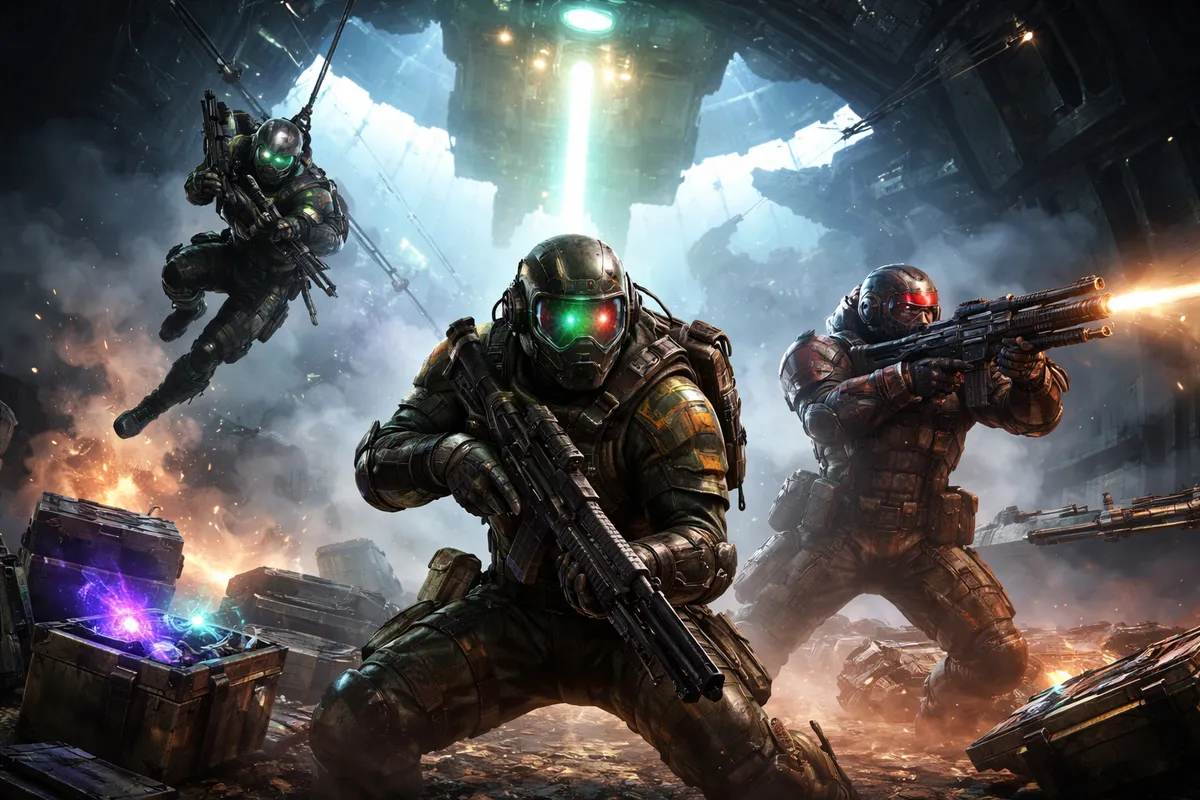
The Real Run Loop: Infil → Build Value → Exfil (Repeat)
Every successful run is basically a value-building mission with a timer and opposition.
1) Infil (Deployment)
You drop into Tau Ceti with a plan and a kit. Your first job is to stabilize: get oriented, confirm your route, and avoid early chaos that can end your run before it starts.
2) Build Value (Loot + Objectives)
Value isn’t only “gold items” or rare gear. In Marathon, value can mean:
- contract progress
- faction reputation
- crafting components / upgrades you need
- keys/credentials that open higher-tier opportunities
- better weapons, mods, implants, cores (depending on your progression path)
3) Exfil (Extraction)
Exfil is not a cutscene. It’s a contested objective. You’re announcing your intent to leave, and other Runners (and the map’s threats) can punish sloppy extractions.
4) Between Runs (Vault + Progression)
After the match, you convert success into future consistency:
- store what you extracted
- sell what you don’t need
- upgrade your “power floor” through long-term systems
- tune your next loadout based on what you learned
Beginners improve fastest when they stop thinking “I need a perfect run” and start thinking “I need a repeatable loop I can execute even when things go wrong.”
Before You Deploy: The Beginner Loadout Mindset (Risk, Not Ego)
New players usually lose gear because they treat the loadout screen like a flex.
Here’s the beginner rule that saves your stash:
Bring the best gear you can afford to lose three times.
That doesn’t mean “go in naked.” It means choose a kit you can repeat, so one bad spawn or one ambush doesn’t reset your confidence.
A practical beginner loadout checklist:
- A primary weapon you can control under pressure (reliable recoil, manageable range)
- Enough ammo to survive two fights (one PvE, one PvP) without panic-looting mid-fight
- Healing/sustain to recover from chip damage and keep moving
- One utility tool that helps you leave (scouting, denial, mobility, or survival)
- A backpack plan (space for valuables + space for essentials you’re likely to find)
What not to do early:
- Don’t bring your rarest “dream kit” into a run you don’t understand yet.
- Don’t stack “cool” items that don’t solve problems (like escape, sustain, intel).
- Don’t deploy without a goal. “I’ll just see what happens” turns into “I died with nothing.”
Runner Shells: How Your “Class” Changes the Entire Run
In Marathon, your Runner shell isn’t just flavor—it defines how you gather information, take fights, escape fights, and secure exfil.
Beginner-friendly way to choose a shell: pick the one that fixes your biggest weakness.
- If you lose fights because you get surprised: pick intel.
- If you lose fights because you can’t disengage: pick mobility.
- If you lose fights because chip damage drains you: pick sustain/support.
- If you lose fights because you hesitate: pick pressure/entry.
A quick beginner framing of shell roles:
- Destroyer: fight-forward tools that help you take space and survive direct engagements.
- Assassin: stealth, disruption, and “choose your fight” control.
- Recon: information and tracking—wins by making the battlefield readable.
- Vandal: speed and disruption—wins by forcing messy fights on your terms.
- Thief: loot-focused pressure + mobility to push or escape.
- Triage: keeps you and your team alive longer through healing/support tools.
- Rook (Scavenger mode): a special way to play as a solo scavenger in an already-running match, with no loadout risk—perfect for low-stress learning and rebuilding.
If you’re brand new, Rook scavenger runs are one of the safest ways to learn maps, loot value, and rotations without gambling your vault every time.
Contracts & Factions: Why Your Run Goal Shouldn’t Be “Just Loot”
Marathon’s progression isn’t only “extract gear, get richer.” A major part of your growth comes from factions and contracts—objectives you choose that shape what you should do during a run.
Why contracts matter for beginners:
- They give you a clear objective, so you stop wandering into bad fights.
- They reward consistent play even when loot is mediocre.
- They teach you the map by forcing purposeful routing.
- They help you build a stronger baseline so you’re not relying on “lucky drops.”
Beginner mistake: picking a contract, completing the objective, and then staying too long because “we’re already here.”
A better rule:
When your contract is done, your new job is exfil.
You can always take a second objective later—if you survive.
The First 5 Minutes: How Good Runs Start (And Bad Runs End)
Most “instant losses” happen early because players are noisy, indecisive, or greedy.
Your first 5 minutes should look like this:
- Stabilize: check your surroundings and identify likely approach paths.
- Route: commit to a short route with a fallback exit direction.
- Upgrade: grab essentials first (ammo, heals, armor/sustain).
- Scout: listen for activity and avoid sprinting into a hot zone blind.
- Decide: either take an early fight with advantage, or rotate away for value.
Early-run priorities that keep you alive:
- Avoid standing still in “loot posture” (inventory open, attention tunneled).
- Loot quickly, then move to cover before sorting.
- If you hear nearby activity, assume someone is already rotating to cut you off.
Beginners don’t need perfect aim to survive early—they need discipline.
Loot Priorities: What’s Worth Carrying (And What Gets You Killed)
Your backpack is not a trophy case. It’s a tool for extracting value.
The smart beginner loot order:
- Survival items first (healing, protection, ammo)
- Run-enablers (utility that helps you scout, deny, or escape)
- Objective items (contract requirements, keys/credentials when relevant)
- High-value loot (rare items, premium gear, valuable salvage)
- “Nice-to-have” upgrades (attachments/mods that improve future kits)
The #1 greed trap: carrying too many “maybe useful later” items that reduce your flexibility. When you’re stuffed, you stop picking up what actually matters, and you take risks to justify your full bag.
A simple backpack habit that boosts survival:
Keep one “panic slot” open so you can instantly grab a key item or swap to a better drop without playing inventory Tetris in the open.
PvE vs PvP: When to Shoot, When to Slip Away
Marathon is PvPvE, meaning you’re managing both environmental threats and other players. The common beginner failure is treating every encounter the same.
PvE fights are about efficiency.
- Win quickly with minimal resource loss.
- Don’t chase; clear what blocks your route or objective.
- Don’t turn a “quick clear” into a five-minute firefight that advertises your location.
PvP fights are about information and timing.
- The first team to understand the situation usually wins.
- Shooting first isn’t the same as having advantage.
- A “fair” 50/50 is a bad fight in extraction games—try to make it unfair.
Beginner rule for choosing fights:
Take PvP fights when at least two of these are true:
- you have better cover/angle
- you have better information (scans, sound, sightlines)
- you have an exit plan if it goes wrong
- you’ve already secured value and are fighting to protect it
- the fight is blocking your contract or exfil
If you can’t explain why you’re fighting, you’re probably fighting because of adrenaline—and that’s how you donate your kit.
Movement, Abilities, and “Cost”: Treat Your Tools Like Currency
Marathon rewards expressive play, but it punishes “free” aggression. Movement abilities, scanning tools, shields, and sustain all come with tradeoffs—cooldowns, heat, exposure, or commitment.
Beginner habit that changes everything:
Spend abilities to create advantage, not to look cool.
Examples of “good spending”:
- Using mobility to reposition to cover before you’re one shot from elimination.
- Using intel before rotating, so you don’t walk into a crossfire.
- Using defensive tools to secure exfil timing, not after you’re already trapped.
Examples of “bad spending”:
- Using escape tools to start fights you can’t finish.
- Scanning after you’ve already been seen.
- Burning sustain items early because you didn’t rotate away from chip damage.
The difference between average and consistent players is not aim—it’s resource timing.
Exfil 101: Why Extraction Is the Most Dangerous Part of the Run
Exfil is where beginners throw away good runs. You’re tired, loaded, and emotionally attached to your bag—so you rush.
Treat exfil like a mini-mission:
Secure → Scout → Trigger → Survive → Leave
Secure
- Approach from cover, not from open ground.
- If possible, arrive with time to breathe rather than sprinting in late and panicked.
Scout
- Check common angles and likely approach routes.
- Listen. Audio is often more valuable than sight at exfil.
Trigger
- Starting exfil tells the world “I’m leaving soon.” Assume you may be challenged.
Survive
- Don’t stand where you started the exfil sequence.
- Change position, watch flanks, and expect a push.
Leave
- When exfil completes, don’t second-guess. Greed at the finish line is the oldest extraction mistake.
A key Marathon-specific idea: exfil locations and patterns can shift with updates and zone changes, and certain areas have been adjusted specifically to reduce predictability. You’ll win more often if you stop relying on “the usual exfil spot” and start treating every extraction as potentially different.
Seasonal Resets and Gear Fear: The Fastest Way to Get Better
Many new players hoard good gear because they think, “I’ll use it when I’m better.” But extraction shooters don’t reward hoarding—they reward learning.
Marathon’s seasonal structure encourages a fresh start for the whole community at season boundaries, which changes the psychology of loot. Instead of treating gear like a permanent collection, treat it like fuel for practice.
How to break gear fear:
- Make 2–3 repeatable kits.
- Run them until the kit feels automatic.
- Upgrade only when your survival rate rises, not when you feel bored.
If you build your skill, your vault rebuilds itself. If you chase the “perfect stash,” you’ll always feel one loss away from panic.
A Beginner Run Plan You Can Copy (Solo, Duo, or Trio)
Use this as your default blueprint until the game feels readable.
Step 1: Choose one clear goal
Examples:
- complete one contract objective
- loot a specific category (heals, keys, crafting components)
- scout a route for future runs
- do a low-risk rebuild run
Step 2: Plan a short route with a fallback
- Primary route: where you expect value
- Fallback route: where you go if the area is hot
Step 3: Play quiet until you’ve stabilized
- fast loot, minimal noise
- avoid long PvE fights early
- rotate with cover
Step 4: Take only “advantage fights”
- if you’re surprised, disengage
- if the fight drags, break contact and rotate
- don’t chase into unknown angles
Step 5: Convert success into exfil
- contract done or bag valuable? leave.
- exfil is the win condition, not the “end of the match.”
Step 6: Post-run discipline
- store what you’ll actually use
- sell what you won’t
- rebuild your repeatable kits immediately so your next run starts calm
Solo-specific tip: your best skill is avoiding being sandwiched. If you hear two separate fights, don’t “third party” as a habit—use the chaos to rotate to exfil or complete a contract.
Duo-specific tip: one player watches, one loots. If both loot at the same time, you’re basically asking to get wiped.
Trio-specific tip: assign roles in every fight (entry, support, watcher). You don’t need perfect comms—just avoid three people doing the same thing.
BoostRoom: Get Better at Marathon Without Burning Your Vault
If you want faster improvement (and fewer painful loss streaks), structured help makes a huge difference—especially in extraction shooters where decision-making matters as much as aim.
BoostRoom can help you level up your Marathon runs through:
- 1-on-1 coaching focused on routing, exfil discipline, and fight selection
- VOD reviews to fix the exact habits that are draining your survival rate
- Guided squad runs to learn safe rotations, timing, and team roles in real matches
- Beginner rebuild plans to stabilize your vault and remove gear fear
- Shell playstyle training so your abilities create real advantages instead of panic buttons
The goal isn’t to “carry your account.” The goal is to teach you a repeatable system so you can extract consistently—whether you’re playing solo or with friends.
FAQ
What’s the main objective in a Marathon run?
To build value (loot + objective progress) and exfil alive so what you gathered becomes usable progress.
Do I always need to fight other players to succeed?
No. You can succeed by routing well, choosing smart contracts, taking only advantage fights, and extracting consistently.
Why do I keep dying right before extraction?
Most players rush exfil, stand still, or approach from open ground. Treat exfil like a contested objective: scout, trigger, reposition, and survive the final moments.
What should I focus on first as a complete beginner?
Consistency. Pick one goal per run (usually a contract objective), learn a simple route, and extract with moderate value repeatedly.
Is it better to play solo or with a crew?
A crew is usually safer and more forgiving, but solo can be great for learning discipline—especially if you commit to disengaging and extracting instead of forcing fights.
How do seasonal resets change how I should play?
Resets reward learning over hoarding. Use good gear to practice now, because skill is what persists—and it’s what rebuilds your vault faster.
Which Runner shell is best for beginners?
Choose the shell that fixes your biggest weakness (intel, survival, mobility). If you want low-risk learning and rebuilding, Scavenger-style play options can be a strong starting point.



