What “Playing From Behind” Really Means
Being behind is not one thing. It can be any combination of these:
- Gold behind: your items are weaker, so straight fights are harder.
- XP behind: you lose levels and key spikes, so duels and skirmishes become risky.
- Tempo behind: you’re always late—late to waves, late to objectives, late to vision.
- Map behind: you’ve lost towers, so you have fewer safe areas and fewer routes.
- Information behind: the enemy controls vision, so you walk blind and get picked.
Your comeback plan depends on which one you’re dealing with. The biggest mistake players make is responding to any deficit the same way: by forcing random fights to “get back in.” That usually makes the deficit worse.
A better definition of playing from behind is:
Stop the game from getting faster than you can handle, then slowly take control back with safe gold and better setup.
The Comeback Mindset That Actually Works
When you’re behind, your goal is not to “outplay every fight.” Your goal is to raise your team’s floor and lower the enemy’s ability to snowball.
Here are the three mindset rules that win comebacks:
- Rule 1: Stop bleeding first.
- One extra death while behind is worth more than it feels. It gives the enemy tempo, vision, and often an objective.
- Rule 2: Your time is more valuable than your ego.
- It’s okay to give up a wave’s worth of risky CS if taking it likely kills you and gives the enemy Baron pressure.
- Rule 3: You don’t need many “big plays.” You need one clean swing.
- One shutdown + one objective + one tower is often enough to equalize a game that felt doomed.
This mindset prevents the #1 comeback killer: desperation.
The 3-Phase Comeback Plan
Every comeback follows the same three phases. Treat them like a script.
Phase 1: Stabilize
Goal: stop deaths, stop tower bleeding, stop objective snowball.
What “success” looks like: you survive, collect safe waves, and keep the game playable.
Key habits:
- group earlier
- ward defensively
- clear waves safely
- don’t face-check
- don’t take low-percentage fights
Phase 2: Neutralize
Goal: reclaim predictable income and map access.
What “success” looks like: you catch up on items, reduce the vision gap, and stop losing every objective setup by default.
Key habits:
- build a defensive vision line
- trade objectives intelligently
- take safe camps and waves on timers
- punish overextensions with picks
Phase 3: Punish and Convert
Goal: win one decisive fight on your terms and convert into towers/Baron/end.
What “success” looks like: you collect shutdowns or objective bounties, take Baron or multiple towers, and flip map control.
Key habits:
- choose the right fight location (chokes, near towers, near your vision)
- protect the carry with shutdown money
- convert immediately (Baron/towers/inhib) instead of chasing
If you don’t know what to do, ask: Which phase am I in? Then play the correct phase, not the one you wish you were in.
The Golden Rule: Safe Gold Beats Hero Gold
When behind, gold is not equal. There are two types:
- Safe gold: minions and camps you can take with low risk.
- Hero gold: gold you can only get by fighting, invading, or pushing deep without vision.
Safe gold is what ends losing streaks because it’s reliable. Hero gold is what creates losing streaks because it’s gambling.
Your goal is to build a safe gold routine so your team hits item spikes without donating kills.
Safe Gold Strategy 1: Catch Waves Like It’s Your Job
The most consistent comeback resource in League is minion waves—because waves always spawn, and they always bring gold and XP.
When behind, you should treat waves like a schedule:
- Priority A: Catch waves that are crashing into your towers.
- This is the safest gold in the game. It’s also the gold most losing teams miss because they group mid and watch towers die.
- Priority B: Catch the “next safe wave” in the lane nearest your team.
- If you must leave base to farm, pick the lane that has the shortest distance to safety.
- Priority C: Only push past river when you have vision and a plan.
- “Just one more wave” past river is one of the most common ways teams donate shutdowns.
A simple habit that wins comebacks:
Never let two full waves die to tower while you are standing mid doing nothing.
Safe Gold Strategy 2: Use the “Two-Wave Rule” to Avoid Getting Picked
When behind, players die in side lanes because they stay too long.
Use this rule:
- If you are alone in a side lane while behind, you take one wave, maybe two if you see enemies elsewhere, then you leave.
Why it works:
- It prevents the collapse timing where 2–3 enemies disappear and you’re still farming.
- It keeps your deaths low.
- It forces the enemy to actually show multiple champions if they want you, which gives your team information.
If you’re behind, your life is worth more than one extra wave.
Safe Gold Strategy 3: Farm “Inside Your Vision Line”
A vision line is the boundary where you can safely operate. When you’re behind, your vision line should be closer to your towers and jungle entrances, not in the enemy jungle.
Your safe farming zone is:
- lanes up to where your wards cover
- jungle camps on your side that you can reach without walking blind
- areas your team can rotate to quickly
A quick self-check:
If you can’t explain how you escape if two enemies show up, you’re not farming—you’re gambling.
Safe Gold Strategy 4: Spend Gold on Time
When behind, a common mistake is staying on the map with 1200–2000 unspent gold because you’re afraid to recall. That creates a silent loss:
- you fight with weaker items
- you get chunked easier
- you lose the next objective fight harder
A practical rule:
Recall when you can spend meaningful gold, but only after you fix the wave first.
The clean version:
- clear a wave
- make sure the next wave isn’t instantly killing your tower
- then recall
- return with tempo
Being behind is not an excuse to sit on gold. Spending is how you become relevant again.
Stop the Bleeding: The “No Free Deaths” Comeback Protocol
Most comebacks fail because the losing team keeps donating kills. The first comeback step is eliminating the deaths that cost you nothing but pride.
Here are the most common “free deaths” when behind:
- face-checking river or jungle alone
- pushing a lane past river with no vision
- walking to ward by yourself
- chasing kills into fog because “we need something”
- contesting an objective late and blind
- defending a tower 1v4 when the team can’t help
Your comeback protocol is:
- No face-checks
- No solo wards in dark areas
- No extended side lane farming without information
- No late objective contests
- No ego fights to prove you’re still strong
This isn’t “playing scared.” This is playing smart.
Vision When Behind: Build a Defensive Wall, Not a Random Scatter
When behind, many players ward in the same places they would ward when ahead—deep river bushes, enemy jungle entrances—and they die doing it.
Your vision job when behind is different:
- protect your jungle entrances
- protect the lane you need to farm
- prevent flanks on your carries
- track the enemy’s approach to objectives so you don’t get surprised
A strong defensive vision line usually includes:
- one ward on the most likely enemy approach route
- one ward covering a flank path
- one control ward in a defensible choke or brush near your team
The goal isn’t “see everything.” The goal is stop getting surprised.
Using Faelights for Comebacks
2026’s Faelight ward spots matter a lot when you’re behind because they give you a short, powerful information window without needing deep risky wards.
When behind, use Faelight wards for:
- base exits so you don’t walk into traps
- river entrance checks before you move toward an objective
- side-lane safety so a split pusher or wave catcher can back off in time
Faelight wards are best used like a timed ability:
- place them right before you need to move
- then act on the information immediately
A common mistake is placing “strong wards” and then ignoring them. Vision only helps if you respect it.
Objective Decisions When Behind: Contest, Trade, or Delay
You do not need to contest every dragon or every Herald when behind. In fact, that mindset is how teams lose the game faster.
When behind, every objective is a choice:
- Contest if you can arrive early with waves pushed and vision set.
- Trade if you are late or weaker and can take value elsewhere.
- Delay if you can hold the area safely and make the enemy waste time.
The worst decision is “half contest”:
- you show up late
- you face-check
- you die
- and you lose the objective anyway
If you can’t contest properly, trade properly.
The 90–60–30 Objective Setup Rule (Even When Behind)
Even when you’re behind, setup timing matters. Your best chance to win an objective fight is arriving early and making the enemy walk into your controlled space.
- 90 seconds before: clear waves, recall for items, decide contest vs trade
- 60 seconds before: ward entrances, sweep where possible, group
- 30 seconds before: stop wandering alone, hold positions, look for picks
When behind, this rule is even more important because being late guarantees you’re walking into fog.
How to Trade Objectives Without Falling Further Behind
A smart trade is one where you gain something permanent or high-value while the enemy is busy elsewhere.
Good trades when behind:
- give dragon, take two towers or a tower + camps
- give Herald, take dragon setup or bot plates
- give Baron attempt pressure (they group and waste time), take mid wave + side wave + deep defensive vision reset
- give an objective you can’t contest, take shutdown pick on the rotating enemy
Bad trades:
- giving dragon while standing mid doing nothing
- giving Baron while dying in side lane
- giving Herald and also losing waves into towers because no one cleared
A trade is only a trade if you actually take something.
Shutdowns and Bounties: How Comebacks Really Happen
Most comeback gold comes from three sources:
- shutdown gold on fed enemies
- objective bounties (when active)
- tower progress gold from plates or turrets you can safely take
But there’s a right and wrong way to chase these.
Shutdown Strategy: Don’t Chase the Fed Player—Trap Them
The fed enemy usually plays one of two styles:
- aggressive and greedy (they want to carry)
- cautious and protected (they know they’re the win condition)
Your job is not to “hunt them randomly.” Your job is to punish the moments they must appear:
- catching a side wave
- walking to an objective
- face-checking for vision
- rotating between lanes
Shutdowns are easiest when you:
- control vision in one area
- bait them into entering it
- layer CC and burst together
- then convert to objective immediately
Who Should Get Shutdown Gold
In Solo Queue, shutdown gold is often wasted because it goes to a champion who can’t convert it into teamfight value.
A practical rule:
- If your team has a clear carry that scales well, funnel shutdown gold to them when possible.
- If your team’s only hope is a scaling DPS champion, protect that champion and let them cash in.
This is not “stealing kills.” This is creating a win condition.
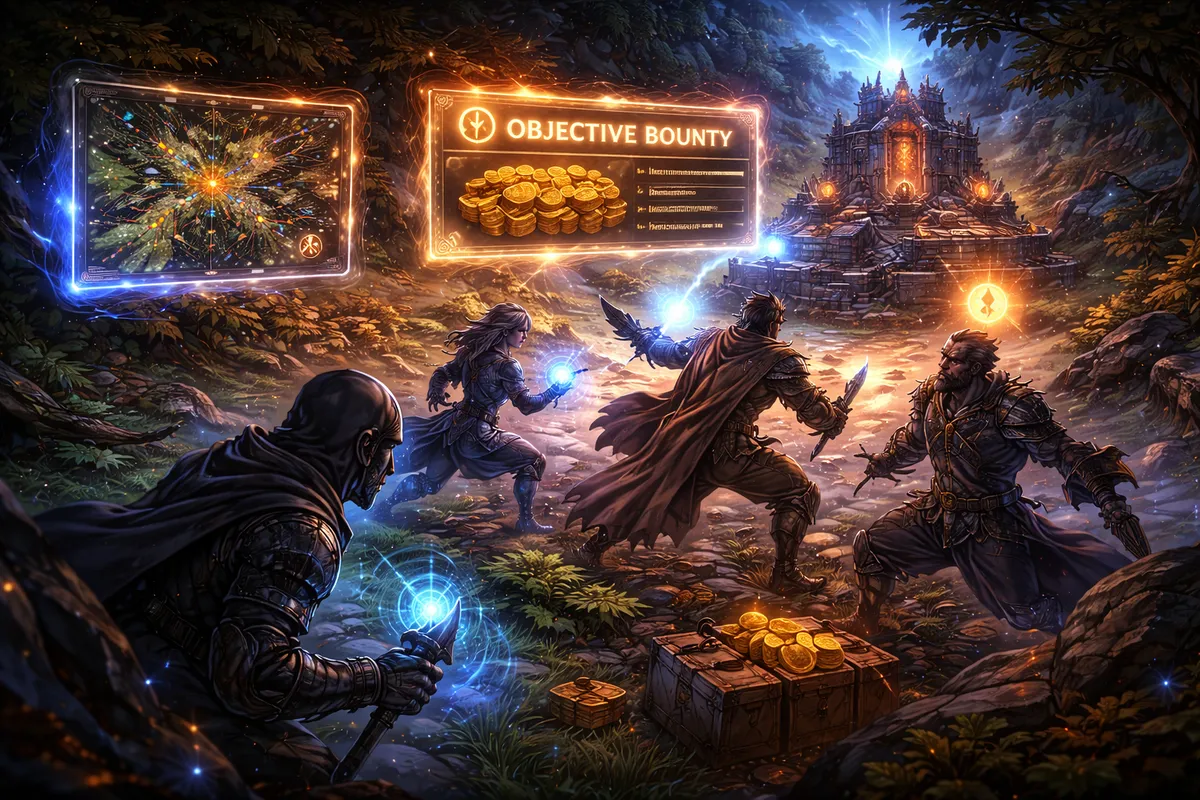
Objective Bounties: Play Slow and Take Guaranteed Value
When objective bounties are active, the enemy often feels forced to defend everything. That creates openings.
If bounties are up:
- avoid coinflip fights
- set up safe wave pressure
- take the bounty objective when the enemy is late or split
- retreat immediately after collecting—don’t overchase
Objective bounties are comeback fuel, but only if you don’t donate kills right after collecting them.
Safe Gold by Role: What Each Role Should Do When Behind
Comebacks feel easier when each role knows their job. Here’s the simplest “behind plan” by role.
Top Lane: Stop the Side-Lane Donation
Top laners often lose games from behind by dying repeatedly in side lane while trying to “pressure.” Pressure is only pressure if you live.
Top behind rules:
- Catch waves near your side safely.
- If you don’t have vision and you’re behind, do not push past river alone.
- Build your lane plan around survival and wave control, not solo kills.
- If you are a tank: your comeback power is teamfight structure. Group earlier for objectives and peel your carry.
- If you are a split champion: split only with a timer (push 1–2 waves, then leave) and only when your team isn’t about to fight 4v5.
Top lane safe gold routine:
- clear side wave near your tower
- rotate toward mid/river for vision
- be present for the next objective fight if your team needs you
Jungle: Stabilize With Camps, Not Desperation Ganks
Behind junglers often throw games by forcing ganks that can’t work. When behind, your job is to recover tempo and prevent the enemy from taking everything.
Jungle behind rules:
- Stop doing “hope ganks.” Only gank when it guarantees value (kill/Flash/forced recall).
- Prioritize your camps and take them efficiently.
- Trade cross-map: if enemy jungler shows top, take something bot.
- Use vision and tracking to avoid losing your second and third clears.
- Hover lanes for short windows only; if nothing is happening, return to camps.
Jungle safe gold routine:
- clear your safest quadrant
- place or help place defensive vision near the next objective side
- look for counterganks (behind junglers win by turning enemy aggression into a losing fight)
Counterganking is a comeback superpower because it wins fights without starting them.
Mid Lane: Waveclear and Tempo Control
Mid lane is the comeback anchor because mid controls how fast your team can rotate and defend.
Mid behind rules:
- Prioritize waveclear. If you lose mid tower and then lose wave control, the map becomes unplayable.
- Don’t roam randomly. Roam only when the wave is pushed or when you must protect a fight.
- Use safe positioning and vision to stop picks.
- If your champion scales: play for item spikes, not ego trades.
Mid safe gold routine:
- clear mid wave safely
- move only when you have information
- help set defensive vision
- punish enemy roams with wave and tower damage when possible
The best mid-laner from behind is the one who makes the map less chaotic.
ADC: Your Comeback Job Is “Don’t Die, Get Items, Then Carry”
ADC comebacks are extremely real—if you stop dying. As ADC, your team usually cannot win fights without you later, which means your life is the comeback win condition.
ADC behind rules:
- Farm the safest waves first. Don’t walk into fog to “catch side lane” without vision.
- Hit the closest safe target in fights. Don’t chase backline when you’re behind.
- If the enemy assassin is missing, play like they’re next to you.
- Buy the defensive tool you need to stay alive in fights if one threat keeps deleting you.
ADC safe gold routine:
- clear waves near your tower
- rotate with your support or mid when collecting riskier farm
- show up to fights early (late ADC arrivals create panic and lost fights)
A behind ADC that stays alive becomes a win condition faster than most players expect.
Support: Vision Discipline and Peel Wins Comebacks
Support decides whether your team can farm safely and whether you lose the game to picks.
Support behind rules:
- Ward defensively first. Don’t walk deep alone.
- Sweep only when you have teammates near you.
- Your best contribution is preventing face-check deaths and protecting carries.
- Choose one job in fights: engage or peel. When behind, peel is often more valuable unless you have a guaranteed engage comp.
Support safe gold routine:
- keep defensive wards on jungle entrances and objective approaches
- escort your carries when they farm risky waves
- help your team reset vision lines before objectives
When behind, support isn’t “weak.” Support is the role that makes the game playable.
Comeback Teamfighting: Where to Fight and How to Win
When behind, you usually don’t want wide open fights in the middle of nowhere. You want fights where:
- the enemy must walk into you
- your vision is stronger
- your carries can hit safely
- the terrain punishes overextension
Best comeback fight locations:
- near your towers
- at choke points where AoE and CC are strong
- in areas where you have vision and the enemy must face-check
Worst comeback fight locations:
- deep in enemy jungle
- wide open river with no vision
- random mid fights with no objective reason
- chasing into fog after a small win
Comeback fights are won by structure and patience, not by sprinting at the enemy.
The “Kite Back and Punish” Rule
One of the strongest behind strategies is not engaging first. It’s letting the enemy commit and then punishing their cooldowns.
Kite-back wins because:
- winning teams often over-dive
- over-dive splits their formation
- split formation makes their carry exposed
- exposed carry gives shutdown gold
Your teamfight plan when behind should often be:
- hold position
- let them start
- peel the first diver
- then re-enter with your damage dealers alive
If you’re behind, surviving the first 3 seconds of a fight is often the whole game.
Wave Management From Behind: The “Defend, Then Push One Lane” Method
When behind, many teams make the mistake of pushing nothing. They group mid, clear one wave, then wait to die.
You need at least one lane pushed sometimes—because pushing creates time.
A safe method:
- Defend first: clear the wave safely near your towers.
- Then push one lane: push the nearest safe lane only until the wave is neutral or slightly advanced.
- Then reset: don’t overstay; return to defense and vision.
This creates breathing room without donating picks.
How to Play When You’ve Lost Outer Towers
Losing outer towers feels scary because the map opens and the enemy has more routes. Your comeback plan becomes:
- stop walking into your jungle alone
- set wards on your jungle entrances
- keep mid wave under control
- farm waves closer to base
- group earlier for objectives
A good rule:
If you lost your outer towers, you can’t play “solo farming” the same way anymore.
Your map is smaller, so you must farm more as a team.
How to Defend When Inhibitors Are Threatened
When the game is close to base, panic is the enemy. Your goal is to defend calmly and wait for the enemy to overreach.
Defense priorities:
- clear super waves safely
- don’t chase kills past your base gate
- protect carries from flanks
- look for picks on the enemy who steps too far forward
A classic throw from the winning team:
- diving too deep under inhibitor towers
- getting wiped
- losing Baron or the game
Your job is to make them pay for impatience.
Smart Itemization From Behind: Build to Function
When behind, you should itemize so you can actually participate. That doesn’t always mean “full defense,” and it doesn’t always mean “full damage.”
Use these decision rules:
- If you die instantly to one threat: build the defensive tool that stops that threat.
- If you live but can’t kill frontline: build penetration or sustained damage.
- If sustain is making fights unwinnable: prioritize anti-heal.
- If CC prevents you from moving: prioritize anti-CC tools.
The comeback item goal is:
Stay alive long enough to do your job.
The Comeback Communication Plan (No Typing Required)
When behind, long typing usually creates more tilt and less coordination. Use pings and short intent.
High-value behind pings:
- danger pings on fog routes
- “assist me” on defensive ward areas
- “on my way” when you’re rotating (to stop teammates fighting early)
- objective timer pings to encourage early setup
- target pings on the diver or shutdown target
A simple phrase that changes games:
- “We scale—don’t fight blind.” (even if you only ping, that’s the concept)
Behind teams win when they stop taking random fights.
The 7-Day Comeback Training Plan
If you want to become the player who wins “unwinnable” games, train comeback skills intentionally for one week.
Day 1: No free deaths
Goal: zero face-check deaths.
Day 2: Wave catching discipline
Goal: never miss two waves to tower while grouped mid.
Day 3: Defensive vision line
Goal: wards on jungle entrances before objectives.
Day 4: Objective decisions
Goal: no late blind contests; trade instead.
Day 5: Teamfight role rules
Goal: carry survives first 3 seconds; peel divers first.
Day 6: Shutdown execution
Goal: trap with vision; punish overextension; convert instantly.
Day 7: Conversion practice
Goal: every won fight becomes tower/Baron/dragon, not a chase.
These seven days build a comeback identity: calmer play, smarter trades, and fewer losing streaks.
BoostRoom: Turn Comeback Macro Into a Climbing Weapon
Most players lose from behind because they don’t have a plan—they only have emotions. BoostRoom helps you build a real comeback system that fits your role, champion pool, and rank environment.
With BoostRoom, you can get:
- a role-based “behind plan” you can repeat every game
- safe gold routes and wave schedules tailored to your role
- vision patterns (including how to use Faelights defensively) to stop picks
- objective decision rules so you stop coinflipping from behind
- teamfight frameworks that protect your win condition and punish dives
- replay feedback that pinpoints the first domino mistake that made the game spiral
When you know how to play from behind, ranked becomes less stressful—because even bad early games still feel winnable.
FAQ
How do I stop the game from snowballing when we’re behind early?
Stop bleeding deaths, catch waves safely, ward defensively, and avoid late blind objective contests. The fastest way to lose is giving extra kills while already behind.
Should we ever fight when behind?
Yes, but on your terms: near your vision, near your towers, or in choke points where your CC and AoE are strong. Avoid fights in fog or deep enemy jungle.
What’s the safest way to get gold when behind?
Catch waves near your towers first. Then take safe jungle camps on your side. Only push past river when you have information and an escape plan.
How do objective bounties help comebacks?
They reward the losing team for taking key objectives and structures. The best approach is to play slow, set vision, and take bounty objectives when the enemy is late or split—then reset safely instead of overchasing.
How do we get shutdowns without flipping fights?
Don’t chase. Trap. Use vision denial, wait for the fed enemy to catch a wave or rotate, then collapse with multiple teammates and layered CC. Convert the shutdown into an objective immediately.
As ADC, how do I farm when behind without dying?
Farm the closest safe wave, don’t walk into fog alone, and rotate with support/mid when collecting risky farm. If the enemy assassin is missing, play like they’re nearby and stay within peel distance.
As jungler, what should I do when I’m behind?
Stop forcing low-percentage ganks. Clear efficiently, trade cross-map, look for counterganks, and protect your camps and objectives with vision and timing.
When should we trade an objective instead of contesting?
Trade when you are late, blind, or weaker at that moment and you can take something meaningful elsewhere (tower, waves, camps, vision). The worst option is showing up late and dying.



