Heist Is a Window Game: The Core Concept
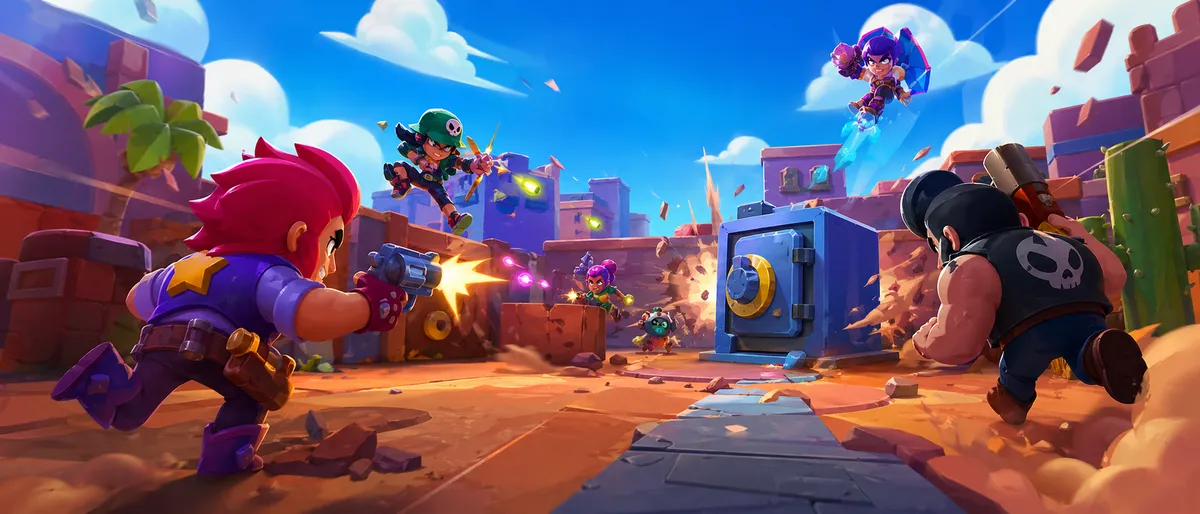
Heist rewards the team that creates damage windows while denying the enemy’s windows. A damage window is a short period where your team can hit the safe without immediately losing the fight or donating free takedowns. Most players treat the safe like the goal and sprint at it nonstop. Strong players treat the safe like a bank vault: you only crack it open when the security is down.
A clean Heist match usually looks like this:
- You win your lane trade or force two enemies to heal.
- You step forward together and hit the safe for a short burst.
- You leave before you get collapsed on.
- You reset, defend, and repeat.
The team that understands windows wins even when raw damage numbers look similar, because their damage is safe, timed, and repeatable.
The Three Heist Win Conditions
Every Heist match is decided by one (or more) of these win conditions:
1) Safe DPS advantage (you win the race)
You have higher sustained safe damage when windows appear, so every win in space control converts into bigger chunks.
2) Map control advantage (you decide where fights happen)
You hold stronger positions and choke points, so the enemy’s push arrives late, low HP, or split.
3) Defense advantage (you deny their pushes)
You don’t just “fight near the safe.” You stop pushes early with rotations, stalling, and smart clears—so the enemy rarely gets a clean window.
A great comp usually covers at least two of these. If your team only has one (for example, only DPS with no defense), you’ll win some games fast and lose others faster.
Roles in Heist: Attack, Anchor, and Answer
Heist comps feel unstoppable when each player has a job.
Safe Melter (Attack)
The Brawler whose main job is to cash in on windows and shred the safe quickly. They often want straight lines, clear angles, and short fights.
Lane Controller / Anchor (Map control + Defense)
The Brawler who holds a lane, denies rotations, and prevents the enemy from walking into your side. They stabilize the match so your damage dealer gets windows.
Flex Answer (Counter + Utility)
The Brawler that solves the matchup: wall break, anti-rush, anti-thrower, anti-tank, or anti-dive tools. This role is what stops “unfair” enemy comps from snowballing.
One Brawler can cover two roles, but if nobody covers the Anchor role, your team will feel like it’s constantly on fire.
Map Reading for Heist: Open Lanes vs Walled Routes
Before you play, read the map shape. It determines how windows are created.
Open Heist maps (long sightlines)
- Windows come from winning poke wars and forcing retreats.
- Strong tools: range, consistent damage, wall break to remove cover, and safe tap damage.
- Common mistake: walking into open space to hit safe and getting deleted.
Walled Heist maps (tight corners, many walls)
- Windows come from controlling chokes and winning close trades.
- Strong tools: control/area denial, thrower pressure (if protected), anti-rush defense.
- Common mistake: chasing into corners and feeding chain deaths.
Split-route maps (multiple paths to safes)
- Windows come from rotations and timing: one lane wins, then collapses.
- Strong tools: mobility, mid control, and players who rotate on time.
- Common mistake: all three players defend one route while the other route opens for free.
Your first goal is to identify: “Are windows created by range pressure, choke control, or rotations?” Then play the correct lane and spacing.
Safe Pressure: What It Actually Means
“Safe pressure” isn’t just hitting the safe. It’s threatening the safe without donating your life.
Safe pressure has three layers:
Layer 1: Threat pressure
You stand in a position where the enemy must respect the fact that you could hit the safe if they misstep. This forces them to defend angles and slows their rotations.
Layer 2: Chip pressure
You take small, low-risk safe hits when defenders are forced to heal, reload, or rotate. You’re not committing—just banking value.
Layer 3: Window pressure
You take heavy safe damage during a real window: a kill, a forced retreat, or a full lane win.
Most teams lose because they skip Layer 1 and 2, then try to brute-force Layer 3 repeatedly.
How to Create Safe Damage Windows (Repeatably)
If you want consistent Heist wins, create windows with these methods:
Win a lane, not a brawl
Your first win is usually the forward cover position, not a kill. Once you own forward cover, the enemy must peek badly to contest, and that creates kill opportunities.
Force defenders to spend ammo
When defenders waste ammo clearing pressure, they can’t stop a safe tap. The moment you see low ammo, you step up and cash in.
Punish the defender’s rotation
In Heist, defenders often rotate too late. If you win a lane and rotate quickly toward the safe, you get a free burst before defenders arrive.
Use wall break to open safe angles
Removing one key wall can turn “impossible to hit safely” into “free tap every wave.” Wall break doesn’t only help offense—it also helps defense by reducing thrower safety or opening sightlines to stop rushes.
Stack your push timing
The strongest window is when two teammates step in at once. Even if each does modest safe damage, the combined burst forces the enemy to respond, creating a tempo advantage.
The Safe-Pressure Rhythm: Tap, Reset, Re-enter
Most Heist players either overcommit or undercommit. The best rhythm is simple:
- Tap the safe briefly when a window appears.
- Reset behind cover before you get collapsed on.
- Re-enter from a fresh angle while the enemy resets.
This rhythm prevents the most common Heist throw:
- You hit safe too long.
- Enemy respawns arrive.
- You get pinched, die, and donate a counter window.
A small safe tap that keeps you alive is usually better than a greedy tap that flips the entire match.
Offense Positioning: Where to Stand Before You Hit the Safe
Your position before a window appears determines whether you can convert.
Good offense positions:
- Behind cover within one quick step of safe angle.
- On a side angle that forces defenders to turn.
- Near a wall you can “peek-tap-peek” from.
- In a lane that allows a fast retreat path.
Bad offense positions:
- Standing directly in front of safe with no cover.
- Deep inside enemy territory with no retreat route.
- Stacking with teammates so one control tool hits all of you.
- Hitting safe while low HP (you become free value).
A simple rule:
If you can’t retreat to cover within a second, you’re not in a safe pressure position.
Ammo Economy: The Hidden Reason Pushes Fail
Heist is heavily decided by ammo economy.
If you arrive to a push with low ammo, the push is fake.
You’ll hit the safe once, then die to defenders or fail to confirm kills.
Winning teams do this:
- They hold shots until they can land them.
- They don’t spam into walls or empty space.
- They reload before stepping into the window.
- They punish enemies who are empty.
Quick habit that wins:
Before pushing, glance at your ammo mentally and ask:
“Can I fight defenders and hit safe, or only one of those?”
If the answer is “only one,” don’t commit deep.
Defense Rotations: Defend Early, Not at the Safe
Most Heist losses happen because teams “defend at the safe” instead of defending the path to the safe.
Strong defense has layers:
Layer 1: Forward defense (best layer)
Stop the enemy before they reach safe range. This denies windows entirely.
Layer 2: Mid defense (stall layer)
If they get through, you stall their push while teammates rotate back.
Layer 3: Safe defense (emergency layer)
Only used when a push already reached the safe. Your goal becomes preventing a full burst and forcing them off quickly.
If your defense starts at Layer 3 every time, you’re already losing—because every fight happens on your doorstep.
The Rotation Rule: One Peels, Two Hold
Heist defense often fails because everyone rotates at once and loses lanes. Use this rotation structure:
- Two players hold lanes/control space (don’t abandon the map).
- One player peels back to meet the push early or protect the safe angle.
Then you swap as needed. This avoids the classic mistake:
- all three collapse on defense,
- the enemy resets,
- then your lanes are lost and the next push is even worse.
Defense is about keeping structure, not stacking bodies.
How to Stop Rush Comps Without Panicking
Rush comps win when they force chaotic close fights on your safe. Your job is to remove chaos.
Anti-rush principles:
- Don’t chase into their entry route; make them come into your controlled space.
- Keep one player ready to peel back early.
- Save your best defensive tool for the moment they commit to safe range.
- Clear minions/summons/turrets quickly if they create safe tanking value.
Spacing rule vs rush:
Never stack close together near your safe. Rush comps love hitting two defenders at once.
Timing rule vs rush:
When you stop the first rush, immediately take space forward again. Many teams stop a rush then sit on the safe, which gives the rush comp infinite retries.
Defense as a Timer Game: Stalling Wins
When the enemy reaches your safe, you don’t always need kills. Often you only need time.
Stalling tools (conceptually):
- knockbacks to push them off safe range,
- slows to make them waste time,
- body-blocking lines that force longer routes,
- area denial that punishes standing still on the safe,
- baiting them to chase you away from the safe.
Your defense goal in emergency moments is:
Reduce the length of their window.
Even shaving a few seconds repeatedly wins games.
When to Counter-Push vs When to Reset
A huge skill gap in Heist is knowing when to counter-push after defending.
Counter-push when:
- you just defeated one or more enemies (numbers advantage),
- enemies are respawning and can’t defend immediately,
- your ammo and HP are healthy enough to convert,
- your lane positions allow a safe route to the enemy safe.
Reset when:
- you defended but you’re low HP or low ammo,
- the enemy team is still alive and can pinch your push,
- your lanes are unstable and would collapse if you leave.
The biggest throw is a “half push”:
- you drift forward with low resources,
- die near mid,
- give the enemy a free counter window.
Heist Drafting: Build a Comp That Can Do Both Jobs
In draft modes, you win Heist by drafting a team that can:
- create windows on offense,
- and deny windows on defense.
A strong draft answers four questions:
1) Who is our main safe melter?
You need at least one reliable objective damage source.
2) Who anchors lanes and stabilizes defense?
A stable anchor prevents snowball losses.
3) Do we have a way to open or close the map?
Wall break can create safe angles and remove enemy comfort. On some maps, not having wall break means you must outplay heavily.
4) What is our emergency answer to their win plan?
Anti-rush, anti-thrower, anti-tank, or anti-sniper tools depending on map shape.
Drafting isn’t about picking three strong Brawlers. It’s about picking three Brawlers that solve the same problem from different angles.
Draft Priority by Map Type
Use these priorities based on map shape (works long-term because geometry matters).
Open maps:
- Priority 1: consistent range pressure (wins lanes)
- Priority 2: wall break (opens safe angles / removes cover)
- Priority 3: safe melter (converts windows)
- Priority 4: anti-dive/anti-rush safety
Walled maps:
- Priority 1: control and choke denial
- Priority 2: anti-rush / peel defense
- Priority 3: safe damage that can happen through controlled routes
- Priority 4: wall break if it unlocks key angles
Split-route maps:
- Priority 1: rotation speed / flexible kits
- Priority 2: a stable anchor who can hold while others rotate
- Priority 3: one big converter who cashes in on rotations
- Priority 4: an answer to the most likely rush path
Ban Logic for Heist: Ban What Breaks Your Structure
In draft formats, bans should remove the thing your team can’t handle with your current picks.
Examples of ban mindset:
- If your team is squishy ranged and lacks peel, ban heavy dive/rush threats.
- If your team is slow and wants to hold chokes, ban mobility that bypasses chokes.
- If your team can’t wall break and the map favors throwers, ban oppressive thrower setups.
- If you rely on a single safe melter, ban the strongest hard counter to that style.
A good ban is rarely “the strongest Brawler.” It’s “the strongest Brawler into our plan.”
Common Draft Traps (Avoid These)
These traps lose Heist more than mechanics mistakes.
Triple offense, no defense anchor
You race well, then lose because you can’t stop a single coordinated push.
Triple squishy with no peel
You win early poke, then collapse the moment a tank or assassin touches you.
No way to create angles
If you can’t wall break or rotate into side angles, you end up walking into a set defense repeatedly.
All control, no converter
You can stall and look “solid,” but you can’t punish windows, so the match drifts into a loss.
The fix is usually one pick:
- a defense anchor,
- a wall breaker,
- or a reliable converter.
Heist Lane Play: Win One Side, Then Convert
Heist is often decided by one lane. If you win one side consistently, you can:
- rotate to pinch mid,
- open the enemy safe angle,
- and force defenders to split.
Lane win sequence:
- Win forward cover (don’t chase).
- Force enemy to heal or retreat.
- Step into a safe damage angle for a short burst.
- Back out before the collapse.
- Repeat.
This makes your pressure feel “inevitable” and prevents the classic problem of trading kills but never converting to safe damage.
How to Play From Ahead: Protect Your Lead Without Turtling
When your safe is healthier, your enemy’s desperation becomes predictable. Your job is to punish their forced pushes.
Ahead mindset:
- Your goal is to deny windows, not to force risky big pushes.
- You can trade space for time if needed, as long as the safe stays protected.
- You should hold strong defensive positions earlier, not later.
Practical “ahead” rules:
- Keep lanes stable; don’t triple-stack offense.
- Save your best defensive tool for the enemy’s all-in push.
- Don’t chase low enemies away from the safe if it opens the lane behind you.
- After stopping a push, take space forward again so they can’t repeat instantly.
Heist is often thrown when the winning team plays like they’re losing—forcing messy dives instead of denying the comeback plan.
How to Play From Behind: The Comeback Plan
When you’re behind in safe health, you need windows that are bigger than normal. That doesn’t mean “rush mindlessly.” It means create one decisive sequence.
Comeback Plan A: Win a clean lane fight, then full commit
- Force a 3v2 or 3v1.
- Send two to safe, one to block the retake route.
- Burst hard, then retreat before the respawn collapse.
Comeback Plan B: Force defenders to split
- Attack from two angles so their defense can’t cover both.
- Use wall break or rotation timing to open the second angle.
- Convert the moment their defense turns.
Comeback Plan C: Stop their push first
Sometimes the best comeback is defense:
- deny their next window,
- keep your safe alive,
- then take a calmer, higher-quality push.
Comeback rule that matters most:
If you’re behind, you can’t afford to donate extra windows by feeding chain deaths. One bad push can end the match.
The Respawn Wave Concept: Push Between Waves
A major Heist concept is respawn waves. Even without tracking exact timers, you can feel when an enemy is about to return.
Smart push window:
Right after you secure a takedown, you have a short time where defenders are missing. That’s your best safe damage window.
Bad push window:
When enemies are about to respawn and you’re still standing on the safe. That’s how you donate a counter window.
Practical habit:
After any kill, take safe damage quickly, then back off before the wave arrives. Don’t be greedy.
Practical Checklists: Play Heist Like a System
Use these checklists to remove guesswork.
Offense checklist
- Do we have a real window (kill, retreat, ammo advantage)?
- Do I have enough ammo to fight defenders and hit safe?
- Do I have a retreat path after the burst?
- Are we pushing together or one-by-one?
- Is there a better angle (rotation) than walking straight in?
Defense checklist
- Are we defending early (path) or late (on safe)?
- Do we need one peel back, or do we need full collapse?
- Are we stacked and vulnerable to area tools?
- Can we stall instead of chasing for kills?
- After stopping push, are we taking space forward again?
Draft checklist
- Do we have a safe melter?
- Do we have a lane anchor?
- Do we have wall break or a way to create angles?
- Do we have an answer to rush/dive/throwers on this map?
- Can we assign lanes clearly?
Training Drills: Improve Heist Faster Without Grinding
If you want real improvement, train one skill per session.
Safe pressure drill
For several matches, force yourself to:
- only hit safe during a clear window,
- and always retreat after a short burst.
- This builds discipline and reduces feed deaths.
Defense rotation drill
Pick a “peel player” mindset:
- the moment you see a push forming, rotate early to meet it.
- Your goal is to stop pushes before safe range.
Angle drill
Practice getting safe damage from a side angle:
- rotate after winning lane,
- hit safe briefly,
- back out.
- This trains you to stop walking straight into defense.
Ammo discipline drill
Play a session where you avoid shooting unless:
- it hits an enemy,
- breaks critical cover,
- or denies a push.
- You’ll be shocked how much stronger your pushes feel with full ammo.
BoostRoom: Build a Heist Playbook That Fits Your Style
If you want Heist wins to feel consistent, you need more than “tips.” You need a repeatable system: what you pick, where you stand, when you push, and how you rotate defense. BoostRoom is built to help players improve fundamentals and decision-making so Heist stops feeling like a coin flip.
With BoostRoom, you can build:
- a reliable Heist Brawler pool (safe melter, anchor, flex answer)
- map-reading routines so you know whether to prioritize range, control, or wall break
- offense timing habits that create clean damage windows without feeding
- defense rotation rules that stop rushes and deny comebacks
- draft checklists so your team comp always has coverage
The goal is long-term improvement: smarter choices, fewer throws, and a clear plan you can follow even with random teammates.
FAQ
How do I deal safe damage without dying?
Treat the safe like a window objective. Hit it only after you win space, force retreats, or get a takedown. Burst briefly, then retreat before defenders collapse.
What’s the biggest mistake in Heist?
Overcommitting to the safe with no retreat path. One greedy push often flips the match by donating a counter push.
Should we defend at the safe or in front of it?
In front of it whenever possible. Defend the path to the safe so the enemy never gets a clean window.
How do we stop rush teams?
Peel early, save your best defensive tool for the commit, avoid stacking near the safe, and take space forward again after you stop the first rush.
What makes a good Heist draft?
One reliable safe melter, one lane anchor for stability, and one flex answer (wall break or anti-rush/anti-thrower tools) based on map shape.
When should we counter-push?
After you secure a numbers advantage and you have enough ammo/HP to convert. If you’re low resources, reset instead of taking a half push.
Why do we win fights but still lose the safe race?
Because fights aren’t being converted into safe windows. After a takedown, immediately take objective damage (briefly), then reset before the respawn wave arrives.
How do we come back when our safe is low?
You need a bigger-than-normal window: force defenders to split, win a clean fight, then full commit with two hitting safe and one blocking the retake route. Avoid chain-feeding—one extra donated window ends the match.



