What Trophy Fish Mean in Fishing Planet
Trophy is a fish size class, alongside Young, Common, and Unique. A Trophy Walleye is still a Walleye. A Trophy Bass is still the same species as the Common Bass you catch nearby. The difference is its size class, which can affect the fight, the value of the catch, achievements, and collection progress.
That distinction matters because Trophy fishing is not solved by buying a “Trophy rod.” You target the species first, then adjust your setup toward the conditions that favour a larger catch. Larger hooks, a more selective bait, a different depth, or a more deliberate lure presentation can all matter, but none of them replaces reading the fish information available in the game.
Trophy fish are not guaranteed by one item
No bait, lure, hook, or coordinate can guarantee a Trophy fish. Fishing Planet uses several interacting factors, including species behaviour, fish size, water area, bait or lure, hook size, depth, retrieve, and conditions at the location. A setup that catches one Trophy fish can remain useful, but it should be treated as a repeatable starting point rather than a promise.
The strongest approach is to identify the fish you want, inspect its current in-game information, and make controlled changes. If you replace the bait, hook, depth, location, rod, and lure retrieval all at once, you will not learn which part of the setup improved the result.
Trophy catches can support achievements and collections
Trophy fish are more than a larger catch screen. Fishing Planet achievements include Trophy-fish objectives, and collections can ask you to catch Trophy versions of specific species. This gives Trophy hunting its own purpose beyond general level or Credit progression.
That is why this guide focuses on accurate targeting. A productive Trophy setup should help you work toward a particular species or collection objective rather than turning every fishing session into a broad, unfocused hunt for anything large.
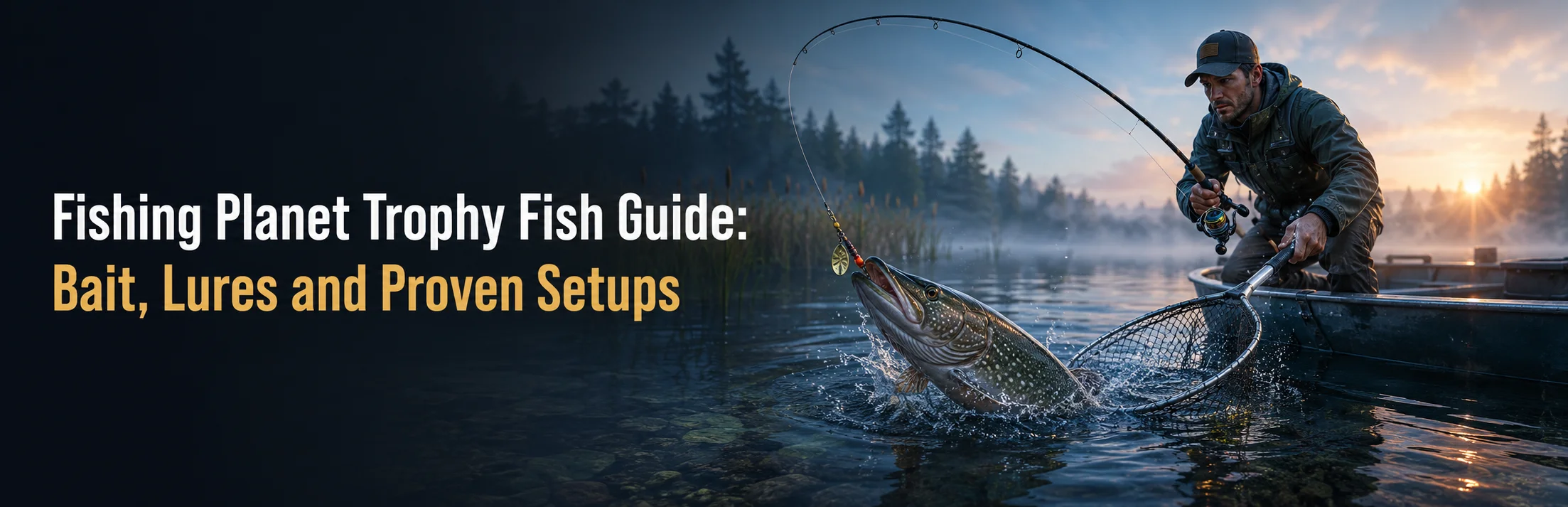
How to Read a Fish Before Building a Trophy Setup
The fish information in the current game is your starting point. Open the species details for the waterway and look at the fish’s likely diet, preferred bait or lures, practical hook range, and the type of presentation it responds to. Community setups are useful for ideas, but the live in-game details take priority when they differ.
Start with the target species, not the tackle shop
Choose one species before you buy bait or lures. This immediately narrows your decisions. A Trophy panfish may respond best to a light float presentation. A Trophy Walleye may be a lure or small-minnow target. A large catfish or Sturgeon calls for a much stronger bait-focused setup. Buying a heavy rod first does not answer any of those questions.
Once the target is clear, select tackle that can land the largest reasonable catch for that species while staying balanced. The rod line rating, reel drag, main line, leader, and terminal tackle should all work together. A lost Trophy is often a setup problem rather than a lack of rod strength.
Match hook size to the fish you want to filter
Hook size is one of the most useful ways to shift a setup toward larger fish, but it is not a universal “bigger is always better” rule. A hook that is too small can produce a high number of Young and Common fish. A hook that is too large can reduce bites or exclude the species completely.
Use the fish card and a proven starting range for the species, then adjust in small steps. If a setup produces nothing but small fish, a modest increase in hook or lure size may help. If bites disappear, return to the previous option and change a different variable instead.
Depth and presentation are part of the setup
Float depth, leader length, sinker weight, retrieve type, and the exact part of the water you fish all change how a presentation reaches a species. The Fishing Planet tutorial specifically notes that Trophy-sized fish can dwell near the bottom, which is a useful reminder not to leave a bait at a default shallow depth when the target feeds lower in the water column.
Do not turn that into a universal rule. Some Trophy fish feed shallow, near cover, or on a particular lure path. Treat depth as a variable to test against the fish’s current information rather than an automatic instruction to fish the deepest water available.
Proven Trophy Bait Setups
Bait setups are most effective when you want a controlled, natural presentation. They are especially useful for fish that feed near the bottom, for cautious species, and for Trophy targets where depth and hook selection make a visible difference.
Trophy panfish float setup
For smaller Trophy fish such as Bluegill, Redear Sunfish, and White Crappie, a light float setup can be more productive than heavy gear. Red Worms paired with a #6 hook are a long-standing starting point for several Trophy panfish at Lone Star Lake. The exact best depth depends on the species and area, so use the fish information and adjust the float rather than assuming every target feeds at the same level.
This setup is valuable because it is selective without being excessive. A #6 hook is large enough to move away from the smallest bites for many panfish targets, but not so large that it automatically removes the species from the presentation. Use a balanced light rod, compatible line, and a leader length that lets the bait sit where the fish are feeding.
Trophy Walleye bait setup
Small Minnows on a #1/0 hook are a familiar starting point for Walleye fishing at Emerald Lake. This is a natural-bait route for players who want to target Walleye without relying only on a lure retrieve. Use a setup strong enough for a Trophy Walleye, but do not use an oversized rod and line that make the fish feel trivial or create an inefficient presentation.
If your result is a mix of Common Walleye and no Trophy bites, check the current fish card, depth, hook range, and exact place you are fishing. Raise or lower one part of the float or bottom presentation before replacing the entire rig. A measured adjustment gives you useful feedback; random changes do not.
Trophy catfish and Sturgeon bait setup
Larger bait-focused targets need more deliberate rigging. Cutbait, leeches, large minnows, spawn sacks, and mussel-style baits can all have specific roles depending on the species. For example, White Sturgeon are commonly targeted with bait-focused heavy setups, while catfish often respond to appropriate cutbait or live-bait choices.
The exact bait is only half of the build. Use a rod and reel that can safely handle a strong fish, line within the rod’s supported range, and a leader suited to the species. Before you cast, also confirm that your keepnet or stringer can retain a Trophy-sized fish. Landing the target only to release it because storage is too small defeats the purpose of a focused hunt.
Selective bait is better than expensive bait
Do not assume that the most expensive bait will catch the biggest fish. A Trophy setup works because the bait suits the species, the hook is appropriate, and the presentation reaches the fish. A reasonably priced bait that produces relevant bites is more useful than premium bait with no clear target.
When testing, begin with the bait shown on the fish information or a trusted species-specific recommendation. Change only one factor at a time. This gives you a clear record of whether the bait, hook, depth, or location adjustment actually improved the setup.
Proven Trophy Lure Setups
Lures offer active control over the presentation. They are especially useful for predatory fish such as Bass, Walleye, Pike, Trout, and other species that react to motion, size, depth, and retrieve style.
Trophy Bass lure setup
Larger Bass can respond to a more substantial lure profile than the smallest fish at the same waterway. Spinnerbaits, bass jigs, worms, crankbaits, and surface lures can all be valid tools depending on the current fish information and the area you are fishing. The key is to choose a lure that fits the rod’s rating and imitate a presentation Bass can find and strike.
Do not assume every large lure produces only Trophies. Small Largemouth or Peacock Bass can still take a bigger presentation, while a selective lure may also reduce your total bite rate. Use it when your goal is the larger size class, then adjust the lure profile or retrieve only after you have given the setup enough consistent testing.
Trophy Walleye lure setup
Walleye are a strong lure target because their response can be shaped by lure type and movement. Narrow spoons, spinner-style lures, and soft plastics on suitable jigheads are common starting categories. Match the lure weight to your rod, then vary your retrieve deliberately rather than reeling every cast at the same speed.
A stop-and-go, steady, or slightly varied retrieve can make a lure more convincing depending on current conditions. Watch the fish response and keep the retrieve you can repeat. When a presentation produces a quality bite, note the lure, hook size, weight, and method so you can return to that exact setup later.
Trophy Trout lure and bait options
Trout often reward a more careful choice of lure or natural bait. Small spoons, spinners, flies, fish eggs, and insect-style baits can all have a place depending on the trout species and waterway. A light or medium rod that casts the chosen lure correctly is generally more useful than a heavy predator build.
For Trophy Trout, pay attention to the lure’s working depth, the current fish preferences, and the water you are covering. A lure that stays too shallow or passes too quickly through a productive zone can miss the fish even when the colour and hook size are reasonable.
Trophy Pike and other toothy predators
Pike, Muskellunge, and similar predators can require larger bait or lures and stronger terminal tackle. These fish can also bite through unsuitable line or leaders. Where the target species makes it necessary, use a leader that protects the setup while remaining compatible with the rod, reel, and main line.
Lure size can help filter toward stronger fish, but it is not a shortcut around the rest of the setup. Choose a lure that fits your rod’s lure-weight range, work it through likely predator areas, and avoid using maximum drag simply because you hooked a large fish. A carefully controlled fight is safer than an avoidable breakage.
Build a Balanced Trophy Setup Before You Cast
Trophy fish fight harder than the smaller fish you may catch with the same setup. A properly balanced build gives you the control to land them without turning an enjoyable catch into a broken line, damaged gear, or forced release.
Rod, reel, line, and leader must agree
Select a rod that supports the main-line test you plan to use. Choose a compatible reel whose drag can be set safely below the line and leader limit. Then select a leader for the species and method, especially when fishing around toothy predators or using a presentation that needs a specific leader type.
Do not focus on a single strongest number. A reel with more maximum drag than the line can support is not a benefit if you set it too high. A leader weaker than the main line can be intentional, but only if you understand that it will be the likely failure point during a hard fight.
Storage is part of a Trophy build
Before targeting a large Trophy fish, inspect your stringer or keepnet. You need both enough total capacity and enough maximum individual-fish capacity. This is especially important for larger Catfish, Sturgeon, Pike, carp, and saltwater targets.
Trophy fishing feels much better when the target can be kept legally and retained after landing. Confirm the waterway license rules before you start, especially when protected or restricted species may appear in the same area.
Use the right rod type for the presentation
Float, spinning, casting, feeder, and bottom rods do different jobs. A float setup gives precise depth control for natural bait. A spinning or casting setup supports active artificial-lure retrieval. Feeder and bottom rods are useful for fish that feed close to the lakebed or riverbed.
Do not force a target into the method you already own when the fish information points elsewhere. Choosing the correct rod type is usually more valuable than buying a marginally stronger version of the wrong type.
How to Test a Trophy Setup Without Guessing
Trophy hunting becomes much more consistent when you test it like a fishing pattern rather than a one-cast gamble. Keep the target species fixed and make controlled adjustments to the presentation.
Start with a reliable species setup
Begin with a bait or lure already known to attract the target species. This establishes a baseline. If the species bites but the catches are mostly Young or Common, you have a productive starting point and can begin refining hook size, bait profile, depth, lure size, or retrieve.
If the target species does not bite at all, return to the fish information before making a large purchase. You may be using the wrong bait class, lure weight, rod type, or location area.
Change one variable at a time
For bait fishing, test hook size first, then depth or leader length, then bait choice. For lure fishing, test lure profile, lure size or weight, working depth, and retrieve. The exact order is less important than changing only one meaningful element at a time.
This prevents a common mistake: assuming the new rod caused a Trophy bite when the real difference was a slightly deeper float or a different hook. Trophy catches may still have an element of chance, but controlled testing turns chance into usable information.
Record the catches that matter
Use map markers and simple notes to preserve a successful pattern. Record the waterway, target fish, bait or lure, hook size, depth or leader length, rig, and retrieve. You can also note whether the fish was Common, Trophy, or Unique.
The goal is not to copy a fixed routine. It is to keep an accurate record of a species-specific presentation you can revisit when working on an achievement, collection, or personal Trophy target.
Trophy Fishing Mistakes to Avoid
Chasing Trophies with random large hooks
Increasing hook size without checking the species can remove bites instead of improving them. Use a practical range from the fish card or a reliable species setup, then make measured changes.
Treating a Trophy setup as a Unique setup
Trophy and Unique fish are different size classes and can require different levels of precision. Do not assume a rare Unique guide is the only way to catch a Trophy fish from the same species.
Fishing the wrong depth for the presentation
Depth is easy to overlook with float and bait setups. If the species is active but the expected size class is missing, test depth or leader length before abandoning the location.
Overloading light equipment
A Trophy fish can expose a mismatched rod, reel, line, or leader. Use a balanced setup that fits the target rather than pushing a light rig past its safe limits.
Forgetting to check retention rules
Always confirm license restrictions and storage limits. Trophy hunting should not end with a fine or a catch that cannot fit in your keepnet.
More About Fishing Planet Trophy Hunting
Trophy fishing is one of the best ways to learn the detail behind Fishing Planet’s fish behaviour. It teaches you how bait, lure size, hooks, depth, rigs, and retrieval interact. Instead of approaching a waterway as a list of random catches, you begin to see it as a group of species with individual patterns.
That knowledge also makes a Fishing Planet account more complete. A collection of Trophy catches, unlocked locations, useful tackle, and mastery progress reflects the time and skill put into the game. If you later want to understand how account progress can be presented in a listing, see BoostRoom’s guide on selling a Fishing Planet account.
Why Choose BoostRoom for Game Marketplace Services
BoostRoom is a gamer marketplace where players can browse active services and digital-good listings across supported games. Fishing Planet availability can vary, so review the game category and individual listing information before making a purchase.
Clear offer information
Review the exact scope, platform or region where relevant, seller details, requirements, and estimated delivery information for every listing.
Direct checkout
When you find a suitable active offer, you can proceed directly to checkout from that offer.
Marketplace choice across supported games
Explore active accounts, boosting, coaching, items, currency, game keys, top-ups, and other categories through the BoostRoom Gamer Marketplace. Available services depend on the game and current sellers.
Final Cast: Build Patterns, Not Promises
The best Trophy Fish setup is the one that suits one specific species and can be repeated: the right bait or lure, a practical hook size, the right depth or retrieve, balanced tackle, and a location where the fish actually feeds. Start from current fish information, use proven examples as a baseline, and refine one variable at a time.
Fishing Planet and all related names are trademarks of their respective owners. BoostRoom is independent and is not affiliated with or endorsed by Fishing Planet’s publisher or developer. Always review the game’s current rules and platform terms before using any third-party marketplace service.
Frequently Asked Questions
What is a Trophy fish in Fishing Planet?
A Trophy fish is a larger size class of a normal species. It is not a separate species or the same thing as a Unique fish. The fish card identifies the size class when you land it.
What bait catches Trophy fish in Fishing Planet?
The best bait depends on the species. Red Worms on a #6 hook are a useful starting point for several Trophy panfish, Small Minnows on a #1/0 hook can target Walleye, and larger bait-focused species may need cutbait, spawn sacks, or other specific bait. Always confirm the current fish information for your target.
Do bigger hooks catch more Trophy fish?
Sometimes a larger hook can reduce smaller catches, but it is not always better. Choose a hook that fits the target species, then adjust carefully if your current setup produces only Young or Common fish.
What lures are best for Trophy fish in Fishing Planet?
The right lure depends on the predator. Spoons, spinners, jigs, soft plastics, crankbaits, and surface lures can all be useful. Match the lure to the fish card and your rod’s lure-weight range, then refine the retrieve and working depth.
Why am I catching only Common fish instead of Trophies?
Check the hook or lure size, bait choice, depth, retrieve, exact fishing area, and current fish preferences. Change one variable at a time so you can identify what improves the size of your catches.
Do I need heavy gear for Trophy fish?
No. Use gear appropriate for the target species. Small Trophy panfish need a balanced light setup, while Trophy Pike, Sturgeon, Catfish, or saltwater fish need heavier tackle and suitable storage.



