What a Tank Actually Does in ESO PvE
A great tank makes every fight feel easier without needing to “carry” damage. Your value comes from control, not numbers on a damage meter.
Your real responsibilities in PvE
Hold priority enemies
Bosses, mini-bosses, heavy hitters, and dangerous ranged enemies should be focused on you, not your healer or damage dealers.
Stack enemies for AoE damage
Most groups are built around area damage. If enemies are spread out, fights take longer and become more dangerous. Your pulls and positioning create fast clears.
Keep key debuffs active
When you keep the right debuffs on enemies, your group’s damage increases and the healer’s job becomes calmer. This is a massive part of “tank uptime.”
Create predictable movement
Boss turned away from the group, enemies stacked, safe zones easy to see—this is what makes mechanics manageable for everyone.
Survive without draining the healer
A tank who survives cleanly allows the healer to buff, provide sustain tools, and stabilize the group instead of panic-healing nonstop.
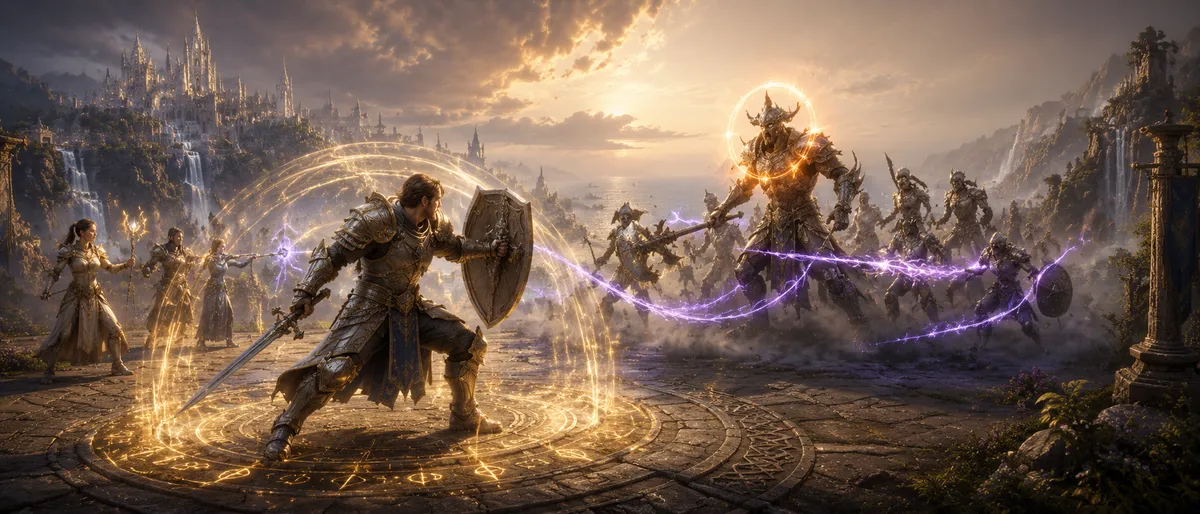
Tanking Fundamentals: The Four Priorities to Master First
If you’re new, don’t try to learn everything at once. These four priorities will level you up faster than any gear upgrade.
Priority 1: Taunt uptime on the right targets
If the boss is not reliably focused on you, everything else becomes chaos.
Priority 2: Clean pulls and stacks
If packs are neatly stacked, your group kills faster and takes less damage overall.
Priority 3: Debuff uptime that increases group damage
Keeping resist-reduction and damage-taken debuffs up can be worth more than an extra damage dealer’s perfect rotation.
Priority 4: Survival with stable resources
If you survive but run out of resources, you still fail—because you can’t taunt, block, pull, or reposition when it matters.
Taunts Explained: How Aggro Really Works
Aggro in ESO can feel confusing because there are two different things happening at the same time: taunt and threat.
Taunt is a hard rule
When you apply a taunt to an enemy, it is forced to attack you for a fixed duration (commonly 15 seconds). Taunt overrides normal threat behavior.
Threat is the soft background system
Threat builds based on actions (damage, healing, pulls, proximity, etc.). If an enemy is not taunted, it will usually attack whoever it “hates” most based on threat.
The beginner takeaway
- If it must hit you: taunt it
- If it’s a weak add pack: you can often control it with pulls and positioning, but key threats still deserve taunts
Taunt Duration and the “Refresh Window” That Makes You Reliable
Most common taunts in PvE last 15 seconds. Your goal is to keep that effect active without creating taunt problems.
A simple timing rule that works everywhere
Re-taunt at around 12–14 seconds.
This gives you a buffer for movement, mechanics, lag, and distractions, while keeping taunt stable.
Why not re-taunt at 2 seconds?
Because it wastes actions and attention. Tanking is about managing multiple responsibilities, and good timing frees your brain for pulls, mechanics, and survival.
Why not wait until 0 seconds?
Because real fights are messy. If you wait for the exact last second, you will eventually miss it during a mechanic, and the boss will turn and delete someone.
Overtaunting and Taunt Immunity: The Mistake That Wrecks Runs
Taunt immunity is what happens when multiple players keep swapping taunts on the same target too frequently. The enemy becomes immune to new taunts for a short time, and that can cause unpredictable targeting.
What beginners need to know (without overcomplicating it)
- Overtaunt is primarily a multi-taunter problem, not a “one tank pressed taunt too often” problem.
- It happens when taunts keep changing between different players in a short window.
- When taunt immunity triggers, new taunts won’t stick for a brief period, so the enemy can behave unpredictably.
How to avoid it in normal groups
Be the only person taunting bosses.
If a damage dealer “helpfully” taunts, or another support is accidentally taunting, you can get taunt swaps and trigger immunity.
How to avoid it in organized groups with multiple tanks
Assign targets clearly.
- Tank A holds Boss
- Tank B holds Add boss / specific mini-boss / specific mechanic target
- If both tanks are taunting the same enemy repeatedly, you risk taunt issues.
A practical rule for beginners
If you’re the tank, politely ask the group:
“Please avoid taunting—I'll keep bosses controlled.”
It prevents many messy wipes.
Your Taunt Toolkit: The Three Taunts Every Beginner Should Understand
You don’t need 10 taunts. You need a reliable set of options that cover different situations.
Melee taunt that also reduces enemy resistances
The most common beginner tank taunt also applies Major Breach and Minor Breach (big resist reduction) for the taunt duration. This is why groups love it: it’s control + damage boost in one action.
Ranged taunt (for bosses that can’t be approached safely)
A ranged taunt is essential for:
- Pulling a dangerous ranged enemy’s attention immediately
- Taunting bosses during mechanics that punish close positioning
- Re-taunting when the boss moves or teleports
A class-based taunt (if your class offers one)
Some class kits include a built-in taunt option. These can be excellent, but your beginner foundation should still be: one reliable melee taunt + one reliable ranged taunt.
Taunt Uptime in Real Fights: Bosses vs Adds
A beginner tank often tries to taunt everything. That’s not always efficient.
What must be taunted almost always
- Bosses
- Mini-bosses
- Heavy attackers that leap, charge, snipe, or slam
- Elite ranged enemies that can delete teammates
What can sometimes be controlled without constant taunts
- Low-health adds that die quickly when stacked
- Trash packs in easy content (if your group is strong)
The safe beginner approach
If you’re unsure whether something is dangerous, taunt it. As you learn fights, you’ll recognize which enemies can be controlled through stacking and which must be held.
Pulls and Stacking: Why Tanks Make Damage Feel “Higher”
Pulling is the most underrated tank skill because it directly increases group DPS without adding any damage yourself.
Why stacking increases damage
Most PvE damage is area-based. If enemies are stacked in a tight pile, every AoE hit lands on everything. If enemies are spread out, AoE damage is wasted.
What “good stacking” looks like
- Melee enemies are grouped in front of you
- Ranged enemies are pulled or forced into line-of-sight
- The group stands behind the enemies safely
- The boss is faced away from the group while still in the stack when possible
The tank mindset
You are building a “kill zone” where your group’s AoE becomes lethal and the healer’s ground heals cover everyone.
The Beginner Pull Playbook: A Step-By-Step Pack Routine
This is a simple routine you can repeat in almost every dungeon.
Step 1: Spot the priority threats
Before you rush in, quickly identify:
- The hardest hitter
- The ranged caster/archer
- Any enemy that looks like a mini-boss
Step 2: Start the pack where you want it to die
If you start fighting in a bad location (stairs, corners, hazards), you’ll spend the whole pull fighting your own positioning.
Step 3: Grab priority enemies first
Use your taunt(s) on the priority threats so they don’t wander to your healer.
Step 4: Stack with pulls and line-of-sight
- If you have a direct pull tool, use it to bring ranged enemies in.
- If you don’t, use line-of-sight: move behind a wall or corner so ranged enemies run to you.
Step 5: Turn the pack away from your group
This reduces frontal damage and avoids cleaves hitting teammates.
Step 6: Stabilize and repeat
Once everything is stacked, your job is to maintain taunts and debuffs while surviving cleanly.
Line-of-Sight Pulling: The Easiest “Secret” for Non-Chaos Stacks
Line-of-sight pulling is beginner-friendly and works even if you don’t have a strong direct pull ability.
How it works
Ranged enemies want to attack from range. If they can’t see you, they will often move closer to regain line-of-sight—walking right into your stack.
How to do it in practice
- Tag the pack (taunt or hit priority enemy)
- Step behind a corner, pillar, doorway, or wall
- Wait a moment for ranged enemies to walk in
- Then re-center the stack in a safe spot
Why this is powerful
It stacks enemies without yanking them unpredictably, and it makes your fights cleaner.
Crowd Control: When to Stun, Root, and When Not To
Crowd control is a tool, not a habit. Bad crowd control can actually make stacking worse.
Good reasons to use crowd control
- A dangerous add is about to kill a teammate
- You need to stop a channel, cast, or leap
- You need a short “breathing window” to recover resources or stabilize
Bad reasons to use crowd control
- Spamming stuns constantly so enemies become immune
- Rooting enemies far away so they don’t move into the stack
- Knockbacks that scatter packs everywhere
A clean beginner rule
Use crowd control to prevent danger or to help stacking—avoid crowd control that scatters enemies or stops them from grouping.
Uptime: The Tank Debuffs That Matter Most
“Uptime” for tanks means keeping the right effects active so the group deals more damage and takes less damage.
Resist reduction uptime (huge value)
Keeping Major Breach and Minor Breach active on priority targets is one of the best “always useful” tank contributions because it increases damage for the whole group.
Damage reduction uptime (stability)
Effects like Minor Maim reduce an enemy’s damage done. This makes fights smoother for the healer and safer for everyone.
Damage taken uptime (fast clears)
Some tank setups apply effects like Major Vulnerability, which increases the damage the enemy takes. This is a powerful group damage amplifier when applied at the right time.
The practical order of importance
- Keep taunt on priority targets
- Keep resist reduction on priority targets
- Keep damage reduction on dangerous targets
- Apply “damage taken” amplifiers during burn windows if you have them
Uptime: Group Buffs Tanks Are Expected to Bring
In many groups, the tank is not only a controller but also a support buffer.
Warhorn usage (high-impact support)
Aggressive Warhorn is widely used in PvE because it creates a burst window for group damage by giving Major Force for a short time and increasing max resources for longer.
Why tanks often bring it
Tanks can build ultimate reliably, and Warhorn timing is often cleaner when controlled by a support role watching boss phases.
Minor Courage from tank sets (trial value)
Some popular tank sets provide Minor Courage to the group when you taunt, boosting Weapon and Spell Damage. This is especially valuable in trials where group buffs scale with 12 players.
The beginner reality
In normal dungeons, your first priority is control and survival. In organized runs, you’ll add more buff responsibilities as you improve.
Survival Basics: Damage Reduction Layers (Not Just “More Health”)
Survival in ESO tanking is built from layers that stack together. Health helps, but it’s not the whole story.
Layer 1: Resistances (armor/spell resistance)
Resistances reduce incoming damage, up to a cap where you get a maximum mitigation percentage from resistance alone.
Layer 2: Blocking
Blocking is one of your biggest mitigation tools, but it costs resources. Good tanks block the right hits, not every hit.
Layer 3: Flat damage reduction buffs
Effects like Minor Protection or dungeon/trial-specific reductions can lower damage taken further.
Layer 4: Shields and burst recovery
Shields and emergency healing tools stabilize “oh no” moments when mechanics overlap.
Layer 5: Movement and positioning
Dodging a mechanic or moving the boss out of hazards often prevents more damage than any stat.
The beginner survival takeaway
If you’re dying, the fix is often layering (resistance + block + protection + positioning), not just “add more health.”
Resistances: What Numbers to Aim For and Why 33,000 Matters
A common tank milestone is understanding resistance values and what they do.
A simple explanation
At high level, the resistance cap is often described as 33,000, which corresponds to 50% damage mitigation from resistance alone.
How to use this information as a beginner
- You don’t always need to sit at the cap in easy content
- But being near it can make learning much smoother
- Once you’re comfortable, you can trade some resistance for more group support or sustain
A practical approach
Aim for “comfortable tankiness” first. If you feel like you’re getting deleted by heavy hits, resistance and mitigation layers are usually the answer.
Blocking and Resource Management: The Real Tank Skill
Most beginner tanks fail not because they are “too squishy,” but because they run out of resources and can’t keep control.
Why resources are your real health bar
If you can’t taunt, you lose the boss.
If you can’t block, you get crushed.
If you can’t pull, the pack spreads out.
If you can’t reposition, mechanics punish you.
How to block like a tank, not like a statue
Block heavy attacks and obvious big hits
Many enemies telegraph heavy attacks with clear animations. Blocking those is a huge survival boost.
Don’t perma-block everything in easy content
Perma-blocking drains resources and teaches bad habits. In many situations, you can survive light hits without blocking every second.
Use recovery windows
When a boss is doing a harmless animation, walking, or repositioning, that can be a moment to regain resources instead of holding block constantly.
Stop unnecessary actions
Spamming pulls, taunts, or expensive skills constantly can drain you faster than the enemies do. Efficient tanks feel calm because they use the minimum required actions for maximum control.
How to Survive “One-Shot” Moments Without Panic
Some bosses and elites hit hard enough that you feel like you got deleted. Usually, the answer is not “more healing.” It’s preparation.
A simple anti-spike routine
Pre-buff
Keep your defensive buffs active before the big hit happens.
Block the heavy hit
This is where blocking matters most.
Stabilize immediately after
Use a burst recovery tool or shield right after a spike if the fight continues with pressure.
Re-center the boss
Many deaths happen after the spike because the tank stumbles out of position, causing cleaves or hazards to hit the group.
A beginner rule
If a boss has a known heavy slam, treat it like a “scripted moment”: pre-buff, block, stabilize.
Tank Positioning: Turn Bosses, Protect Your Group, Control Space
Positioning is where tanks quietly carry runs.
Turn bosses away from the group
Many bosses have frontal cleaves, cones, or heavy attacks that punish anyone in front. Turning the boss protects teammates.
Keep enemies inside your group’s damage and healing zones
Your healer will often place ground heals and sustain tools. Your job is to keep the fight inside those zones.
Avoid dragging enemies through hazards
Moving the boss through damage fields, poison puddles, or fire zones can force your group to move and lose damage uptime. Move only when needed.
Use walls and corners intentionally
Corners are not “just terrain.” They are tools for line-of-sight pulling and for controlling ranged enemies.
Beginner Tank Gear: What to Wear Before You Chase Endgame Sets
You don’t need perfect gear to tank well. But the right early gear makes learning easier.
Beginner gear goals
Goal 1: Enough survivability to learn mechanics
This can come from defensive stat sets that increase health and resistances.
Goal 2: Enough sustain to keep control
If you’re constantly out of resources, learning becomes miserable.
Goal 3: One piece of group value (when you’re ready)
Once you feel stable, add a set that buffs your group or increases enemy damage taken.
A clean beginner progression path
- Defensive + sustain comfort
- Defensive + one group-support set
- Full support setup (when you’re confident)
High-Value Tank Sets (What They Do and When They Shine)
As you improve, tanks often shift from “selfish survival” to “group power.”
Turning Tide (Major Vulnerability uptime tool)
This set can apply Major Vulnerability for 10 seconds and has a 15-second cooldown, triggered through a block-into-bash flow. It’s popular because Major Vulnerability increases damage taken, accelerating boss kills when timed well.
Claw of Yolnahkriin (Minor Courage on taunt)
When you taunt, it can grant Minor Courage for 15 seconds to your group, increasing Weapon and Spell Damage by 215, with an 8-second cooldown. This is a classic trial tank support set because it scales well in 12-player groups.
Powerful Assault (group damage buff near you)
When you cast an Assault ability in combat, you and up to 5 group members within 12 meters gain 307 Weapon and Spell Damage for 15 seconds. This set is powerful in stacked fights and coordinated groups.
How beginners should use this information
You do not need all of these immediately. Pick one support direction after you feel stable:
- “Boost group damage taken” (vulnerability)
- “Boost group damage stats” (courage)
- “Boost group damage in a tight stack” (assault buff)
A Beginner Tank Skill Bar Blueprint (Easy to Build on Any Class)
Instead of copying a complicated loadout, build your bar by roles. This works across classes.
Core slot categories
1) Main taunt
Your reliable 15-second control tool.
2) Ranged taunt
For bosses and ranged threats.
3) Pull or stack tool
To group enemies and fix ranged chaos.
4) Crowd control or control utility
A stun, root, immobilize, or control effect that helps stabilize packs (without scattering them).
5) Self-sustain or self-heal
A dependable survival tool you can use without thinking.
Ultimate: a group-support ultimate
Warhorn is a common choice, but pick an ultimate that supports your group or stabilizes dangerous moments.
Why this blueprint works
It guarantees you have: control + stacking + survival + group value, which is the core of tanking.
Dungeons vs Trials: How Tank Expectations Change
Tanking changes depending on whether you’re in 4-player or 12-player content.
In dungeons (4-player)
- You do more “hands-on” control: pulling, stacking, stabilizing messy positioning
- You often cover more debuffs yourself because there are fewer support roles
- You sometimes carry the run by keeping things organized even when players are chaotic
In trials (12-player)
- Tank jobs are often assigned: boss tank, add tank, mechanic tank
- Buff and debuff uptime becomes more specialized
- Positioning is more coordinated, so support sets become more valuable
- Communication matters more, especially for taunt swaps and burn windows
Beginner-friendly approach
Learn dungeons first until you can control packs smoothly and keep bosses stable. Then step into trials with the mindset of “do my assigned job perfectly.”
Tank Etiquette: The Small Behaviors That Make Groups Love You
Good tanks don’t just play well—they make the group feel comfortable.
Start pulls at a reasonable pace
A tank who sprints ahead nonstop can leave the healer behind and break group rhythm. A clean pace helps everyone.
Face enemies away from allies
This one habit prevents many random deaths.
Mark priority enemies in harder pulls (optional but helpful)
Even without voice chat, focusing the right enemy can reduce chaos.
Don’t blame teammates for early mistakes
Beginner tanks improve fastest by staying calm. If someone stands in bad things, your job is to stabilize the run, not to argue mid-fight.
Communicate one simple sentence when needed
Examples:
- “Stack behind me for heals.”
- “Please avoid taunting bosses.”
- “Line-of-sight here—pull them to the corner.”
Short and calm wins.
A Practice Routine That Makes You Better Fast
If you want fast improvement, practice tanking as a skill, not as a hope.
Practice 1: Taunt timer awareness
In a simple dungeon, focus on refreshing boss taunt at the 12–14 second mark until it becomes automatic.
Practice 2: Line-of-sight stacking
Pick a dungeon with obvious corners and practice pulling packs into a corner stack without scattering enemies.
Practice 3: “Turn and hold” discipline
Practice turning bosses away from the group and keeping them stable in one spot unless mechanics require movement.
Practice 4: Resource calm
Practice dropping unnecessary actions: fewer panicked pulls, fewer spam taunts, fewer wasted blocks. You’ll feel your resources stabilize.
Your goal
Become the tank who looks calm while everything is trying to kill you.
BoostRoom: Faster Tank Progression, Cleaner Skills, Better Runs
If you want to become a confident tank quickly—but you don’t want weeks of trial-and-error, confusing build choices, or messy learning runs—BoostRoom can help you get there faster.
How BoostRoom helps beginner tanks
Tanking fundamentals coaching
Learn the real priorities: taunt uptime, clean stacks, debuff uptime, and survival layers that don’t drain your resources.
Dungeon-ready and trial-ready progression paths
Get a clear upgrade plan so you don’t waste time farming the wrong pieces or building habits that don’t translate to harder content.
Practical pull and positioning training
The biggest tank improvement isn’t “more stats.” It’s learning how to control packs cleanly so groups kill faster and safer.
If your goal is to be the tank people queue again for, BoostRoom is built to shorten the learning curve.
FAQ
How long does a taunt last in ESO?
Most common tank taunts in PvE last 15 seconds. A reliable beginner habit is refreshing around 12–14 seconds to keep control stable.
What is overtaunting and why is it bad?
Overtaunting happens when multiple players keep swapping taunts on the same target too frequently, which can trigger taunt immunity. When immunity happens, new taunts won’t stick for a short time and the enemy can act unpredictably.
Do I need to taunt every enemy in a trash pack?
Not always. Focus on bosses, mini-bosses, heavy hitters, and dangerous ranged enemies. Many small adds can be controlled through stacking and will die quickly in group AoE damage.
What’s the fastest way to stack ranged enemies?
Line-of-sight pulling is one of the easiest methods: tag the pack, step behind a corner, and let ranged enemies walk into the stack to regain line-of-sight.
Why do people say tanks increase group DPS?
Tanks increase real DPS by stacking enemies tightly for AoE damage and keeping resist-reduction debuffs active on priority targets, making every hit from the group more effective.
What resistance should a beginner tank aim for?
Many tanks aim toward the resistance cap area commonly described as 33,000 (about 50% mitigation from resistances). You don’t need to cap it in all content, but being near it can make learning much easier.
Why do I run out of resources while tanking?
Usually from blocking too much, spamming expensive skills, or overusing pulls and taunts. Efficient tanking is about blocking big hits, using recovery windows, and reducing unnecessary actions.
When should I start tanking trials?
After you can consistently hold boss taunt, stack packs cleanly, survive heavy hits without panic, and keep your key debuffs up while managing mechanics.



