What Raids Are in The Division 2
A raid is a large, coordinated endgame activity designed around an eight-player team. Unlike standard missions, raids are built with these “raid rules” in mind:
- Eight-player scaling is fixed
- Even if you enter with fewer than eight players, the raid does not scale down to match your group size. The activity assumes a full team and stays tuned for that.
- Two sub-groups
- Raids are organized into two standard four-player parties inside one eight-player raid team, so communication and teamwork are central to the experience.
- Mechanics matter
- Raids are not just “strong enemies.” They are structured encounters that require coordination, timing, and role clarity—especially on Normal difficulty.
- Time commitment is real
- A first-time clear can take a while, because learning is part of the raid experience. Once your group is comfortable, runs become much faster and smoother.
If you enjoy teamwork, planning, and “big clear” satisfaction, raids are some of the best content The Division 2 has to offer.
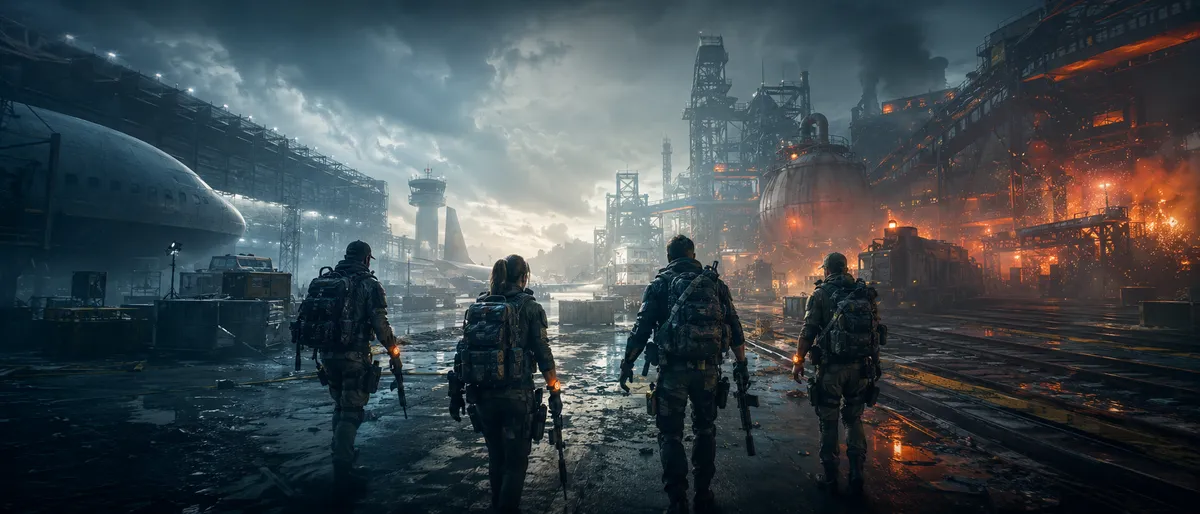
Dark Hours and Iron Horse in One Quick Comparison
The Division 2 has two raids:
- Operation Dark Hours
- Set at the Washington National Airport, focused on a large endgame push through a landmark location and multiple major encounters.
- Operation Iron Horse
- Set in a foundry environment called the United Ironworks, built as a later raid with its own encounter flow and reward pool.
What they share:
- 8-player teams
- raid leader starts the run
- Normal and Discovery-style experiences exist
- weekly reward timers for boss loot
- unique raid-themed commendations and cosmetic rewards
What typically feels different (without getting into combat tactics):
- the environments and encounter pacing
- the learning curve and coordination demands
- the specific gear sets and cosmetic themes tied to each raid
Why Raids Are Still Worth Doing
Players come to raids for different reasons, and it helps to know what you’re actually chasing.
Raids are worth it if you care about:
- unique cosmetics and commendations that represent real endgame accomplishments
- raid-tied gear sets (and their special chest/backpack variants, depending on item history and current loot pools)
- structured teamwork gameplay that feels different from everything else in The Division 2
- long-term account goals like filling out collections, completing achievements, and unlocking special reward paths
Raids are less worth it if you only want quick “drop in, drop out” farming. Raids reward preparation and coordination more than speed.
How to Access Raids
Accessing raids is intentionally straightforward once you know where to look.
The basic access path
- Go to the Base of Operations.
- Speak with the helicopter pilot.
- Open the Raid tab in the social menu.
- Select the raid, pick the difficulty, and assemble your group.
Raid leader rule
The player who creates the raid group becomes the raid leader, and only the raid leader can start the raid instance. This is important for organizing groups: if you’re joining someone else’s raid, you don’t need to “start it,” you just need to join the group and be ready when the leader launches.
Can you enter alone?
You can technically start the raid without a full group, but it stays scaled for eight players. In practice, you’ll want a full team to have a real experience—especially on Normal difficulty.
Where Each Raid Takes Place
Knowing the location helps you understand the theme and the vibe.
Operation Dark Hours Location
Dark Hours takes place at the Washington National Airport. It’s presented as a major endgame strike into a heavily occupied, abandoned area with a strong “tactical operation” feel.
Operation Iron Horse Location
Iron Horse takes place in the United Ironworks, a foundry setting with a heavier industrial tone and its own narrative context.
These locations matter mostly for atmosphere and identity—each raid feels distinct, which is why many players enjoy doing both even after they’ve earned their main rewards.
Raid Requirements
Raid requirements depend on which version you’re playing and what your character progression looks like. The most important thing is understanding that raids have historically been available in:
- Level 30 endgame rules (World Tier / Gear Score era)
- Level 40 endgame rules (expansion-era endgame)
Both raids have had versions that support these structures, with Iron Horse explicitly supporting a Level 40 version for players who completed the expansion campaign.
Dark Hours Requirements
Dark Hours has a clear historical requirement set for Level 30 endgame:
- Level 30
- World Tier 5
- A minimum Gear Score threshold (commonly stated as 490 in official materials)
If you are playing in Level 40 endgame, you’re typically entering the modern endgame ecosystem where your character progression is not expressed the same way as the old World Tier climb. What matters most in Level 40 endgame is that you are properly geared for endgame difficulty, have a stable loadout, and can contribute consistently to a coordinated group.
Iron Horse Requirements
Iron Horse launched with a Level 40 version tied to the expansion-era endgame, and official descriptions emphasize:
- A Level 40 version available to players who completed the Warlords of New York campaign
- A Level 30 version that was made available to base-game owners after the Level 40 release window
- Support for mixed Level 30/40 groups (with scaling behavior based on the highest-level present)
Practical takeaway:
If you’re Level 40 and have finished the New York campaign, you’re in the correct “endgame lane” for the full Iron Horse experience.
Normal Difficulty vs Discovery Mode
Raids are commonly experienced through two difficulty formats:
- Normal difficulty
- The intended “full raid” experience with the real coordination demands and the full reward pool.
- Discovery mode
- A more accessible version designed to let players experience the environment and learn the broad structure with matchmaking support and reduced difficulty complexity.
You should think of Discovery as:
- a learning and onboarding experience, and
- a way to see the raid content without needing a full coordinated group.
You should think of Normal as:
- the true raid challenge, and
- the mode tied to the complete reward pool and most completion-based accomplishments.
Matchmaking Rules for Raids
Historically, the big matchmaking rule has been simple:
- Matchmaking is supported in Discovery mode, not in Normal difficulty.
That means:
- If you want quick access with random teammates, Discovery is usually the path.
- If you want the full Normal experience, you typically need a pre-made group (clan friends, community groups, or organized LFG).
Even when community discussions mention edge-case behavior or bugs, the reliable expectation for most players is:
Discovery is the matchmade raid experience; Normal is the organized raid experience.
What Changes in Discovery Mode
Discovery mode is best understood as:
- easier overall difficulty
- lighter learning burden
- a safer environment to understand raid flow
It is not meant to replicate the full Normal experience perfectly. The point is to let more players see raid environments and begin learning teamwork expectations without needing a highly organized group on day one.
Rewards in Discovery Mode vs Normal
The key reward idea (kept simple and non-technical):
- Normal difficulty supports the full raid reward pool, including the most exclusive completion-tied rewards.
- Discovery mode has reward restrictions compared to Normal.
If your main goal is:
- learning the raid and getting comfortable → Discovery is useful
- earning the “full” raid accomplishments and most exclusive rewards → Normal is the target
Weekly Reset and Loot Lockouts
Both raids are protected by a weekly timer for boss loot.
What that means in practice:
- Boss-specific loot rewards are granted once per week per character (under the weekly timer rules).
- You can still replay raids after that, but you should not expect the same boss loot payouts until the weekly reset happens.
This weekly system exists to:
- keep raid rewards meaningful, and
- encourage weekly participation without turning the mode into nonstop, unlimited boss farming.
Can You Run the Raid More Than Once a Week
Yes, you can run raids more than once a week. Players commonly do this for:
- learning and practice
- helping friends
- chasing completion goals and commendations
- improving teamwork and consistency
Just keep your expectations realistic about the weekly loot timer: repeating raids can still be fun and valuable, even when the weekly boss loot rewards are already claimed.
Raid Team Structure: Why the Two Sub-Groups Matter
Every raid team is built from:
- two four-player sub-groups inside one eight-player raid
This structure influences raid culture in a few important ways:
- It’s normal to hear players refer to “Group 1” and “Group 2” as organizational units.
- Teams often coordinate responsibilities across sub-groups.
- Communication quality matters more than raw individual performance.
Even if you’re not an experienced raider, understanding this structure helps you feel less lost when a group starts organizing.
Raid Communication Expectations
You don’t need to be a pro communicator to enjoy raids, but raids do assume:
- You can listen to basic coordination calls.
- You can respond when your group asks a quick question.
- You can stay calm when the group is learning.
If you’re nervous about communication, start with Discovery mode or join a beginner-friendly group. Most good raid communities would rather have a calm learner than a silent player who disappears mid-run.
Time Commitment: What to Expect
Raid completion time depends heavily on experience and team coordination.
A realistic expectation range:
- First-time groups: longer sessions, more resets, more learning time
- Experienced groups: significantly faster clears with smooth pacing
The best mental model:
Your first clear is often a learning session. Your second and third clears are where the raid starts feeling “comfortable.”
Dark Hours Rewards Overview
Dark Hours rewards include:
- raid-tied gear set drops and related loot
- cosmetics and vanity items tied to raid completion and commendations
- commendations that award unique visual rewards like arm patches
- historical limited-time recognition rewards tied to early completion windows (for example, world-first and first-week completion recognition)
Important note for modern players:
Some reward items introduced with raids can later become available through broader loot pools over time, depending on game updates. However, raid-specific completion recognition (like commendations, certain cosmetic themes, and completion history) remains a core reason many players still run Dark Hours.
Iron Horse Rewards Overview
Iron Horse rewards include:
- raid-associated gear sets introduced with the raid’s release
- cosmetics and commendations themed around the raid
- special reward paths and projects that can unlock additional raid-related items over time
- historical world-first recognition rewards similar to Dark Hours
Iron Horse is also commonly associated with a more “industrial” cosmetic theme due to its foundry setting and narrative framing.
Raid Gear Sets Introduced by Each Raid
Even if you don’t plan your entire endgame around raids, it’s useful to know which gear sets are historically tied to each raid because they often show up in endgame conversations.
Dark Hours Gear Set Introductions
Dark Hours is historically associated with three gear sets that were originally positioned as raid-connected sets:
- Aces & Eights
- Tip of the Spear
- Negotiator’s Dilemma
Over the years, some of these sets have been added to the general loot pool through updates, but Dark Hours remains the raid where their identity was introduced and where many players first learned how “raid set” ecosystems worked in The Division 2.
Iron Horse Gear Set Introductions
Iron Horse is historically associated with:
- Foundry Bulwark
- Future Initiative
These sets were introduced as raid-linked gear sets and later became part of broader loot conversations across endgame.
Cosmetics, Commendations, and Arm Patches
Raids are one of the biggest sources of “show it off” rewards that are not purely stat-based.
Common raid reward types include:
- arm patches earned from raid commendations
- cosmetic items tied to raid completion or raid-specific achievements
- vanity rewards that act as proof you participated in raid content
If you enjoy collecting, raids become a long-term hobby: even after you’ve learned the run, you can chase commendations and completion achievements for visual rewards.
World-First and Early-Completion Recognition
Both raids were launched with special recognition rewards tied to:
- the first team to complete the raid globally, and
- completion within the first week of release (historical event rewards)
These are mostly important today as historical context:
- they show how “serious” raids were positioned at launch, and
- they explain why raids became a big community event.
You shouldn’t feel “behind” if you missed those windows—modern raiding is about your own goals, not a past race.
Clans and Group Completion Rewards
Official raid announcements also highlighted group-based rewards like clan trophies or clan recognition for completing a raid as a full clan group in one session (historical framing).
Even if you’re not in a clan, the lesson is useful:
Raids reward stable teams. If you enjoy raids, joining a regular group can make the experience dramatically smoother and more fun.
Choosing Your First Raid
If you are deciding between Dark Hours and Iron Horse for your first raid experience, choose based on:
- Your current endgame stage
- If you are fully in Level 40 endgame and completed the expansion campaign, Iron Horse’s Level 40 framing will feel aligned with your progression.
- Your group availability
- If you only have random teammates, Discovery mode helps you see raid content without needing a pre-made group.
- Your personal goal
- If you’re chasing cosmetics and commendations, either raid can be a great first choice.
A simple recommendation:
Start with the raid that you can realistically commit to finishing with a calm group. The “best raid” is the one you actually complete and enjoy.
A Practical “Raid Ready” Checklist (No Combat Tactics)
This checklist focuses on preparation and quality-of-life, not encounter strategy.
- Stable endgame loadout
- Bring a loadout you can play consistently for a long session. Raids punish “experimental” setups more than normal missions because resets cost the entire team time.
- Inventory space
- Clear room before the raid. Raids can drop a lot of items, and you don’t want to waste group time managing a full bag mid-run.
- Repair kits and basic supplies
- Go in topped up on basic resources so you’re not scrambling between phases.
- Comfort settings
- Make sure your audio and UI are readable. Raids involve coordination; you don’t want to miss important information because your settings are uncomfortable.
- Time budget
- If it’s your first run, plan for learning time. The best raid nights are the ones without rushing.
- Communication readiness
- Even if you’re quiet, be ready to listen and respond when your group asks something simple.
This checklist alone prevents the most common “first raid pain”: wasted time from unprepared menus.
What to Do After Your First Raid Completion
Your first completion is the beginning, not the end. After your first clear, a smart follow-up plan looks like this:
- Sort loot with purpose
- Keep only what improves your current loadouts or what clearly fits a future plan. Convert everything else into long-term value (recalibration library upgrades or materials).
- Track what you actually want next
- Many players run raids again without a goal and burn out. Decide whether your next goal is:
- a specific commendation
- a cosmetic completion milestone
- finishing a gear set collection
- simply learning the raid until it feels comfortable
- Save a raid loadout
- If you plan to raid again, save a dedicated loadout so you don’t rebuild every time.
- Respect the weekly timer
- If your main reason for running raids is weekly rewards, schedule one weekly run. If your reason is learning and community, run more often with no stress.
Common Misunderstandings About Raids
Raids come with a lot of “myths.” Here are the most helpful clarifications.
- “Raids are only for elite players.”
- Not true. Raids are for coordinated players. Skill helps, but teamwork and learning matter more.
- “If I don’t have perfect gear, I can’t participate.”
- Discovery mode exists for learning, and beginner-friendly groups exist for Normal. A stable, consistent loadout matters more than perfection.
- “If I fail once, I shouldn’t try again.”
- Raids are designed around learning. Most players’ first attempts include resets.
- “Raids are only about loot.”
- Loot is part of it, but raids are also about achievements, commendations, and the fun of structured teamwork.
BoostRoom: How It Helps You Save Time With Raids
Raids can be incredibly fun—but the time sink is often not the raid itself. It’s everything around it:
- not knowing what requirements you need
- not having a stable loadout ready for long sessions
- spending hours with groups that fall apart
- wasting loot because your inventory and upgrade systems aren’t organized
BoostRoom helps by focusing on the parts that save time without skipping the experience:
- getting your account “raid-ready” with a clean checklist
- setting up consistent loadouts and inventory rules so raid loot turns into upgrades
- planning around weekly timers so you don’t waste sessions
- helping you understand the difference between Discovery and Normal expectations so you join the right type of run for your goal
If your goal is to experience raids without losing weeks to confusion and wasted preparation, BoostRoom makes the path cleaner.
FAQ
Q: How many players do you need for a raid?
A: Raids are built for eight players and do not scale down for smaller groups. You can enter without eight, but the raid remains tuned for a full team.
Q: Where do you start Dark Hours and Iron Horse?
A: You start raids from the Base of Operations by speaking with the helicopter pilot and using the raid menu to assemble a group and launch.
Q: What is Discovery mode?
A: Discovery mode is an easier, matchmade raid experience designed to help players learn raid structure and see the environment with fewer coordination demands than Normal.
Q: Can you matchmake for Normal raids?
A: The reliable expectation is that matchmaking is for Discovery mode, while Normal raids are typically organized with a pre-made group.
Q: Do raids have a weekly reset?
A: Yes. Boss loot is protected by a weekly timer, so the most meaningful boss rewards typically drop once per week per character.
Q: Do I need the expansion for Iron Horse?
A: The Level 40 version of Iron Horse was designed for players who completed the Warlords of New York campaign, while a Level 30 version also exists for base-game endgame.
Q: Are raids worth doing if you mainly play solo?
A: If you enjoy teamwork and want raid-specific achievements, cosmetics, and gear set history, raids are worth it—but you’ll want to join a group to experience them properly.



