How to Use This Starter Build Guide
Pick the one playstyle that matches what you’re actually doing in the match (not what you wish you were doing). Then follow three simple rules:
- Rule 1: Buy for your lane first, your fantasy second. If you can’t farm and trade, you won’t reach the fun items.
- Rule 2: Start with 2–4 “Tier I” items max. Early value is great, but you need upgrades for midgame fights.
- Rule 3: Upgrade into a real spike. Your first upgraded item should make you noticeably stronger in either damage uptime, mobility, survivability, or utility control.
Deadlock’s shop has multiple costs (you’ll commonly see 800, 1600, 2400, 3200, 4000, 6400, and more). Instead of memorizing prices, think in tiers:
- Tier I = lane tools (cheap, fast impact)
- Tier II = first real spike (dueling power, mobility, control)
- Tier III = midgame core (teamfight and objective power)
- Tier IV+ = late-game and fight-winning actives
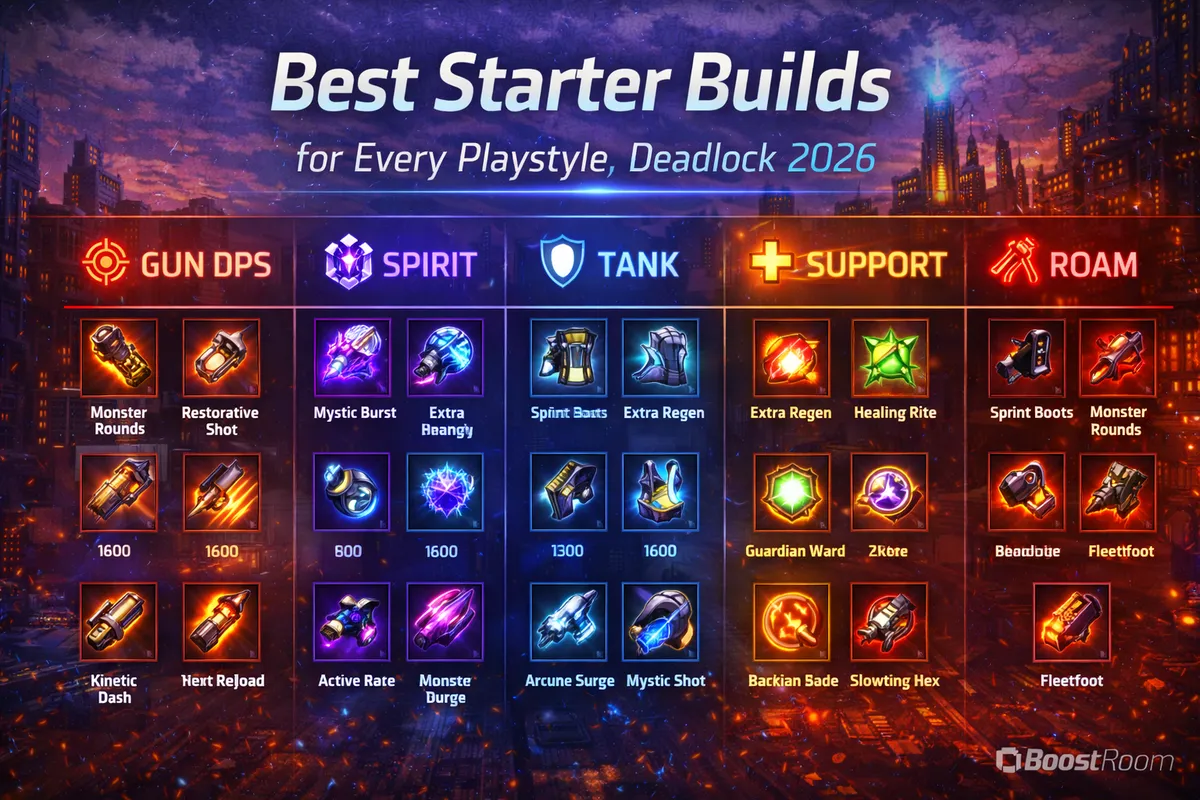
Quick Rules for Choosing a Starter Build
Use this checklist in the first minute:
- Are you expected to be the main damage dealer? Start Gun DPS or Spirit Carry.
- Are you starting fights and soaking attention? Start Tank or Initiator.
- Are you hunting picks, flanking, and rotating? Start Roamer/Assassin.
- Are you enabling teammates with saves, heals, and disables? Start Support/Utility.
Then adjust for lane type:
- High-action lane (lots of trading and skirmishes): prioritize sustain (Restorative Shot / Extra Regen / Healing Rite) and stamina (Extra Stamina).
- Poke lane (long range chip damage): prioritize movement (Sprint Boots) and range/velocity (Long Range / High-Velocity Rounds).
- All-in/melee lane: prioritize anti-melee tools (Rebuttal) and health (Extra Health).
- CC-heavy lane: prioritize anti-CC triggers (Reactive Barrier) sooner than you think.
The “Universal Best” Tier I Items (So You Stop Overthinking)
If you’re new, these Tier I items are popular because they solve common early problems:
- Monster Rounds: makes farming and objective damage easier (extra damage and resist vs NPCs, plus out-of-combat regen).
- Restorative Shot: gives weapon damage and reliable self-heal on a timed proc (heal is bigger on heroes than NPCs/orbs).
- Sprint Boots: simple movement + out-of-combat regen that helps every role rotate and reset faster.
- Extra Regen: steady lane sustain that upgrades cleanly into stronger healing support later.
- Extra Stamina: more stamina + faster recovery so you can actually use movement tech without arriving to fights empty.
You don’t need all of them. You need the ones that match your lane and job.
Starter Build: Gun DPS Carry (Sustained Damage + Objective Pressure)
Who this is for: players who want to win by constant shooting, fast wave clear, and melting Walkers/Shrines when fights are won.
Your early goal: keep your gun online, keep your HP stable, and hit a first spike that makes trades feel unfair.
Tier I start (pick 3, sometimes 4):
- Monster Rounds (farm + objective pressure)
- Extended Magazine (ammo + weapon damage so you can keep shooting through trades)
- Restorative Shot (lane sustain without needing to back)
- Optional: Sprint Boots (if rotations and safety matter more than raw lane power)
First upgrade path (choose one based on what you feel):
- Active Reload if your problem is “I’m always reloading at the worst time.” It rewards good reload timing with a temporary buff (fire rate, bullet lifesteal, move speed).
- Kinetic Dash if your problem is “I can’t stick to targets / my gun feels slow.” Dash-jump to get a fire rate + ammo window that turns short trades into wins.
- Enduring Speed if your problem is “I can’t move in fights because slows ruin me.” Slow resist keeps your positioning stable, which is secretly a damage increase.
How to play this build in lane:
- Crash wave, take safe trades while your sustain procs, and don’t chase deep without stamina.
- Every time you win a trade, convert it into denies, wave control, or objective chip—Gun DPS carries win by turning small advantages into permanent map progress.
Common swap decisions:
- If enemies heal through poke: add Healbane early (your spirit damage applying healing reduction is huge for confirming kills).
- If enemies lock you down: get Reactive Barrier earlier than planned. Surviving one CC chain often wins the next fight.
Starter Build: Burst Gun (Headshot/Window Damage)
Who this is for: players who want to win by quick kills—one strong window, one forced reset, one confirmed pick.
Your early goal: spike your burst and force the enemy to play scared.
Tier I start (pick 2–3):
- Headshot Booster (next headshot bonus damage on a short cooldown, plus bonus health)
- Restorative Shot (stay healthy while you look for burst windows)
- Either High-Velocity Rounds (easier poke and hit confirmation) or Sprint Boots (repositioning and safer angles)
First upgrade path:
- Upgrade Headshot Booster toward Headhunter when you’re consistently landing headshots. Headhunter adds more headshot bonus damage, a heal component, and a short move-speed burst—perfect for burst playstyles that want to shoot, step out, then re-peek.
- If you’re playing at distance: Long Range gives you a big damage condition when you’re far enough away, plus better fall-off range and sprint speed. It’s a “poke into kill” starter that stays relevant.
How to play this build in lane:
- Don’t spam shots into shields and sustain. You’re looking for clean windows: enemy reload, enemy missed dash, enemy used movement ability, enemy steps away from cover.
- Your best burst is often “two shots + ability” rather than a full spray. Use the proc timing (headshot bonus / restorative shot) intentionally.
When burst is failing:
If you can’t finish kills because targets barely escape, buy Slowing Hex early. It slows movement, reduces dash distance, and silences movement-based abilities/items. That converts “almost kills” into real kills.
Starter Build: Spirit Caster (Cooldown Windows + Zone Damage)
Who this is for: players who want to win lane with abilities, force enemies out of cover, and dominate early skirmishes with burst/zone control.
Your early goal: increase spirit value without becoming fragile, and set up your first midgame fight impact.
Tier I start (pick 3):
- Mystic Burst (adds a charged bonus damage trigger for meaningful ability hits)
- Extra Spirit or Extra Charge (depending on whether you need raw power or more frequent ability usage)
- Sprint Boots or Extra Regen (movement or sustain—choose what your lane demands)
First upgrade path (choose your identity):
- Arcane Surge if you’re dash-jumping a lot and want your next ability to hit harder/farther/longer. It rewards movement into casts and helps both offense and disengage patterns.
- Improved Spirit if your kit just needs raw scaling and you want consistent damage without special triggers.
- Mystic Slow if you win by controlling the fight and setting up teammates, not by pure damage.
Anti-heal and anti-carry options (early winners):
- Healbane is one of the best early “team value” spirit buys because it applies healing reduction through spirit damage and rewards kills with a heal.
- Suppressor is a brutal tempo item against gun carries: apply spirit damage, reduce their fire rate for a few seconds, and suddenly their whole trade pattern collapses.
How to play this build in lane:
- Don’t cast on cooldown “because you can.” Cast to create a result: secure a deny, force them off the wave, force a reset, or set up a gank.
- The most important caster skill is not getting jumped. If you’re dying to dives, you need Reactive Barrier or better positioning—not another damage item.
Starter Build: Hybrid (Gun + Spirit, Flexible Matchups)
Who this is for: players who want one build that can adapt: poke early, fight midgame, and still scale.
Your early goal: build a stable base, then decide whether your next spike is gun or spirit based on how the match is going.
Tier I start (pick 3):
- Restorative Shot (sustain + weapon damage)
- Monster Rounds (farm and objective pressure)
- Mystic Burst or Mystic Expansion (depending on whether your kit wants burst or range/radius)
First upgrade path choices:
- If your gun is carrying lane trades: go Kinetic Dash or Active Reload.
- If your abilities are carrying skirmishes: go Arcane Surge or Mystic Shot (bonus spirit damage on a timed bullet is great for hybrid poke).
- If you’re getting slowed or kited: go Enduring Speed so your hybrid damage can actually stay applied.
Why hybrid works well for beginners:
You can pivot. If you’re ahead, you choose the spike that ends the game faster. If you’re behind, you choose the spike that keeps you alive and farming.
Starter Build: Frontline Tank (Space Holder + First Contact Survivor)
Who this is for: players who want to be the hero that walks into dangerous space first, absorbs pressure, and enables the team to fight around objectives.
Your early goal: don’t die in the first engage, and make the enemy spend too much time trying to remove you.
Tier I start (pick 3–4):
- Sprint Boots (you can’t tank if you can’t arrive first)
- Extra Health (huge early HP that upgrades into stronger durability later)
- Extra Regen or Healing Rite (sustain based on lane pressure)
- Optional vs melee lanes: Rebuttal (parry cooldown reduction, melee resist, and strong parry reward)
First upgrade path (what tanks actually need):
- Battle Vest if the lane is bullet-heavy and you want reliable bullet resist plus a “healthy = stronger” trading pattern.
- Enduring Speed if slows stop you from holding space. Slow resist is how tanks stay in the fight long enough to matter.
- Reactive Barrier if the enemy has movement locks, chains, stuns, sleeps—anything that prevents you from playing your kit.
How to play this build in lane:
- Your job is not to “win damage charts.” Your job is to win space: hold wave positions, control corners, and make it unsafe for enemies to step up.
- Tanks that wander aimlessly are useless. Tanks that stand between enemies and the wave create guaranteed value.
First midgame mission:
When your team is ready to hit Walkers, your build should let you stand in front and survive long enough for your backline to shoot the objective.
Starter Build: Initiator (Engage, Disrupt, and Start the Fight)
Who this is for: players who want to start fights, force cooldowns, and create openings—without instantly dying.
Your early goal: get enough survivability to enter, plus one control tool that prevents the enemy from cleanly escaping.
Tier I start (pick 3):
- Sprint Boots (positioning and timing = good engages)
- Extra Stamina (engage without arriving empty; also upgrades into multiple great items)
- Restorative Shot or Extra Regen (stay healthy while you look for plays)
First upgrade path:
- Arcane Surge if your engage is ability-driven and you want the next cast to be stronger (range/duration/power).
- Kinetic Dash if your engage depends on gun follow-up and you want a strong dash-jump window.
- Slowing Hex if your engage creates “almost kills” but targets slip away. Reducing dash distance is especially punishing in Deadlock.
Anti-counterplay tool (the difference between good and great initiators):
- Dispel Magic is a self-purge that removes many negative effects (non-ultimate), heals you on activate if it removes anything, and grants a short move-speed burst. If you keep dying to debuffs and control chains, this item often flips your survivability overnight.
Starter Build: Roamer / Assassin (Pick Potential + Clean Escapes)
Who this is for: players who want to rotate, flank, punish overextended lanes, and win through picks—not 6v6 brawls.
Your early goal: faster rotations, stealthier approaches, reliable pick confirmation, and a guaranteed exit plan.
Tier I start (pick 3):
- Sprint Boots (roam timing matters)
- Monster Rounds (fast clears = more roam windows)
- Headshot Booster or Restorative Shot (burst or sustain depending on your lane)
First upgrade path (pick-focused):
- Backstabber is a classic roamer tool: quieter approach, bonus health, and a behind-hit wound that deals spirit damage over time while reducing bullet resist—plus reveal and speed bonuses near the target. This makes your flank actually stick instead of being shrugged off.
- Slowing Hex if your pick target keeps escaping. It’s one of the most reliable “confirm the kill” actives early.
- Fleetfoot if you need a true movement advantage. It reduces the penalty of shooting on movement and provides an active burst of move speed and slow resist—great for chase and escape.
How to roam without falling behind (the most important roamer skill):
- Only roam when the wave is pushed and you can afford to leave.
- If a roam doesn’t result in a kill or an objective, reset quickly and return to farming.
- Your economy is your threat. A broke roamer is just a loud spectator.
Starter Build: Support / Utility (Saves, Tempo, and Fight Control)
Who this is for: players who want to win by keeping teammates alive, enabling carries, and using high-impact actives to swing fights.
Your early goal: stabilize lane, then become the reason your team wins the first big objective fight.
Tier I start (pick 3):
- Extra Regen or Healing Rite (lane sustain)
- Sprint Boots (be present for every skirmish)
- Extra Charge or Mystic Expansion (more frequent abilities or better ability reach)
First upgrade path (support power spikes):
- Guardian Ward is the “my carry lives” button: barrier + temporary move speed, with a cooldown benefit when cast on allies. It wins early fights by denying burst and letting teammates reposition.
- Upgrade into Divine Barrier later when fights are decided by debuffs. It removes non-stun debuffs and provides a much larger barrier—this is one of the most match-defining team-save items in the game.
- Rescue Beam is a big midgame support spike: it heals a target ally (and yourself) by a percentage of max health and can pull the target during the channel. It’s both a save and a reposition tool.
Support control options (when saving isn’t enough):
- Slowing Hex to shut down enemy mobility and stop escapes.
- Suppressor to cut a gun carry’s fire rate and wreck their fight uptime.
- Healbane to apply healing reduction through spirit damage so your team can actually finish kills.
Starter Build: Anti-Dive Bodyguard (Peel-First Teamfighting)
Who this is for: players whose main job is protecting a fragile carry from divers and CC chains.
Your early goal: survive the initial dive, deny burst, and punish overcommit.
Tier I start (pick 3):
- Sprint Boots (stay in range to peel)
- Extra Health or Extra Regen (dependability)
- Restorative Shot (sustain while you trade for your carry)
First upgrades:
- Reactive Barrier if dives come with stuns/locks. It triggers a barrier and restores stamina when you’re hit by specific movement-locking effects.
- Guardian Ward if the dive target is your carry. It’s one of the cleanest early “save tools” available.
- Enduring Speed if the dive is slow-based and you can’t reposition to peel.
How to know you’re peeling correctly:
If your carry survives the first engage and keeps dealing damage, you’re doing your job—even if you personally don’t top damage.
Starter Build: Objective Siege (Walkers and Shrines Win Conditions)
Who this is for: players who win games by converting every won fight into fast objectives.
Your early goal: faster wave clear, faster structure damage, and enough movement to show up to objective windows on time.
Tier I start (pick 3–4):
- Monster Rounds (objective/farm pressure)
- Extended Magazine (more bullets = more objective uptime)
- Sprint Boots (arrive first, rotate faster)
- Optional sustain: Restorative Shot (stays healthy while you siege)
First upgrades:
- Active Reload to keep DPS continuous through long objective hits.
- Kinetic Dash for better fight entry and sustained pressure.
- Enduring Speed to avoid getting forced off objectives by slows.
Siege rule that wins games:
Don’t start hitting objectives unless your team can hold space. Items help, but positioning and timing are still the real siege tools.
Starter Build: Playing From Behind (Stabilize + Farm Back Into the Game)
Who this is for: anyone who lost lane early or is stuck in a rough matchup.
Your early goal: stop bleeding deaths, secure farm safely, and buy items that increase your “time alive,” not your “dream damage.”
Tier I start (pick 3):
- Extra Regen (steady sustain)
- Sprint Boots (safer rotations and faster resets)
- Monster Rounds (farm comeback tool)
First upgrades:
- Enduring Speed to survive slows and reposition safely.
- Reactive Barrier if you’re being chain-controlled.
- Guardian Ward if your team’s win condition is a carry you need to protect while you recover.
The comeback mindset:
You don’t need to win lane now. You need to stop losing the map. Farm safely, avoid bad fights, and join only when the fight is on your terms.
The Most Common Starter Build Mistakes (And the Fix)
- Buying too many Tier I items and never upgrading: cap your early purchases and commit to a real spike item.
- Ignoring movement: Sprint Boots and slow resist often win more games than one extra damage piece because they decide whether you’re present for fights.
- Buying damage while dying first: if you can’t stay alive for your second rotation, you need a defensive or utility upgrade.
- No anti-heal when healing decides fights: if targets keep escaping at 10% and returning full, get healing reduction tools earlier.
- No anti-CC in CC-heavy matches: Reactive Barrier, Dispel Magic, and Counterspell-style tools are how you actually play your hero.
Practical Rules
- Build your first 8–12 minutes around one main identity (Gun DPS, Burst, Spirit, Tank, Utility).
- In most matches: 3 Tier I items → 1 Tier II spike → then adapt.
- If you die to CC twice in a row, your next buy should be anti-CC/cleanse, not more damage.
- If you can’t catch anyone, buy mobility or dash-reduction control (Slowing Hex-style effects).
- If your team has one win-condition carry, at least one player should rush a real save tool (Guardian Ward into Divine Barrier is the classic path).
- If you want faster improvement, practice one playstyle for 20 games before switching—item habits become automatic.
BoostRoom
If you’re trying to improve fast, starter builds are one of the highest ROI skills in Deadlock—because you make these decisions every single match, and they decide whether you hit your first spike on time.
BoostRoom helps you turn “I’m not sure what to buy” into a simple, repeatable system:
- A starter build plan tailored to your playstyle (damage, tank, utility, roam)
- Matchup-based swaps (anti-heal, anti-CC, anti-burst) that actually make sense
- Timing routines so you spend Souls at the right moments and stop missing spikes
- Clean upgrade paths so your inventory doesn’t get stuck with filler items
When your early game becomes consistent, everything else becomes easier: farming, teamfighting, objective play, and closing matches.
FAQ
What’s the single best starter item in Deadlock?
If you want a safe, universal answer: Sprint Boots or Monster Rounds. Sprint Boots helps you rotate and reset; Monster Rounds helps you farm and pressure objectives. The “best” depends on your job and lane.
How many Tier I items should I buy before upgrading?
Usually 2–4. After that, you risk delaying your first real spike and showing up weak to the first big skirmish.
I keep running out of ammo—what do I start with?
Extended Magazine early, then consider Active Reload (reload skill payoff) or Kinetic Dash (dash-jump window with ammo and fire rate).
I keep getting slowed and can’t move in fights—what do I buy?
Enduring Speed is a common answer because slow resist keeps your positioning stable. It’s often the difference between escaping and dying.
What should supports rush if their carry keeps dying?
Guardian Ward early for barrier + speed, and plan to upgrade toward Divine Barrier when debuffs decide fights.
What’s the best early anti-heal option?
Healbane is a strong early anti-heal tool for many spirit-based playstyles because spirit damage applies healing reduction and it rewards kills with a heal.
How do I confirm kills when enemies keep escaping?
Slowing Hex is one of the most consistent early answers because it slows, reduces dash distance, and limits movement-based escape tools.
Is Dispel Magic worth it early?
If you’re losing fights because of negative effects and control chains, yes. It purges many non-ultimate negatives, heals you if it removes anything, and grants a short move-speed buff—often turning certain deaths into survivable disengages.
How do I know my starter build is working?
You’ll feel three things: you can hold lane without constant backin



