


Apex LegendsGuides


Patch notes are where Apex Legends’ “next meta” is born—but most players read them the wrong way. They skim for a few flashy buffs/nerfs, argue about what’s “OP,” then queue with no real plan. The result is predictable: the first week of a season feels chaotic, and players either overreact (switching everything) or underreact (playing the same way and getting punished). This page translates patch notes into real gameplay meaning: what actually changed, which changes reshape the meta fast, and how to adapt without losing your identity as a player.
Check out some of our most popular Apex Legends services:
Patch notes aren’t a list of random changes. They’re the dev team nudging the game toward a desired pace and style. When you read them like an analyst, you stop guessing and start predicting.
Here’s the meta-reader’s approach:
If you want to be ahead of the meta, your goal is to answer one question after any patch:
What does this update reward more than it did last month?
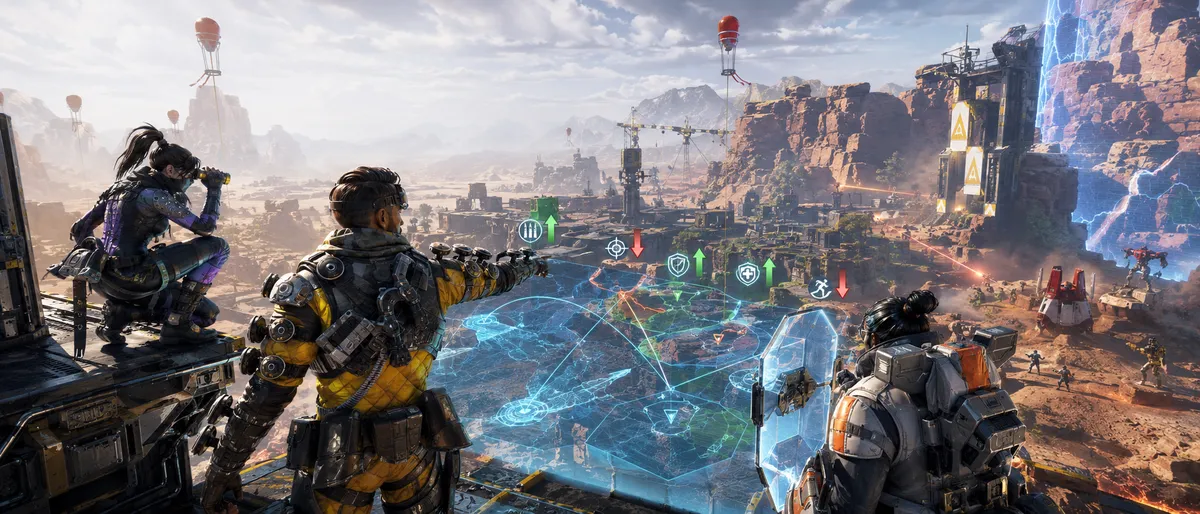
When people say “the meta changed,” they often mean “my fights feel different.” That feeling usually comes from one of five levers:
Most season-to-season metas can be described as a mix of these levers. When tempo and recovery go up, the lobby gets faster and more chaotic. When space ownership and information get stronger, games become more structured and predictable.
Keep this in mind as we break down the recent patch cycles.
Breach introduced Hardlight Mesh on windows in structures across the map. In simple terms: buildings became more dynamic, because windows could act as temporary barriers that can be broken and later rebuild after a delay.
What that means for the meta:
Meta takeaway: Breach pushed the game toward structured building control and made “taking space” feel more like a sequence instead of a single swing.
Breach also adjusted early-game consistency by changing how certain survival items work:
What this does to the meta (without any hype):
Meta takeaway: the game nudged toward faster early pacing (leave your drop sooner) while reducing the number of matches that feel “unfair” from the first minute.
Breach also removed Drop Zones in Ranked, returning matches to the classic dropship start with a Jumpmaster.
This is a meta-shaper because it changes the first 2 minutes of every ranked match:
Meta takeaway: ranked shifted back toward intentional opening plans—and that rewards squads with consistent drop routines.
Breach also introduced more granular dialogue controls (Legend, ping, announcer) and continued the direction of a more contextual soundscape approach.
Meta impact:
Meta takeaway: audio changes rarely feel like “meta,” but they often raise the ceiling for decision-making—especially in tight rotations and endgames.
Midseason patches often feel smaller than season launches, but they can reshape how fights play out. The Aftershock Midseason patch (Mar 23, 2026) matters for three reasons:
Midseason meta changes tend to “lock in” the direction of the season. If Breach was about interactive structures and early-game stability, Aftershock tuned the experience around readability and pacing.
Aftershock included a notable audio system change: enemy footsteps outside your view were adjusted so they become louder the further behind you the source is.
Meta implications:
Meta takeaway: the patch rewarded players who reset their attention after fights and punished players who tunnel vision.
When patch notes adjust Legends, they rarely change just one character—they change what kinds of squads feel comfortable.
Across the Breach and Aftershock cycle, the direction was clear:
The meta result is usually a split into archetypes:
If you want to understand “meta,” don’t ask “what’s the best Legend?” Ask:
Which archetype is the season trying to make more viable?
Aftershock also moved a POI location on Olympus (Elysium) to reduce a forced contest pattern in Ranked and Competitive.
Why this matters:
Meta takeaway: map changes often create “invisible” meta shifts by changing how often squads collide early and where the lobby pressure builds.
Overclocked (May 4, 2026) is a major meta-shifter because it introduced system changes that affect the pace of almost every match:
If you only read one part of any Overclocked breakdown, read this:
Overclocked increased recovery speed and reduced some “free rotation” tools.
That combination changes what is safe, what is risky, and how fast the lobby punishes mistakes.
Deathbox Respawns introduce a new risk–reward recovery option. The dev notes explain the goal clearly: reward teams that can clear and hold an area by letting them recover strength faster than the classic banner-and-beacon process.
Meta impact:
Meta takeaway: Overclocked rewards teams that can finish fights cleanly and secure the aftermath—not teams that just trade endlessly.
Check out some of our most popular Apex Legends services:
Chained Healing allows a second healing item to be queued so it starts automatically after the current one finishes, with multiple settings options (and a new default).
Meta impact:
Meta takeaway: Overclocked pushes the game toward faster rhythm. You don’t need to play reckless; you need to play cleaner.
Overclocked patch notes include matchmaking changes with two goals:
Meta implications:
Meta takeaway: matchmaking changes don’t change abilities, but they change the texture of your lobbies—and that changes what strategies feel reliable.
Overclocked reduced reliance on certain map traversal tools:
Meta impact:
Meta takeaway: Overclocked reinforced a core Apex truth: mobility is a team resource, not just a personal luxury.
New Legends always shake the meta, but the larger effect is usually this:
They introduce a new style of team movement and engagement timing, which forces other picks to adjust.
Overclocked also buffed several Legends (including Vantage, Conduit, and Ash). The patch notes frame these updates as helping certain kits remain impactful across the entire match, not just early or midgame.
Meta implications you can reliably expect in the first weeks of a season:
Meta takeaway: early-season meta is often unstable by design. Your advantage comes from choosing an archetype (hold, hybrid, tempo) and staying disciplined, instead of swapping styles daily.
Overclocked introduced scheduled Ranked Ladder events later in the split and also fixed an issue around season reset seeding near tier boundaries.
Meta impact for ranked-minded players:
Meta takeaway: ranked isn’t just “play more.” It’s play smarter in the windows that matter.
The biggest mistake after patch notes is doing everything at once:
A better adaptation model is “two layers”:
Layer 1: Stay stable
Layer 2: Make one meta adjustment
Choose one:
Meta adaptation is not chaos. It’s one clean change that aligns with what the patch rewards.
If you want a repeatable system for every update, use this:
This routine is what turns patch notes into an advantage instead of a distraction.
These are the most common “meta mistakes” players make:
The meta isn’t mysterious; it’s predictable when you focus on the levers that matter.
Check out some of our most popular Apex Legends services:
Most players read patch notes and then guess what to do next. That’s why progress feels random—especially in ranked.
BoostRoom helps you turn patch changes into a simple plan you can execute:
If you want to climb faster after big updates, the shortcut is not chasing trends—it’s having a patch-proof system.
What are the most important parts of Apex patch notes to read first?
Start with system changes (recovery, healing flow, ranked format, traversal tools), then maps, then Legends. Systems and maps usually reshape the meta more than individual tuning lines.
Why does the meta feel chaotic after a new season launches?
Pick rates spike, players experiment, and lobbies test new mechanics. The fastest way to stay consistent is to pick one archetype (hold/hybrid/tempo) and commit for a week.
How do Deathbox Respawns change ranked pacing?
They can reduce downtime after fights if a squad can hold space safely. That makes the post-fight phase more important and can compress third-party timing windows.
Does Chained Healing make fights easier?
It makes recovery smoother, but it also makes opponents recover smoother. The bigger effect is faster tempo, not “free safety.”
How do traversal tool removals change team comps?
When map tools offer fewer universal rotation options, movement and repositioning become more dependent on team composition and route planning.
How can solo players benefit from matchmaking changes?
If solo queue matchmaking becomes more fair over time, consistent decision-making (safe rotations, clean resets, smart fight selection) becomes an even stronger way to climb steadily.
Should I switch Legends every patch?
No. Most players improve faster by building a stable main-and-backup pool that fits their preferred archetype, then making small weekly adjustments.
More Reads

Leveling the Apex Legends Battle Pass fast isn’t about grinding nonstop—it’s about making sure every minute you play produces progress. Most players fall behind for three reasons: they ignore challenge planning, they waste time in “low progress” matches (lots of downtime, little XP), or they play in a way that resets their momentum (leaving games early, chasing chaos, and never finishing a clean loop of Daily + Weekly goals). The fastest levelers do the opposite: they build a simple routine, stack challenges together, and protect the one resource that matters most—consistent match completion time. This guide is your complete, practical Battle Pass leveling system for Ranked and Pubs. You’ll learn how the modern split-based Battle Pass works, what “Stars” actually mean, how to turn Daily and Weekly challenges into predictable levels, how XP boosts really work, and which play habits give the biggest progress per hour. Follow the routines here and you’ll stop guessing—your Battle Pass becomes a checklist you can finish on schedule.
Read more
Solo queue in Apex Legends can feel like you’re playing two matches at once: one against the lobby, and one against randomness. Your teammates land differently, rotate differently, fight differently, and sometimes don’t communicate at all. The good news is that solo queue isn’t “unwinnable”—it just rewards a different skill set than full-stack play. The solo players who win consistently aren’t always the flashiest; they’re the ones who create order inside chaos. They make a clear plan early, keep the squad connected, avoid the worst midgame traps, and turn messy moments into recoverable games. This guide is a complete solo queue blueprint for winning with random teammates in both Ranked and Pubs. You’ll learn how to lead without voice chat using smart pings, how to choose drops that reduce coin-flip chaos, how to rotate in safe steps so teammates naturally follow, how to reset after pressure so you don’t get instantly cleaned up, and how to play endgame in a way that turns “we’re still alive” into “we can actually win.” The goal is simple: fewer throw games, more controllable matches, and a lot more wins—even when your squad is unpredictable.
Read more
Apex Legends pro play looks familiar at first—20 squads, a closing ring, fights everywhere—but the logic behind it is completely different from regular matches. Competitive Apex is a game of timing, space, information, and risk management, where the “best” team isn’t always the one that takes the most fights—it’s the one that turns every minute into an advantage and survives the chaos that comes from having 60 players on one map. This guide explains Apex Legends esports from the ground up: what the ALGS is, how the season is structured, how teams qualify, how scoring works, what “Match Point” actually means, why POI Drafting and Legend Bans changed the meta, and how to watch pro matches with understanding instead of confusion. If you’ve ever wondered why teams sometimes play slow, why one fight can decide the entire series, or why “meta picks” suddenly change mid-tournament, this is your complete competitive breakdown.
Read more