Why Static Groups Dominate in Verra 🧠👑
Ashes isn’t only “how strong is your character.” It’s also:
- who can show up consistently,
- who can protect trade,
- who can contest objectives,
- who can run content without begging in chat for hours.
Bold line: A mid-geared group with discipline beats a geared group with no plan. 😈
Static groups win because they master tempo:
- faster leveling loops,
- smoother dungeons,
- safer caravans,
- better node influence,
- and better PvP outcomes.
And once you start winning consistently, recruiting becomes easy (because people like joining winners).
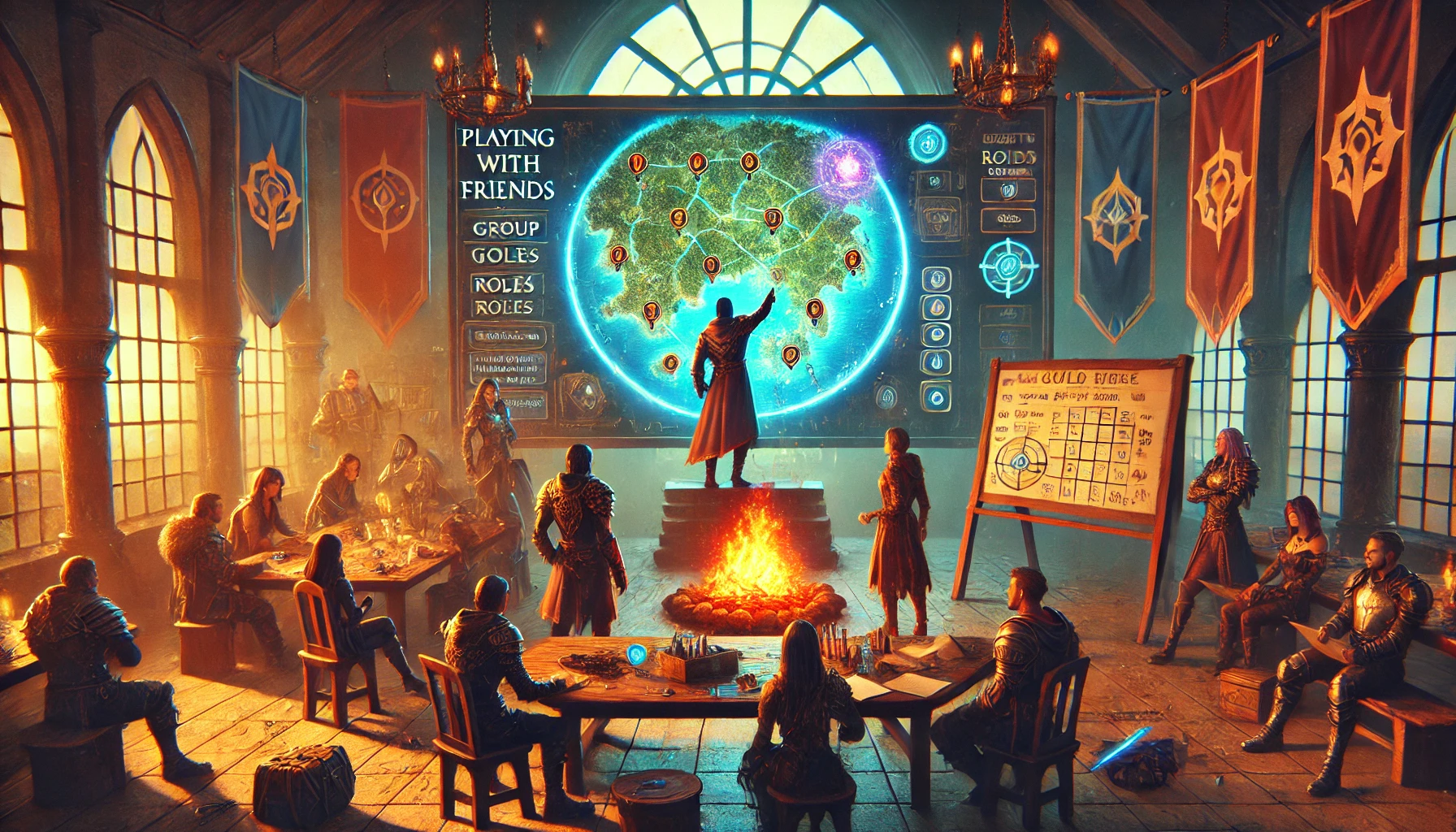
Static Group vs Guild: What You Should Build First 🧩
Let’s make this simple:
Static group (best early):
- 6–12 players
- consistent voice comms
- shared schedule
- fast decision-making
- perfect for caravans, dungeon nights, roaming PvP
Guild (best long-term):
- multiple squads
- leadership structure
- economy + crafting network
- siege roster potential
- political weight
If you’re starting from scratch, do this:
Phase 1: Build a static core (6–12)
Phase 2: Expand into squads (12–30)
Phase 3: Form a guild with officers (30+)
Phase 4: Add alliance partners when needed (alliances are capped by a maximum of four guilds).
Bold line: Don’t build a “big guild” before you build a “real core.” ✅
The Golden Rule: Pick a Shared Server Plan 🌍📌
Most friend-groups fail because they never pick a plan. Everyone logs in and does “their thing,” then later they wonder why they feel disconnected.
Your server plan should include:
- Home region / node focus
- Primary content (PvE, PvP, economy, naval, politics)
- Money loop (how you fund gear + consumables)
- Event schedule (even if it’s only 2 nights a week)
- Growth plan (how you recruit without ruining vibes)
You don’t need a 20-page document. Just agree on one direction.
Bold line: A group without a plan becomes a chat group, not a progression group. 😅
Role Basics: The “Holy Trinity” + Real Group Jobs 🛡️💥💚
Ashes is built around traditional roles—Tank, DPS, and Support.
But “static group roles” go beyond combat.
Here’s the roles mix that actually works:
Combat roles
- Tank / frontline: starts fights, holds space, protects squishies
- DPS: deletes targets, clears PvE fast, pressures objectives
- Support: healing, buffs, cleanse-style support, fight stability
Non-combat group roles (super important)
- Shotcaller: makes final calls in PvP (one voice, no chaos)
- Scout: map awareness, warns about ambushes, tracks threats
- Quartermaster: manages group supplies (pots, food, mats)
- Crafter lead: coordinates what the group crafts and who specializes
- Trade lead: manages caravan routes, timings, risk levels
- Recruitment officer: keeps the roster healthy without drama
Bold line: If nobody owns these jobs, everyone wastes time doing them badly. 🧠
Best Static Group Compositions (Easy Templates) 🧱✅
You can adjust these based on your archetypes, but the structure stays strong.
6-Man “Core Squad” Template (Perfect for most nights) 🔥
- 1 Tank/frontliner
- 1 Main Support
- 3 DPS (mix melee + ranged)
- 1 Flex (control/support hybrid or extra DPS)
Why this works:
- enough survival
- enough damage
- enough flexibility to adapt
8–12 “Two-Team” Template (For caravans + contested zones) 🚚⚔️
Split into:
- Escort Team (frontline + support + DPS)
- Scout/Harass Team (mobile DPS + control)
Why this works:
- the scout team prevents surprise wipes
- the escort team stays tight and objective-focused
Dungeon Night Template (Speed + safety) 🗝️
- 1 reliable tank
- 2 support-ish players (one can be lighter support)
- 3–5 DPS depending on content difficulty
- 1 player assigned as route leader (pull pace matters more than people think)
Bold line: The best comp is the one your group can execute under pressure. 🎮
How to Turn Friends Into a Real Static (Without Becoming a Manager) 😅🤝
Friends are great… until:
- someone always shows up late,
- someone always argues,
- someone refuses to play team comps,
- and nobody wants to “be the bad guy.”
So you need light structure that doesn’t kill the fun.
Use these simple rules:
Rule 1: Set two weekly “anchor times”
Example: 2 nights a week, same time, same length.
Even casual groups become strong when consistency is real.
Rule 2: Agree on one main activity per night
- PvE night
- caravan night
- PvP roam night
- crafting/economy night
Rule 3: Keep a 10-minute “start ritual”
- everyone repairs/restocks
- voice comms check
- route plan
- who’s shotcalling tonight?
Bold line: A smooth start is the difference between a good night and a messy night. ✅
Caravan Grouping: How to Move Goods Without Losing Your Mind 🚚🛡️
Caravans create content. They also create problems. The secret is running them like a mini-mission.
Caravans are part of the trade/economy loop and are designed to be contested.
So your caravan team needs structure.
The caravan “3-layer” setup
Layer 1: Scouts (ahead and wide)
- check choke points
- watch high ground
- report enemy movement early
Layer 2: Escort bubble (tight and disciplined)
- tank/frontline stays near the caravan
- support stays protected
- DPS focuses threats, not random duels
Layer 3: Cleanup/response (flex squad)
- fast movers who respond to ambushes
- punish overextensions
- chase off harassers only when safe
Caravan rules that save runs
- Never all chase. Half the wipe stories start with “we all chased one guy.”
- Don’t run “full bags” at peak chaos time unless you’re confident.
- Use a route caller. One person decides routes and pivots.
Bold line: Caravans aren’t risky because they exist. They’re risky because groups get emotional. 😅
Dungeon Grouping: How to Keep Runs Fast and Friendly 🗝️😄
Dungeons can be the best bonding content… or the fastest way to tilt friendships.
Here’s how you prevent drama:
Assign 3 simple dungeon roles
- Pull leader: controls pace and positioning
- Interrupt/CC leader: calls priority interrupts and control moments
- Loot/goal leader: keeps the group aligned (“we’re here for X”)
Make “wipe talk” short
After a wipe:
- 10 seconds: what killed us?
- 10 seconds: what’s the fix?
- pull again.
No essays. No blame.
Bold line: Good dungeon groups don’t avoid wipes. They recover fast. ✅
Guild Structure That Actually Works (Simple, Not Corporate) 🏰📌
If you’re scaling into a guild, you need a structure that:
- gives people direction,
- protects the culture,
- and prevents leadership burnout.
Guilds in Ashes can scale up to large sizes depending on progression choices (often referenced as a maximum cap of 300).
And alliances allow up to four guilds together.
So the biggest mistake is trying to run a 100+ roster with “vibes only.”
Recommended guild roles (minimum)
- Guild Leader: vision + final decisions
- Combat Officer: PvP roster, comps, practice nights
- PvE Officer: dungeon/raid scheduling, progression
- Economy Officer: crafting priorities, materials, market focus
- Caravan Officer: trade routes + escort schedules
- Recruitment Officer: trials, onboarding, culture fit
Squad system (the real secret)
Instead of one giant blob, split into squads:
- Squad A: PvP
- Squad B: PvE
- Squad C: Economy/Trade
- Squad D: Mixed/casual
Each squad has a captain, and captains report up.
Bold line: Squads keep a guild human. Blobs make guilds silent. 👀
Recruiting Without Ruining Your Guild 🧲😈
Most guilds die because recruitment is random:
- invite anyone,
- hope it works,
- drama happens,
- core players quit.
Instead, recruit like this:
The 3-question filter
Before accepting someone long-term, ask:
- What content do you actually play most?
- What role do you enjoy in groups?
- What do you want from a guild besides loot?
You’re looking for alignment, not perfection.
Trial system (simple and fair)
- 1–2 weeks trial
- attend at least 2 group activities
- no pressure, no ego
- at the end: both sides decide
Culture rules (non-negotiable)
Write 5 rules and enforce them politely:
- respect comms
- no loot drama
- no harassment
- show up when you sign up
- help the group when you can
Bold line: Good guild culture is built by what you allow, not what you say. ✅
Communication Tools: What Your Group Should Use 🎧🧰
You don’t need fancy stuff. You need consistent stuff.
Must-have tools
- Voice comms: for caravans, PvP, dungeons (voice saves time)
- Text channels: announcements + builds + trade requests + scheduling
- A simple sign-up system: even a basic calendar or pinned message works
Nice-to-have tools
- Event signups/roster tools for larger guilds (guild leadership tools are discussed as a supported direction).
- Crafting request tracking (who needs what mats, who crafts what)
- Caravan route notes (safe routes, danger zones, “don’t go here at this time”)
Bold line: The best tool is the one your guild actually uses. 😅
Social Tips That Keep Groups Together (The Real Endgame) 🧠❤️
This section is the difference between “we played for a month” and “we own this server for a year.”
Make people feel useful
Every player should have a job:
- scouting
- crafting
- escorting
- gathering
- shotcalling
- organizing
When people feel useful, they log in more.
Celebrate wins the right way
Not just “loot drops,” but:
- “clean caravan run”
- “first boss kill”
- “successful defense”
- “new recruit who fits perfectly”
Keep criticism private
If someone messes up:
- DM them
- keep it respectful
- focus on improvement
Public callouts destroy teams.
Rotate leadership roles
Shotcalling every night burns people out. Rotate:
- one night “PvP lead”
- one night “PvE lead”
- one night “caravan lead”
Bold line: Burnout kills more guilds than enemies do. 🥲
How to Handle Drama Before It Nukes Your Guild 💣
Drama isn’t “if.” It’s “when.” The trick is not letting it spread.
The 24-hour rule
If something serious happens:
- don’t make big decisions while angry
- sleep on it
- then solve it calmly
The “one voice” rule in combat
In PvP or caravan defense:
- one shotcaller talks
- everyone else gives short info
- no arguing mid-fight
The “loot clarity” rule
Decide early:
- how loot is handled
- what’s guild bank vs personal
- how crafting support works
Confusion creates accusations.
Bold line: Most drama is just unclear expectations wearing an angry mask. 😅
Node Life: How Friend Groups Plug Into the World 🏛️🌍
If your group wants to feel “real” in Ashes, don’t ignore node life.
Nodes develop, create influence, and can form vassal relationships as they grow.
That means your group’s location and activity can shape the map—especially when you’re organized.
Easy node plan for groups
- choose a home region
- contribute to node growth naturally (quests, tasks, activity)
- build relationships with neighbors
- avoid being “the random group” with no allies
Bold line: In Ashes, community isn’t a bonus. It’s the system. 🤝
Best “Group Nights” to Run as a Static (Steal This Schedule) 📅✅
Here’s a weekly structure that works for most squads:
Night 1: PvE progression
- hard dungeons
- practice comps
- improve coordination
Night 2: Caravan/economy
- planned routes
- escort practice
- supply chain building
Night 3: PvP roam
- contested zones
- learning matchups
- building shotcaller confidence
Optional casual night:
- gathering + crafting + chill voice
- help newer members
- restock supplies
Bold line: Consistency beats intensity. Two clean nights a week > seven messy nights. ✅
Conclusion: Build a Team, Not Just a Party 🏁🤝
If you want the best “playing with friends” experience in Ashes of Creation, don’t rely on luck. Build a simple system:
- a shared plan,
- clear roles,
- predictable schedules,
- and a culture that keeps people happy to log in.
Start as a static. Grow into squads. Scale into a guild. Then become the kind of group other players respect—and fear. 😈🔥
Final bold line: Verra is better with friends… but it’s unbeatable with a real team. 🏰⚔️