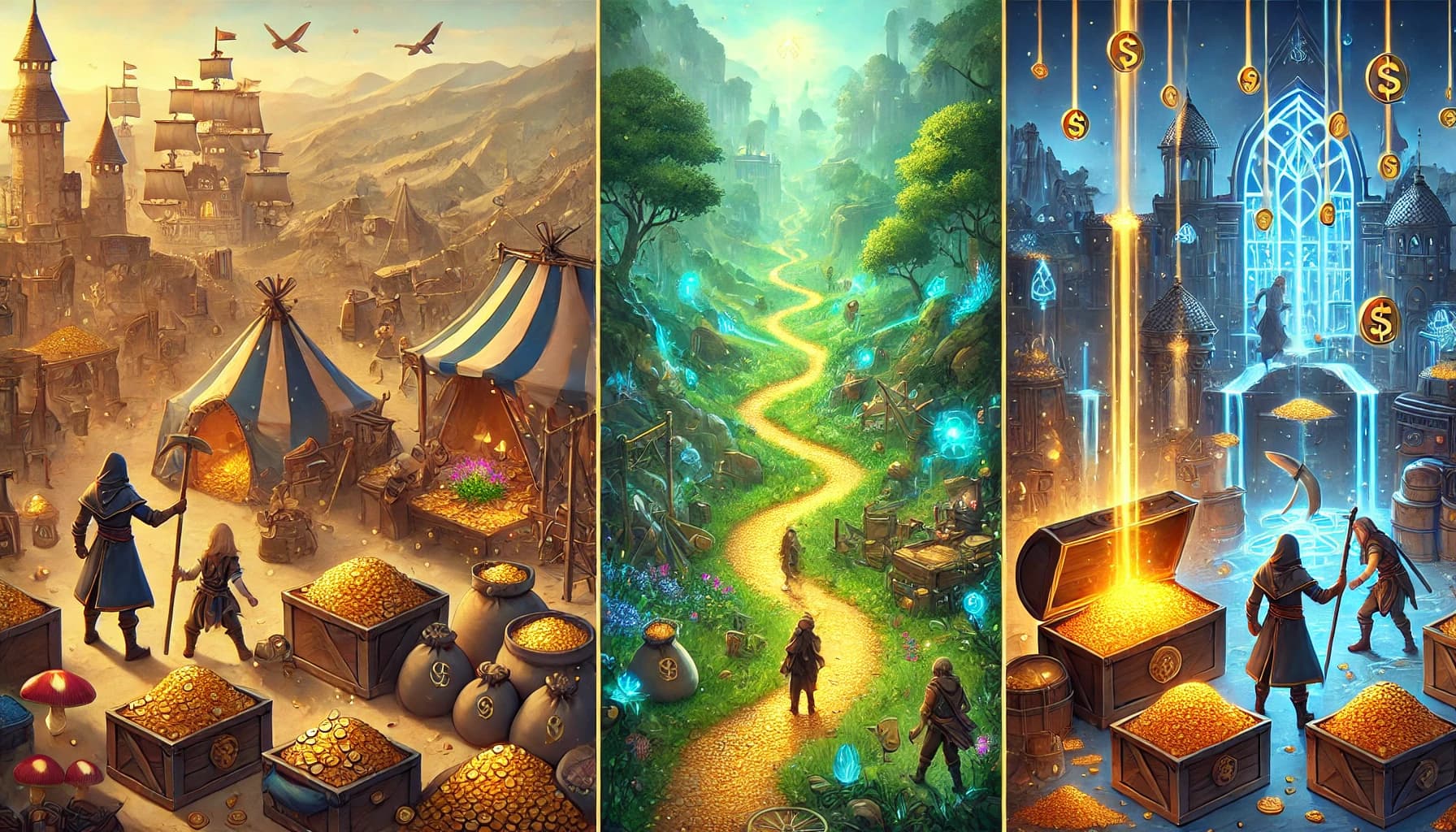
The “Power Triangle” of Verra: Guilds, Nodes, Alliances 🔺👑
If you want the simplest mental model, use this:
Guild = organization
Node = authority
Alliance = scale
A guild can be stacked, but without political influence it’s just a strong team.
A node can be rich, but without defense it’s a loot pinata with walls.
An alliance can dominate routes, wars, and elections — because scale changes everything.
Bold truth: Most server rulers aren’t “the best players.” They’re the best organizers.
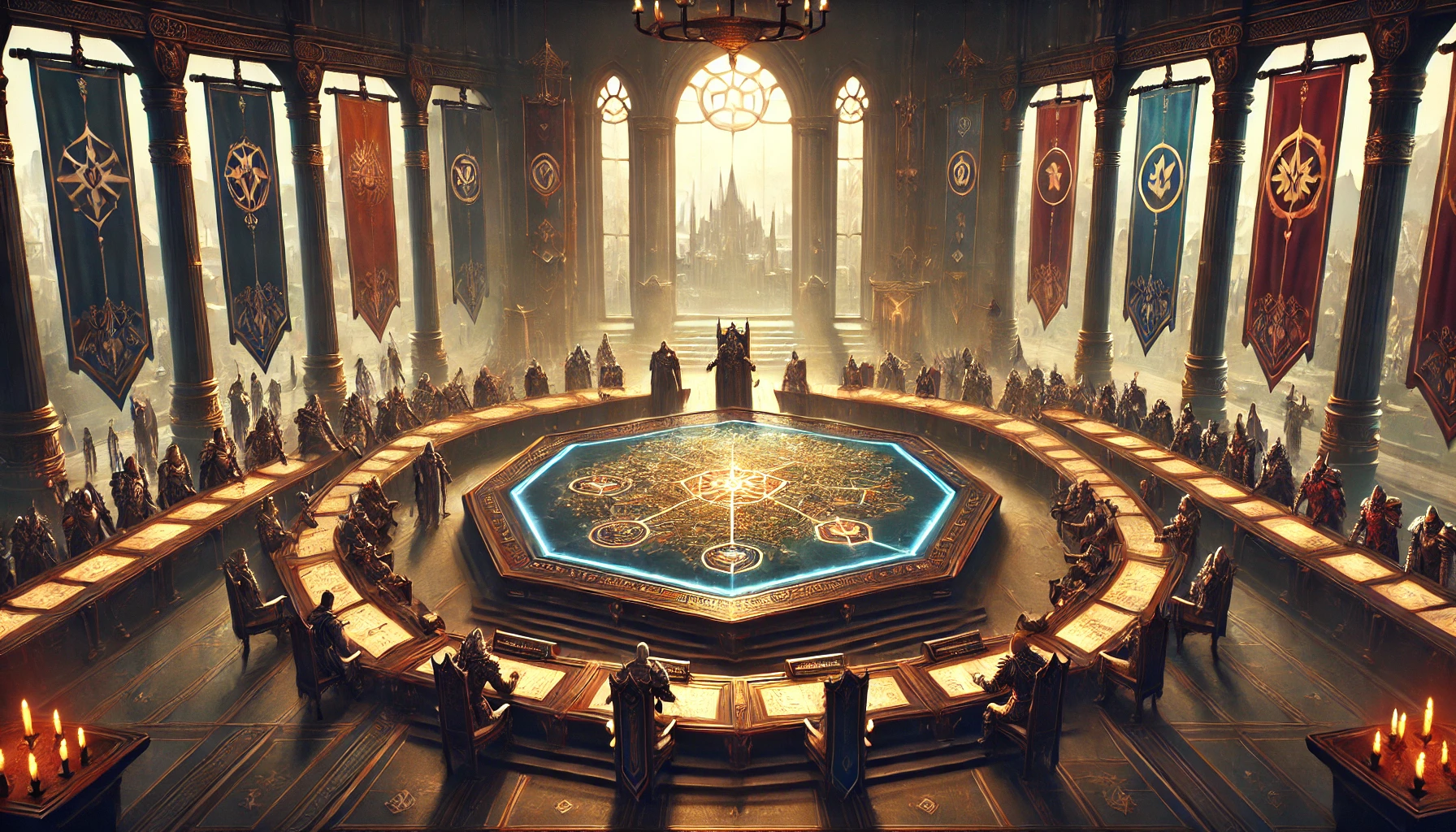
Guilds 101: What a Guild Really Is (Beyond a Tag) 🏷️🛡️
In Ashes, guilds are meant to be big enough to run real operations. That means your guild isn’t only for “grouping.” It’s a machine.
A healthy guild usually has:
A leadership core (the shot-callers)
A logistics team (crafters, gatherers, traders)
A combat core (PvP + PvE anchors)
A social layer (recruitment, training, vibes)
Even if your guild is casual, you’ll still feel the benefits of structure.
Bold line: A guild without roles is just a chat channel with extra steps.
Guild size and why it matters
There’s public info pointing to a maximum guild cap that can reach 300 depending on guild progression choices. That number alone explains why politics gets spicy: one guild can be a small army. And if that guild works with other guilds… welcome to server geopolitics.
Guild Roles That Actually Win Wars 🎯👥
You don’t need a complicated rank ladder. You need roles that keep the guild functional when things get stressful.
Here are the roles that matter the most:
Leader / Council 🧠
Sets goals, decides diplomacy, chooses fights.
Officers / Captains ⚔️
Lead parties, manage squads, run calls.
Recruiters / Community 🗣️
Keeps the guild alive long-term. A guild that can’t recruit slowly dies.
Crafters / Economy Crew 🔧💰
Turns raw time into real power. They keep the guild geared and funded.
Scouts / Intel 👀
Political gameplay is information warfare. Knowing “who is moving where” is worth more than a new weapon.
Diplomats 🤝
Handles alliances, deals, peace talks, and “don’t turn this into a server war… yet.”
Bold truth: The strongest guilds don’t have the best players — they have the best coverage of jobs.
Alliances: How Big Groups Become “Unavoidable” 🤝🔥
Alliances are where power jumps from “strong guild” to “server influence.”
The key rule that keeps alliances from becoming infinite zerg blobs is that an alliance is limited by a maximum of four guilds (and guilds can only be in one alliance). That means alliances are forced to make choices: who gets invited, who gets cut, who gets used as a temporary partner.
Bold line: Alliances are friendships… with spreadsheets.
Why alliances exist (the real reasons)
Alliances do three things extremely well:
They share manpower when it matters
They share information 24/7
They stabilize control over territories, routes, and elections
Even if you hate politics, you’ll still feel alliances because:
They can lock down farm spots
They can dominate trade lanes
They can control the “rules” of a region through mayors and taxes
Nodes and Government: Politics Starts When People Live Somewhere 🏘️🗳️
Nodes are the political engine of Ashes. As a node grows, it becomes more than buildings — it becomes a community with real leverage.
Nodes also have types (Economic, Military, Scientific, Divine), and that type affects government style and priorities.
Here’s the important part for politics:
Citizenship ties you to a node.
Mayorship ties someone to authority.
Taxes tie the whole region to a money system.
Bold truth: If you control the node, you control the lifestyle around it.
Citizenship: The “Membership Card” That Enables Power 🪪🏠
Politics isn’t open to everyone equally. It’s tied to citizenship.
The public design info points to these ideas:
Only citizens can participate meaningfully in node elections and leadership paths.
Citizens pay dues / taxes that help fund the settlement treasury.
Citizenship isn’t the same as guild membership — you can be in one guild, but your political home is your node.
That creates a very real dynamic:
Guilds try to pack citizens into the node they want to control.
Players who hate the mayor’s policies can migrate elsewhere.
Mayors can “price out” certain behavior through taxes.
Bold line: Citizenship is how a casual player becomes politically relevant.
Mayors: The Face of Power (And Why Everyone Tries to Control Them) 👑🧾
Mayors matter because they’re not cosmetic. They have tools.
From public info, mayors can influence things like:
Settlement taxes (general rate and activity-based overrides)
Settlement policies and mandates
Settlement treasury usage
Certain building-related decisions (with systems that involve player buy-in/votes in specific cases)
Leadership powers tied to settlement type (especially during siege/war situations)
So even if you never care about “roleplay politics,” you’ll care when:
Your crafting fees change
Your trading costs change
Your region becomes safer or more chaotic
Your node’s money gets spent smart… or wasted
Bold truth: A good mayor makes a node feel rich. A bad mayor makes a node feel like a tax trap.
Election Types: How Different Nodes Choose a Mayor 🗳️⚔️💰
Not every node picks a mayor the same way. This is where politics becomes really fun — because the “meta” changes depending on node type.
Public info points to distinct election styles depending on settlement type, such as:
A vote-based election method (commonly associated with Scientific/Academic direction)
A combat-based method (Military / trial by combat style)
A wealth or economic performance style (Economic)
A service/favor style (Divine)
What this means in practice:
In vote nodes, you win with popularity + organization.
In combat nodes, you win with skill + teamwork (and smart preparation).
In wealth nodes, you win with money pipelines and economic dominance.
In service/favor nodes, you win with consistent activity and community support.
Bold line: You don’t “pick a node.” You pick a political game mode.
Taxes: The Quiet Weapon That Controls Behavior 💸🧨
Taxes are one of the most underrated power tools in any sandbox MMO.
Public info indicates mayors can:
Set a generalized settlement tax rate
Set overrides for different activities within the settlement
And that money goes into systems like a settlement treasury.
Here’s the part players feel immediately:
High taxes can push people out.
Low taxes can attract citizens and business.
Targeted taxes can punish certain playstyles and reward others.
Bold truth: Taxes are PvP… but with numbers instead of swords.
How taxes shape server politics
Taxes create “migration waves.” When a mayor gets greedy or hostile, people leave. When a mayor is smart, people move in.
That migration changes:
Market prices
Crafting supply
Dungeon attendance
Defense strength
Election power blocs
A mayor can “win” short-term by taxing hard, but lose long-term because the node becomes empty.
Bold line: The best mayors don’t max taxes. They optimize them.
The Settlement Treasury: Where Your Money Goes (And Why You Should Care) 🏦🪙
Treasury systems are what turns taxes into real influence.
If your node is rich, it can:
Fund defenses and war preparation
Support growth and services
Create a “gravity effect” where everyone wants to live there
If your node is broke:
It becomes fragile
It loses competitiveness
It becomes easy to bully economically and militarily
This is why political drama happens:
Players will argue about “what the treasury should be used for” because it affects everyone.
Bold truth: A rich node wins wars before the war even starts.
Political Gameplay Loops: What You’ll Be Doing All Year 🔁🗺️
Politics in Ashes isn’t a one-time event. It’s a loop.
Here are the big loops that keep repeating:
Build Influence → Get Office → Set Rules → Face Backlash → Defend Power
Loop 1: Election season 🗳️
Guilds campaign. People promise buffs and low taxes. Rival guilds spread dirt. Votes get traded for favors. And suddenly you realize you’re in a medieval MMO democracy simulator.
Loop 2: Node growth and rivalry 🏗️
As nodes develop, nearby nodes get jealous. Rival leadership tries to slow you down. People sabotage routes. Guilds “encourage” conflict.
Loop 3: Trade control 🚚
Caravans, markets, crafting pipelines — these become political tools. You don’t just fight for loot. You fight for economic oxygen.
Loop 4: Siege pressure ⚔️🏰
When a node becomes important enough, it becomes a target. That’s the natural endpoint of politics: people try to take what you built.
Bold line: Politics isn’t separate from gameplay. It is the gameplay.
Alliances and Betrayals: Why “Drama” Is Actually Content 🐍🎭
In Verra, betrayal isn’t random. It’s usually logical.
Common betrayal reasons:
A guild wants a better alliance slot
A mayor breaks a deal on taxes or permits
A rival offers a stronger trade agreement
A war is coming and someone wants to be on the winning side
A guild outgrows its “friends” and wants independence
The smartest players treat diplomacy like this:
Nothing is permanent. Everything is conditional. Trust is built through repeat behavior.
Bold truth: A treaty with no benefit is just a delay before a backstab.
How to protect yourself without being paranoid
Make deals that are “win-win now,” not “trust me forever.”
Keep your supply lines diversified.
Avoid one-point-of-failure alliances.
Build relationships across multiple groups, not just one big partner.
How Small Guilds Survive in a World of Mega-Guilds 🐺🧠
You don’t need 300 members to matter. You need leverage.
Here are ways smaller groups win:
Become economically essential 💰
Own a craft niche. Control a key material. Provide consistent services.
Become the intel guild 👀
Big guilds hate surprises. If you provide information, you become valuable.
Become mercenaries ⚔️
Pick wars carefully. Sell strength in decisive moments.
Become the “swing voters” 🗳️
In vote-based nodes, small groups can decide elections if they unify and negotiate.
Bold line: Small guilds don’t win by fighting the zerg head-on. They win by becoming necessary.
How to Play Politics as a Solo Player (Yes, You Can) 🎒🗳️
Solo players often think politics is “not for them.” That’s a mistake.
Solo political power comes from:
Voting blocs (you + friends)
Economic value (you supply something important)
Reputation (people trust you)
Consistency (you show up, you help, you’re known)
If your node’s government relies on citizen participation, your vote matters. If your node relies on activity-based progression, your work matters.
Bold truth: In Ashes, a solo player with a strong reputation can have more influence than a random guild member #147.
Red Flags: How to Spot a “Bad Ruler” Early 🚩😅
If you want to avoid wasting months under a messy regime, watch for these:
The mayor never explains tax changes
The leadership blames everyone else for problems
Treasury use feels secretive or chaotic
The node loses citizens constantly
All diplomacy is “threats” and no cooperation
The same friends always benefit, everyone else pays
Bold line: If leadership can’t communicate, it can’t lead.
The Fun Part: Political Victory Doesn’t Always Mean “Owning Everything” 🏆✨
Some players think winning politics means becoming a tyrant.
Real winning is simpler:
Your guild has stability
Your region has good services
Your economy keeps growing
Your wars are chosen smart
Your alliances are controlled, not chaotic
A “healthy power” node becomes a magnet. People move in. Markets thrive. Defense improves. And rivals have a harder time justifying a siege.
Bold truth: The best political play is making your region so good that attacking you feels like griefing their own progress.
How BoostRoom Fits Into This (For Players Who Want Progress Without Stress) 🚀🛡️
Politics is fun… until it isn’t. Some players love campaigning, organizing wars, running trade pipelines. Others just want to enjoy Verra without spending their whole life in guild spreadsheets.
BoostRoom helps players who want:
Faster progression so they can join real guild content sooner
Support for PvE and group prep so they’re “raid-ready” and valuable
Coaching to understand systems like nodes, taxes, and politics faster
A smoother path into the content without wasting weeks learning everything the hard way
Bold line: You don’t need to be the mayor to benefit from politics — you just need to be prepared when politics hits you.
Conclusion 🏁🏰
Guilds create the power. Nodes give that power a throne. Alliances turn local control into server control. And taxes are the invisible hand that pushes players, markets, and wars in predictable directions.
If you want to “win” in Ashes politics, remember this:
Organization beats strength. Reputation beats drama. And smart money beats raw numbers. 🧠💰⚔️