What Makes PIONER Feel Different (So You Pick the Right “Next Game”)
Before you install anything, it helps to name what you actually love about PIONER—because “similar” can mean totally different things.
Most PIONER fans fall into one (or more) of these buckets:
- The Risk-Reward Bucket: You like bringing gear into danger, making hard choices, and feeling real tension every run.
- The MMO Progression Bucket: You want long-term goals, reputation/factions, unlocks, and a sense that your account is becoming stronger over time.
- The Survival Crafting Bucket: You like scavenging, upgrading, building, and turning junk into real value.
- The PvPvE Bucket: You want enemies and players to both be threats—because that unpredictability keeps things fresh.
- The Atmosphere Bucket: You’re here for bleak worlds, anomalies, mystery, and that “something is watching me” feeling.
Once you know which bucket matters most, choosing the right game becomes easy—and you avoid the classic mistake: downloading a game that’s “like PIONER” visually but not emotionally.
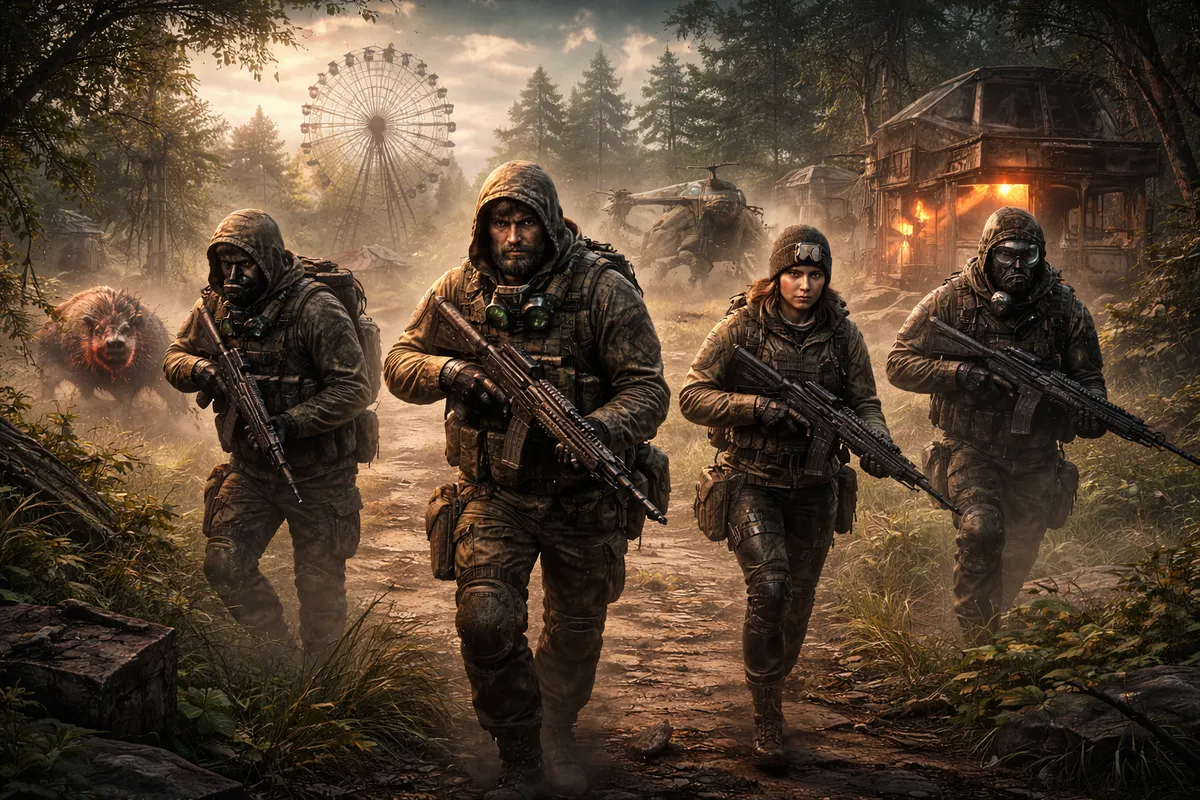
Quick Selector: Which “Games Like PIONER” Fit Your Playstyle
Use this as a fast filter.
If you want the closest risk-reward extraction tension:
Escape from Tarkov, Arena Breakout: Infinite, Hunt: Showdown 1896, ARC Raiders, Marauders, Vigor, Delta Force
If you want open-world survival + crafting + living off the land:
Once Human, DayZ, Rust, SCUM, Deadside, Fallout 76
If you want MMO-style co-op progression, builds, and endgame loops:
Destiny 2, Warframe, The Division 2
If you want anomalies, factions, and “stalker zone” vibes:
S.T.A.L.K.E.R. 2, STALCRAFT: X (and the broader STALKER-style subgenre)
If you want PvE-first tactical missions with faction flavor:
Gray Zone Warfare, Fallout 76, Warframe, Destiny 2
How to Compare Any Game to PIONER (The Practical Rules)
When you’re deciding what’s “worth your time,” focus on these four rules:
Rule 1: What do you lose when you die?
If death is expensive (lost gear, lost loot, long travel), the game will feel closer to PIONER’s tension.
Rule 2: What are the long-term goals?
If the game has progression that lasts weeks (reputation, base building, crafting trees, endgame modes), it scratches the MMO itch.
Rule 3: Who is the main threat—players, AI, or the environment?
- Players as the main threat = sharper PvP tension
- AI as the main threat = better co-op and tactical pacing
- Environment as the main threat = deeper survival fantasy
Rule 4: How “repeatable” is the fun?
Some games feel amazing for 15 hours but get repetitive. Others become better at 50+ hours because builds, economy, and skill depth open up.
Keep these rules in mind as you read each pick below.
Escape from Tarkov (The Hardcore Extraction Blueprint)
If what you love most about PIONER is the heart-racing extraction loop, Tarkov is the genre’s most influential “hard mode” option.
Why PIONER players usually like it:
- Every raid feels like a serious decision: gear, routes, timing, and risk management matter.
- The loot-and-extract loop is intense, and wins feel earned.
- Weapons and modifications can become a long-term hobby all by themselves.
What’s different from PIONER:
- Tarkov’s learning curve is famously steep. It’s more punishing and less “MMO social world” than PIONER.
- It’s less about open-world wandering and more about map knowledge, routes, and extracting under pressure.
Start strong (carryover skills from PIONER):
- Treat your first sessions like training, not “winning.” Your goal is survival consistency.
- Build a cheap kit you can repeat without stress.
- Practice discipline: extracting with medium loot often beats dying with “almost everything.”
Arena Breakout: Infinite (Extraction, But Faster to Learn)
Arena Breakout: Infinite targets the same “every raid is a gamble” feeling, often with a more approachable early experience compared to the most hardcore options.
Why it clicks for PIONER fans:
- It’s built around high-stakes PvPvE extraction where decisions matter.
- The risk-reward loop is clear and constant: fight, loot, extract—or lose it.
What’s different from PIONER:
- It’s more “raid instance” extraction than living MMO world.
- The vibe is more tactical-raid focused than anomaly-driven exploration.
Start strong:
- Play like a PIONER risk runner: don’t take your best gear until your routes are consistent.
- Track your “profit per run,” not your kill count.
Hunt: Showdown 1896 (Extraction With Horror Tension and Sound Mind Games)
Hunt is a different flavor of extraction: you’re hunting a boss target while other players hunt you back, and sound is everything.
Why PIONER players love it:
- The tension is constant, and fights are memorable.
- PvE threats exist, but PvP pressure is always nearby.
- The game rewards patience, positioning, and reading the map like a predator.
What’s different from PIONER:
- Matches are session-based rather than persistent MMO roaming.
- The pacing is more “hunt, trap, ambush” than “farm, craft, progress.”
Start strong:
- Think like a scavenger: move smart, listen harder than you shoot, and leave the fight if the angle is bad.
- In Hunt, survival is a skill—don’t treat every fight like a duel you must take.
ARC Raiders (Modern Extraction With Big Popularity and a Shared-World Feel)
ARC Raiders leans into extraction tension but aims for a broader audience, often feeling like a modern bridge between hardcore extraction and more accessible shared-world action.
Why PIONER fans should try it:
- It’s built around extraction-style runs and a dangerous surface world.
- It delivers that “go out, get value, return alive” loop that PIONER players naturally understand.
- It’s a strong pick if you like progression but don’t want the harshest possible punishment.
What’s different from PIONER:
- It has its own identity and pacing—less “Soviet ruin survival,” more futuristic scavenger pressure.
- It’s not trying to be a full survival-crafting MMO in the same way PIONER is.
Start strong:
- Prioritize clean extracts early. You’ll progress faster by banking wins than gambling every run.
- Use your PIONER habit of planning exits before trouble starts.
Marauders (Extraction in Space With Crafting and Salvage)
Marauders is extraction with a sci-fi pirate theme: raid, loot, craft, survive.
Why it fits PIONER fans:
- The loot-and-extract mindset transfers instantly.
- Crafting and gear progression are part of the core loop.
- You get tense “I might lose everything” moments, but in a fresh setting.
What’s different from PIONER:
- It’s not an open-world survival MMO—more session-based raiding.
- The setting is a big shift: if you’re here for anomalies and wastelands, this is more “industrial space survival.”
Start strong:
- Play conservatively until you understand the pace of encounters.
- Treat crafting materials like currency: don’t waste them on early gear you’ll replace immediately.
Vigor (Free-to-Play Loot-and-Extract With Base Building)
Vigor mixes extraction encounters with a “build up your shelter” progression loop, which can feel familiar if you like the idea of improving your home base over time.
Why PIONER fans might enjoy it:
- The loop is simple and satisfying: loot, shoot, extract, build yourself up.
- It scratches the “I’m getting stronger because I survive” itch.
What’s different from PIONER:
- The overall feel and pacing are different—less MMO mission structure, more repeatable encounters.
- It’s a distinct ecosystem with its own balance and progression style.
Start strong:
- Build a routine: one safe run, one risky run, repeat.
- Don’t chase fights when your backpack is already profitable.
Delta Force (Extraction Options With Multiple Escape Styles)
Delta Force includes a strong extraction angle: different methods of exfiltration and the pressure of choosing the right exit plan.
Why it matches the PIONER mindset:
- Extraction is treated like strategy, not a single predictable doorway.
- If you enjoy planning routes and escapes in PIONER PvP zones, you’ll recognize the same decision-making muscle.
What’s different from PIONER:
- It’s not centered on survival crafting and anomalies.
- It’s more tactical combat-forward, depending on which mode you spend time in.
Start strong:
- Choose one reliable escape strategy and master it before experimenting.
- Track where fights happen most often, then route around them when you’re carrying value.
Gray Zone Warfare (PvE-First Tactical Missions on a Hostile Island)
If you like the idea of faction tension and tactical missions but want something more PvE-friendly, Gray Zone Warfare leans PvE-first while still keeping high stakes.
Why it fits PIONER fans:
- It’s mission-driven and squad-friendly.
- Faction warfare and a dangerous environment create consistent tension.
- It rewards careful movement and smart engagement choices.
What’s different from PIONER:
- The tone is more modern-military operator than anomaly survival.
- The experience is built heavily around tactical mission execution.
Start strong:
- Move like a PIONER explorer: slow is smooth, smooth is fast.
- Learn one “safe extraction rhythm” before taking on risky mission chains.
Once Human (Open-World Survival Shooter With MMO Energy and Weird Threats)
Once Human is one of the strongest picks if you want survival crafting + multiplayer + a strange post-apocalyptic world.
Why PIONER fans usually click with it:
- It’s open-world, multiplayer, and survival-focused.
- You build territory, compete for resources, and fight monstrous threats.
- It scratches that “live in the world, gear up, improve your situation” feeling.
What’s different from PIONER:
- It’s more survival-building oriented in many sessions.
- Combat feel and progression structure are its own thing, so it won’t feel like a reskin—more like a cousin.
Start strong:
- Treat your base as an economy engine, not just a house.
- Farm what supports your build and your crafting bottlenecks—ignore shiny junk that eats inventory space.
STALCRAFT: X (The MMO Shooter Closest to “The Zone” Feeling)
If you want a game that screams “stalker vibes” but also leans into being online and open-world, STALCRAFT: X is one of the most direct alternatives.
Why PIONER fans like it:
- Open-world online gameplay in a mutant-and-anomaly zone.
- Strong atmosphere for players who love danger, mystery, and hostile exploration.
- The overall identity overlaps with the “dangerous zone” subgenre.
What’s different from PIONER:
- The presentation and feel are distinct; it’s not trying to be PIONER.
- The progression and pacing can feel more MMO-grindy depending on how you approach it.
Start strong:
- Don’t roam aimlessly—pick one progression goal per session.
- Farm smarter, not longer: prioritize items tied to your next upgrade.
S.T.A.L.K.E.R. 2: Heart of Chornobyl (Atmosphere and Anomalies, Even If It’s Not an MMO)
Even though it’s not a survival MMO shooter in the same way, S.T.A.L.K.E.R. 2 is a top pick if what you love is the anomaly mystery + dangerous exploration vibe.
Why PIONER fans should consider it:
- It’s built around the Exclusion Zone fantasy: danger, factions, anomalies, and artifacts.
- You get deep immersion, tense exploration, and that “the world is hostile” feeling.
What’s different from PIONER:
- It’s not built as an online MMO world.
- The loop is more story-driven and single-player focused.
Start strong:
- Play it like a survival game: avoid unnecessary fights, stock essentials, and respect the world.
- Exploration and patience pay off more than rushing objectives.
DayZ (Hardcore Survival Where Your Story Is Your Progression)
DayZ is the classic “survive first” sandbox—no comfort systems, no guaranteed direction, just you, the world, and other survivors.
Why PIONER fans may love it:
- The tension is real because survival itself is the goal.
- Your best loot has value because it took effort to earn and protect.
- Player interactions can become unforgettable stories.
What’s different from PIONER:
- There are no “MMO mission rails” to guide you.
- Progression is more about your survival competence than structured unlock paths.
Start strong:
- Learn survival basics before chasing combat.
- Avoid crowded loot hotspots early; bank consistency first, drama later.
Rust (Base Building, Raids, and High-Stakes PvP Survival)
Rust is one of the most intense survival PvP games—your base is your bank, and other players want to rob it.
Why PIONER fans might enjoy it:
- Risk and reward are constant, and planning matters.
- Crafting, resource routes, and defense strategy become a full meta-game.
- Group play can feel like running a real operation.
What’s different from PIONER:
- It’s far more base-raid focused, with wipe cycles shaping the whole experience.
- The social dynamic can be harsher, depending on the server.
Start strong:
- Choose servers that match your intensity level.
- Build small and smart early—survival isn’t about a big base, it’s about a defendable base.
SCUM (Hyper-Detailed Survival Systems and “Hard Mode” Planning)
SCUM leans into realism: deep survival mechanics, detailed management, and a sandbox built around being prepared.
Why PIONER fans might like it:
- It rewards players who like systems: inventory discipline, maintenance, stamina, and planning.
- If you enjoy optimizing survival routines in PIONER, SCUM pushes that even further.
What’s different from PIONER:
- The complexity is heavier; it can feel like survival “simulation.”
- The combat and pacing differ from an MMO mission structure.
Start strong:
- Don’t try to master everything at once. Pick one system to learn per day.
- Treat your inventory like a tool belt: only carry what supports your plan.
Deadside (Open-World Survival Shooter With PvP and PvE, Plus Safe Zones)
Deadside is a strong “middle ground” survival shooter: open world, loot, PvE threats, PvP danger, and a structure that’s easier to digest.
Why PIONER fans may click with it:
- PvP and PvE both matter, and the world supports survival shooter routines.
- Safe zones can reduce frustration and create a more approachable loop.
What’s different from PIONER:
- It’s less anomaly/story-driven and more “survival shooter sandbox.”
- Progression identity is different—less MMO quest depth.
Start strong:
- Use safe zones to stabilize your economy.
- Build habits around banking loot often—consistency beats highlight-reel runs.
Fallout 76 (Co-op Open World With Building, Events, and Long-Term Progression)
If you want a big online world you can live in—more relaxed than hardcore extraction—Fallout 76 can be a surprisingly good fit.
Why PIONER fans might enjoy it:
- Open-world multiplayer exploration with long-term account progression.
- A steady cycle of events, loot, and building means there’s always something to do.
- It supports both solo and co-op playstyles.
What’s different from PIONER:
- The tone is very different—more RPG world than bleak survival MMOFPS.
- PvP isn’t the core identity in the same way; it’s not built around constant PvPvE tension.
Start strong:
- Play it like a “comfort MMO”: settle your build first, then chase efficiency.
- Use events as your progression engine instead of grinding the same loop.
Destiny 2 (Action MMO Endgame: Raids, Builds, and Constant Goals)
If what you really want is “I have a character that grows forever, with co-op endgame goals,” Destiny 2 is one of the biggest options.
Why PIONER fans might like it:
- MMO-style activities, builds, and repeating endgame loops.
- Strong co-op identity with a lot of content variety.
- Progression is always giving you a “next target.”
What’s different from PIONER:
- It’s not survival crafting; it’s a looter-shooter MMO structure.
- The risk-reward is more about builds and encounters than losing your backpack.
Start strong:
- Pick one build direction and commit for a week before branching out.
- Focus on learning the endgame cadence—Destiny rewards routine.
Warframe (Free-to-Play Co-op Power Progression With Huge Build Depth)
Warframe is for the player who loves becoming absurdly powerful over time through gear, mods, and long-term collection.
Why PIONER fans might enjoy it:
- Massive progression depth and co-op flexibility.
- You can play casually or grind hard; both are valid.
- It’s perfect if you love optimizing builds and chasing upgrades.
What’s different from PIONER:
- It’s not survival in the “food/rest/resource scarcity” sense.
- The vibe is sci-fi power fantasy rather than post-apocalyptic tension.
Start strong:
- Don’t chase everything. Pick a clear short-term goal (one weapon, one frame, one upgrade path).
- Treat your inventory as a project: organization makes progression faster.
The Division 2 (Tactical Looter Shooter With Dark Zone PvP Tension)
The Division 2 is a “shared-world” looter shooter with structured progression, co-op, and a specific PvP area designed to create tension.
Why PIONER fans might enjoy it:
- Co-op progression, builds, and a steady grind loop that feels purposeful.
- The Dark Zone creates that “players can ruin your day” tension in a controlled space.
- It scratches the itch for tactical shooting plus long-term character growth.
What’s different from PIONER:
- It’s not survival crafting; it’s loot/build optimization.
- PvP tension exists, but in a more organized system than open survival sandboxes.
Start strong:
- Build for survivability first, damage second. The game rewards consistency.
- Treat PvP zones like PIONER risk zones: enter with a plan, not a mood.
How to Choose Your Next Game Without Wasting Time
Here’s the simplest decision method:
Step 1: Choose your primary itch (pick one)
- Extraction tension
- Open-world survival crafting
- MMO co-op progression
- Anomalies and atmosphere
Step 2: Choose your tolerance level
- “I want hardcore punishment”
- “I want tension but not misery”
- “I want progression without constant PvP stress”
Step 3: Choose your schedule reality
- Short sessions (30–60 minutes): games with quick runs and clean loop clarity
- Long sessions (2–4 hours): games with deep crafting, base building, raids, and farming arcs
If you do this honestly, you’ll land on a game that actually fits you—rather than one you uninstall in two days.
BoostRoom
If you’re the kind of player who loves PIONER because you enjoy smart progression, then the “next game” you pick is only half the equation. The other half is how efficiently you learn it.
BoostRoom helps survival MMO shooter players:
- choose the right game based on playstyle (solo, duo, squad, PvE-first, PvPvE risk)
- build a clean learning plan (what to focus on in your first 5 hours, first 20 hours, and first week)
- avoid the biggest early mistakes (bad inventory habits, bad economy decisions, risky routes too early)
- set up better performance and visibility so fights feel fair and consistent
- develop squad structure (roles, comms habits, loot rules) so co-op stops being chaos
If you want the same feeling you get in PIONER—steady progress, fewer wasted sessions, and more “wins you can repeat”—BoostRoom is built for that.
FAQ
What is the closest game to PIONER overall?
If you want “online zone vibes,” anomalies, and an MMO feeling, STALCRAFT: X is a strong match. If you want the pure risk-reward extraction tension, Escape from Tarkov (or Arena Breakout: Infinite) is closer in spirit.
What should I play if I like PIONER but hate losing loot to PvP?
Try PvE-first or PvE-friendly options like Gray Zone Warfare, Warframe, Destiny 2, or Fallout 76. You’ll still get progression without constant “players ruin everything” pressure.
What’s best if I love crafting, economy, and base/territory building?
Once Human is a top pick for survival crafting with multiplayer energy. Rust is the extreme PvP version of that fantasy. Fallout 76 is a calmer, co-op open-world option.
What game feels most like PIONER’s “dangerous exploration” vibe?
S.T.A.L.K.E.R. 2 is excellent for atmosphere and anomalies. STALCRAFT: X is great if you want that zone vibe in an online open world.
Which games are easiest to start as a solo player?
Once Human, Fallout 76, Warframe, and Destiny 2 are generally solo-friendly. Extraction games can be solo-playable too, but they punish mistakes harder.
How do I avoid bouncing off a new survival MMO shooter?
Don’t try to learn everything at once. Use a one-week plan: one goal, one build direction, one reliable route, and one “safe” money loop. Consistency beats hype.



