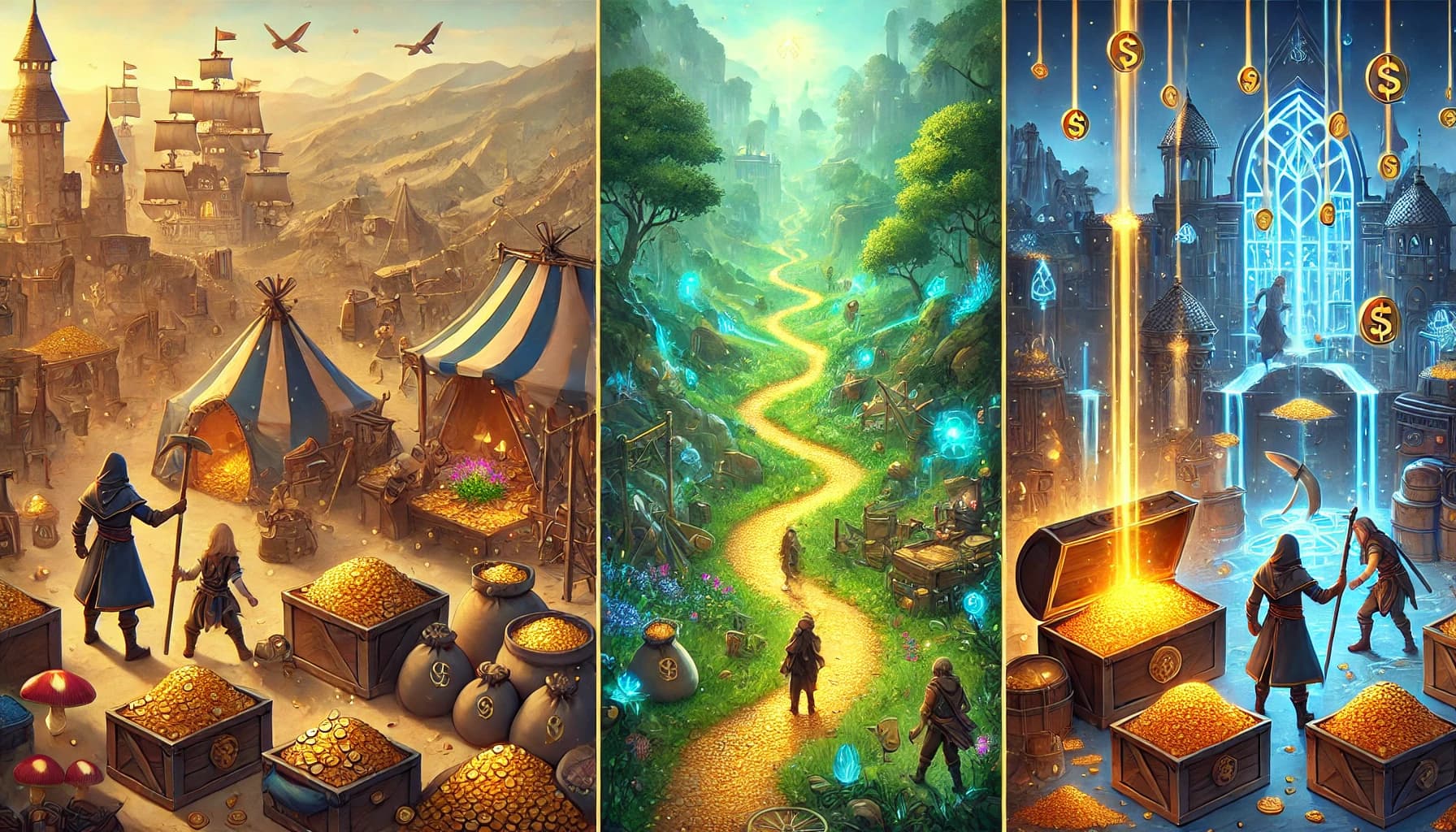
The Endgame Mindset Shift: It’s Not a “Final Zone,” It’s a Server Story 📖🔥
A lot of MMOs do endgame like this:
Max level → daily dungeon → weekly raid → repeat.
Ashes endgame is more like:
Max level → choose your life path → fight other players (directly or indirectly) for control of systems.
You’re not just farming stronger gear. You’re farming position:
- Position in your region (node influence, markets, routes)
- Position in your guild (roles, siege teams, crafters)
- Position in the economy (supply chains, high-demand goods)
- Position in PvP (reputation, duels, open-world dominance)
Bold line: In Verra, endgame is staying important. 👑

First 24 Hours at Max Level: Set Your Foundation ✅🧱
Before you chase the “big shiny” content, do these or you’ll feel behind forever.
Lock in your main playstyle
- Are you mostly: PvE progression, PvP fights, crafting/economy, naval, politics?
- Pick one “main lane” so your decisions make sense.
Stabilize your build
- Make sure your kit has: a reliable engage, a reliable escape/reset, and one “win button.”
- Don’t over-theorycraft—endgame rewards execution.
Clean up your logistics
- Your bags/stash should be organized for your lane (mats, gear sets, consumables).
- Know your “home hub” (where you sell, craft, meet your people).
Get socially plugged in
- Even if you’re a solo player: find a squad, a trade circle, or a guild.
- Endgame content is way smoother when you’re not doing everything alone.
Bold line: Max level isn’t “done.” It’s “ready.” 🏁
Your Endgame Pillars: Pick Two, Then Expand 🎯
If you try to do everything, you’ll feel busy and weak. If you pick two lanes, you feel powerful fast.
Here are the main pillars:
- Sieges & territory (node and castle conflict)
- World bosses & major events
- High-end PvE (dungeons/raids and dangerous zones)
- Competitive PvP (open world, wars, organized fights)
- Economy & caravans
- High-end crafting & artisan identity
- Naval endgame (ships, sea raids, ocean trade)
- Politics & leadership
- Housing/freeholds and long-term production
Bold line: Two lanes = progress. Eight lanes = stress. 😅
Sieges: The Real Endgame Calendar ⚔️🏰
If there’s one system that screams “this is endgame,” it’s sieges.
There are two headline types most players care about:
- Settlement/Node sieges (wars that can change a node’s fate)
- Castle sieges (guild-focused wars over major castles)
How to approach sieges without getting farmed
Show up with a job
Endgame sieges punish “random hero energy.” Pick a role:
- Frontline (soaks pressure, holds space)
- Backline damage (safe DPS and target focus)
- Control/peel (stops dives, protects healers/ranged)
- Support (keeps groups alive and fighting longer)
- Scout/harass (information and disruption wins wars)
Treat siege prep as a weekly project
The siege itself is the exam. Your week is the studying:
- gear upgrades,
- consumables stock,
- build tuning,
- group practice,
- and politics.
Don’t ignore the objective
Most siege losses come from tunnel vision:
- chasing kills,
- splitting groups,
- or fighting in the wrong location.
Bold line: In sieges, “top kills” is a flex. “Winning objectives” is power. 👑
World Bosses & Major Events: Big Loot, Bigger Drama 🐉🔥
World bosses are endgame magnets because they create natural conflict:
- multiple groups want the same target,
- at the same time,
- in the same place.
Some world bosses can have multi-step progression (clearing supporting enemies first) , which means the “fight” can be a whole mini-campaign, not just one pull.
How to farm bosses like a real endgame player
Get info first
- The strongest guild isn’t always the strongest fighter.
- The strongest guild is often the one with the best information.
Build a “boss-ready” comp
You don’t need perfect meta. You need:
- consistent damage,
- survival,
- control,
- and enough sustain to survive long fights.
Decide your risk level
Some nights you go full contest mode.
Some nights you play safer targets and build steady power.
Bold line: Boss hunting is half PvE and half social warfare. 😈
High-End PvE: Dungeons, Raids, and Dangerous Spaces 🗝️👑
Ashes aims to keep a lot of meaningful PvE tied to the open world feel, even when there are mechanisms to keep encounters from turning into a 200-player clown fiesta (like room locks or restrictions on encounters)
That means your PvE endgame is usually about:
- learning routes and safe timings,
- managing the risk of other players showing up,
- and making your group efficient enough to finish before things get messy.
Your PvE endgame routine (simple and effective)
- Pick 1–2 “main farm targets” (places you know well)
- Do 1 “progression night” (hard content, wiping is okay)
- Do 1 “money night” (fast clears, consistent value)
- Always extract clean (don’t keep pushing when you’re tilted)
Bold line: The best PvE group isn’t the highest DPS. It’s the cleanest decision-making. 🧠
High-End Crafting: Become the Player Everyone Needs 🔨✨
Crafting in Ashes is not “everyone maxes everything.” It’s built around specialization.
A character can only be Master in up to 3 professions and Grandmaster in up to 2 across artisan branches
That single rule turns crafting into real endgame value, because specialists become rare.
How to choose a profitable crafting identity
Pick one main identity:
- Supplier (gathers/processing lanes that feed everyone)
- Crafter (turns materials into high-demand finished goods)
- Premium crafter (chases rarity upgrades and specialized recipes)
- Trade/circulation player (moves goods where they’re worth more)
The “endgame crafter loop”
- Secure supply (your own gathering routes or trusted suppliers)
- Process efficiently (turn volume into valuable components)
- Craft high-demand items consistently
- Sell in the right region
- Reinvest into better recipes/tools/material quality
There’s also talk/design around deeper crafting systems like recipe/material choices affecting results and deconstruction/disassembly of rare drops yielding recipes you can replicate Ashes of Creation—which basically means: endgame crafting can be a whole progression game by itself.
Bold line: Endgame crafters don’t chase drops. They chase control of supply. 😈📦
Economy Endgame: Markets, Caravans, and Regional Power 💰🗺️
If you want endgame wealth, you have two main options:
- farm valuable things,
- or move valuable things smartly.
Caravans and regional trade are designed to matter because prices aren’t always equal everywhere—and moving goods creates risk and profit.
How to become rich without living in a dungeon
Play demand
- Sell what people burn daily (consumables, materials, upgrades)
- Sell what guilds need in bulk (siege-ready supplies)
Play location
- A “bad price” in one node can be a “great price” somewhere else.
- Learn 2–3 trade loops instead of chasing every rumor.
Use caravans when it makes sense
Treat caravans like a planned run, not a random gamble. They’re part of the endgame economy system and can create conflict and opportunity.
Bold line: Endgame money isn’t about one lucky flip. It’s about repeatable loops. ✅
Naval Endgame: The Ocean Is a Second Endgame Map 🌊⚓
A lot of players will ignore the sea… until the sea becomes the reason their guild is rich (or broke).
Naval content includes naval PvP between ships and naval PvE like open sea raids and sea-based bosses
There are also ship classes with larger ships aimed at raid-scale content (like galleons/capital/raid ships)
What naval endgame actually looks like
- guilds controlling harbors and sea routes,
- escorts for valuable shipments,
- hunting sea PvE targets,
- naval ambushes and counter-ambushes,
- and politics over who “owns” the ocean lanes.
How to get into naval content without being clueless
- Learn the basics: ship roles, crew coordination, safe travel habits.
- Join runs as crew before trying to “lead.”
- Don’t bring your entire net worth on your first serious ocean trip.
Bold line: The ocean rewards organized players more than any other part of the game. 🧠⚓
Competitive PvP: Fight Smart, Not Red-Name Stupid 😈🩸
Open-world PvP in Ashes isn’t “free for all with zero consequences.” The flagging/corruption system exists to discourage griefing and make meaningful PvP activities matter.
How to PvP as an endgame player (the good way)
- Fight in PvP themes/contexts that make sense (wars, caravans, sieges, contested zones).
- Avoid “bait kills” that create long-term penalties.
- Build for your actual PvP job:
- burst assassin,
- bruiser/duelist,
- ranged control,
- support/peel,
- or group fight commander.
Bold line: Endgame PvP is winning fights that matter—not collecting clips that cost you hours. 🧠
Politics Endgame: Mayors, Taxes, and Power Moves 🗳️🏛️
If you’ve never cared about MMO politics before, Ashes might change that.
Node growth, leadership, and policy can influence:
- what the node prioritizes building,
- how trade feels,
- and how the region’s culture/economy develops.
Castle conflicts are explicitly framed as major guild-driven events where organized PvP determines control , which naturally pulls politics into the core loop.
How to participate without becoming a full-time politician
- Support a node/guild vision that benefits your lane.
- Vote/participate with your own progress in mind (economy players vote differently than PvP players).
- Build relationships—endgame politics is mostly social trust.
Bold line: The strongest players don’t always have the best gear. They have the most allies. 🤝
Long-Term Goals That Keep Endgame Fresh 🎯✨
Here are “evergreen” long-term goals that don’t rely on one specific patch loop:
- Become a known specialist crafter (people DM you for orders)
- Build a trade network (suppliers + buyers + escorts)
- Earn a siege roster spot (main team, not bench)
- Control a regional farming route with your guild
- Master one PvP identity (duelist, shotcaller, support, scout)
- Become the “boss hunter” group on your server
- Build a naval crew that actually communicates
- Get involved in node leadership (even as a supporter, not necessarily mayor)
Bold line: Pick one legacy goal. It makes endgame feel like a journey again. 🏆
A Weekly Endgame Routine Template (Steal This) 📅✅
If you want structure without turning the game into a second job:
One progression night
- Hard content, learning, wipes allowed
- Goal: improve execution, not just loot
One economy night
- gather/process/craft/sell
- or planned caravan runs
One PvP night
- organized fights, wars, or contested objectives
- build practice and teamwork
One “server story” night
- politics, node activity, naval pushes, scouting, alliances
- the night where you do things that change the map
Then fill the rest with quick sessions:
- inventory cleanup,
- market listings,
- small upgrade goals,
- and helping your group.
Bold line: The best endgame routine is the one you can repeat without burning out. 😄
Common Endgame Traps (And Quick Fixes) 🚫
Trap: Doing everything
Fix: pick one main lane + one money lane.
Trap: Being guildless
Fix: even a small organized group beats a lone max-level player.
Trap: Chasing drama
Fix: contest when it’s smart, farm when it’s profitable.
Trap: Hoarding instead of investing
Fix: turn materials into upgrades and influence.
Trap: Fighting “for ego”
Fix: fight for objectives, routes, and outcomes.
Bold line: Endgame is a strategy game wearing MMO armor. 🧠⚔️
Conclusion: Your Endgame Is Your Identity 🏁
Max level in Ashes of Creation is where you stop being “a character” and start being a force—in PvE, PvP, economy, naval, or politics. The players who thrive aren’t the ones who grind the hardest. They’re the ones who:
- pick clear goals,
- build routines,
- join organized groups,
- and play systems like a long game.
Final bold line: Choose your lane, build your power, and write your server’s story. 😈📖