🌋 What Is the Ashes of Creation Node System?
At the core of Ashes of Creation is a single idea:
Nodes are the centers of civilization.
They’re pre-set points on the map with a Zone of Influence (ZoI) around them. Any time players earn XP inside that ZoI – killing mobs, gathering, questing, etc. – the node itself also gains XP.
At launch, there will be 85 regular nodes across the world, and they all start as untouched Wilderness. As players move into an area, that node slowly wakes up, appears, and starts evolving.
Why this matters:
Every node can become a unique city with its own buildings, markets, and services.
Different nodes unlock different content – dungeons, raids, events, housing, etc.
No two servers will have the same map of developed cities, because it all depends on where people decide to live and play.
So when people say “the node system is the game,” they’re not joking. Almost everything – housing, politics, PvP, even certain bosses – is tied to nodes in some way.
🗺️ Zones of Influence – How Your Actions Feed a Node
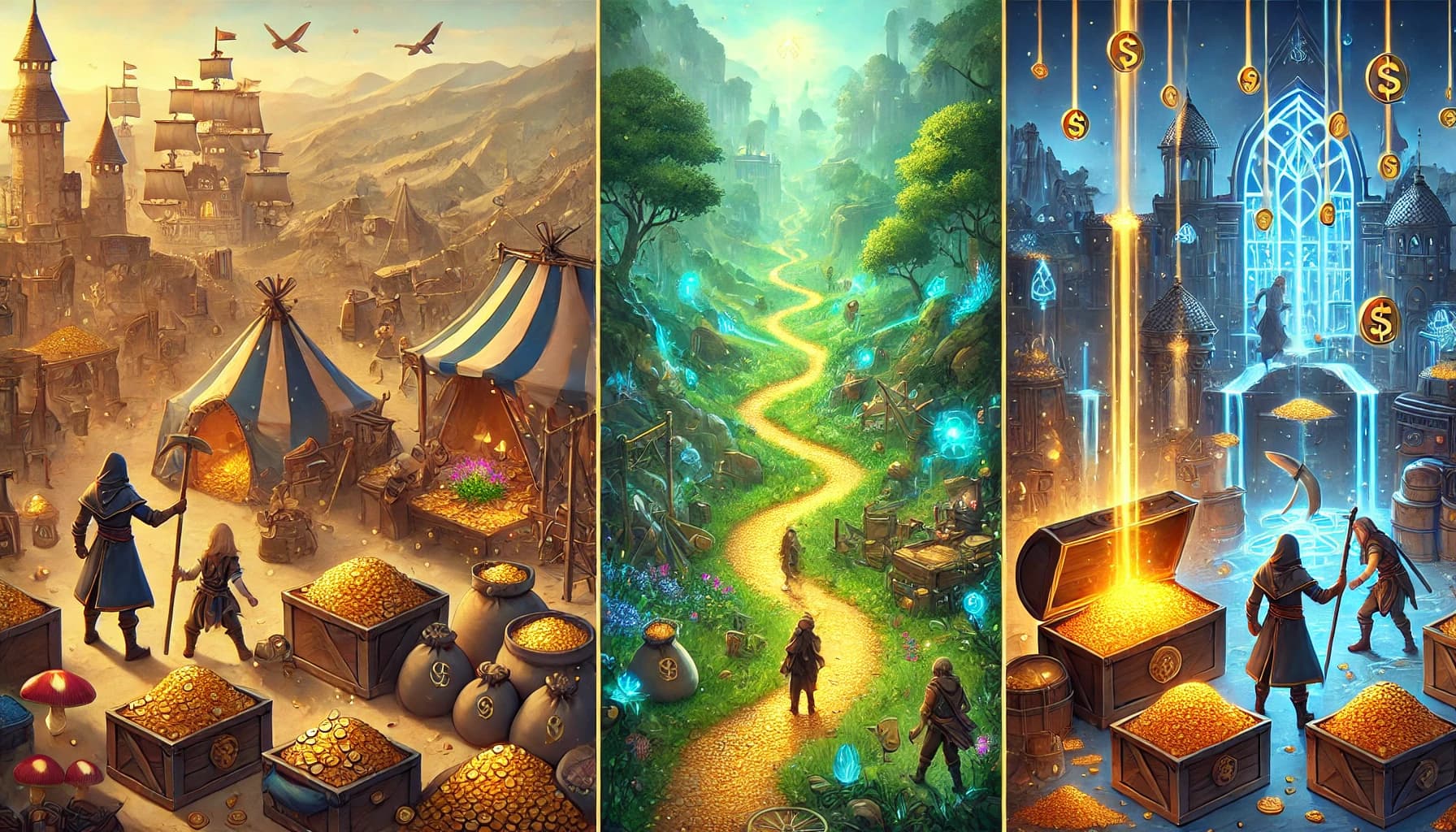
Each node has a Zone of Influence – basically the invisible region around it where player activity counts toward that node’s XP.
When you:
…you’re not just leveling your character – you’re also leveling the node of that area.
Some key points about ZoIs:
You’re always inside some node’s ZoI once you leave the starter areas.
As nodes level up, their ZoI expands, touching and competing with neighboring nodes.
That competition is where lockouts and vassal systems come in (we’ll get to that).
So even if you “don’t care about politics,” just playing the game naturally means you’re helping shape which towns exist (and which stay dead) on your server.
🏗️ Node Stages – From Wilderness to Metropolis
Nodes don’t go from nothing to huge city overnight. They evolve through seven stages:
Wilderness – No visible settlement yet.
Expedition – A small outpost/crossroads appears; first tiny sign of civilization.
Encampment – A more stable camp with a few structures.
Village – Real settlement: basic services, early housing, and player government.
Town – Bigger population, more buildings, more advanced services.
City – Major hub with strong infrastructure, specialized buildings, and influence.
Metropolis – One of the five biggest nodes on the entire server; a true capital.
Ashes101 even notes rough time scales like “few hours” for Expedition, “few days” for Village, and “many weeks” for Metropolis – assuming constant player activity.
As nodes level up, a few big things happen:
More buildings & services unlock – markets, guild halls, temples, crafting stations, etc.
The architecture changes based on which race contributed the most XP to that node.
At Village (3) and beyond, you get player governments, citizenship, housing, sieges, and vassal systems.
Think of it like this:
Stage 0–2: “Forming camp” phase
Stage 3–4: “Actual town with politics and players caring” phase
Stage 5–6: “Server-defining city people will fight wars over” phase
🏙️ Four Node Types – Military, Economic, Divine & Scientific
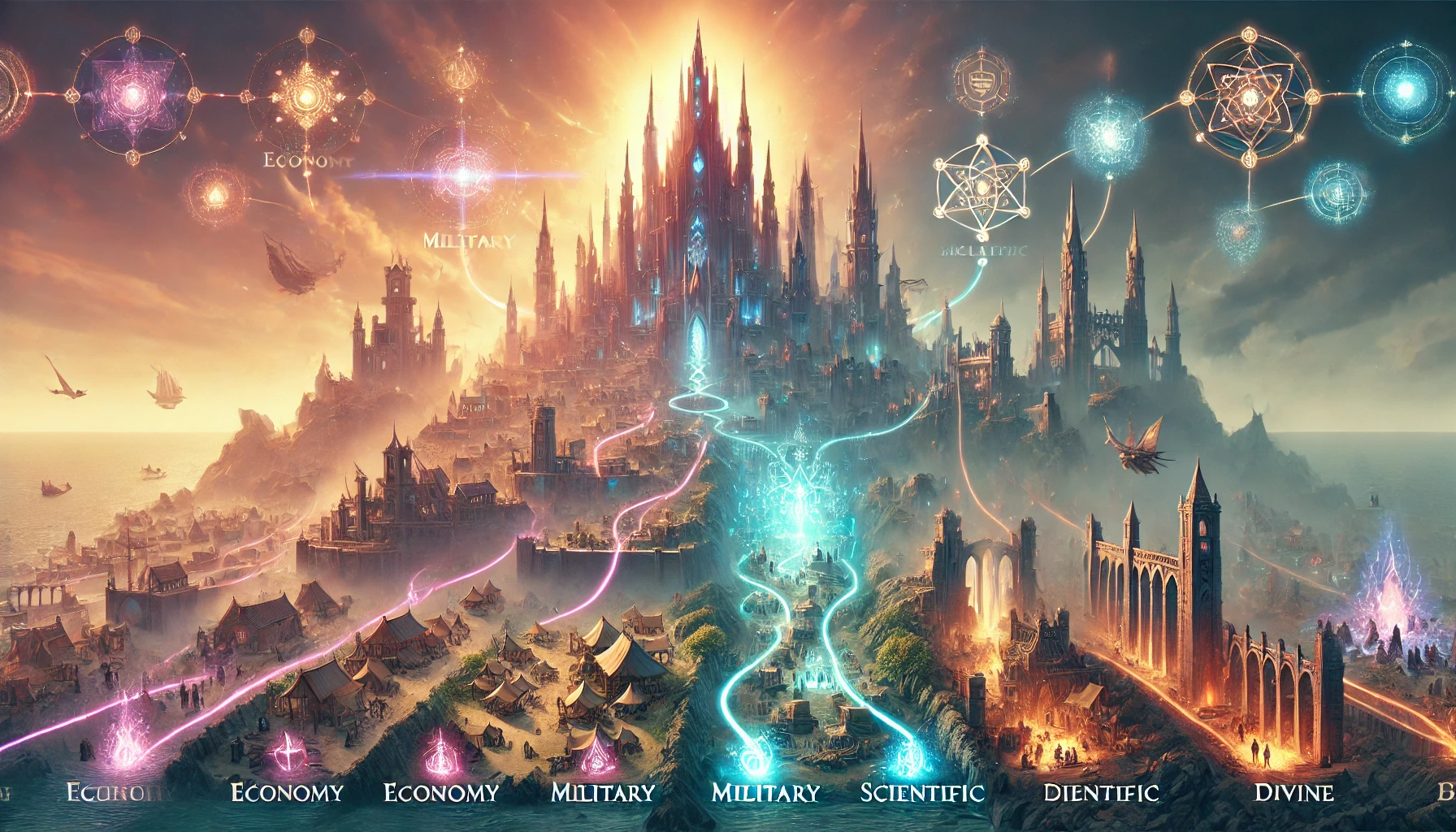
Not all nodes are the same. Each node has a fixed type that never changes, no matter how many times it’s destroyed or rebuilt:
Military Node – Focused on combat, defense, and PvP perks.
Economic Node – Trade, markets, caravans, and money-focused advantages.
Divine Node – Faith, temples, and religion-related systems.
Scientific Node – Research, technology, and advanced crafting or learning.
This type is decided by the node’s location, not by what players do. A certain spot on the map will always be, for example, an Economic node, even if it gets destroyed and rebuilt 10 times.
The type matters because it changes:
Which special buildings can appear (for example, marketplaces or universities).
What buffs, quests, and services the node offers to its citizens and neighbors.
How the mayor is elected (economic vs. scientific vs. military vs. divine systems).
On a big scale, you’ll end up with a world where some regions are trade superpowers, some are holy centers, some are war fortresses, and some are knowledge hubs – all based on which nodes players let grow.
🕸️ Vassal Nodes & Lockouts – Why One City Kills Another’s Progress
Now for the spicy part: nodes compete.
Starting at Stage 3 (Village), when a node levels up, it can block nearby nodes from advancing, and even turn them into vassals.
Here’s how it works:
Before Stage 3, nodes don’t lock each other out. Multiple Expeditions and Encampments can grow side by side.
At Stage 3+, if a node levels, it can prevent neighboring nodes from going past certain stages.
The stronger node becomes a Parent, and weaker nearby nodes become Vassals.
Vassal node rules:
A vassal node must always be at least one stage lower than its parent.
If a vassal node earns more XP than needed for its cap, that extra XP is funneled up to the parent.
Vassals can have their own vassals – creating a feudal-like pyramid of nodes under one metropolis.
Ashes101 explains that a single Stage 6 Metropolis can sit at the top of a chain of up to 13 nodes in its vassal web, and across the world there will be 65 vassal nodes and 20 buffer nodes that don’t fall into vassalage but can still grow.
Why this matters:
If your favorite nearby node is stuck at Stage 2, it might be because a neighbor at Stage 3+ is blocking it.
To unlock your node’s growth, players may decide to siege and destroy the blocking node.
This directly encourages political alliances, revenge wars, and map-shaping conflicts.
👑 Governments, Mayors & Citizenship – Who Controls a Node?
Once a node hits Village (Stage 3), it stops being just a fancy quest hub and turns into a player-run city. That’s when the mayor and government systems kick in.
Important pieces:
Mayor
Elected differently depending on node type (e.g., votes, economic power, etc.).
Can set taxes, choose which major buildings to construct, declare wars, and name the node.
Government & council
Different leadership positions with specific powers (like adjusting policies or managing projects).
Citizenship
You become a citizen by owning property (house, apartment, freehold) tied to that node’s ZoI.
Only citizens can vote in that node’s elections or run for mayor.
Taxes & vassal income
Citizens pay property taxes / rent that go into the node’s treasury.
Parent nodes get a cut of their vassal nodes’ taxes, and castles above them get a further slice.
Basically, once a node hits Stage 3, it becomes a political entity players fight to control, because:
The mayor can build or destroy important infrastructure.
Guilds want their people in charge to support their PvP or economic plans.
Alliances form around protecting or dismantling certain nodes.
☠️ How Cities Die – Sieges, Atrophy & World Resets
Nodes don’t just go up. They can come crashing down.
There are two main ways a node can lose progress or be reset:
1️⃣ Sieges
Players can declare node sieges against high-level nodes (Village and above). If attackers win, that node can be destroyed or de-leveled, potentially resetting all the way back to Wilderness.
When a parent node is destroyed:
Its vassal nodes can also be wiped or affected depending on the system (for Stage 0–2 “territory nodes”, destruction of the parent wipes them too).
The map around it changes – services vanish, content shifts, and new opportunities appear.
This is where the “cities die” part comes from. That giant capital you loved? If it loses a siege, it might literally disappear from the map for a while.
2️⃣ Atrophy (Decay)
Nodes need a certain level of ongoing XP activity to maintain their stage. If players abandon a node and no one plays in its ZoI, it can suffer atrophy, gradually losing its accumulated XP and potentially dropping in level or collapsing.
The higher the level, the more it needs constant activity – which keeps old content from staying dominant forever. This system makes sure that:
⚔️ Why Players Fight Over Nodes – Rewards, Power & Ego
So why do players go absolutely feral over certain nodes?
Because nodes control:
Access to content
Some dungeons, raids, and world events only appear if certain nodes are developed.
Economy & trade routes
Economic nodes can become trade hubs with better markets, caravan advantages, and money-making opportunities.
Housing & freeholds
You need certain node stages to unlock in-node housing and freeholds in the surrounding lands. If your city dies, your home is at risk.
Political dominance
Controlling a metropolis and its vassal web gives your alliance insane influence over a huge slice of the map.
Server identity & pride
“Our guild built that city.”
“Our alliance defends this trade hub.”
“We destroyed that rival metropolis at 3 AM.”
When you combine:
Limited Metropolis slots (only 5 in the whole world),
A web of vassal relationships,
And unique content tied to certain nodes…
…you get a system where map control is basically endgame.
🧭 How This Affects You as a New Player
You don’t need to be a hardcore shot caller or guild leader to care about nodes. Even as a casual or new player, the node system affects your daily gameplay.
Here’s how:
Where you level and quest decides which nodes grow.
The closest high-level node becomes your main hub for:
Repairing
Trading
Crafting
Socializing and finding groups
Your first home and citizenship tie you to a specific node, affecting:
Which elections you vote in
What buffs and services you get
Which wars and sieges matter to you
Simple beginner mindset:
Pay attention to which node names you see while you’re playing.
Watch which nearby nodes are leveling – look for stage-up events and city growth.
Decide with your friends or guild which node you want to invest in long-term.
When you’re ready, get housing and citizenship in a city you believe in, not just a random one.
📌 Example Scenario – From Tiny Camp to Server Capital
To make it easier, picture this:
On day one, your group picks a spot near a pretty area and starts questing there. At first, it’s all Wilderness.
After enough XP is earned in that ZoI, an Expedition pops up – just a little outpost with barely anything.
As more players arrive and grind there, it becomes an Encampment, then a Village (Stage 3):
A mayor is elected.
Basic housing opens.
You can become citizens.
Your guild decides: “This is our home.”
The city climbs to Town (4) and City (5):
The local architecture reflects your race contributions.
Custom buildings come online.
The area becomes a big trade and PvE hub.
Eventually, your node has a shot at Metropolis (6) – but a nearby city doesn’t want that:
If you hit Metro, you’ll get your own vassal web, tax income, and dominance.
They organize a siege to stop your growth.
The entire server shows up to fight around the walls of your city.
If you win, your metropolis goes live and reshapes your region.
If you lose, your city could be wiped, and everyone is forced to rebuild somewhere else.
That’s the fantasy Ashes of Creation is built around: player-made cities, player-made politics, and player-made destruction.
🏁 Conclusion – Learn to Read the Map, Not Just the Minimap
The node system is what makes Ashes of Creation different from most MMOs:
Cities aren’t permanent theme-park hubs – they’re player-grown.
The map isn’t static – it shifts as nodes level up, become vassals, get locked out, or die.
Power isn’t just gear and level – it’s also where your node sits, who runs it, and what it controls.
If you’re new to the game, you don’t need to memorize every detail, but you should understand:
Nodes level up from Wilderness → Expedition → Encampment → Village → Town → City → Metropolis.
From Stage 3 onward, nodes can lock out neighbors, create vassals, and become political hubs.
Sieges and atrophy can reset everything, giving the world a living, breathing feel.
Once you start thinking in terms of “Which node am I feeding right now?” instead of just “Where are the quests?”, you’ll see Ashes of Creation for what it really is:
Not just an MMORPG – but a shared world-building project where your XP, your friends, and your guild literally decide which cities exist on your server.