What “carrying” really means in solo queue (and why tilt is the real enemy)
In a coordinated team, “carry” can mean big damage numbers or insane highlight plays. In solo queue, carrying is usually quieter and more reliable:
- You reduce chaos by creating structure (who touches, where the team fights, when to reset).
- You prevent “free losses” (stagger deaths, wasted ultimates, chasing off objective).
- You turn won fights into objective progress (capture %, payload distance, checkpoint pressure).
- You keep your team’s mental stable enough to actually group and follow.
Tilt is the real enemy because it breaks all four. The moment teammates start arguing, they stop listening, stop grouping, and start “proving a point” instead of winning the round.
Your mindset for solo queue should be:
Win the next 30 seconds, not the argument.
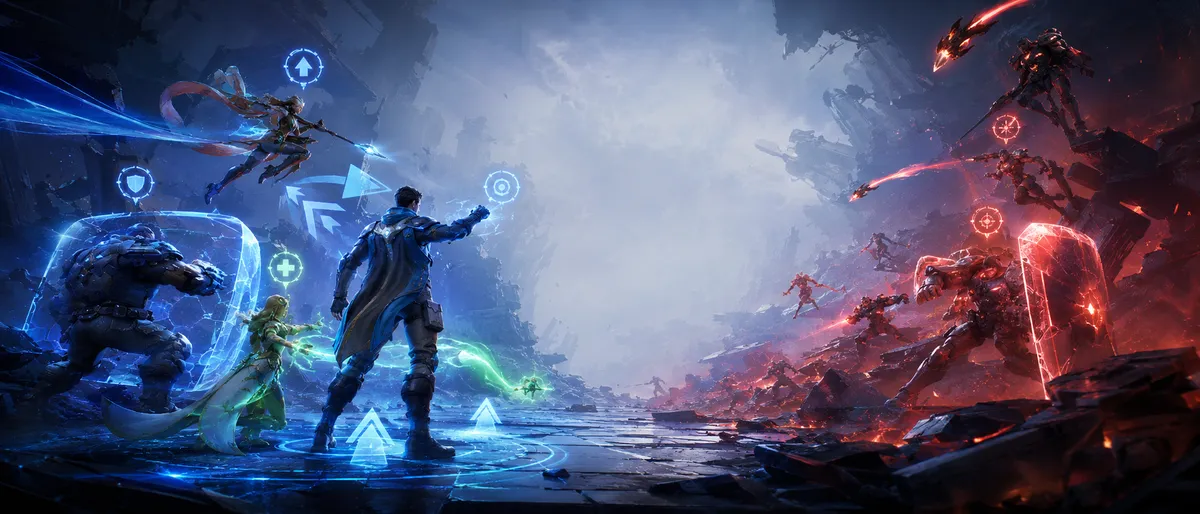
The Solo Queue Triangle: Structure, Tempo, and Conversion
If you want a mental model you can use every match, use this:
- Structure: Does our team have a frontline, healing, and at least one consistent damage source? If not, I fill the biggest missing piece.
- Tempo: Are we fighting together on time, or trickling? If trickling, I slow the game down with resets and regroup calls.
- Conversion: After we win a fight, do we take objective progress immediately? If not, I call “objective now” and physically go there first.
Most solo queue games are lost because one of these collapses. Most solo queue wins happen because one player quietly keeps these three alive.
The “one-role, two-heroes” rule that makes solo queue easier
You can’t control teammates, but you can control consistency. The fastest way to become consistent is shrinking your hero pool.
Pick:
- One main role you play most of the time.
- Two heroes in that role: one “safe” pick and one “problem-solver” pick.
Examples of what “safe” vs “problem-solver” means:
- Safe Vanguard: anchors objectives and protects your team even if they’re messy.
- Problem-solver Vanguard: peels divers or disrupts backlines when supports keep dying.
- Safe Duelist: consistent damage and easy value in main fights.
- Problem-solver Duelist: backline pressure or anti-clump tools for objective fights.
- Safe Strategist: survivable healing and steady value.
- Problem-solver Strategist: utility that stops dives or flips overtime touches.
When you swap heroes, it should solve a specific problem, not “I feel bad.”
Solo queue hero selection: fill the missing job, not the missing role
A team can have “two Strategists” and still lose because nobody touches. A team can have “two Vanguards” and still lose because nobody finishes targets. The job matters more than the label.
Before locking a hero, ask:
- Do we have someone who can touch and live?
- Do we have someone who can finish low targets reliably?
- Do we have someone who can keep the frontline alive?
- Do we have someone who can stop dives on our supports?
If the answer is “no” to any of those, your pick should fix it.
The safest way to carry with randoms: play for “easy value”
“Easy value” means value that doesn’t require perfect teamwork. In solo queue, prioritize heroes and playstyles that:
- Work from cover and don’t need deep flanks.
- Win objectives by existing in the right place at the right time.
- Have a clear job that teammates naturally benefit from (even if they ignore you).
This doesn’t mean you can’t play high-skill heroes. It means your default plan should not depend on strangers reading your mind.
Communication without tilt: 12 short callouts that win games
You don’t need speeches. You need short, repeatable callouts that help in the next 3 seconds.
Use these (voice, text, or pings):
- “Group up.”
- “Down two—reset.”
- “Touch now.”
- “Objective first.”
- “No chase.”
- “Focus support.”
- “Peel backline.”
- “Hold corner.”
- “Save ults next.”
- “One ult only.”
- “We win this—push.”
- “Wait for 6.”
Two rules that keep comms tilt-proof:
- Say “we”, not “you.”
- Call actions, not blame.
Ping discipline: how to get randoms to follow you without talking
In solo queue, pings are your best friend because they’re fast and non-toxic.
A simple ping system:
- Ping objective when it’s time to touch/escort.
- Ping one target right as you start shooting them (people instinctively join focus).
- Ping danger/flank once, then reposition (don’t spam; spam becomes noise).
- Ping “need help” early when a diver commits (early peel beats late peel).
The reason pings work: they require zero trust. Teammates don’t need to “believe in your plan”—they just react to what’s marked.
The single biggest solo queue skill: stopping stagger deaths
Stagger deaths are when teammates die one-by-one and you never take a clean 6v6 fight. This is how “winnable” games become unwinnable.
Your anti-stagger script:
- If you’re down two: “Down two—reset.”
- If someone is still fighting: “Leave if you can. Group.”
- If people keep trickling: “Wait 6.”
- When ready: “Go together.”
Even if only two teammates listen, your next fight becomes cleaner—and clean fights are how you climb.
Objective-first habits that win without relying on teammates
Solo queue carry is mostly objective discipline.
Use these habits every match:
- After a won fight: touch/capture/escort first, chase second.
- When the enemy is touching: kill the toucher or force them off.
- In overtime: touch in layers (first touch, second touch, third touch), not all at once.
- On defense: stall safely—touch from cover if possible, then back up before you stagger.
Most solo queue throws happen because people chase kills while the objective is unattended. Be the player who never forgets the objective exists.
How to carry as Vanguard in solo queue: “corner control + peel”
Vanguards are the most reliable solo queue carry role because you control space and touch timing.
Your Vanguard solo queue plan:
- Hold a corner near the objective so your team can fight from cover.
- Touch when needed to stop progress (especially in overtime).
- Peel when divers hit your supports—one saved support often wins the fight.
- Don’t overchase. Your value is owning the space that wins the round.
If you want a fast checklist:
- Did my supports live through the first engage?
- Did we have a safe space to fight?
- Did we touch at the right time?
If yes, you’re carrying—even if you didn’t top damage.
How to carry as Duelist in solo queue: “soft angles + finish”
Duelists carry best in solo queue when they stop trying to be a highlight montage and start being a converter: turning pressure into eliminations.
Your Duelist solo queue plan:
- Take a soft angle (side of your team, still in healing range).
- Shoot what your team is already shooting (focus creates fast kills).
- Prioritize finishing low targets over starting new duels.
- Reset early—dying alone is the fastest way to lose your teamfight.
The rule that keeps Duelists from feeding:
- If you used your escape tool to enter, you must play safer until it returns.
How to carry as Strategist in solo queue: “survive first, stabilize second”
Strategists carry in solo queue by making fights last long enough for chaos teammates to stumble into a win.
Your Strategist solo queue plan:
- Never die first. Play one step from cover.
- Keep your Vanguard stable during the engage window.
- Save one defensive tool every fight for dives.
- Use your big resources on objective fights, not random poke.
A simple support mantra:
If I’m alive, the team has a chance. If I’m dead, the fight is probably over.
Tilt-proof teamwork: how to ask for swaps without starting a fight
Most solo queue arguments start with “swap” requests. The fix is phrasing.
Better swap requests:
- “We’re dying fast—can we get one more heal or shield?”
- “They’re diving backline—can we get a peeler or someone to watch them?”
- “We need touch—can one tank play objective with me?”
- “We’re not finishing—can we focus supports first?”
Avoid:
- “DPS swap.”
- “No heals.”
- “Tank diff.”
- “Why are you playing that?”
If you ask for a problem to be solved, people cooperate more. If you accuse a role, people defend themselves.
The Solo Queue Carry Framework: 5 moves that win more games
Use these five moves repeatedly:
- Win the first clean fight
- Group up. Fight together. Don’t trickle.
- Convert immediately
- Capture/escort/hold space. Don’t chase.
- Set up the next fight
- Take high ground, hold the next corner, watch the flank.
- Track the enemy “big moment”
- If they haven’t used a huge ultimate in a while, expect it. Save an answer tool.
- Reset early
- When a fight is lost, leave before you die late. Late deaths lose the next fight too.
If you only do these, you will climb.
When to carry with calm vs when to carry with aggression
Solo queue isn’t always “play safe.” Sometimes you must be the one who starts momentum. The trick is knowing when.
Carry with calm when:
- your team is split and trickling
- you’re down ultimates
- your supports are getting farmed
- you’re defending a checkpoint/last objective
Carry with aggression when:
- you just got a pick
- you have an ultimate advantage
- the enemy used their big defensive tool and it’s down
- it’s overtime and you must force the fight now
Aggression without timing is feeding. Aggression with timing is carrying.
Ultimate economy in solo queue: the “one ult per fight” rule
Random teams often waste ultimates. You can’t control everyone, but you can control the rhythm.
A simple solo queue rule:
- Use one big ultimate per real fight unless it’s overtime or a must-win checkpoint fight.
Your anti-waste calls:
- “One ult only.”
- “No more ults—we win clean.”
- “Save for overtime.”
- “Commit now—stack if needed.” (only for must-win fights)
If you’re the only one following this, you’ll still gain advantage because you’ll have ultimates for the next fight when others don’t.
Team-Up value in solo queue: use it on “forced fights”
Team-Ups are strongest when the enemy can’t just walk away.
Best solo queue timing windows:
- Overtime touches
- Checkpoint fights in Convoy
- Retakes in Domination at high percentage
- The first real engage in Convergence capture
Short Team-Up callouts that don’t annoy teammates:
- “Team-Up next fight.”
- “Use Team-Up on touch.”
- “Play near me—Team-Up ready.”
Mode playbooks for solo queue
Solo queue Domination: win by retakes and touch timing
Domination is about controlling the mission area and not trickling.
Your Domination solo queue plan:
- If you lose the point: group for retake (don’t run in alone).
- Retake with two lanes (main + side angle), even if the side lane is just one person.
- Save a big resource for overtime touches.
- After winning a fight: hold corners around point, not just the center.
One callout wins Domination constantly:
Solo queue Convoy: win by corners, escort discipline, and contest timing
Convoy is where solo queue teams throw by forgetting the payload.
Attacking plan:
- Always have someone escorting when safe.
- After a wipe: escort fast, then push up to hold the next corner.
- Don’t chase into side rooms while payload sits still.
Defending plan:
- Touch from cover when possible to stop progress.
- If the fight is lost: back up early to the next corner (avoid stagger).
- Spend resources to stop checkpoint fights—they swing time hard.
Two callouts that win Convoy:
- “Someone escort.”
- “Hold corner.”
Solo queue Convergence: treat capture and escort as two different games
Most solo queue throws happen at the phase swap.
Capture plan:
- Don’t trickle. One clean push beats three half pushes.
- Win one fight, then stand in the area long enough to actually capture.
Escort plan:
- Reposition immediately after capture; don’t celebrate in the open.
- Hold the next corner before the enemy returns.
- Save resources for the first checkpoint fight.
One callout that prevents throws:
Dealing with “bad comps” without tilting
You will get matches with:
- no Vanguard,
- no Strategist,
- or five Duelists.
You can still win if you choose the right adaptation.
If your team has no Strategist:
- play closer together
- fight from cover
- avoid long fights
- pick a self-sufficient hero and prioritize objective timing
If your team has no Vanguard:
- pick a hero that can touch in emergencies
- stop fighting in the open
- focus on fast picks and quick conversions
If your team has too many supports:
- make sure at least one damage hero can finish
- don’t overlap defensive ults
- win by objective control and long-fight superiority
If your team has too many Duelists:
- be the “adult in the room”: touch timing, flank watch, objective conversion
- take soft angles, not deep solo flanks
- stop the stagger loop with regroup calls
The key is staying practical: solve the biggest missing job and stop bleeding easy deaths.
The “tilt firewall”: how to protect your mental and keep teammates calm
Solo queue climbing is as much mental management as mechanics. You don’t need positivity spam. You need a firewall that stops the match from turning into a meltdown.
Your tilt firewall habits:
- Mute toxic chat early if it distracts you.
- Use short neutral callouts instead of debates.
- Compliment actions, not players: “Nice hold,” “Good touch,” “Great peel.”
- After a lost fight, don’t explain why—just call: “Reset. Next fight.”
- If you feel anger rising, shift to a mechanical task: “soft angles only,” “one-step-to-cover,” “no stagger.”
You can’t force strangers to be calm, but you can avoid feeding the fire.
A simple 15–30 minute solo queue improvement routine
If you want fast progress, do this before Ranked:
- 5 minutes: tracking while strafing (smooth aim)
- 5 minutes: corner peeks (peek → shoot → hide)
- 5 minutes: one hero combo loop (enter → trade → exit)
- Then one goal for the session:
- “No first deaths,” or
- “Objective conversions,” or
- “Down two—reset callouts.”
Small daily discipline beats random grinding.
BoostRoom: carry more games without burning out
Solo queue is where most players plateau because they try to “aim harder” instead of building a system that works with randoms. BoostRoom is built for players who want consistent results without turning every session into stress.
BoostRoom helps Marvel Rivals players:
- build a small hero pool designed for solo queue consistency
- learn tilt-proof communication that gets randoms to group more often
- master objective conversion (win fight → capture/escort → set up next)
- improve ultimate and Team-Up timing so big resources land on must-win fights
- stop repeating the same solo queue losses (stagger deaths, overchasing, dying first)
If you want to climb while staying calm, the secret isn’t “perfect teammates.” It’s a repeatable plan—and BoostRoom is designed around making that plan automatic.
FAQ
What is the fastest way to rank up in Marvel Rivals solo queue?
Stop stagger deaths, fight 6v6 more often, and convert every won fight into objective progress. Those three habits win more games than any hero pick.
What role carries solo queue the most?
Vanguards and Strategists are the most consistent because they control objective touches and team survival. Duelists can carry hard too, but they rely more on clean conversions and not feeding on deep flanks.
How do I carry without tilting my team?
Use neutral short callouts (“Down two—reset,” “Objective now,” “Focus support”), avoid blame language, and keep requests framed as solving a problem, not accusing a teammate.
What should I do if my team refuses to group?
Play a hero that gets value without deep coordination, take soft angles near the objective, and focus on win conditions: touching, stalling, and finishing low targets during objective fights.
Should I fill roles or play my best hero in solo queue?
If your best hero still covers a key missing job (touch, healing, peel, finishing), play it. If your team is missing something essential (like any sustain or any touch), filling that job often wins more games than forcing comfort picks.
How do I ask for swaps without starting an argument?
Ask for what the team needs: “Can we get one more heal/shield?” “Can someone peel divers?” “We need a toucher.” Avoid “swap” accusations like “DPS swap.”
When should I stop queueing Ranked for the session?
If you feel yourself getting tilted or you’re repeating the same mistake (dying first, overchasing, staggering), take a break or switch modes. Bad mental leads to bad decisions, and bad decisions create losing streaks.



