Path of Exile 2 Beginner Guide: Everything New Players Need to Know
Path of Exile 2 is not a game where your character becomes strong only because you level up. Levels help, but your real power comes from the combination of skills, support gems, passive tree choices, gear stats, defenses, flask use, movement, and understanding enemy mechanics. This is why two players using the same class can feel completely different. One character may destroy bosses smoothly, while another struggles against normal enemies, even if both are the same level.
The most important beginner lesson is simple: Path of Exile 2 rewards planning, but it does not require perfection from the start. Your first character is partly a learning experience. You will test skills, replace gear often, make passive tree choices, discover boss patterns, and slowly understand what your build needs. The goal is not to play perfectly. The goal is to make smart enough choices that your character keeps improving instead of hitting a wall.
Unlike many simpler RPGs, Path of Exile 2 does not lock every skill to one class. Your class gives you a starting position, natural attribute direction, early weapon identity, and Ascendancy options, but the skill system is flexible. This means your class matters, but your build matters even more. A beginner should think less about “best class forever” and more about “what playstyle do I understand and enjoy?”
A smooth beginner experience usually comes from choosing one main damage skill, supporting it properly, keeping your weapon or spell scaling updated, investing into defenses, and replacing weak gear before it becomes a problem. Most beginner struggles come from doing the opposite: using too many damage skills without support, ignoring life and resistances, keeping an old weapon for too long, or spending passive points randomly across unrelated damage types.
Path of Exile 2 is also still a game that changes with updates. New classes, Ascendancies, support gems, crafting systems, campaign improvements, and endgame changes can shift what feels strongest. That is why this guide focuses on durable beginner principles instead of only short-term meta picks. A strong beginner rule remains useful even when balance changes.
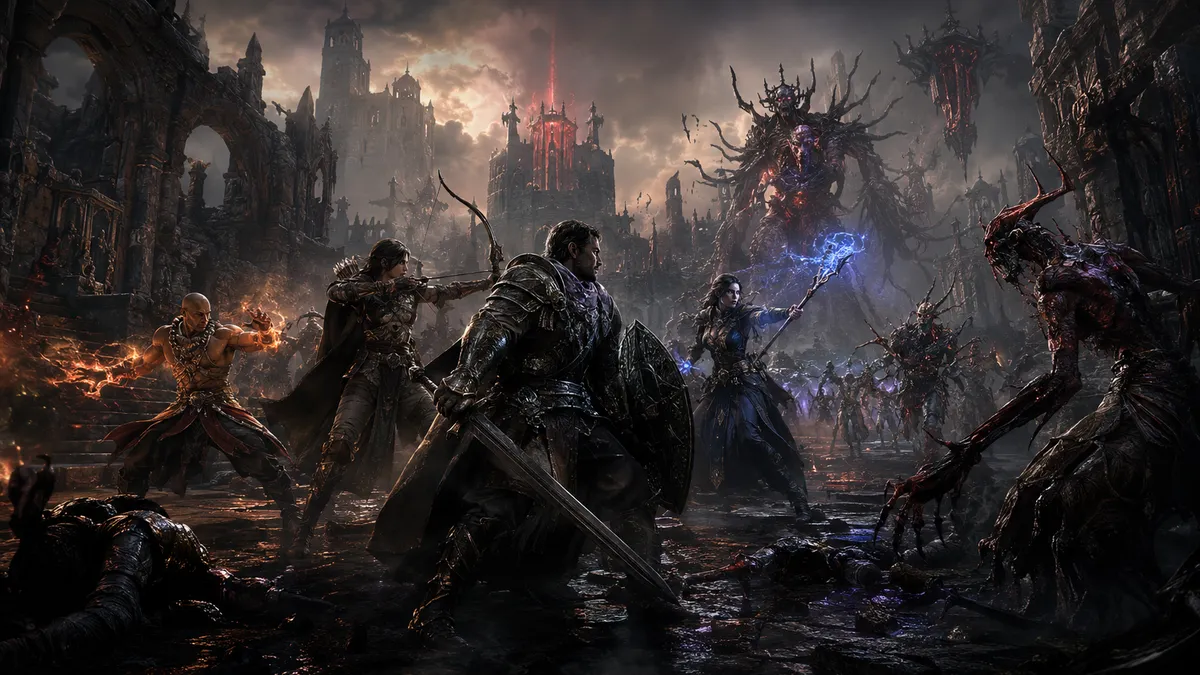
What Kind of Game Is Path of Exile 2?
Path of Exile 2 is an online action RPG set in the dark world of Wraeclast. You fight monsters, collect loot, upgrade your build, defeat bosses, and eventually move into endgame systems where maps, league mechanics, bosses, crafting, and long-term farming become the main focus.
The game is built around depth. Skills are not just buttons on your character sheet. They are gems that can be upgraded and modified. Items are not just higher-level stat sticks. They can have prefixes, suffixes, base types, sockets, quality, rarity, and modifiers that change how your character performs. The passive tree is not just a small talent menu. It is a huge network of stat bonuses, build-defining notables, and special choices that shape your character.
For beginners, this depth can create decision stress. You may worry that every choice will ruin your build. In reality, early choices are usually fixable, and the first few acts are designed to teach you. You should read tooltips, compare item stats, test support gems, and learn why something works instead of blindly equipping whatever has the highest number.
Path of Exile 2 also has a more deliberate combat style than many action RPGs. Bosses have dangerous attacks, movement matters, dodge roll timing matters, and standing still too long can punish you. Even strong builds need to respect mechanics. This makes the game feel difficult at first, but it also makes improvement satisfying. You do not only win because your numbers are bigger. You win because your build, gear, and gameplay improve together.
Best Beginner Mindset Before You Start
The best mindset for a new Path of Exile 2 player is to treat your first character as a serious learning character, not as a perfect endgame machine. You can absolutely reach far with your first build, but you should expect to learn through mistakes. That is normal.
Do not try to understand every system on day one. Learn the game in layers. First, learn movement, basic attacks, skill gems, and gear replacement. Then learn support gems, damage scaling, and defenses. After that, learn crafting, trading, boss mechanics, and endgame. Trying to absorb everything at once makes the game feel harder than it really is.
A good beginner also reads. Path of Exile 2 gives many clues through item text, gem tags, passive descriptions, and enemy behavior. If a support gem says it supports projectile skills, do not expect it to improve a melee slam. If a passive gives increased cold damage, it will not help a pure physical attack unless your skill converts or deals cold damage. If a weapon has much higher damage than your old one, it may be a major upgrade even if it has fewer fancy modifiers.
Another important mindset is not hoarding every item. Beginners often fill their stash with random magic items, low-level rares, and crafting pieces they never use. Keep useful currency, good rare items, build-relevant uniques, and gear with strong life, resistances, movement speed, or damage stats. Sell or discard weak items so your stash stays manageable.
Most importantly, do not be afraid to ask for help, use guides, or get support when you feel stuck. Path of Exile 2 is built around knowledge. Players who learn faster progress faster. BoostRoom is useful for players who want smoother progression, faster help with difficult content, and support when campaign bosses, gearing, leveling, or endgame systems start feeling too slow.
Choosing Your First Class in Path of Exile 2
Your class choice decides where you start on the passive tree, which attributes are easiest to reach, what weapons and skills feel natural early, and which Ascendancy classes you can choose later. It does not mean you can only use one type of skill forever, but it does shape your easiest path.
For a beginner, the best class is usually the one with the clearest playstyle. If you like ranged attacks, Ranger or Mercenary-style gameplay can feel natural because you can damage enemies from distance. If you like spells, Sorceress or Witch-style gameplay can be easier to understand because your damage often comes from gem levels, spell stats, minions, elements, or chaos effects instead of weapon damage alone. If you like melee, Warrior, Monk, Huntress, or Druid can feel exciting, but melee often asks you to pay more attention to positioning, enemy attacks, and defensive layers.
The current Early Access roster has expanded over time, with major updates adding classes such as the Huntress and Druid. The Huntress focuses heavily on spear-based combat and agile attacks, while the Druid adds shapeshifting and primal-style skills. These classes can be fun, but new players should still choose based on comfort rather than popularity. A popular class does not help if you dislike its rhythm.
A simple way to choose your first class is to answer one question: how do you want to deal damage?
If you want to shoot enemies from a distance, pick a ranged attack class. If you want to cast elemental spells, pick a spell-focused class. If you want minions to help you fight, pick a minion-friendly class. If you want heavy hits and close combat, pick a melee class. If you want shapeshifting and nature-style abilities, Druid may fit you. If you want spear mobility and tactical melee-ranged hybrid combat, Huntress may fit you.
Do not choose only because someone says a class is “best.” Balance changes, but playstyle preference stays important. A build you enjoy is easier to learn, easier to improve, and more likely to keep you playing long enough to reach endgame.
Understanding Skill Gems
Skill gems are one of the most important systems in Path of Exile 2. Your active skills come from gems, not from a basic class ability list. A skill gem gives you an ability such as an attack, spell, minion, curse, movement skill, or other build tool.
Each skill has tags. These tags are extremely important because they tell you what can scale the skill. A skill might have tags such as projectile, fire, cold, lightning, melee, spell, attack, minion, area, physical, or chaos. When you choose passives, support gems, and gear, you want those bonuses to match your main skill’s tags.
For example, if your main skill is a projectile attack, bonuses to projectile damage, attack damage, weapon damage, critical strike, attack speed, or the element your skill uses may help. If your main skill is a spell, weapon physical damage usually does not help unless the skill has special scaling. If your main skill is a minion skill, bonuses to your own attack damage may not help your minions unless the wording specifically applies to minions.
A beginner mistake is swapping skills constantly without understanding scaling. Testing is good, but your character becomes stronger when you focus. Choose one main damage skill that feels good. Then build around it. Use other skills for utility, crowd control, mobility, exposure, curses, buffs, or single-target support, but avoid spreading your investment across five unrelated damage skills.
You should also keep your skill gems upgraded. Higher gem levels often increase damage or effectiveness, especially for spells and minions. If your damage suddenly feels low, check whether your skill gem can be improved, whether your supports are useful, and whether your weapon or relevant gear is outdated.
Understanding Support Gems
Support gems modify active skills. They can increase damage, add extra projectiles, change area behavior, improve speed, add utility, or create new interactions. Support gems are where builds become creative.
The beginner rule for supports is simple: every support attached to your main skill should clearly help that skill do its job. If your main skill is used for clearing packs, you may want supports that improve area, projectiles, speed, or chaining behavior. If your main skill is used for bossing, you may want supports that increase single-target damage, ailment strength, critical scaling, or sustained damage.
Do not use support gems only because they look powerful. Read the downside too. Some supports increase damage but reduce speed. Some improve area but lower single-target damage. Some change how a skill behaves so much that it may feel worse for your build. The best support is not always the one with the largest damage number. It is the one that makes your skill perform better in real combat.
Support gems also have requirements. They need to be valid for the skill they support. If a support does not apply, it will not help. Always check whether the support is actually affecting your selected skill. A beginner can waste a lot of power by using supports that look right but do not match the skill’s tags.
A practical beginner setup is to have one strong clearing skill, one strong bossing skill if needed, one mobility option, one defensive or utility option, and any buffs or minions your build needs. Keep the setup simple until you understand why each skill is there.
Understanding the Passive Skill Tree
The passive skill tree looks huge, but you do not need to understand the entire tree. You only need to understand the area around your class and the path your build wants to take.
Passive points should support your main plan. If you are using fire spells, look for spell damage, fire damage, cast speed, energy shield, mana, life, and other relevant bonuses. If you are using bows, look for projectile damage, attack speed, bow damage, critical stats, evasion, life, and movement-related bonuses. If you are using minions, look for minion damage, minion survivability, spirit-related options, defensive stats, and useful utility.
Do not travel too far across the tree too early unless you know exactly why. Long paths can be powerful later, but beginners often lose power by spending too many points on travel nodes and not enough on meaningful damage or defense. In the campaign, efficient nearby nodes are often better than chasing a distant exciting node.
You should also balance offense and defense. A common beginner mistake is taking damage nodes only. This works for a while, then bosses start killing you too quickly. Another mistake is taking defense only, which can make fights drag on so long that you die anyway. A good campaign build needs both: enough damage to kill enemies quickly and enough defense to survive mistakes.
When choosing passives, ask these questions:
Does this improve my main skill?
Does this improve my survivability?
Does this solve a real problem my character has right now?
Does this path lead to a strong notable or build-defining mechanic?
If the answer is no, skip it for now.
Attributes, Requirements, and Scaling
Path of Exile 2 uses core attributes that affect requirements and build direction. Strength, Dexterity, and Intelligence are not just flavor stats. They often determine which gems, weapons, and gear you can use. Some builds naturally need one attribute, while hybrid builds may need two.
Beginners should pay attention to attribute requirements before upgrading gems or swapping gear. Sometimes you find a great item but cannot equip it because you lack Dexterity or Intelligence. Sometimes you upgrade a gem and suddenly cannot use it after changing gear because your old item had attributes you forgot about.
Do not ignore attribute stats on gear. A ring, amulet, belt, or armor piece with the right attribute bonus can allow your whole setup to work. However, do not overinvest into attributes you do not need. Every stat should have a reason.
Scaling is another key idea. Your build becomes strong when multiple parts of your character scale the same thing. If you use lightning projectiles, then lightning damage, projectile damage, attack speed, shock effect, critical chance, and weapon damage may all work together depending on the skill. If your gear scales cold spells while your passive tree scales physical attacks, your build becomes split and weak.
The best beginner builds are focused. You should be able to describe your build in one clear sentence, such as: “I use lightning spells from range,” “I use minions to fight while I apply curses,” “I use bow projectiles with high attack speed,” or “I use melee slams with high physical damage and armor.” If your build cannot be described clearly, it may be too scattered.
Gear Basics for New Players
Gear is one of the biggest power sources in Path of Exile 2. A strong item can make the campaign feel smooth, while outdated gear can make even normal enemies feel dangerous.
For beginners, the most important gear stats are usually damage, life, resistances, movement speed, and relevant defenses. Damage depends on your build. Attack builds care a lot about weapon damage. Spell builds often care more about gem levels, spell damage, cast speed, elemental damage, or specific modifiers. Minion builds care about minion stats and spirit-related setup. Defense builds care about life, armor, evasion, energy shield, block, deflection, resistances, and other mitigation layers.
During the campaign, replace gear often. Do not keep a low-level weapon just because it has one nice modifier. If you are an attack build, weapon upgrades are extremely important. A higher damage weapon can be a bigger upgrade than several passive points. If you are a spell build, check modifiers that increase the level or damage of your spells. If you are dying often, check whether your armor pieces have useful life and resistances.
Movement speed on boots is very valuable. It helps you move through zones faster, dodge boss attacks more easily, and reduce campaign time. Many beginners underestimate movement speed because it does not look like damage, but it improves both survival and efficiency.
Rings, amulets, and belts are often great places to fix resistances and attributes. If your damage feels fine but you die quickly to elemental attacks, your jewelry may be the easiest place to solve the problem.
Item Rarity and What to Pick Up
Items can come in different rarities, and each rarity has a different purpose. Normal items have no modifiers. Magic items have fewer modifiers. Rare items can have multiple modifiers and are often your main upgrades during the campaign. Unique items have special fixed effects that can be powerful, but they are not automatically better than rares.
A common beginner mistake is equipping a unique item just because it is unique. Some uniques are amazing for specific builds. Others are leveling tools. Some are weak if your build cannot use their special effect. Always compare what the item actually gives you. A rare helmet with life and resistances may be better than a unique helmet with a cool effect but no useful defense.
Pick up rare items that match your build or important slots. Weapons, boots, rings, amulets, belts, and body armor are usually worth checking. You do not need to pick up every item forever. As you progress, become more selective.
Good beginner item signs include increased damage for your skill type, added damage for attack builds, life, resistances, movement speed, useful attributes, spirit when needed, and defensive values that match your build. Bad signs include modifiers that do not affect your skills, low-level bases far behind your current area, or items that reduce your defenses without giving meaningful power.
Currency and Crafting Basics
Path of Exile 2 uses currency items for crafting and trading. These items can modify gear, add modifiers, change item rarity, improve quality, or perform other crafting functions. Beginners often make two opposite mistakes: they either waste all currency randomly or hoard everything and never improve their gear.
The best approach is balanced. Use common crafting currency to fix real problems during the campaign, but save rarer currency until you understand its value. If your weapon is terrible, using crafting to improve a good base can be worth it. If your boots have movement speed and one open weakness, improving them may be useful. If you find a good rare with strong life and resistances, enhancing it can help you progress.
Do not craft randomly on bad bases. A base item matters. If the base is too low level or wrong for your build, currency may be wasted. Try to craft on items that already have at least one or two useful stats.
A practical beginner crafting rule is this: craft to solve a problem, not because you are bored. If your damage is low, improve your weapon or skill-related gear. If you die to elemental damage, improve resistances. If you move too slowly, look for better boots. If you cannot use a gem, fix attributes. Every craft should have a purpose.
The game has continued adding and changing crafting systems through updates, so beginner players should expect crafting depth to grow as they reach higher content. You do not need to understand every advanced system early. Learn simple item improvement first, then study deeper crafting once you have a stable character.
Campaign Progression Tips
During the campaign, your goal is to keep moving while upgrading enough to avoid walls. You do not need to full-clear every zone. Explore enough to find objectives, quests, useful loot, and important rewards, but do not spend too much time killing every monster in every corner unless you enjoy it.
If you become underleveled, slow down and kill more monsters. If you are overleveled and your gear is fine, keep progressing. Campaign speed is about balance. Rushing too hard can leave you weak. Clearing too much can waste time.
Always pay attention to quest rewards. Some quests unlock important systems, passive points, respec options, crafting features, or progression tools. Missing these can make your character weaker than expected. When you enter a new act, check vendors for useful skill gems, support gems, weapons, and gear upgrades. Vendors can sometimes sell items that are better than what you found.
Bosses are major learning points. If a boss kills you repeatedly, do not instantly assume your build is ruined. Watch the attack patterns. Many bosses have clear wind-ups, dangerous zones, or phases that become easier once you understand them. Improve your gear if needed, but also improve your movement.
Before a difficult boss, check these basics: your main skill has proper supports, your weapon or spell gear is not outdated, your flasks are useful, your resistances are not terrible, your boots have movement speed if possible, and your passive points are not scattered. Fixing one or two of these can make a fight much easier.
How to Survive Bosses
Boss fights in Path of Exile 2 are designed to punish panic. New players often die because they keep attacking when they should move, dodge too early, or stand inside dangerous effects. Damage matters, but patience matters too.
The first boss rule is to learn before forcing damage. Spend a few attempts watching what the boss does. Notice which attacks are small, which attacks are deadly, and which attacks leave the boss open afterward. Most bosses have windows where you can safely attack. Your job is to survive until those windows appear.
The second rule is to dodge with purpose. Do not spam dodge roll randomly. If you dodge too early, you may still get hit by the real attack. If you dodge into danger, you may make the fight worse. Dodge sideways or behind enemies when possible, and avoid rolling into corners.
The third rule is to keep moving, but not mindlessly. Running in circles without attacking can make fights last too long. Standing still too much gets you punished. Good bossing is a rhythm: move, attack, dodge, reposition, attack again.
The fourth rule is to upgrade defenses. If every hit nearly kills you, your gear may be the problem. Add life, resistances, armor, evasion, energy shield, or other defensive layers that fit your build. A dead character deals no damage.
If a boss blocks your progress and you do not want to spend hours struggling, BoostRoom can help with difficult campaign bosses, progression support, and smoother leveling assistance. Many players use help not because they cannot learn, but because they want to save time and continue enjoying the game.
Flasks and Recovery
Flasks are easy to overlook, but they are a major part of survival. Your life flask can save you from mistakes, but only if you use it at the right time. Do not wait until you are almost dead if damage is still coming. Use recovery early enough to survive the next hit.
As you level, replace old flasks. A low-level flask may recover too little to matter. Check vendors and drops for stronger flask bases. Better flasks can make a huge difference in campaign comfort.
Utility effects also matter. Depending on your setup and available options, flasks can help with defense, speed, recovery, or specific problems. Beginners should at least understand that flasks are part of gear progression, not just emergency buttons.
Do not enter hard fights with empty flasks if you can avoid it. Kill nearby monsters to refill charges when needed. In long fights, manage flask use carefully. Panic-spamming flasks can leave you without recovery when the boss enters a more dangerous phase.
Resistances and Defensive Layers
Resistances reduce incoming elemental damage, and they become more important as the game gets harder. Beginners often focus only on damage and then wonder why fire, cold, or lightning attacks destroy them. If a boss or zone deals heavy elemental damage, poor resistances can make the fight feel unfair.
Life is also important. Even if you have good damage, a tiny life pool makes mistakes deadly. Many rare gear pieces can roll life, and life passives can help keep your character stable.
Different classes and builds may lean into different defensive layers. Armor helps against physical hits. Evasion helps avoid attacks. Energy shield provides an additional protective pool. Block, deflection, recovery, recoup, guard-style effects, minions, crowd control, chill, freeze, stun, and mobility can also contribute to survival depending on the build.
The beginner mistake is relying on only one thing. Damage alone is not defense. Movement alone is not enough. A good character has several ways to survive: enough life, reasonable resistances, movement speed, useful flasks, appropriate defensive gear, and knowledge of enemy attacks.
How to Build Damage Correctly
Damage in Path of Exile 2 is about synergy. A build becomes strong when the skill, supports, passives, gear, and playstyle all support the same plan.
For attack builds, your weapon is often central. If your skill uses weapon damage, a weak weapon will hold you back badly. Upgrade weapons often while leveling. Look for higher physical damage, added elemental damage, attack speed, critical stats, or modifiers that fit your skill.
For spell builds, skill gem level and spell-specific modifiers are often important. Cast speed, elemental damage, spell damage, critical stats, and exposure or ailment mechanics can all matter depending on the spell. Do not assume a high physical weapon helps your spell unless the spell specifically uses it.
For minion builds, your own damage stats usually do not help unless they say they affect minions. Focus on minion damage, minion life, minion speed, spirit setup, curses, auras, and ways to keep yourself safe while your minions fight.
For ailment builds, understand what ailment you are scaling. Ignite, shock, chill, freeze, poison, bleed, and other effects may need different stats. Do not mix too many damage identities early. A focused build usually beats a confused build.
The easiest damage test is simple: when you upgrade an item or passive, do enemies die faster? If not, check whether that upgrade actually affects your skill.
Common Beginner Mistakes to Avoid
The first big mistake is using too many main skills. You do not need six damage skills. You need one or two strong damage tools and several support tools. Focus makes your character stronger.
The second mistake is ignoring defenses. New players often take every damage passive they see, then get destroyed by bosses. Add life, resistances, and defensive layers as you progress.
The third mistake is keeping old weapons too long. This is especially bad for attack builds. If your weapon is outdated, your damage will feel terrible no matter how many passives you take.
The fourth mistake is not reading gem tags. Support gems and passive bonuses need to match your skill. If they do not match, they may do nothing.
The fifth mistake is wasting valuable currency without understanding it. Use basic crafting to solve problems, but do not throw rare currency at random low-level items.
The sixth mistake is copying advanced builds without understanding them. Some builds need specific uniques, high-level passives, expensive gear, or endgame mechanics. A beginner-friendly build should work while leveling, not only after everything is complete.
The seventh mistake is refusing help. Path of Exile 2 is deep, and every experienced player was confused once. Reading guides, watching mechanics, comparing gear, and using services like BoostRoom can save time and make progression much smoother.
Trading and Economy Basics
Path of Exile 2 has an item economy, and trading can help you improve your character faster. You do not need to trade constantly during the campaign, but knowing the basics is useful.
Trading is most helpful when one weak slot is blocking your progress. Maybe you need boots with movement speed and resistances. Maybe you need a better weapon. Maybe you need a ring with attributes. Buying one affordable item can sometimes solve a problem that would take hours to fix through random drops.
Beginners should avoid spending everything on one flashy item unless it solves a major problem. Balanced gear is usually better than one expensive piece surrounded by weak items. For example, a huge damage weapon feels good, but if your resistances are terrible and your life is low, bosses may still destroy you.
You should also learn that not every rare item is valuable. Value comes from useful combinations of stats, good bases, strong rolls, and demand from real builds. Items with life, resistances, movement speed, strong weapon damage, gem-related stats, minion stats, or build-specific modifiers may be worth checking. Random mixed modifiers usually are not.
Preparing for Endgame
The campaign is only the beginning. After finishing the story content available in your version, Path of Exile 2 moves toward endgame systems involving the Atlas, Waystones, league mechanics, bosses, crafting, and long-term farming.
Endgame asks more from your character. Random gear that worked in the campaign may not be enough. You need better defenses, more consistent damage, stronger flasks, clearer farming goals, and a plan for upgrades.
Before entering serious endgame progression, check your character carefully. Is your main damage skill fully supported? Are your resistances in a good place? Do you have enough life or another defensive pool? Is your movement speed comfortable? Is your weapon or spell gear current? Do you know which stats your build needs next?
Waystones and Atlas progression are important because they shape your endgame path. Endgame maps become both your challenge and your reward source. You will use them to farm currency, find items, unlock mechanics, fight bosses, and improve your character.
New players should start endgame carefully. Do not immediately push the hardest content if your character barely survived the campaign. Build momentum. Farm manageable areas, upgrade weak slots, learn map modifiers, and slowly increase difficulty.
Atlas and Endgame Systems for Beginners
The Atlas is Path of Exile 2’s long-term endgame structure. Instead of simply replaying the campaign, you move through endgame areas, complete objectives, interact with league mechanics, and unlock deeper challenges. Major updates have expanded and adjusted endgame systems with fixed points of interest, storylines, map areas, Pinnacle Boss access, and Atlas-related progression.
For beginners, the Atlas should be treated like a second learning phase. You are no longer only asking, “Can I beat this act boss?” You are asking, “What content should I farm, what rewards do I need, and how do I improve my build for harder challenges?”
League mechanics such as Breach, Ritual, Delirium, Abyss, Expedition, Fate of the Vaal, and other systems may appear or become available depending on the current update and your progression. Each mechanic has different rewards, difficulty patterns, and boss paths. Do not try to master all of them instantly. Pick one or two that you enjoy and learn them properly.
Atlas passive choices should match your goals. If you want currency, choose mechanics with good repeatable rewards. If you want specific crafting materials, focus on systems that provide them. If you want boss progression, build toward boss access. Randomly selecting Atlas passives can reduce efficiency.
Endgame is where BoostRoom can become especially valuable. Many players understand the campaign but feel lost when Atlas systems, boss keys, Waystones, and farming strategies appear. BoostRoom can help players save time, complete difficult content, and reach stronger progression goals without wasting hours on trial and error.
Practical Rules for a Smooth First Character
Choose one main damage skill and build around it.
Use support gems that clearly match your main skill’s tags.
Upgrade your weapon often if you are an attack build.
Upgrade spell-related gear and gem levels if you are a spell build.
Do not ignore life, resistances, and movement speed.
Do not spend passive points randomly across unrelated damage types.
Check vendors regularly for better gems, flasks, and gear.
Replace low-level flasks as you progress.
Do not equip a unique item only because it is unique.
Use crafting currency to solve real problems.
Learn boss patterns before blaming your build.
Keep your stash organized so useful items are easy to find.
Trade for specific upgrades when one weak slot is slowing you down.
Do not compare your first character to advanced endgame builds.
Ask for help or use BoostRoom support when progression becomes frustrating.
These rules may sound simple, but they solve most beginner problems. Path of Exile 2 becomes much easier when your character has a clear plan, current gear, useful defenses, and a focused skill setup.
When Should You Use BoostRoom?
BoostRoom is useful when you want to enjoy Path of Exile 2 without losing too much time to slow progression, confusing systems, or difficult content walls. Some players want help with campaign bosses. Some want faster leveling. Some want support with farming, gearing, or endgame progression. Some simply want experienced help so they can avoid beginner mistakes.
Using BoostRoom does not mean skipping the fun of the game. It means removing the parts that feel frustrating, repetitive, or too time-consuming. If you are stuck on a boss, unsure how to improve your gear, struggling to progress into endgame, or tired of farming without results, BoostRoom can help you move forward.
Path of Exile 2 is a knowledge-heavy game. The difference between a slow character and a smooth character is often not effort; it is knowing what to upgrade next. BoostRoom gives players a faster path to progress, better results, and a smoother experience, especially when the game’s systems feel overwhelming.
FAQ
Is Path of Exile 2 beginner-friendly?
Path of Exile 2 can be beginner-friendly if you learn it step by step. The game has many deep systems, but you do not need to master all of them immediately. Focus first on your class, main skill, support gems, gear upgrades, defenses, and boss mechanics.
What is the best class for beginners in Path of Exile 2?
The best beginner class depends on your preferred playstyle. Ranged and spell-based classes can feel easier because they allow safer positioning, while melee classes can be more demanding because they fight closer to danger. The best choice is the class whose skills feel clear and enjoyable to you.
Can I ruin my character with bad passive points?
You can make your character weaker with bad passive choices, but early mistakes are usually fixable. The safest approach is to focus on passives that improve your main skill and survivability. Avoid spreading points across unrelated damage types.
Should I follow a build guide for my first character?
A beginner-friendly build guide can help a lot, especially if you feel overwhelmed. However, you should still read your skills, supports, and gear so you understand why the build works. Blind copying can become confusing when you need upgrades.
What stats matter most while leveling?
Most builds want strong damage scaling, life, resistances, movement speed, and useful defensive stats. Attack builds also need regular weapon upgrades. Spell builds often care about gem levels and spell-related modifiers. Minion builds need minion-specific stats and survivability.
Are unique items always better than rare items?
No. Unique items can be powerful when their special effect fits your build, but rare items with life, resistances, movement speed, and strong damage stats are often better during leveling.
How do I know if a support gem works with my skill?
Check the skill tags and support requirements. If the support matches your skill type, it can apply. If it does not match, it may do nothing. Always read the support description carefully.
Why do I keep dying to bosses?
You may be ignoring mechanics, dodging too early, standing still too long, or lacking defenses. Check your life, resistances, movement speed, flasks, and gear. Also watch the boss attack patterns before trying to deal damage constantly.
When should I start trading?
You can start trading when a specific gear slot is slowing you down. Good early trade targets include better weapons, boots with movement speed, rings with resistances, and gear that fixes missing attributes.
What should I do after finishing the campaign?
After the campaign, focus on endgame progression through Atlas systems, Waystones, farming, gear upgrades, crafting, and boss preparation. Start with manageable content, improve weak gear slots, and increase difficulty gradually.
Can BoostRoom help if I am stuck?
Yes. BoostRoom can help with campaign progression, difficult bosses, leveling support, gearing direction, farming help, and endgame progression. It is a useful option if you want to save time and avoid getting stuck for hours.



