Dota 2 Ranking System Explained: How MMR and Medals Work
Dota 2 ranked matchmaking is where many players go when they want more serious games, clearer progression, and a visible way to measure improvement. Unranked matches are useful for learning heroes, testing builds, and playing with less pressure, but ranked matches feel different because every win and loss affects your rating. Your medal becomes a visible symbol of your progress, and your MMR becomes the number behind that progress.
The Dota 2 ranking system can feel confusing at first. Some players ask why they gained more MMR in one match and less in another. Some players wonder why their medal does not instantly update after every win. Others return after a long break and see Rank Confidence instead of a normal ranked display. New players may not know how calibration works, why a phone number is required, or why they need many unranked hours before ranked unlocks.
The simple explanation is this: Dota 2 uses matchmaking rating, usually called MMR, to estimate your skill and match you with similar players. Your visible medal is the public rank connected to that skill estimate. Since the New Frontiers update, Valve has explained Dota 2 MMR as being made of two important ideas: Rank, which estimates your skill, and Rank Confidence, which measures how confident the system is in that estimate. When you play ranked matches, your Rank changes after wins and losses, while your Rank Confidence generally increases because the system has more recent data about your performance level.
Understanding this system helps you stop worrying about every single number and start focusing on what actually matters: winning more consistently, playing your role correctly, improving your decision-making, and building habits that increase your long-term MMR. BoostRoom can help players with that process through Dota 2 coaching, replay review, role guidance, and practical ranked improvement support.
What Is MMR in Dota 2?
MMR stands for Matchmaking Rating. It is the rating Dota 2 uses to estimate your skill level in ranked matchmaking. When you win ranked games, your MMR usually goes up. When you lose ranked games, your MMR usually goes down. The purpose of MMR is to help the system create matches where both teams have a fair chance to win.
MMR is not a perfect measurement of your skill in one single game. A player can play well and lose. A player can play badly and win. A support can create huge impact without having a flashy score. A carry can have many kills but make poor objective decisions. Because Dota 2 is a team game, one match does not define your true level. Over many matches, however, your MMR usually becomes a better reflection of your consistent impact.
The key word is consistent. Ranked climbing is not about one lucky winning streak. It is about playing better than your current rank over enough games. If you consistently make better decisions than players at your medal, your win rate should eventually rise. If you consistently repeat mistakes, your MMR may stay the same or fall.
MMR is affected by winning and losing, not by simply having the highest KDA, most damage, or most farm in a single match. Individual performance matters because it helps your team win, but the ranked result is based on the match outcome. That is why baiting teammates for stats is a bad ranked habit. The system rewards winning, and Dota 2 wins come from teamwork, objectives, map control, good fights, and strong decision-making.
What Are Dota 2 Medals?
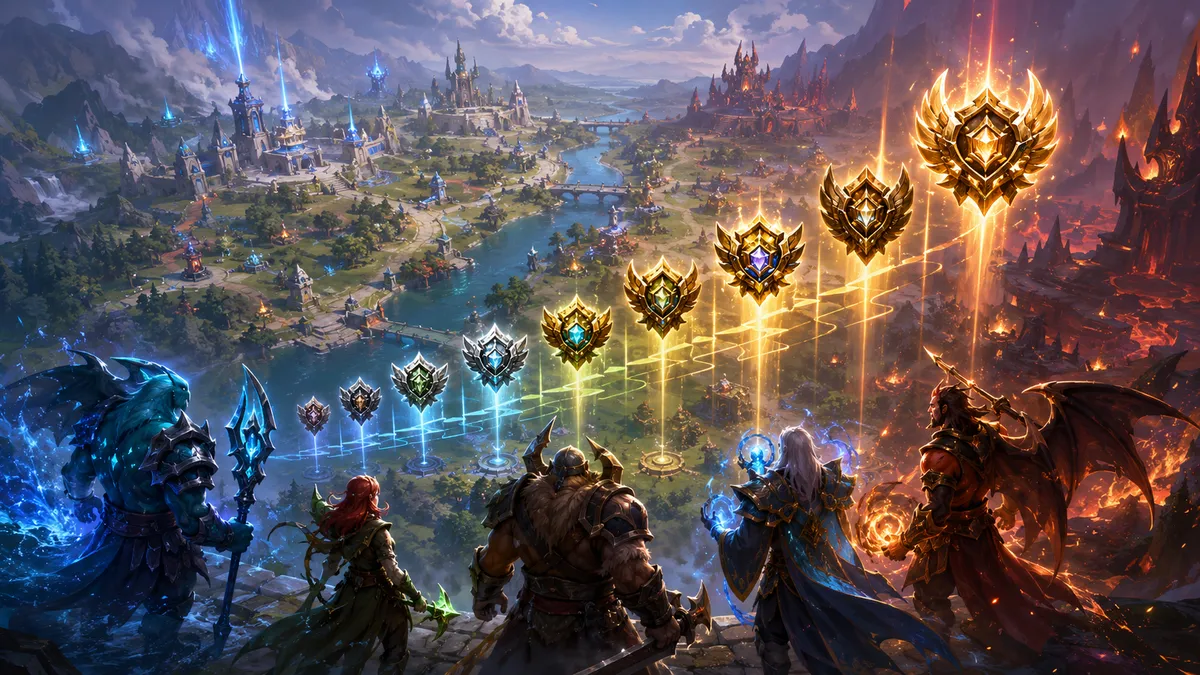
Dota 2 medals are the visible rank badges that represent your ranked skill bracket. The main medal order goes from Herald to Immortal. Most ranks have five stars or divisions inside them, which gives players smaller steps of progress before reaching the next full medal. Dota 2 rank guides commonly list eight main ranks: Herald, Guardian, Crusader, Archon, Legend, Ancient, Divine, and Immortal.
The medal system is easier to understand than raw MMR because it gives players a visual rank. Instead of only saying “I am 2310 MMR,” a player can say “I am Archon.” Instead of only tracking small number changes, players can aim for the next star or next medal.
The usual Dota 2 medal order is:
Herald
Guardian
Crusader
Archon
Legend
Ancient
Divine
Immortal
Herald is the lowest visible rank bracket, while Immortal is the highest. Immortal players can appear on regional leaderboards depending on their rating and region. Most ranks before Immortal have five smaller divisions, such as Herald 1 to Herald 5, Guardian 1 to Guardian 5, and so on.
Medals are useful because they make progress easier to understand, but they are not the full story. Your medal is connected to MMR, Rank Confidence, and other matchmaking details. The exact medal calculation is not fully public. Dota 2 Wiki notes that Valve keeps the exact medal calculation secret, that community MMR estimates can be off by a few hundred points, and that MMR is not always the only factor involved in medal display.
This is why two players with similar visible medals may not always have the exact same MMR situation. It is also why your medal may not always update exactly when you expect.
Approximate Dota 2 Medal MMR Ranges
The exact Dota 2 medal formula is not officially public, so every MMR table should be treated as an estimate, not a perfect rule. Community rank tables are still useful because they give players a general idea of where each medal begins and ends.
A commonly used approximate medal range is:
Herald: 0–769 MMR
Guardian: 770–1539 MMR
Crusader: 1540–2309 MMR
Archon: 2310–3079 MMR
Legend: 3080–3849 MMR
Ancient: 3850–4619 MMR
Divine: around 4620–5420 or higher depending on the table
Immortal: usually around 5620+ MMR in many community estimates
DMarket’s Dota 2 rank table lists the common community ranges as Herald 0–769, Guardian 770–1539, Crusader 1540–2309, Archon 2310–3079, Legend 3080–3849, Ancient 3850–4619, Divine starting around 4620, and Immortal starting around 5620+.
These numbers are useful for planning, but they should not be treated as exact guarantees. Dota 2 ranked has changed over time, and the current system includes Rank Confidence. Medal display can also vary because the matchmaking system uses more than a simple public table. The safest way to think about MMR ranges is this: the table gives you an approximate target, but your in-game ranked profile is the final source for your account.
For example, if you are high Crusader and close to Archon, the table can help you estimate how many net wins you may need. But you should not panic if your medal progress feels slightly different from a website estimate. That does not automatically mean the system is broken. It often means the exact internal calculation is more complex than a simple public chart.
How Rank Confidence Works
Rank Confidence is one of the most important parts of modern Dota 2 ranked matchmaking. In the New Frontiers update, Valve explained that MMR is not only a single number. It includes Rank, which estimates your skill, and Rank Confidence, which represents how confident the system is in that skill estimate. The more recent ranked data the system has, the more confidently it can place you.
Think of Rank Confidence like the system saying, “We are this sure about where you belong.” If you play ranked regularly, Dota 2 has more data about your current level. If you stop playing ranked for a long time, your old rank may become less reliable because your skill, the patch, the meta, and the player base may have changed.
Rank Confidence matters because it can affect how your MMR changes after matches. When the system is less confident, your rating may move more because Dota 2 is still trying to find your correct placement. When the system is more confident, your MMR changes are usually more stable. Valve’s 7.33c patch notes said ranked games with high Rank Confidence would move closer to around plus or minus 25 MMR, especially after changes that adjusted how uneven team ratings are handled.
This is why returning players may feel like their rank is being “tested” again. The system needs fresh ranked results to understand where they currently belong. It is also why players should avoid making emotional conclusions after only a few calibration-style games. Your rank becomes clearer after more matches.
What Is Calibration in Dota 2?
Calibration is the process where Dota 2 determines or updates your ranked placement. New ranked players need to play calibration matches before receiving a stable visible rank. Returning players may also experience recalibration-like behavior when their Rank Confidence is low or when system changes require updated placement data.
Dota 2 Wiki lists ranked requirements that include linking a unique phone number, playing at least 100 hours on the account to access ranked matchmaking, and playing trial games so the system can calibrate MMR.
Calibration does not mean the system only cares about those first matches forever. It means those matches are important for initial placement. After calibration, your rank keeps changing through normal ranked wins and losses. If you calibrate lower than expected, you can still climb. If you calibrate higher than expected, you still need to maintain that level.
A common mistake is treating calibration as a one-time judgment of your entire Dota 2 ability. It is not. It is a starting point. Your real rank is built over many games.
Players should take calibration seriously, but they should not panic. Pick your best role, play a small hero pool, avoid experimenting, communicate clearly, and focus on winning objectives. Do not use calibration games to test heroes you barely understand. Do not queue while tilted. Do not play when tired. Calibration games can move your account quickly, so treat them like serious ranked matches.
How Much MMR Do You Gain or Lose Per Match?
In older Dota 2 ranked systems, players often talked about fixed MMR values, such as plus or minus 30 for solo games. Modern Dota 2 is more flexible because Rank Confidence and team rating differences matter. Valve’s New Frontiers explanation says ranked changes are based on match results, and the 7.33c notes later clarified that high-confidence games would usually move closer to plus or minus 25 MMR after adjustments to uneven team rating calculations.
This means you should not expect every ranked match to give or remove the exact same amount forever. If your Rank Confidence is low, your changes may be larger. If teams are not perfectly even, the MMR change can also vary. If your confidence is high, changes are usually more stable.
The most important point is simple: winning increases your rank, losing decreases it, and consistent performance over many matches determines where you settle. Do not obsess over whether one game gave slightly more or less than expected. Focus on the habits that create a positive win rate.
A player with a 52% win rate over many ranked games will usually climb slowly. A player with a 55% or 60% win rate will climb much faster. A player with a 50% win rate is usually at the correct rank for their current performance level. A player below 50% may fall until they reach games where they can win more consistently.
How Dota 2 Ranked Matchmaking Creates Games
Dota 2 ranked matchmaking tries to create balanced matches by placing players of similar skill into the same game. The system considers rank, confidence, party conditions, server settings, role choices, and other matchmaking factors. The goal is not to give you easy games. The goal is to make games where both teams have a reasonable chance.
This is why climbing can feel hard. When you win more, the system gives you stronger opponents. If you keep winning against stronger opponents, you climb. If you lose, the system adjusts. Ranked matchmaking is designed to keep testing whether you belong higher, lower, or around your current level.
Ranked games can feel unfair sometimes because Dota 2 is complex. Drafts can be hard. Teammates can tilt. Players can be off-role. Someone can have a bad lane. But over a long period, you are the only constant in your matches. That does not mean every loss is your fault. It means your long-term improvement depends on your own decisions.
Better players do not win every game. They win more of the games that are winnable. They throw fewer leads. They recover better from bad lanes. They pick comfort heroes. They understand objectives. They communicate around timings. They stay calm when games are difficult. Those habits are what ranked matchmaking eventually rewards.
Ranked Roles and Role Queue
Dota 2 ranked can be played through Ranked Classic or Ranked Roles. Ranked Classic does not let players lock a specific role before queueing. Ranked Roles lets players select the role they want, such as carry, mid, offlane, soft support, or hard support. Dota 2 Wiki describes Ranked Roles as a system where players can queue for desired roles, while Role Queue helps players find matches faster through earned role queue games.
Role Queue matters because many players prefer core roles, especially carry and mid. If everyone only queued for the most popular roles, matchmaking would become slower and less balanced. Role Queue encourages players to fill needed positions so games can form faster.
For improvement, Ranked Roles is useful because it lets you focus on one position more consistently. If you are trying to improve carry, you need repeated carry games. If you are learning support, you need repeated support games. Role consistency helps you improve faster because each match teaches similar lessons.
However, players should still understand every role at a basic level. Even if you main carry, knowing support responsibilities helps you lane better. Even if you main support, knowing carry farming patterns helps you protect your core. Ranked improvement becomes much easier when you understand how all five roles work together.
Core MMR, Support MMR, and Role Performance
Dota 2 has used role-based matchmaking concepts to better match players in the positions they choose. Dota 2 Wiki notes that separate MMRs are maintained for core and support roles, although they influence each other by a set percentage. It also notes that failing to play the selected role can affect behavior score.
This matters because being strong in one role does not always mean you are equally strong in another. A Divine carry may not play support at the same level. A strong hard support may not have the farming patterns to play carry at the same rank. Role-based matchmaking helps account for this difference.
For ranked climbing, the lesson is clear: specialize first. If you want to climb faster, pick a main role and master it. Do not queue carry one game, mid the next, offlane after that, and hard support when tokens run out without having a plan. Every role requires different habits.
Carry requires farming efficiency, item timing, and late-game positioning. Mid requires lane control, rune timing, and map pressure. Offlane requires pressure, initiation, and space creation. Soft support requires movement, disables, and early playmaking. Hard support requires lane protection, vision, detection, and positioning.
BoostRoom coaching can help players identify which role fits them best and how to build a ranked plan around that role. A focused player usually improves faster than a player who changes
position every match.
All Dota 2 Ranks Explained
Herald
Herald is the lowest rank bracket. Players here are usually still learning basic mechanics, hero abilities, lanes, items, and map awareness. Games can feel chaotic because many players do not fully understand roles or objectives yet.
The best way to climb from Herald is to focus on fundamentals. Learn a small hero pool. Practice last hitting. Buy basic items correctly. Carry teleport scrolls. Stop dying alone without vision. Take towers after winning fights. Buy detection against invisible heroes. These simple habits can create huge improvements.
Herald players often try to learn advanced strategies before mastering basics. That is not necessary. You do not need perfect drafts or professional-level mechanics. You need fewer repeated mistakes.
Guardian
Guardian players usually understand more basics but still struggle with consistency. They may know what their role should do, but they do not do it every game. A carry may farm well in one match and fight too much in the next. A support may ward sometimes but forget detection. An offlaner may start fights without checking teammate positions.
To climb from Guardian, focus on consistency. Play the same few heroes. Learn lane mechanics. Improve your first ten minutes. Watch the minimap more often. Stop chasing kills into fog. Communicate simple calls.
Guardian games are very winnable for players who stay calm and make objective-based decisions.
Crusader
Crusader is where many players begin to understand more of the game but still lack strong decision-making. Players may know hero builds, role names, and basic timings, but they often fight randomly or miss objectives after kills.
To climb from Crusader, improve map awareness and objective play. After winning a fight, take a tower, Roshan, enemy jungle control, or lane pressure. Do not only chase kills. Learn when to farm and when to fight. Start reviewing deaths because many Crusader deaths are avoidable.
Crusader players can make quick progress by reducing unnecessary deaths and improving item timing.
Archon
Archon is often considered a middle rank area in Dota 2 community discussions. Players here usually understand the game better, but their execution and decision-making can be inconsistent. Some players have good mechanics but poor map awareness. Others understand strategy but miss easy last hits or misplay fights.
In June 2026 rank distribution data from Esports Tales, Archon begins around the middle of the overall ranked population, with Archon 1 listed around the 57th percentile. The same dataset shows Legend 1 around the 73rd percentile and Ancient 1 around the 84th percentile, giving players a rough idea of how rank brackets compare across the active ranked player base.
To climb from Archon, focus on role mastery. Carries should improve farming routes and item timings. Supports should ward with purpose and stop dying first. Mid players should turn lane advantage into map pressure. Offlaners should create space instead of farming safely all game.
Legend
Legend players usually have solid game knowledge. They know many heroes, understand common items, and have better laning than lower ranks. However, mistakes still happen often in map movement, teamfight positioning, and late-game decision-making.
To climb from Legend, you need better consistency under pressure. Do not throw leads by diving high ground. Do not farm dangerous waves without vision. Do not fight before key cooldowns or items. Understand Roshan timing. Communicate around smokes, buybacks, and objectives.
Legend is a rank where replay review becomes especially valuable. Small mistakes begin to matter more because opponents punish them more often.
Ancient
Ancient players are above most of the ranked player base. They usually understand roles, lanes, meta heroes, and itemization better than average players. The difference between Ancient and higher ranks often comes from decision speed, consistency, map control, and teamfight execution.
To climb from Ancient, you need to refine details. Are you farming the right areas? Are you showing on waves at bad times? Are you using smoke before objectives? Are your wards connected to a plan? Are you forcing fights before item timings? Are you tracking enemy buybacks and cooldowns?
Ancient players often know what they should do, but do not always do it fast enough or consistently enough.
Divine
Divine is a high-skill rank where players usually have strong mechanics, better map awareness, and deeper game knowledge. Mistakes are punished more quickly. Drafts matter more. Timings matter more. Vision control matters more. Players here often specialize in specific roles and hero pools.
To climb from Divine, you need sharper execution and better decision-making. You must understand matchups, fight timing, power spikes, Roshan control, lane pressure, and late-game risk. You cannot rely only on mechanical advantage. Everyone can play the game at a strong level, so decision quality becomes critical.
Divine players often benefit from coaching because mistakes become more subtle. A replay may reveal that the game was lost not from one obvious throw, but from repeated small
inefficiencies.
Immortal
Immortal is the highest Dota 2 medal bracket. It includes some of the best public matchmaking players, semi-professional players, and professional players. Immortal games are faster, more punishing, and more coordinated. Small mistakes can decide the match.
Immortal has leaderboard elements, and very high-rated players are often compared by regional ranking. Valve’s 7.33c patch also raised the minimum MMR for Immortal Draft eligibility to 6500, showing that high Immortal matchmaking has additional structure beyond normal medal progression.
Most players do not need to think about Immortal systems immediately. But understanding that Immortal is a leaderboard-level bracket helps explain why the gap between Divine and top Immortal can be massive. Reaching Immortal is already a major achievement. Climbing within Immortal is another challenge entirely.
Why Your Medal May Not Match Your Expectations
Many players feel confused when their medal does not move exactly how they expected. There are several possible reasons.
First, medal progress is not always a simple visible number. Your account has MMR, Rank Confidence, and internal matchmaking details. The medal is the visible result of a deeper system.
Second, community MMR tables are estimates. Since Valve does not publish the exact medal formula, public tables can be slightly wrong or outdated. Dota 2 Wiki specifically warns that exact medal calculation is secret and that estimated MMR-to-medal values may not perfectly match every account.
Third, Rank Confidence can affect how quickly your visible rank becomes stable. If you are recalibrating or returning after a break, your visible rank may need more matches before it feels normal.
Fourth, role performance can matter in matchmaking display. If you queue different roles, your displayed rank experience may not feel identical across all positions.
Fifth, your expectations may be based on old ranked systems. Dota 2 ranked has changed many times. Advice from years ago may not fully apply to the modern system.
The best solution is to focus less on one medal update and more on long-term win rate and performance habits.
How to Unlock Ranked Matchmaking in Dota 2
New players cannot immediately enter ranked matchmaking. Ranked is designed for players who have enough basic experience to understand the game. Dota 2 Wiki lists ranked access requirements that include linking a unique phone number to the Steam account and playing at least 100 hours on the account before ranked matchmaking becomes available.
This requirement exists because ranked is more competitive and because Dota 2 needs some account history before placing a player into serious matchmaking. A completely new player who enters ranked too early would likely have a poor experience and create unbalanced games for others.
Before unlocking ranked, players should use unranked matches to learn basic heroes, roles, items, map movement, and lane mechanics. Ranked should not be your first learning environment. It should be where you test your improvement after building basic skills.
A good ranked-ready checklist includes:
You understand all five roles.
You can play at least three heroes in your main role.
You know how to buy detection.
You carry teleport scrolls.
You understand Roshan and towers.
You know what your hero’s first major item does.
You can lane without feeding repeatedly.
You understand that kills should lead to objectives.
You can mute toxic players and keep playing.
You are ready to review your own mistakes.
Ranked becomes much better when you enter with preparation instead of confusion.
Ranked Classic vs Ranked Roles
Ranked Classic is the traditional ranked mode where roles are not assigned before the match. Players draft and decide lanes themselves. This can work well with good communication, but it can also create arguments if multiple players want the same role.
Ranked Roles lets players select preferred positions before matchmaking. This gives more structure and helps players practice their chosen role consistently. Dota 2 Wiki describes Ranked Classic as the default ranked mode without role selection and Ranked Roles as the mode where players can queue for the role they want.
For most players who want to improve, Ranked Roles is easier to use because it supports focused practice. If you are learning position 5, you can queue hard support. If you are improving carry, you can queue carry when you have role queue games. This reduces role conflict and makes your improvement plan clearer.
Ranked Classic can still be useful for flexible players, but it requires stronger communication and adaptability. If you queue Ranked Classic, be ready to play what the team needs.
Does KDA Affect MMR?
KDA does not directly decide whether you gain or lose MMR in a normal ranked match. Winning and losing are what matter. Good KDA can help you win, but it is not the same as winning impact.
This is an important lesson because many players play selfishly for stats. A support may avoid a necessary death that would save the carry. A carry may chase kills instead of hitting buildings. A mid hero may farm damage numbers while ignoring Roshan. These actions may look good on the scoreboard but still reduce the chance of winning.
Dota 2 rewards useful impact. Sometimes useful impact means dealing damage. Sometimes it means warding. Sometimes it means tanking spells. Sometimes it means buying detection. Sometimes it means pushing a wave. Sometimes it means not dying before buyback. Sometimes it means sacrificing yourself so your carry survives.
If you want more MMR, play to win, not to protect your scoreboard.
Does Behavior Score Affect Ranked?
Behavior and communication quality can affect your matchmaking experience, even if they are not the same as MMR. Low behavior can lead to worse game quality, more restrictions, and a more frustrating ranked environment. Dota 2 Wiki notes that abandoning, griefing, gameplay sabotage, and reports can lead to penalties or lower behavior-related outcomes.
Good behavior matters for climbing because ranked is already difficult. If you argue, flame, grief, or give up early, you lower your own chance to win. Even if a teammate makes a mistake, toxic chat rarely improves the match. It usually distracts everyone.
A strong ranked player communicates simply. Ping missing heroes. Say when your ultimate is ready. Tell the team when your Black King Bar is close. Ask for Roshan after a won fight. Request detection if needed. Call for smoke when your team has a timing. Mute players who are distracting you.
Good communication does not guarantee victory, but it increases your chance of turning messy games into winnable games.
How to Climb MMR in Dota 2
Climbing MMR is not about one trick. It is about improving the habits that win more games over time. The best ranked improvement strategy is simple: specialize, review, and play with purpose.
Start by choosing one main role. A carry player should learn farming patterns, item timing, and late-game decision-making. A mid player should learn lane control, rune timing, and rotations. An offlaner should learn pressure, initiation, and space creation. A soft support should learn movement, disables, and ganking. A hard support should learn lane protection, warding, detection, and positioning.
Next, build a small hero pool. Three to five heroes are enough for serious improvement. If you play a different hero every match, you make the game harder for yourself. When you repeat heroes, you learn matchups, timings, and limits faster.
Then review your losses. Do not review only the final fight. Look at your first ten minutes, deaths, item timing, map movement, and objective decisions. Many games are lost long before the Ancient falls.
Finally, focus on one improvement goal at a time. If you are a carry, track last hits and deaths. If you are a support, track useful wards and spell impact. If you are mid, track rune control and rotations. If you are offlane, track pressure and initiation quality.
BoostRoom can help players climb more efficiently by identifying the mistakes that are hardest to see alone. A coach can show why your farming route is slow, why your wards are not protecting objectives, why your fights start badly, or why your hero pool does not fit your ranked goals.
Win Rate and MMR Climbing
Your win rate is one of the best indicators of whether you are climbing. A 50% win rate usually means you are close to your current level. A win rate above 50% means you are gaining MMR over time. A win rate below 50% means you are losing MMR over time.
A 52% win rate may feel slow, but it is still climbing. Over hundreds of games, small edges matter. Many players think they need a 70% win rate to climb, but that is unrealistic for most accounts after enough matches. Even a small positive win rate shows that your decisions are better than your current bracket.
The goal is not to win every match. Some games are extremely hard. Some drafts are bad. Some teammates will tilt. Some lanes will collapse. Your job is to win more than you lose across many games.
This mindset protects you from tilt. A loss does not destroy your climb. A losing streak does not mean you are hopeless. What matters is whether your habits are improving and whether your long-term win rate moves in the right direction.
Why Players Get Stuck at the Same Rank
Players usually get stuck because they repeat the same mistakes without noticing. They may think they are unlucky, but their replays show patterns.
A carry may farm dangerous waves without vision. A support may ward randomly instead of around objectives. A mid player may win lane but never pressure side lanes. An offlaner may build greedy items instead of initiation. A soft support may roam too much and abandon the offlane. A hard support may die first in every fight. These repeated mistakes create a rank ceiling.
Another reason players get stuck is hero chaos. They play too many heroes and never master any of them. A player with 100 average games across 20 heroes often improves slower than a player with 100 focused games across 4 heroes.
Tilt is another major reason. Players who queue while angry make worse decisions. They fight too much, type too much, ignore objectives, and give up early.
To get unstuck, review your last ten losses and look for repeated patterns. Do not ask only “Who fed?” Ask “What mistake happened again and again?” That is your improvement target.
MMR Is Not Your Identity
Many players take ranked medals personally. They feel embarrassed by their medal or angry when they lose MMR. This mindset makes improvement harder. Your medal is not your identity. It is just a measurement of your current ranked performance.
A Herald player can become Guardian. A Guardian can become Crusader. A Crusader can become Archon. Every high-rank player was once weaker than they are now. Improvement is normal. Learning is normal. Losing is normal.
MMR is useful because it gives feedback. It shows whether your current habits are winning. But it should not control your mood. If you treat every ranked loss like a personal failure, you will tilt and play worse. If you treat every ranked loss like information, you will improve.
The healthiest ranked mindset is: “What can I learn from this game?” That question creates progress.
How BoostRoom Helps With Ranked Improvement
BoostRoom can help Dota 2 players understand ranked more clearly and improve faster with structured support. Many players know they want more MMR, but they do not know what is actually stopping them. They blame teammates, change heroes constantly, or copy random builds without fixing the real problem.
With coaching and replay review, BoostRoom can help identify your specific ranked mistakes. A carry player may need better farming routes. A support may need better ward timing. A mid player may need stronger rotations. An offlaner may need better initiation. A soft support may need clearer movement. A hard support may need better lane control and positioning.
BoostRoom guidance is useful because ranked improvement should be personal. Generic advice can help, but your own replays show the truth. Your deaths, item choices, lane decisions, map movements, and fight positioning reveal exactly why your MMR is not moving.
The fastest way to improve is not to play more random games. It is to play with a plan, review your mistakes, and fix the habits that lose matches.
FAQ
What is MMR in Dota 2?
MMR means Matchmaking Rating. It is the rating Dota 2 uses to estimate your skill level and match you with players of similar ability in ranked games.
What are Dota 2 medals?
Dota 2 medals are visible rank badges connected to your ranked skill level. The main medals are Herald, Guardian, Crusader, Archon, Legend, Ancient, Divine, and Immortal.
How does Rank Confidence work in Dota 2?
Rank Confidence measures how confident the system is in your current rank estimate. Playing ranked gives the system more recent data, which usually increases confidence and makes your rank more stable.
How much MMR do you gain or lose per ranked game?
Modern Dota 2 MMR changes are not always fixed. With high Rank Confidence, changes are often closer to around plus or minus 25 MMR, but the exact amount can vary based on matchmaking factors.
How do you unlock ranked matchmaking in Dota 2?
Players generally need ranked access requirements such as a unique linked phone number and enough unranked playtime before ranked matchmaking becomes available.
Is KDA important for gaining MMR?
KDA can help you win, but MMR gain is based on winning the match, not simply having the best scoreboard. Playing for objectives and team success is more important than protecting stats.
Why did my medal not change after winning?
Your medal may not update immediately because the visible medal is connected to MMR, Rank Confidence, and internal matchmaking calculations. Community medal tables are estimates, not exact formulas.
What is the highest rank in Dota 2?
Immortal is the highest Dota 2 rank. High Immortal players may appear on regional leaderboards, and the top of the ladder includes elite public matchmaking players and professionals.
What is the best way to climb MMR?
The best way to climb is to focus on one main role, play a small hero pool, review your mistakes, improve farming and map awareness, communicate clearly, and play around objectives.
Can BoostRoom help me improve my Dota 2 rank?
BoostRoom can help with Dota 2 coaching, replay review, role guidance, hero pool planning, and ranked improvement support. This helps players identify mistakes faster and build a clearer path to climbing.
Final Thoughts: Understand the System, Then Focus on Better Games
The Dota 2 ranking system may look complicated, but the core idea is simple. Your MMR estimates your skill. Your medal shows your rank visually. Rank Confidence shows how certain the system is about your placement. Wins push you upward. Losses pull you downward. Over many games, your rank reflects your consistent impact.
You cannot control every teammate, draft, or mistake in ranked matchmaking. You can control your own preparation, hero pool, role understanding, map awareness, item choices, communication, and replay review. Those are the things that create long-term MMR growth.
Do not obsess over one match. Do not let one bad teammate ruin your focus. Do not treat one medal as your permanent level. Ranked is a long-term process. Players climb by building better habits and repeating them until their win rate improves.
If you want to rank up faster, play with purpose. Choose a main role. Master a few heroes. Learn your timings. Stop dying without vision. Take objectives after fights. Review your losses. Stay calm during difficult games. Use coaching when you need clearer feedback.
BoostRoom can help make that path easier with Dota 2 coaching and replay analysis designed around real ranked improvement. When you understand how MMR and medals work, ranked becomes less confusing. When you understand your own mistakes, climbing becomes much more realistic.



