Dota 2 Items Guide: How to Choose the Right Items Every Game
Items are one of the biggest reasons Dota 2 feels so deep. Two players can pick the same hero, play the same role, and still have completely different impact because one player chooses the right items for the match while the other follows a build without thinking. Good itemization can make a weak lane playable, turn a farming hero into a late-game monster, help a support save teammates, give an offlaner the ability to start fights, or let a mid hero control the tempo of the game.
Bad itemization does the opposite. A carry can buy damage but die before hitting anyone. A support can rush a greedy item while the team has no detection. An offlaner can skip initiation and leave the team unable to start fights. A mid hero can buy farm items while the game needs tempo. A team can lose to invisibility, healing, illusions, magic damage, or disables simply because nobody bought the items that solved the problem.
Dota 2’s Steam page explains that the game has an abundance of powerful items and that no two games are the same because heroes, abilities, and items give players many different ways to play. It also notes that every hero can fill multiple roles, which makes item decisions even more important because the same hero may need different builds in different matches.
This Dota 2 items guide explains how to choose the right items every game. It is not just a list of “best items” because Dota 2 does not work that way. The best item depends on your hero, your role, your lane, your team, the enemy lineup, your timing, and the current state of the match. The goal is to help you understand why items are bought, when to change your build, and how to stop wasting gold on items that look good but do not help you win.
BoostRoom can help Dota 2 players improve itemization faster through coaching, replay review, role guidance, and practical match analysis. Many item mistakes are hard to notice during the game, but they become clear when an experienced player shows exactly why one item timing worked, why another item delayed your impact, or why a different defensive or utility item would have changed the fight.
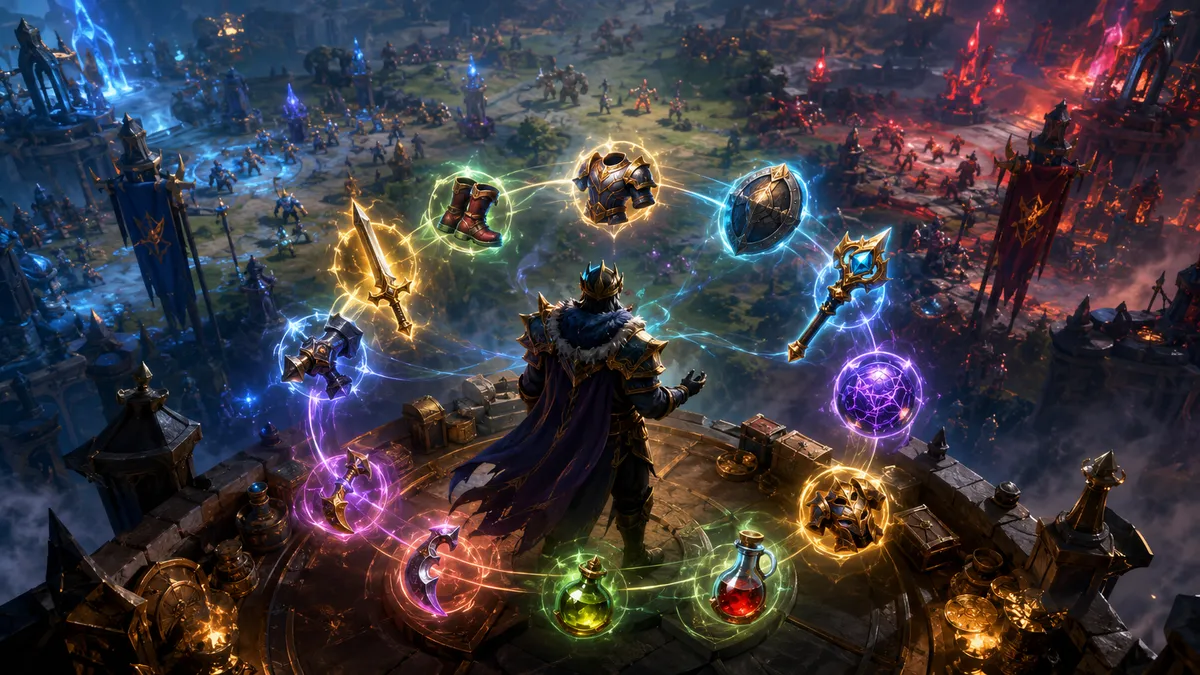
Why Itemization Matters So Much in Dota 2
Itemization matters because items turn gold into impact. Farming more gold is only useful if you spend that gold on items that help your hero do its job. A 20,000 net worth carry with the wrong items can lose to a lower net worth carry with the correct items. A support with one good save item can have more fight impact than a support who buys a selfish item too late. An offlaner with a fast Blink Dagger can create more pressure than an offlaner with random stats.
Dota 2 items solve problems. That is the most important idea in this entire guide. Do not ask only, “What is the normal build?” Ask, “What problem do I need to solve in this game?”
If enemies have too many stuns, you may need spell immunity, status resistance, positioning items, or a different fight approach. If enemies have invisibility, your team needs detection. If your team cannot start fights, someone may need Blink Dagger, Force Staff, Shadow Blade-style initiation, Eul’s Scepter, Scythe of Vyse, Rod of Atos, or another catch item depending on heroes. If enemies heal too much, you may need anti-healing options. If enemies deal heavy physical damage, armor and evasion-style answers may matter. If enemies deal heavy magical damage, magic resistance, spell immunity, saves, or better positioning may be required.
Itemization also decides timing. A hero is not equally strong at every minute. A carry with a farming item and Black King Bar may suddenly be ready to fight. An Axe with Blink Dagger becomes a different hero. A support with Glimmer Cape or Force Staff can save teammates who would otherwise die. A mid hero with a key mobility item can start making plays. These timings shape the match.
Many players lose because they buy items too late, buy items in the wrong order, or buy items that do not match the enemy lineup. If you want to improve fast, itemization is one of the best skills to study.
The Main Rule: Items Must Match the Game
A Dota 2 item build is not a fixed recipe. It is a plan that changes based on what is happening. Guides are useful, but they are starting points, not rules. If you follow the same item build every game, you will eventually lose matches that could have been won with adaptation.
A good item decision considers several questions. What is my hero supposed to do? What role am I playing? Did I win or lose the lane? What damage type is killing me? Which enemy hero is the biggest threat? Does my team need initiation, damage, save, vision, tower pressure, Roshan damage, or defensive utility? Am I close to a timing? Can I fight after this item? Will this item still matter in ten minutes?
For example, a Juggernaut game against many disables may require different choices than a Juggernaut game where enemies cannot control him. A Crystal Maiden game against heroes that jump the backline may require earlier defensive items. A Tidehunter game where the team lacks initiation may need Blink Dagger earlier. A mid Zeus game against long-range jump heroes may require positioning and defensive items instead of only damage.
The wrong item can feel good in theory but fail in practice. A damage item is not good if you die before attacking. A farming item is not good if your base is already being destroyed. A defensive item is not enough if your team has no way to start fights. A save item is less useful if you are always the first hero dying.
Itemization is not about buying the most expensive item. It is about buying the item that gives the most useful impact at the right moment.
Starting Items: How to Begin the Lane Correctly
Starting items are often ignored by beginners, but they can decide the first few minutes. A bad starting item build can make you lose lane before any big item matters. Starting items should help you last hit, trade, survive, cast spells, and stay in lane long enough to reach your first timing.
For cores, starting items usually provide stats, damage, regeneration, and lane stability. A carry needs enough health regeneration to survive harassment and enough early damage or stats to last hit. A mid hero may need stats, regeneration, and sometimes a quick Bottle plan depending on hero and matchup. An offlaner may need durability, regen, and early items that help survive pressure from the enemy carry and support.
For supports, starting items should help the lane. Regeneration, wards, sentries, Blood Grenade-type early aggression tools when appropriate, branches, stats, and utility can all matter. A support who buys greedy items and brings no regen may fail their core. A support who buys useful early items can win the lane without getting many kills.
The most common starting item mistake is underbuying regeneration. Players want to rush an early item, so they enter lane with too little healing. Then they take bad trades, lose health, stand too far back, and miss experience or farm. Regen is not wasted gold if it lets you stay in lane and secure more creeps.
Another common mistake is buying starting items without thinking about the lane. If the enemy lane has heavy spell damage, you may need more health or regen. If the lane is about trading attacks, early armor or stats may matter. If you are a support against an enemy pull camp, sentries can be important. If you are mid against strong harassment, you need enough sustain to avoid being forced out.
The lane starts before the creeps meet. Good itemization starts before the horn.
Early Game Items: Small Items Win Lanes
Many players rush big items too early and ignore small items. This is a mistake. Early game items are cheap, efficient, and often decide whether your hero reaches the mid game smoothly. A small item that keeps you alive or helps you farm can be more valuable than saving every coin for a luxury item.
Magic Stick and Magic Wand are classic examples. Against heroes that cast many spells, a fast Magic Stick can save your life, give enough mana for one extra spell, or turn a fight. Boots are another important early purchase because movement speed affects trading, escaping, chasing, rotating, and positioning. Small stat items can improve last hitting and survivability.
Bracer, Wraith Band, and Null Talisman-type early stat items can be useful depending on hero and patch. They are not always automatic, but they often help heroes survive lane, secure last hits, or trade better. The important point is not the exact small item. The important point is that small items can make your hero functional.
Support players also need early items. A Wind Lace can help positioning. Boots can help rotation and survival. A Magic Wand can save you from burst. Early sentries can stop enemy pull control or reveal wards. A fast Smoke can create a rotation. A small support item at the right time can create more impact than saving for something too expensive.
Greed is one of the biggest itemization traps. If you skip early items and die twice, your big item becomes even later. A stable lane often creates faster timings than a greedy lane where you cannot stand near creeps.
Core Items: What Your Hero Needs to Function
Core items are the items that make your hero do its job. They are not the same for every hero. For one hero, a core item may be a farming item. For another, it may be Blink Dagger. For another, it may be Black King Bar. For a support, it may be Force Staff or Glimmer Cape. For an offlaner, it may be an aura item or initiation item.
A carry’s core item usually helps farming, damage, survival, or teamfight presence. A mid hero’s core item often helps tempo, mobility, burst, mana, or survivability. An offlaner’s core item usually helps initiation, durability, aura value, or teamfight control. Supports need items that help with positioning, saving, disabling, vision, or utility.
The danger is confusing “common item” with “required item.” Just because an item is common on your hero does not mean it is correct every game. Sometimes your hero’s usual damage item must be delayed for a defensive item. Sometimes your usual farming item is too slow. Sometimes your usual utility item is less important than detection or mobility.
A good way to understand core items is to ask: “What changes after I buy this?” If the answer is clear, the item may be strong. Blink Dagger lets Axe start fights. Black King Bar lets many carries stand and hit through spells. Force Staff lets supports save allies or escape. Desolator-type damage can help certain heroes kill targets and take objectives. Manta Style can help some heroes dispel effects, farm faster, and push lanes.
Core items should create a power spike. If an item does not make you farm faster, fight better, survive longer, save teammates, or take objectives, ask why you are buying it.
Luxury Items: Powerful but Not Always Practical
Luxury items are expensive items that can make your hero much stronger but are often not the first priority. They can win late-game fights, but buying them too early or in the wrong game can be a mistake.
A common beginner mistake is rushing luxury items without the foundation to survive. A carry may rush a huge damage item while having no defensive tools. A support may save for an expensive item while the team needs wards, detection, or a cheap save. An offlaner may buy a greedy scaling item while the team desperately needs initiation.
Luxury items are good when they match the game state. If your team is ahead and you already have the necessary defensive or utility tools, a luxury item can help close the game. If the game is late and you need more scaling, a luxury item can be necessary. If you are behind and dying instantly, a luxury item may be too slow.
Dota 2 itemization is about timing. The best late-game item may be a terrible 18-minute purchase. The best 18-minute item may be weak at 55 minutes. Always think about when the item will matter.
Defensive Items: Survive Before You Deal Damage
Defensive items are some of the most important items in Dota 2 because a dead hero has no impact. Many players love damage items, but damage means nothing if you die before using it. Defensive items help you survive long enough to cast spells, hit enemies, save allies, or escape.
Black King Bar is one of the most famous defensive items because it allows many cores to fight through dangerous spells for a limited time. It is not always the answer to every problem, but it is often essential against heavy magic damage, disables, and teamfight control. Many carry players delay Black King Bar because they want more damage, then lose fights because they cannot stand and hit.
Linken’s Sphere-style protection can matter against dangerous single-target spells. Lotus Orb-style effects can help against targeted disables or debuffs. Manta Style can dispel certain effects and create illusions. Eul’s Scepter can dodge spells, dispel some effects, or set up plays. Ghost Scepter can help supports survive physical damage. Glimmer Cape and Force Staff can save teammates or reposition.
The right defensive item depends on what is killing you. Do not buy armor against magic burst unless armor also helps the broader game. Do not buy magic resistance if the enemy carry is killing you with physical attacks. Do not buy a defensive item too late if you already know the enemy threat.
A useful question after every death is: “Would a specific item have saved me?” If the answer is yes, consider whether you should have bought it earlier.
Damage Items: Buy Damage When You Can Use It
Damage items help heroes kill enemies, farm faster, take Roshan, and destroy buildings. But damage must be usable. A carry who buys damage but has no survivability may be controlled and killed before attacking. A mid hero who buys burst damage but cannot reach targets may struggle. An offlaner who buys damage while the team lacks initiation may create no real fights.
Damage items should match your hero’s scaling. Some heroes benefit from attack speed. Some need raw damage. Some need critical strike. Some need armor reduction. Some need stats. Some need spell amplification. Some need mana to keep casting. Some need hybrid items that provide both damage and survivability.
The enemy lineup also matters. Against high armor heroes, armor reduction or magical damage may be useful. Against fragile supports, burst damage can be strong. Against illusion heroes, area damage and wave clear may matter more than single-target damage. Against heroes with evasion, accuracy or true strike-style answers may be required.
Damage items are strongest when they line up with your timing. If your hero reaches a damage item before enemies have defensive tools, you can take fights and objectives. If you buy the damage item too late, enemies may already have saves, armor, spell immunity, or positioning tools.
Do not buy damage only because you want a bigger score. Buy damage when it helps your team kill the right targets and take objectives.
Mobility Items: Positioning Wins Games
Mobility items can be game-changing because Dota 2 is a positioning game. Sometimes the best item is not the one with the most damage, but the one that lets you start fights, escape danger, save allies, or reach the correct target.
Blink Dagger is one of the clearest examples. It turns many heroes into initiators. Axe, Centaur Warrunner, Tidehunter, Earthshaker, Sand King, Magnus, Legion Commander, and many other heroes can become much more dangerous with Blink. Without mobility, they may struggle to reach enemies. With mobility, they can start fights from fog.
Force Staff is another important mobility item. It can save allies, push yourself out of danger, break enemy positioning, cross cliffs in some situations, and create distance against melee heroes. For supports, Force Staff is often one of the most valuable items in the game.
Hurricane Pike-style items can help ranged cores maintain distance. Shadow Blade or Silver Edge-style items can provide initiation, escape, and damage in some games, although they require awareness because enemies can buy detection. Boots upgrades also matter because movement speed and map movement are constant parts of Dota 2.
Mobility is not only for escaping. It is also for choosing fights. A hero with mobility can stand in better positions, punish mistakes faster, and avoid being forced into bad engagements.
Utility Items: The Items That Quietly Win Games
Utility items do not always look impressive on the scoreboard, but they often win matches. These items help the team rather than only increasing personal damage. Supports and offlaners buy many utility items, but cores can buy them too when the game requires it.
Force Staff, Glimmer Cape, Pipe-style magic protection, Crimson Guard-style physical protection, Lotus Orb, Eul’s Scepter, Solar Crest-style buffs, Spirit Vessel-style anti-healing, Mekansm or Guardian Greaves-style team sustain, and Scythe of Vyse-style disables can completely change fights.
Utility items are especially important when your team has a clear problem. If your team cannot survive magical burst, a team protection item may matter. If your carry is getting jumped, a save item may matter. If the enemy has a healing hero, anti-heal may matter. If one enemy hero is carrying the game, a disable item may matter.
The value of utility is often invisible to beginners. A Force Staff that saves the carry may be worth more than a damage item. A timely Lotus Orb can stop an enemy initiation. A Smoke purchase can create the fight that leads to Roshan. A Sentry Ward can reveal the invisible hero and win the fight instantly.
Good Dota 2 players respect utility because winning is more important than looking rich.
Support Items: Low Gold, High Impact
Support itemization is about impact with limited gold. A support usually does not get the same farm priority as a core, so every purchase matters. Supports need to buy items that help the team survive, see the map, start fights, or control enemies.
The first support responsibility is usually vision and detection. Observer Wards, Sentry Wards, Smoke of Deceit, Dust, and other information tools can decide games. If enemies have invisible heroes, detection is not optional. If your team wants to play around Roshan, vision matters. If your carry wants to farm safely, defensive wards matter.
After basic support responsibilities, support items usually depend on the game. Glimmer Cape helps against magical burst and can save allies. Force Staff helps against slows, traps, melee heroes, and bad positioning. Ghost Scepter helps against physical damage. Eul’s Scepter can provide control and self-save. Aether Lens-style range can help some supports cast spells safely. Blink Dagger can help initiator supports start fights. Scythe-style disables can be powerful late if a support can afford them.
The biggest support item mistake is greed. A support who saves for a luxury item while the team has no wards, no detection, and no save items may hurt the team. Another mistake is buying the wrong save. Force Staff and Glimmer Cape solve different problems. Ghost Scepter and Eul’s solve different problems. The right support item depends on what threatens your team.
A support with low gold but the correct item can decide the match.
Carry Itemization: Farming, Fighting, and Surviving
Carry itemization usually follows a pattern: lane stability, farming speed, survivability, damage, and late-game scaling. The exact order depends on hero and game, but the carry must understand when to farm and when to fight.
Some carries need an early farming item to accelerate. Others naturally farm fast and can buy fighting items earlier. Some carries need Black King Bar quickly. Others can delay it if enemies do not have enough control. Some carries need mobility to reach targets. Others need stats to survive. Some need lifesteal or sustain. Others need illusions, dispels, or armor reduction.
A carry should ask three questions before every major item. First, does this item help me farm faster or fight better? Second, can I survive after buying it? Third, what objective can my team take when I finish it?
Many carry players buy too much damage and too little survivability. This creates games where they have high net worth but die at the start of fights. Other carry players buy too defensively and lack damage to kill anyone. Good carry itemization balances survival and threat.
Carry players should also think about buyback in the late game. Spending all gold on a luxury item before a critical Roshan or high-ground fight can be dangerous. A carry death without buyback can lose the game. Sometimes holding buyback is the best “item” decision.
BoostRoom carry coaching can help players understand farming item timing, Black King Bar timing, damage vs survivability balance, and late-game buyback decisions.
Mid Itemization: Tempo and Matchup Control
Mid itemization depends heavily on the hero. Some mid heroes want Bottle and early tempo items. Some need mana. Some need mobility. Some need damage. Some need survivability. Some want to pressure towers. Some want to farm and scale.
The mid role is often responsible for creating tempo. That means mid item choices should help the hero affect the map at the right time. If your hero is strong early, items that help rotations, burst, or mobility may be important. If your hero scales, farming and survival may matter more.
A mid player must also adapt to the lane matchup. If you are being harassed heavily, early sustain matters. If you are ahead, an aggressive item can help snowball. If enemies have dangerous jump heroes, defensive items may be needed earlier. If your team lacks catch, your item build may need to provide control.
Mid heroes often influence side lanes. A good item timing can turn into a rotation, tower pressure, or Roshan control. A bad item timing can leave the mid hero farming while the enemy mid controls the game.
The biggest mid item mistake is buying items that do not match your role in that match. If your team needs tempo and you buy too greedy, your side lanes may collapse. If your team needs scaling and you force bad fights, you may throw your advantage.
Mid itemization is about knowing whether your job is to fight now, farm now, or protect yourself until the next timing.
Offlane Itemization: Initiation, Auras, and Space
Offlane itemization is usually about making the team stronger. Offlaners often buy initiation, durability, aura, or utility items. Their job is not always to deal the most damage. Their job is often to make fights possible.
Blink Dagger is a key item on many offlaners because it allows them to start fights. Aura items help the team survive and push. Defensive items let the offlaner stand in front. Utility items help control enemies or protect allies.
A good offlaner asks: “What does my team need from me?” If the team has no initiation, you may need Blink quickly. If the enemy has heavy magic damage, team magic protection may matter. If the enemy relies on physical damage or summons, armor and physical protection may be useful. If your carry is strong but vulnerable, items that protect or enable the carry can win fights.
The biggest offlane item mistake is playing like a second carry when the team needs a position 3. Some offlaners can scale, but if your team has no one to stand forward or start fights, greedy damage items can lose the game.
Another mistake is delaying the key timing. An Axe without Blink has limited fight impact. A Tidehunter with no durability or initiation may struggle to use Ravage well. A Centaur who never groups with team items may waste his hero’s strength.
BoostRoom offlane coaching can help players learn when to buy Blink, when to buy aura items, when to build utility, and how to turn item timings into map pressure.
Hard Support Itemization: Vision, Saves, and Survival
Hard support itemization starts with responsibility. Position 5 often has the lowest farm priority, but that does not mean the role is weak. Hard supports create value through vision, lane support, saves, disables, and positioning.
The first priority is usually helping the lane and buying important support tools. Wards, sentries, regen, detection, and small survivability items can be more important than rushing a big item. A hard support who keeps the carry alive may create more gold for the team than they could ever farm themselves.
After the lane, hard support items should solve team problems. If allies are dying to magic burst, Glimmer Cape may help. If they are being trapped or slowed, Force Staff may help. If the support is dying to physical attacks, Ghost Scepter may help. If the team needs catch, Eul’s or later disables may help. If the support has a game-changing spell but cannot position, Blink or Aether Lens-style range may be useful depending on hero.
Hard supports should avoid buying items only for themselves unless survival is necessary to cast spells. Selfish survival can be good if it lets you use your spells. Greedy damage is usually bad if it delays vision and save items.
A hard support with the right item at the right time can save the carry, reveal the invisible hero, start a fight, or stop a push. Do not measure support item impact only by net worth.
Soft Support Itemization: Playmaking and Utility
Soft supports usually have more farm than hard supports but less than cores. Position 4 itemization often focuses on movement, initiation, utility, and fight setup. This role can be flexible, so item choices matter a lot.
A Lion may need Blink Dagger or Aether Lens-style range to disable key targets. A Spirit Breaker may need durability and utility. A Shadow Shaman may need Blink, save, or tower pressure items. An Earthshaker may need Blink Dagger to become a real initiator. A Mirana may need utility, mobility, or team items depending on role and game.
Soft supports should not become too greedy. Position 4 gets some farm, but the role still supports the team. If you take too much space from cores, the team may lose scaling. If you buy only damage and no utility, your team may lack saves, vision, or control.
The best position 4 itemization is active. Buy items that let you create plays. Smoke with your timing. Ward aggressively when your team wants to invade. Buy detection when needed. Use your item timing to help take towers or Roshan.
A position 4 support often decides the mid game. Good itemization turns movement into kills, kills into objectives, and objectives into map control.
Items Against Magic Damage
Magic damage can come from nukes, area spells, damage-over-time effects, and burst combos. If your hero dies before reacting, you need to consider anti-magic itemization or better positioning.
Black King Bar can be essential for many cores against heavy spell control. Pipe-style team protection can help against area magic damage. Glimmer Cape can reduce incoming magic damage and save allies. Mage Slayer-style effects may help certain heroes reduce enemy spell impact. Eternal Shroud-style items can help some tanky heroes survive magic damage. Hood-style components or magic resistance items may be useful depending on the current patch and hero.
But do not buy magic resistance blindly. If the enemy team has one magic damage support and four physical damage heroes, armor or positioning may matter more. If the enemy has disables rather than damage, spell immunity or dispel may be more useful than raw resistance.
Ask what is actually killing you. Is it magical burst? Long disables? Damage over time? Area spells? A specific ultimate? The answer decides the item.
Items Against Physical Damage
Physical damage usually comes from right-click carries, armor reduction, summons, illusions, and physical spell damage. If enemies are killing your team with attacks, physical defense matters.
Armor items help reduce physical damage. Evasion can be strong if enemies do not have accuracy or true strike. Ghost Scepter can help supports survive right-click cores. Crimson Guard-style protection can help against summons, illusions, or many small hits. Shiva’s Guard-style armor and attack speed reduction can help against physical lineups. Halberd-style disarm can stop some right-click carries from attacking at key moments.
The best physical defense depends on the enemy. Against one hard-hitting carry, disarm or control may matter. Against many illusions, area damage and armor may matter. Against summons, wave clear and group protection may matter. Against armor reduction, armor and positioning both matter.
Do not wait until the enemy carry is unstoppable. If you know the enemy physical damage will be a problem, plan ahead. Defensive itemization is strongest when it comes before the fight is already lost.
Items Against Disables and Control
Sometimes the problem is not damage. Sometimes the problem is control. Your hero cannot move, cannot cast, cannot attack, or cannot escape. In these games, you need items that help you deal with disables.
Black King Bar is often the main answer for cores against many disables, but it is not the only answer. Linken’s Sphere can block a key targeted spell. Lotus Orb can reflect or dispel certain effects. Manta Style can dispel some debuffs. Eul’s Scepter can self-dispel or dodge timing-based spells. Status resistance can help reduce some disable duration depending on the item and patch. Force Staff can save allies from follow-up damage after a disable ends.
Supports can buy save items to protect disabled cores. A carry may not always be able to save themselves. A Glimmer Cape, Force Staff, Lotus Orb, or other save can completely change the fight if used quickly.
The key is identifying which disable matters most. If one spell always starts your death, itemize against that spell. If many spells chain together, you may need broader protection, better positioning, or team coordination.
Items Against Healing and Sustain
Some heroes and teams win fights by healing too much. They survive your burst, reset, and keep fighting. Against heavy healing and sustain, anti-heal or burst timing becomes important.
Spirit Vessel-style anti-healing is often useful against heroes that rely on regeneration, lifesteal, or healing. Shiva’s Guard-style effects and other anti-heal mechanics can matter depending on the current patch and hero choices. Burst damage and disables can also work if your team kills the target before healing matters.
Do not ignore healing heroes until late game. If the enemy draft has strong sustain, plan your itemization early. A delayed anti-heal item may arrive after the enemy has already won several fights.
Support and position 4 heroes often buy anti-heal because they can apply it without taking core farm. However, cores can also adjust if the game demands it. The right item is the one your team actually needs.
Items Against Invisibility
Invisibility is one of the most common ways lower-rank teams lose avoidable fights. Invisible heroes are much easier to handle when your team buys detection. The problem is not always the enemy hero. The problem is often that nobody wants to spend gold on the answer.
Dust, Sentry Wards, and Gem of True Sight-style vision are essential against invisible heroes and items. Supports usually buy most detection, but cores should not refuse to buy it when needed. If an invisible hero is killing you and your support is dead or elsewhere, buy detection yourself.
Sentry Wards help control areas and reveal enemy wards. Dust helps reveal invisible heroes during fights or chases. Gem can be powerful when your team is ahead and can protect the carrier, but dangerous if lost.
The mistake is waiting too long. If the enemy has invisibility, prepare before the fight. Detection bought after three deaths is late. Detection bought before the smoke or objective wins fights.
Items Against Illusions and Summons
Illusions and summons create a different itemization problem. Single-target damage may not be enough if enemies flood the fight with units. You may need area damage, wave clear, armor, or items that help identify the real hero.
Against illusion heroes, cleave, area spells, Maelstrom-style chain damage, Battle Fury-style cleave, Mjollnir-style effects, Shiva’s Guard-style area control, Radiance-style damage, or hero-specific wave clear may be useful depending on your hero. Supports may need defensive positioning because illusions can run at them quickly.
Against summons, armor and wave clear matter. Crimson Guard-style protection can help against many small attacks. Area damage can clear summons. Wards and map awareness can prevent summon heroes from taking towers for free.
The wrong response is buying only single-target damage when the enemy creates too many units. The right response is to ask whether your team can clear waves, protect towers, and survive the unit pressure.
Items for Roshan and Objectives
Items are not only for killing heroes. Some items help take Roshan, towers, and buildings. Objective itemization matters because Dota 2 is won by destroying the Ancient, not by having the most kills.
Armor reduction, attack speed, damage, sustain, summons, and team auras can help take Roshan. Tower pressure items can help end games faster. Defensive team items can help your team group and push. Save items can protect the hero hitting buildings.
If your team wins a fight but cannot take objectives, think about itemization. Does your team lack tower damage? Does your carry need a damage item? Does your offlaner need aura support to group? Does your support need vision around Roshan? Does your team need sustain to stay on the map?
A good item build should help you convert advantages. If your items only help you get kills but not take towers or Roshan, your team may struggle to close the game.
Neutral Items: How to Think About Them
Neutral items are different from normal items because they are not bought in the regular shop. The neutral item system has changed across patches. The current system uses Madstone to craft neutral items, and neutral items occupy a dedicated neutral slot rather than normal inventory space. Liquipedia’s current neutral item page describes neutral items as craftable with Madstone, obtained by farming neutral creeps, and limited to one equipped neutral item per player.
Valve’s Wandering Waters update introduced Madstone as a resource for crafting neutral items based on playstyle and match circumstances. Patch 7.41 also made additional neutral-item-related changes, including neutral item and enchantment adjustments in the official patch notes.
The most important neutral item rule is the same as normal itemization: choose what solves the game. Do not automatically pick the item that looks strongest in general. Pick the one that helps your hero’s current job.
If you are a support who keeps dying, a defensive or positioning neutral may be better than a small damage boost. If you are a carry farming quickly, a neutral that improves farming, damage, or survivability may be best. If you are an initiator, movement, durability, or cast range can matter. If you are a spellcaster, mana, cast range, cooldown support, or spell value may matter depending on available choices.
Neutral items are easy to ignore, but they can provide meaningful value. Check your neutral options. Upgrade when new tiers become available. Do not keep an outdated neutral item just because you forgot to craft or replace it.
Dota Plus and Item Suggestions
Dota Plus can help players with item suggestions, but it should not replace thinking. Valve’s Dota Plus page explains that Plus Assistant gives real-time item and ability suggestions using data from millions of recent games at each skill bracket. It also says the item suggestions consider lane selection, hero lineups, items already purchased, and can be recalculated if the game situation changes.
This can be useful for beginners and returning players because Dota 2 has many items and builds. A suggestion can give you a reasonable starting point. However, data-based suggestions do not know everything about your personal skill, team communication, exact fight patterns, or whether your team is missing a specific utility item.
Use item suggestions as guidance, not autopilot. If the suggestion says damage but you are dying instantly, think about survivability. If the suggestion says a greedy item but your team needs detection, buy detection. If the suggestion gives a standard build but the enemy has a unique threat, adapt.
Good players use guides and suggestions while still reading the match.
Item Timings: The Clock Behind Every Build
Item timing is one of the most important itemization concepts. It is not enough to buy the right item eventually. You need it at the right time. A 20-minute Black King Bar can win fights. A 35-minute Black King Bar after losing every outer tower may be too late. A fast Blink Dagger can create tempo. A delayed Blink may miss the hero’s strongest window.
Every hero has expected timings. These timings depend on lane outcome, role, matchup, and farming speed. A carry should know when their farming item usually arrives. An offlaner should know when Blink or aura timing should happen. A support should know when a first save item is realistic. A mid player should know when their first rotation item or survival item should appear.
If your timing is late, review why. Did you miss last hits? Die in lane? Join bad fights? Walk too much? Buy unnecessary components? Farm the wrong areas? Skip stacks? Lose courier? Delay your recipe? Every late timing has a reason.
When your item timing is early, use it. Do not buy Blink and then farm safely for five minutes. Do not finish BKB and then avoid every fight while the enemy catches up. Power spikes are meant to create pressure.
BoostRoom replay review can help players compare their item timings to what should have happened in that match and identify exactly where gold was lost.
How to Adapt When You Are Ahead
When you are ahead, itemization should help you close the game safely. This may mean buying items that let you take objectives, survive counter-initiation, control Roshan, or prevent the enemy from finding pickoffs.
A common mistake when ahead is greed. Players buy luxury items because they feel unstoppable, then die once and give the enemy a comeback. If you are ahead, ask what could still make you lose. Is it a big enemy ultimate? A disable chain? A high-ground throw? A lack of buyback? An invisible initiation? Your item build should protect against the enemy’s comeback path.
Sometimes the best ahead item is defensive. If your carry already deals enough damage, a defensive item can make them unkillable. If your team has damage but no catch, a disable item can stop enemies from escaping. If your team wants high ground, a save item or Aegis plan may be more important than another damage item.
Being ahead does not mean buying random expensive items. It means buying items that turn the lead into towers, Roshan, barracks, and the Ancient.
How to Adapt When You Are Behind
When you are behind, itemization should help you survive, defend, and find realistic comeback opportunities. This is not the time for slow luxury items unless the game clearly gives you space. If enemies control the map and your team is trapped, you need items that help defend towers, clear waves, save cores, or win one good fight.
Cores behind in farm should avoid dying for greedy item components. Sometimes a smaller defensive item is better than trying to complete a huge item while constantly getting caught. Supports behind should prioritize vision, detection, and cheap utility. Offlaners behind may need to buy team items or initiation instead of greedy scaling.
Wave clear is very important from behind. If your team cannot push lanes out, you cannot leave base safely. Items that help clear waves, protect high ground, or punish dives can create comeback chances.
The biggest mistake from behind is buying as if you are ahead. A slow damage item may never matter if the enemy ends the game first. Ask what item helps you survive the next fight or defend the next objective.
How to Choose Items by Enemy Hero Type
Enemy heroes should strongly influence your items. You do not itemize only for your hero. You itemize for the matchup.
Against burst heroes, buy survivability, magic resistance, spell immunity, or positioning tools. Against tanky heroes, buy damage amplification, armor reduction, anti-heal, or scaling damage. Against mobile heroes, buy disables, slows, or catch. Against illusion heroes, buy area damage and wave clear. Against invisible heroes, buy detection. Against right-click carries, buy armor, evasion answers, disarms, ghost effects, or kiting items. Against spell-heavy teams, buy magic protection, BKB, or saves. Against healing teams, buy anti-heal. Against split pushers, buy wave clear, teleport awareness, and catch.
Do not wait until the enemy hero becomes a problem. If you can predict the problem in the draft, prepare early. If the enemy has Phantom Lancer-style illusions, your team should think about wave clear before the illusions are overwhelming. If the enemy has Slark-style pickoff and invisibility pressure, detection and saves should come early. If the enemy has Enigma-style teamfight threat, positioning, interrupts, and vision become important.
Good itemization starts in the draft, not after the enemy has already won three fights.
How to Choose Items by Your Team’s Needs
Sometimes the right item is not the best item for your personal hero in isolation. Sometimes it is the item your team needs. Dota 2 is a team game, so itemization should cover team weaknesses.
If nobody can start fights, someone needs initiation. If nobody can save the carry, supports may need save items. If nobody can deal building damage, cores may need objective-focused items. If nobody buys detection, invisible enemies will punish the team. If nobody can clear waves, split push becomes dangerous. If nobody can survive magic damage, team protection may matter.
This is especially important for offlaners and supports. These roles often fill missing team functions. A greedy support build may look fun, but if the team has no save, the carry may die every fight. A damage offlane build may look strong, but if the team has no frontline, supports may get jumped instantly.
Before buying a major item, look at your team. What do we already have? What are we missing? What will help us win the next fight? This question prevents selfish builds that lose winnable games.
Inventory Management and Backpack Usage
Choosing items is only part of itemization. Managing inventory matters too. Dota 2 has six main inventory slots, a neutral item slot, backpack slots, teleport scroll slot, and consumable decisions. Late game, slot pressure becomes important.
Early game, backpack usage can help with regeneration, components, and neutral items. You can carry extra regen, swap items carefully, or store components while building toward a bigger item. Be careful with backpack cooldown mechanics when moving items in and out; using items incorrectly can delay important actives.
Late game, slot efficiency matters. A cheap early item may be efficient, but eventually you may need to replace it. A support may need to decide whether to keep detection or an extra utility item. A core may need to choose between damage, survivability, buyback, and consumables.
Do not forget Town Portal Scrolls. Teleport availability is a major part of Dota 2. A player with six expensive items but no TP can miss the fight that decides the game.
Itemization includes what you buy, when you buy it, where you place it, and whether you can actually use it in time.
Common Itemization Mistakes
One common mistake is copying the same build every game. Guides are helpful, but Dota 2 requires adaptation.
Another mistake is buying too much damage and not enough survivability. Damage is useless if you die first.
Another mistake is skipping detection. Invisible heroes become much less scary when your team buys Dust and Sentry Wards.
Another mistake is delaying Black King Bar or defensive items because you want one more damage item. Many cores lose fights because they are greedy.
Another mistake is supports rushing expensive items while ignoring wards, sentries, smokes, and save items.
Another mistake is offlaners buying selfish damage when the team needs initiation or auras.
Another mistake is buying items too late. The correct item at 20 minutes may be much stronger than the same item at 35 minutes.
Another mistake is not using active items. If you buy Force Staff, Glimmer Cape, BKB, Manta, Eul’s, or Blink but never use it correctly, the gold is wasted.
Another mistake is ignoring buyback late game. Sometimes holding gold is better than finishing an item immediately.
Fixing item mistakes can improve your games quickly because items affect every fight.
How to Practice Better Itemization
The best way to improve itemization is to review your games. After each match, look at your items and ask whether they solved the real problems.
Start with your deaths. Did you die because you lacked a defensive item? Did you have the item but fail to use it? Did you buy damage when you needed survivability? Did you ignore detection? Did you die with too much gold saved?
Then review your item timings. Were you late? Why? Did you waste time walking? Did you miss farm? Did you fight before your timing? Did you buy unnecessary small items or skip important ones?
Next, review teamfights. Which item changed the fight? Which item would have helped? Did your team lack a save, initiation, anti-heal, detection, or damage? Did the enemy win because they itemized better?
Finally, compare your build to high-level players on the same hero, but do not copy blindly. Ask why they bought each item. What problem did it solve? What timing did it create? What enemy threat did it answer?
BoostRoom coaching can make this process faster because a coach can explain item decisions in context. Instead of guessing whether your build was wrong, you can learn exactly what item would have improved your game and why.
FAQ
What is itemization in Dota 2?
Itemization means choosing which items to buy, when to buy them, and how those items help your hero and team. Good itemization adapts to the match instead of following the same build every game.
Should I follow Dota 2 item guides exactly?
Item guides are useful starting points, but you should not follow them blindly. Every game is different. Adapt your items based on enemy heroes, your role, lane outcome, team needs, and current game state.
What items should beginners buy in Dota 2?
Beginners should start with simple, useful items that help them survive, farm, and use spells. Magic Wand, Boots, early stats, regeneration, defensive items, and role-specific core items are usually more important than rushing luxury items.
When should I buy Black King Bar?
Buy Black King Bar when enemy spells, disables, or magic damage stop you from doing your job in fights. Many cores need BKB before they can safely deal damage in teamfights.
What should supports buy in Dota 2?
Supports should buy vision, detection, regeneration, and utility items. Common support goals include saving teammates, controlling enemies, placing wards, carrying Dust, and buying items like Force Staff or Glimmer Cape when needed.
How do I choose carry items in Dota 2?
Carry items should help you farm, survive, deal damage, and hit important timings. Choose items based on your hero, enemy control, damage type, and whether you need to fight soon or scale later.
How do I itemize against invisible heroes?
Buy detection. Dust, Sentry Wards, and Gem-style vision are essential against invisible heroes. Do not wait until multiple teammates die before buying detection.
How do I itemize against illusion heroes?
Against illusion heroes, prioritize wave clear, area damage, armor, and items that help handle multiple units. Single-target damage alone is often not enough.
Are neutral items important in Dota 2?
Yes. Neutral items can provide valuable stats, utility, survivability, damage, or mobility. Choose a neutral item that fits your hero’s current job and upgrade when better options become available.
Can BoostRoom help me improve Dota 2 itemization?
BoostRoom can help with Dota 2 coaching, replay review, item build analysis, role-specific item guidance, and practical advice on how to choose better items in real matches.
Final Thoughts: The Right Item Solves the Right Problem
Dota 2 itemization is not about memorizing one build. It is about understanding the game in front of you. Every item should have a reason. Every major purchase should solve a problem, create a timing, protect a hero, punish an enemy, or help your team take objectives.
If you want to choose the right items every game, start asking better questions. What is killing me? What does my hero need to function? What does my team lack? Which enemy hero is the biggest threat? Do we need damage, initiation, saves, detection, anti-heal, armor, magic resistance, mobility, or tower pressure? Am I buying this item at the right time? Can I use this item well in the next fight?
Good items make your hero’s job easier. Bad items make the game harder even when you have gold. A smart support with the correct save item can win a fight. A carry with the correct defensive timing can carry the game. An offlaner with the right initiation item can create every important fight. A mid hero with the right tempo item can control the map.
BoostRoom can help players improve itemization faster by reviewing real games and explaining item choices in context. Instead of copying builds blindly, you can learn how to think like a better Dota 2 player and choose items that match your role, hero, and match situation.
The best Dota 2 item is not always the most expensive item. It is the item that helps you win the next important moment. Learn to recognize that moment, buy for it, and your games will become much easier to control.



