Dota 2 Hero Counters Guide: How to Pick Against Enemy Heroes
Counter-picking is one of the most important drafting skills in Dota 2 ranked games. A strong counter pick can make the enemy carry uncomfortable, stop a mobile mid hero, punish greedy supports, shut down illusions, protect your own cores, or give your team the exact tool it needs to win fights. A bad counter pick can do the opposite: you may choose a hero that looks good on paper but loses lane, does not fit your team, needs too much farm, or creates no real win condition.
Dota 2 has a huge hero pool, and Valve describes the game as having over one hundred heroes, regular updates, diverse abilities, powerful items, and no two games being the same. That variety is why counters matter so much: the value of a hero changes depending on the other nine heroes in the match.
The most important thing to understand is that counter-picking is not just “Hero A beats Hero B.” Dota 2 is more complicated than that. A hero can counter another hero in lane but become useless later. A hero can counter the enemy carry but make your own team too greedy. A support can counter one enemy spell but fail because your lineup has no stuns. A last pick can win the matchup but still lose the game because your team cannot take towers.
This guide explains how to pick against enemy heroes in ranked games with a practical system. You will learn how counters work, when to counter-pick, when not to counter-pick, how to counter mobility, illusions, healing, tanky heroes, ranged cores, greedy drafts, invisibility, split push, teamfight ultimates, and late-game carries. You will also learn how to build a hero pool that lets you counter enemies without picking heroes you cannot play.
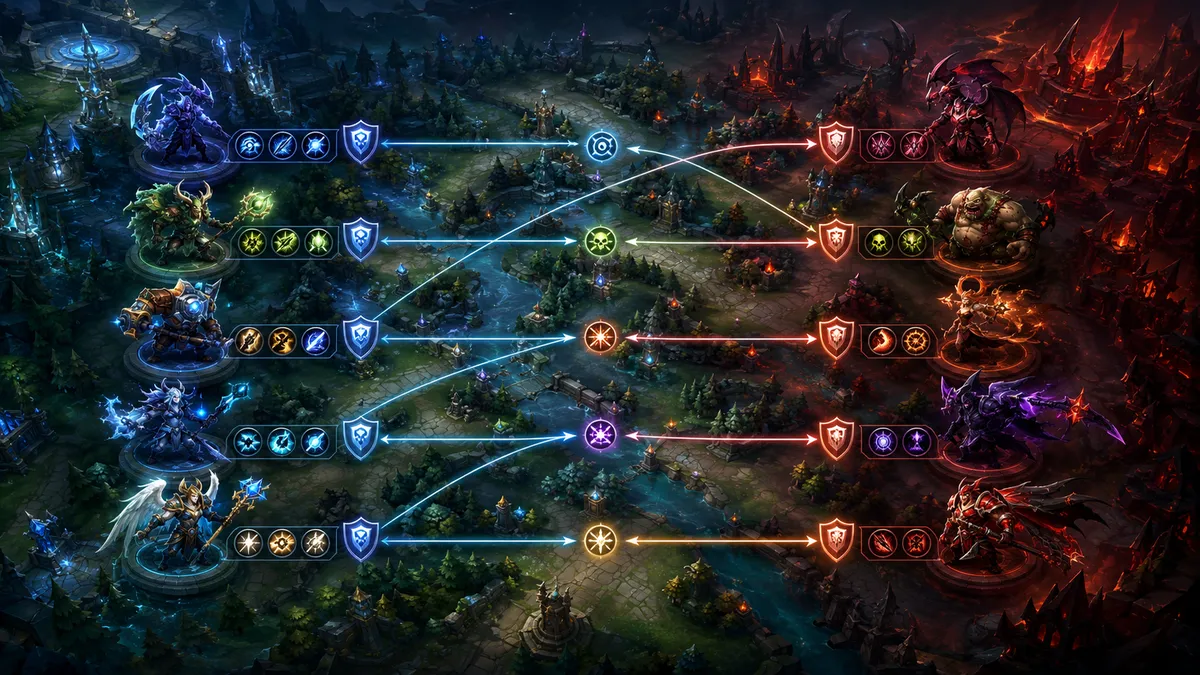
What Is a Hero Counter in Dota 2?
A hero counter is a hero that makes another hero’s game harder. This can happen in many ways. A counter can win the lane. A counter can stop a hero from using mobility. A counter can survive a hero’s burst damage. A counter can remove illusions. A counter can punish healing. A counter can jump the backline. A counter can clear summons. A counter can stop channeling spells. A counter can make the enemy’s normal game plan unreliable.
For example, a mobile hero hates reliable disables. An illusion hero hates strong area damage. A fragile ranged carry hates gap close. A healing lineup hates anti-heal or burst. A greedy carry hates early tower pressure. A support with a save spell hates heroes that can jump and silence them. A teamfight hero hates spread positioning, silences, or long-range initiation.
Counters can be direct or indirect. A direct counter stops a specific hero. An indirect counter solves the enemy team’s strategy. For ranked games, indirect counters are often more reliable. Instead of asking only “what hero beats Phantom Lancer?” you should ask “does our team have illusion clear, wave clear, enough damage, and a way to end before he overwhelms us?” Instead of asking only “what beats Storm Spirit?” ask “do we have instant disable, silence, vision, and enough burst to punish him?”
Good counter-picking is about making the enemy’s win condition harder while keeping your own team’s win condition clear.
Why Counter-Picking Matters in Ranked Games
Counter-picking matters because ranked games are often decided by whether one hero becomes too comfortable. If the enemy carry gets a free lane and nobody can control them later, the game becomes hard. If the enemy mid hero rotates freely and nobody can catch them, side lanes collapse. If the enemy supports can stand safely behind their cores and cast every spell, fights become difficult. A good counter pick prevents these situations before they happen.
Ranked drafting is not the same as professional Captain’s Mode. In All Pick, players choose heroes through a pick and ban process, with hero bans and simultaneous pick rounds affecting how much information each player has before locking in. The current All Pick structure includes a 15-second ban voting phase where each voted hero has a 50% chance to be banned, and later patch history changed All Pick into rounds where both teams pick heroes before reveal.
Because ranked draft information is incomplete, you cannot always get the perfect counter. Supports often pick early. Cores may not see every enemy hero before choosing. Some heroes are banned. Teammates may pick unexpectedly. That means your goal is not perfect counter-picking. Your goal is smart counter-picking.
A smart counter pick does three things. First, it answers an enemy threat. Second, it fits your role. Third, it still works with your team. If a pick does only one of these, it may be risky. If it does all three, it is a strong ranked pick.
The Biggest Counter-Picking Mistake
The biggest counter-picking mistake is picking a hero you cannot play just because it counters one enemy. This happens constantly in low and mid MMR. A player sees an enemy Phantom Lancer and picks a hero they barely know. A player sees an enemy Storm Spirit and picks a lockdown hero they cannot lane with. A player sees an enemy Drow Ranger and picks a jumper they do not understand. The idea is right, but the execution is wrong.
A counter only works if you can actually play it. If you lose lane badly, farm slowly, miss your timing, or use spells incorrectly, the counter does not matter. A comfort hero with a decent matchup is often better than a perfect theoretical counter you cannot execute.
The second mistake is countering one hero while ignoring the whole draft. You may pick a hero that counters the enemy carry, but now your team has no tower damage. You may pick a hero that counters the enemy mid, but your lineup has no saves. You may pick a greedy counter when your team already has three greedy heroes. That is not good drafting.
The third mistake is forgetting your role. A hard support should not pick a farm-heavy hero just to counter one enemy. An offlaner should not pick a second carry if the team needs initiation. A mid should not pick a passive scaling hero if the team already has a greedy carry and no tempo. Counters must respect role responsibility.
Counter-Picking Starts With Identifying the Enemy Win Condition
Before picking a counter, identify what the enemy team wants to do. This is more useful than focusing on one hero name.
Does the enemy want to farm late? Does the enemy want to push early? Does the enemy want to win through teamfight ultimates? Does the enemy want to split push? Does the enemy have one mobile hero who must be controlled? Does the enemy have a fragile backline? Does the enemy rely on healing? Does the enemy have illusions or summons? Does the enemy lack damage early? Does the enemy lack stuns?
Once you understand their win condition, you can pick a hero that disrupts it. If the enemy wants a late-game illusion carry, pick wave clear, illusion clear, tempo, or heroes that can pressure before they become strong. If the enemy wants to jump your backline, pick saves, counter-initiation, or tankier supports. If the enemy wants to group and push, pick wave clear, teamfight, or heroes that punish grouping.
This is why Dota Plus Assistant offers hero suggestions that consider both allied and enemy heroes during draft, while its item and ability suggestions are generated from millions of recent games at each skill bracket. It exists because hero choice depends heavily on lineup context, not only one isolated matchup.
A good counter pick is not only a response. It is a plan.
Countering Mobile Heroes
Mobile heroes are some of the most frustrating heroes to play against in ranked. Storm Spirit, Puck, Queen of Pain, Ember Spirit, Void Spirit, Anti-Mage, Slark, Weaver, Morphling, and similar heroes can dodge fights, escape bad situations, hunt supports, and punish poor positioning. If your team has no reliable control, these heroes can dominate.
The best way to counter mobile heroes is reliable lockdown. Instant disables, silences, roots, hexes, leashes, long-duration stuns, and strong vision all matter. Mobile heroes are strongest when they choose when to enter and leave. Counters work by removing that choice.
Good heroes against mobility often include Lion, Shadow Shaman, Bane, Disruptor, Puck, Doom-style control heroes, Legion Commander, Faceless Void, Night Stalker, Bloodseeker, Spirit Breaker, Nyx Assassin, and other heroes that can catch, silence, reveal, or punish movement. The exact pick depends on role and patch, but the principle stays the same: mobility needs control.
Supports can counter mobility with disables and positioning. Offlaners can counter mobility with initiation. Mids can counter mobility with silence or burst. Carries can counter mobility later with Abyssal Blade-style lockdown or other control items, but waiting until late can be dangerous if nobody controls the hero early.
Do not draft five damage heroes with no catch into mobile enemies. You may win damage charts and still lose every fight because the enemy never stays long enough to die.
Countering Illusion Heroes
Illusion heroes can take over games when the enemy team lacks area damage and wave clear. Phantom Lancer, Naga Siren, Terrorblade, Chaos Knight, and illusion-based builds can overwhelm single-target lineups. If your team cannot clear illusions, fights become confusing and lanes become hard to push.
The best counters to illusion heroes are area damage, cleave, wave clear, illusion identification, mana burn resistance, and tempo. Some heroes do not need to “kill” the real hero immediately; they simply clear illusions fast enough that the illusion hero cannot dominate the fight.
Good anti-illusion options often include Earthshaker, Leshrac, Axe, Sven, Ember Spirit, Sand King, Timbersaw, Underlord, Legion Commander in certain situations, Shadow Fiend, Lina, Puck, Magnus, and heroes or item builds that provide strong AoE damage. Some supports like Jakiro, Grimstroke, Crystal Maiden, Warlock, Phoenix, and Disruptor can also help by controlling areas and clearing waves.
The biggest mistake is ignoring the illusion problem until it is too late. If the enemy picks Phantom Lancer and your team drafts five single-target heroes, your game may become extremely hard. Even if you win early fights, the illusion carry may eventually become unmanageable.
Countering illusion heroes is not only about hero picks. It is also about ending the game before they peak, protecting towers, controlling their jungle, and not giving them free farm. If you draft against illusions but still let the enemy illusion carry farm safely for 30 minutes, the counter may not be enough.
Countering Healing and Sustain
Healing and sustain lineups can be difficult because they survive your first wave of damage and then win extended fights. Heroes like Dazzle, Oracle, Warlock, Io, Omniknight-style defensive supports, Necrophos, Huskar, Alchemist, Lifestealer, and tanky aura lineups can feel impossible if your team has no way to reduce healing, burst targets, or reset fights.
There are three main ways to counter healing. First, kill the healer or save hero before they cast spells. Second, use anti-heal effects or items. Third, burst a target so quickly that healing cannot save them.
Heroes with backline jump are valuable against save supports. If Oracle or Dazzle stands freely behind their team, fights become hard. A mobile mid, initiator, or soft support can force them to use defensive spells on themselves or die before saving the carry.
Ancient Apparition is a classic example of a hero that punishes healing-based strategies because his ultimate changes how enemies can rely on regeneration and healing in fights. Other heroes can counter healing through burst, silence, displacement, or forcing bad positioning.
Do not fight sustain lineups slowly if they are built to win long fights. Either burst the key target, kill the healer first, kite their strongest timing, or take objectives before their sustain becomes overwhelming.
Countering Tanky Heroes
Tanky heroes are designed to stand in front and absorb attention. Bristleback, Centaur Warrunner, Tidehunter, Primal Beast, Dragon Knight, Timbersaw, Underlord, Axe, Mars, and similar heroes can make fights difficult if your team wastes every spell on them while enemy damage dealers stay safe.
The first rule against tanky heroes is not always to hit them first. Sometimes the best counter is ignoring them and killing their backline. If the tank is hard to kill but has little damage without teammates, jumping the supports or damage cores may be better.
The second rule is to draft percentage-based damage, armor reduction, break, healing reduction, mana pressure, or heroes that scale well against high HP. Lifestealer, Slardar, Viper, Necrophos, Drow Ranger, Ursa-style damage heroes, and certain item builds can help depending on the enemy hero.
The third rule is to understand what makes the tanky hero tanky. Is it passive damage reduction? Healing? Armor? Magic resistance? High HP? Spell immunity timing? Auras? Once you know the source of durability, you can answer it more accurately.
Low MMR players often lose to tanky heroes because they panic and throw spells into the first hero they see. Better players ask whether that hero is actually the right target.
Countering Fragile Ranged Carries
Fragile ranged carries can deal huge damage if protected, but they often hate being jumped. Drow Ranger, Sniper, Muerta-style ranged damage heroes, Lina carry-style builds, and similar heroes become dangerous when they stand freely behind a front line. If your team cannot reach them, they may kill everyone from safety.
The best counters are gap close, initiation, flanking, vision control, and heroes that can survive long enough to reach the backline. Storm Spirit, Spirit Breaker, Slark, Phantom Assassin, Spectre, Puck, Clockwerk, Tusk, Nyx Assassin, Axe, Centaur Warrunner, Mars, and other jump heroes can punish ranged cores if they find the right angle.
Do not run straight at a protected ranged carry through the enemy front line. That is what they want. Use Smoke, side angles, vision, Blink Dagger, mobility spells, or split pressure. Force the ranged carry to worry about their own position instead of freely attacking.
If you are drafting support against fragile ranged carries, consider heroes with long-range catch, saves, or ways to protect your jumper. If your team has no one who can reach the backline, the game may become extremely hard.
Ranged carries are strongest when the fight is simple and front-to-back. Counter them by making the fight messy and threatening their safety.
Countering Melee Carries
Melee carries usually need to get close to deal damage. Heroes like Lifestealer, Ursa, Sven, Phantom Assassin, Slark, Juggernaut, Wraith King, and similar heroes can be terrifying once they reach targets. The counter is often kiting, control, disarms, slows, saves, and forcing them to waste their mobility or spell immunity.
Kiting means making the melee carry chase without dealing damage. Force Staff, Glimmer Cape, Ghost Scepter, slows, roots, stuns, movement speed control, and positioning can all help. A melee carry who uses BKB and hits nobody has wasted a huge timing.
Drafting against melee carries often means picking supports and cores that can survive the first jump or punish overcommitment. Shadow Demon, Oracle, Dazzle, Winter Wyvern, Disruptor, Bane, Treant Protector, Puck, Venomancer-style slows, Viper-style break and zone control, and other heroes can make melee carries uncomfortable.
Do not stand clumped and let the melee carry hit multiple heroes. Do not use every disable before they commit. Do not walk into their strongest timing without saves. Make them chase, waste spells, and fight into bad positions.
Countering Split Push
Split push heroes win by pressuring multiple lanes, avoiding direct fights, and forcing your team to react. Anti-Mage, Nature’s Prophet, Tinker-style map pressure, Arc Warden, Naga Siren, Broodmother, Lycan, Beastmaster, and illusion or summon heroes can create chaos if your team cannot catch them or push waves.
Countering split push requires catch, wave clear, mobility, and objective discipline. If you chase one hero across the map with five players, you may lose other lanes. If you ignore split push completely, your towers fall. The key is to respond efficiently.
Good counters include heroes with global presence, instant disables, strong wave clear, or the ability to punish isolated heroes. Spirit Breaker, Storm Spirit, Puck, Queen of Pain, Nature’s Prophet, Clockwerk, Nyx Assassin, Legion Commander, Beastmaster, Batrider-style catch, and similar heroes can help depending on the draft.
Vision is also essential. Split push heroes rely on uncertainty. If you see them moving between lanes, you can punish them. If you have no vision, they control the map.
Do not draft five slow heroes with no catch into split push. You may win one fight and still lose buildings because nobody can respond.
Countering Summon Heroes
Summon heroes create pressure through units. Lycan, Beastmaster, Chen, Enchantress, Nature’s Prophet, Broodmother, Visage, and similar heroes can take towers early, control areas, and overwhelm teams that lack wave clear or unit clear.
Countering summons requires AoE damage, wave clear, heroes that can kill units quickly, and the ability to stop early tower pressure. If your team picks heroes with no wave clear, summon lineups can take towers before your cores are ready.
Good options often include Leshrac, Underlord, Sand King, Timbersaw, Earthshaker, Axe, Sven, Jakiro, Phoenix, Kunkka, Lina, Shadow Fiend, and heroes that clear waves and punish grouped units. Some drafts also counter summons by fighting earlier than the summon lineup expects or by killing the summoner before units matter.
Do not let summon heroes take every tower for free. Wards, wave clear, and early rotations matter. If your team cannot defend towers, the enemy summon lineup will shrink your map quickly.
Countering Invisible Heroes
Invisible heroes punish teams that refuse to buy detection. Riki, Bounty Hunter, Clinkz, Nyx Assassin, Weaver, Shadow Blade users, and Glimmer Cape saves can dominate low MMR games because players complain about invisibility but do not buy Sentry Wards, Dust, or reveal tools.
The first counter to invisibility is detection. This is not optional. If the enemy has invisible heroes and your team has no detection, you are choosing to make the game harder.
The second counter is map awareness. Invisible heroes still move through predictable areas. Defensive wards, Sentries in farming zones, and good positioning can reduce their impact.
The third counter is heroes that naturally reveal, control, or survive invisible ganks. Bounty Hunter, Slardar, Zeus-style reveal tools, Disruptor, Spirit Breaker, tanky supports, and heroes with instant disables can help depending on the game.
Do not expect only the position 5 to solve invisibility. If you are a core and keep dying to an invisible hero, buy detection when needed. Winning matters more than protecting one inventory slot.
Countering Big Teamfight Ultimates
Some heroes win fights with huge cooldowns. Enigma, Tidehunter, Magnus, Faceless Void, Earthshaker, Warlock, Disruptor, Phoenix, Dark Seer, and similar heroes can punish teams that group badly or fight without vision.
There are several ways to counter big teamfight ultimates. First, spread out. If your whole team stands together, you are making their job easy. Second, pick heroes with long-range interrupts, saves, silences, or counter-initiation. Third, track cooldowns. If a huge ultimate is down, that may be your window to fight. Fourth, force fights in areas where the enemy cannot land the perfect spell.
Heroes with long-range stuns, silences, vision, saves, and counter-initiation can reduce the impact of these ultimates. Rubick can also punish certain big spells if positioned well. Silencer-style global control can interrupt or discourage certain channels depending on timing and spell interaction. Bane, Vengeful Spirit, Shadow Demon, Oracle, Dazzle, Winter Wyvern, Puck, Nyx Assassin, and long-range initiators can all help in different situations.
The biggest mistake is knowing the enemy has a big ultimate and still walking into a tight choke point with no vision. Some counters happen in draft, but many happen through positioning.
Countering Strong Laners
Some heroes are not scary because of late game. They are scary because they destroy the lane. Viper, Razor, Huskar, Necrophos, Timbersaw, Bristleback, Undying, Dazzle lanes, Venomancer-style harassment, and other lane bullies can make the first ten minutes miserable.
Countering strong laners starts with realistic expectations. You may not always “win” the lane. Sometimes the counter is surviving, pulling, dragging waves, buying extra regen, avoiding bad trades, and reaching your first recovery timing.
Pick heroes that can survive pressure, secure creeps from range, avoid bad trades, or rotate away. Supports can counter lane bullies with sustain, strong trading, pulls, and protective spells. Cores can counter them by buying enough regen, using creep aggro, and not feeding.
Do not pick a weak lane hero into a lane bully unless your support matchup makes it playable. If you blind pick a greedy carry into a brutal offlane duo, your game may collapse before counters matter.
Lane counters are important, but lane discipline matters too. Even a bad matchup can be playable if you avoid feeding.
Countering Greedy Drafts
Greedy drafts need time. They usually have multiple heroes that want farm before fighting. A team with a hard-farming carry, farming mid, greedy offlane, and passive supports may become strong later, but it can be punished early.
The best counter to greed is tempo. Pick heroes that win lanes, take towers, invade jungle, and force objectives before the greedy heroes are ready. Dragon Knight, Leshrac, Death Prophet-style tower pressure, Beastmaster-style objective pressure, Chen or Enchantress-style early movement, Lycan-style pushing, strong offlane initiators, and active mids can punish greedy lineups.
Do not counter greed by also picking greed unless your draft clearly scales better and can survive. In many ranked games, the team that acts earlier controls the map.
Against greedy drafts, your communication matters. If you win lanes, do not farm passively. Take towers. Ward enemy jungle. Smoke with item timings. Force Roshan. Make the enemy carry fight before they want to.
A greedy enemy draft is only weak if you punish the timing. If you let them farm freely, you are helping them.
Countering Early Push Drafts
Early push drafts want towers quickly. They use summons, healing, auras, strong laners, and tower damage to shrink your map before your cores are ready. If your draft cannot clear waves or defend towers, the game becomes hard.
The counters are wave clear, tower defense, teamfight, and split pressure. Heroes like Jakiro, Keeper of the Light, Underlord, Leshrac, Sand King, Earthshaker, Lina, Puck, Phoenix, Warlock, Dark Seer, and other wave-clear or teamfight heroes can slow pushes. Strong tower defenders make early push lineups work harder.
You can also counter push by cutting waves or trading towers. If the enemy groups five heroes top, maybe you cannot defend, but you can pressure another lane. Do not feed five heroes into a tower defense you cannot win.
Vision matters too. If you see the push coming early, you can prepare. If you only react after the tower is already dying, you may be too late.
Countering push is about delaying their timing and preventing them from taking clean objectives.
Countering Save Supports
Save supports make kills difficult. Oracle, Dazzle, Shadow Demon, Winter Wyvern, Abaddon, Omniknight-style defensive heroes, and Treant Protector can ruin your initiation if you do not account for them.
The first counter is killing or disabling the save support before committing to the main target. If you jump the enemy carry while Oracle is free-casting behind them, you may waste everything. If you jump Oracle first, the carry becomes much easier to kill.
The second counter is silence or displacement. A save support who cannot cast is not saving anyone. Puck, Night Stalker, Silencer-style control, Doom-style control, Nyx Assassin, Spirit Breaker, Clockwerk, Tusk, Storm Spirit, and other backline threats can pressure save supports.
The third counter is baiting the save and resetting. If the enemy uses a major save early, disengage and fight again when it ends or goes on cooldown. Low MMR players often keep attacking into saves and waste damage.
Save supports counter careless initiation. Counter them by identifying them as priority targets before the fight starts.
Countering Backline Spellcasters
Backline spellcasters can win fights if ignored. Zeus, Skywrath Mage, Witch Doctor, Shadow Shaman, Grimstroke, Warlock, Keeper of the Light, Lich, Disruptor, and similar heroes can deal damage, control fights, or save allies from a safe distance.
Countering backline heroes requires reach. If your team cannot reach them, they will cast every spell. Jump heroes, long-range initiation, smoke movement, flanking, and vision control are key.
Clockwerk, Spirit Breaker, Nyx Assassin, Storm Spirit, Puck, Queen of Pain, Spectre, Slark, Bounty Hunter, Tusk, Earth Spirit, and similar heroes can threaten backlines. Even if they do not kill the support instantly, they can force panic, break formation, and stop free casting.
Do not always fight front-to-back against strong backline spellcasters. If you only hit the tank while Zeus or Warlock casts freely, the fight becomes difficult. Identify the backline threat and draft or play to pressure it.
Countering High Armor and Evasion
Some heroes survive because physical attacks do not work well against them. High armor, evasion, disarms, or defensive items can make right-click damage unreliable. Butterfly-style evasion, Solar Crest-style protection, armor stacking, and agility cores can make fights difficult for physical damage lineups.
Counters include magic damage, pure damage, accuracy items, armor reduction, disables, and burst. If your lineup is entirely physical and enemies build evasion or armor, you may need specific items or heroes to solve it. If your draft has mixed damage, enemies cannot counter everything as easily.
Heroes like Slardar, Drow Ranger, Vengeful Spirit, Shadow Fiend, Templar Assassin in certain drafts, Elder Titan-style armor reduction concepts, and magic-heavy mids can help depending on the game. Items also matter. Counter-picking is not only heroes; itemization must support the counter.
The mistake is refusing to adapt. If the enemy has evasion and your carry keeps missing attacks, the solution is not to complain. The solution is to itemize or draft accordingly.
Countering Magic Burst
Magic burst heroes can kill targets before they react. Lina, Zeus, Skywrath Mage, Leshrac, Queen of Pain, Puck, Lion, Tiny, and similar heroes can punish low-HP heroes and weak positioning.
Countering magic burst requires magic resistance, BKB timing, saves, health, positioning, and sometimes heroes that can jump the caster first. Supports with Glimmer Cape, Force Staff, saves, or defensive spells can reduce burst impact. Cores may need BKB or other defensive items before fighting.
Draft-wise, tankier heroes and heroes with built-in survivability can make burst lineups struggle. If the enemy needs to kill one target quickly and fails, they may have little left afterward.
Do not pick five fragile heroes into heavy burst unless your team has saves or strong initiation. A lineup that dies before casting spells is hard to play.
Counter-Picking by Role
Carry Counter Picks
Carry counter-picking is about lane survival, scaling, and matchup fit. As carry, you usually want to answer enemy offlane pressure, enemy disables, enemy late-game threats, and enemy teamfight.
If the enemy has no illusion clear, illusion carries may be strong. If the enemy lacks gap close, ranged carries may be strong. If the enemy has many tanky heroes, Lifestealer or sustained damage carries may be strong. If the enemy has many fragile supports, Spectre or Slark-style backline pressure may be strong. If the enemy wants to push early, you may need a carry that can fight earlier instead of a very greedy farmer.
Do not counter-pick as carry only for late game. You still need to survive lane and reach your timing.
Mid Counter Picks
Mid counter-picking is often about lane matchup and tempo. A good mid counter can win lane, control runes, rotate earlier, or stop the enemy mid from snowballing.
Against mobile mids, pick control or silence. Against greedy mids, pick tempo and tower pressure. Against fragile mids, pick burst. Against strong lane bullies, pick heroes that can secure creeps safely or recover with jungle. Against enemy drafts with no backline protection, mobile mids can dominate.
Mid last pick can decide the game, but only if it fits the whole draft. Do not pick a winning lane hero if your team then has no scaling, no control, or no tower damage.
Offlane Counter Picks
Offlane counter-picking is about ruining the enemy carry’s lane while giving your team initiation, durability, or utility. The offlaner often sees the enemy carry or support before picking, depending on draft order, so this role can create strong lane counters.
Against melee carries, lane bullies and durable heroes can pressure. Against fragile ranged carries, jump initiation and gap close matter. Against illusion carries, AoE and wave clear matter. Against greedy carries, tower pressure and early aggression matter.
Do not pick offlane only to counter lane if your team needs initiation. A lane counter that leaves your team with no frontliner may create mid-game problems.
Soft Support Counter Picks
Position 4 counter-picking is about movement, ganks, lane pressure, scouting, and disabling key enemies. A good soft support can counter enemy mid rotations, punish greedy supports, scout invisible heroes, or help the offlaner win lane.
Against mobile heroes, choose disables or silence. Against backline supports, choose jump or scouting. Against greedy carries, choose lane pressure. Against strong lanes, choose trading and control. Against invisible heroes, choose detection-friendly heroes or heroes with reveal tools.
Position 4 counters work best when they create action. Do not pick a counter and then play passively.
Hard Support Counter Picks
Position 5 counter-picking is harder because hard supports often pick early. Still, you can pick stable heroes that answer common threats. Saves counter burst. Disables counter mobility. Lane pressure counters weak offlaners. Healing or protection helps weak carries. Strong teamfight supports punish grouped enemies.
If you are picking early, avoid supports that are easily countered or require perfect conditions. Pick heroes that provide value even when the enemy draft is unknown.
Hard support counter-picking is often about giving your team missing tools rather than hard-countering one enemy.
How to Use Ban Phase for Counters
Bans are part of counter-picking. If there is a hero your role cannot handle, nominate it. If your hero pool is weak against a specific hero, ban it. If a hero is very popular in your bracket and makes games difficult, ban it.
All Pick ban votes have a chance-based structure, and the game mode information lists the ban phase as 15 seconds where each voted hero has a 50% chance of succeeding. This means bans are not guaranteed, so you still need backup plans. Do not rely entirely on one ban to protect your draft.
A smart ban removes a problem your hero pool struggles against. If you play supports with poor escape, maybe ban a strong jumper. If you play illusion carries, maybe ban a strong illusion clearer. If you play melee carries, maybe ban a lane bully. If you play mid, maybe ban a common hard matchup.
Banning is not only about removing overpowered heroes. It is about protecting your best picks.
How to Build a Counter-Pick Hero Pool
A good counter-pick hero pool should be small but flexible. You do not need to play every counter hero in Dota 2. You need enough heroes to answer common draft problems in your role.
For carry, build a pool with one stable carry, one fast farmer, one fighting carry, one illusion or scaling option, and one ranged damage option if you can play it. For mid, build a pool with one stable laner, one tempo hero, one magic damage hero, one mobile hero, and one scaling hero. For offlane, build a pool with one initiator, one lane bully, one aura/frontline hero, one teamfight hero, and one anti-carry option. For supports, build a pool with one disable hero, one save hero, one lane pressure hero, one teamfight hero, and one roaming or scouting hero.
This kind of pool lets you counter enemy ideas without leaving your comfort zone. You are not guessing. You are choosing from practiced options.
Do not add a hero to your ranked counter pool just because it counters something. Practice it first. Learn lane matchups, item builds, spell timing, and bad games. A counter pick you cannot execute is not a counter.
Hero Counters vs Item Counters
Sometimes you do not need a different hero. You need a different item. This is important because you cannot always counter-pick perfectly in ranked. If you pick early, the enemy may counter you. If you pick support, your core may not answer a threat. Items help solve draft problems.
Against magic burst, defensive items and BKB timings matter. Against invisibility, detection matters. Against healing, anti-heal items or burst strategy matter. Against evasion, accuracy matters. Against physical damage, armor, Ghost Scepter, Force Staff, or kiting items may matter. Against silences, dispels matter. Against mobility, disables and catch items matter.
Dota’s item system is built around adapting to the match; Valve’s Steam page describes Dota as having an abundance of powerful items to help meet the needs of each game.
Do not blame draft if itemization could solve the problem. A good player counters enemies through both pick and build.
Using Statistics Without Being Controlled by Them
Hero statistics can help you draft, but they should not make decisions for you. A hero may have a good win rate but be bad in your specific game. A counter may have good matchup data but be terrible if you cannot play it. A hero may be strong in high MMR but difficult in low MMR because teammates do not coordinate around it.
Use data as a clue. Ask why a hero works. Is it strong in lane? Does it counter popular heroes? Does it scale well? Does it fit the current patch? Does it punish low coordination? Does it require teamwork?
Dota Plus Assistant and other data-based tools can suggest heroes based on allied and enemy lineups, but the final decision still depends on your comfort, role, and game understanding.
The best ranked players combine data, comfort, and draft logic. They do not blindly copy lists.
Common Counter-Picking Mistakes
One common mistake is picking a counter you cannot play. Comfort matters.
Another mistake is countering one hero while ignoring the other four. Dota is a team game.
Another mistake is picking a counter that ruins your role. A position 5 should not become a greedy core just to counter one hero.
Another mistake is countering late game but losing every lane. You still need a playable early game.
Another mistake is countering lane but having no mid-game plan. Winning lane is not enough.
Another mistake is drafting no stuns into mobile heroes. Damage does not matter if enemies escape.
Another mistake is drafting no wave clear into illusion or summon heroes. You need to clear units and defend towers.
Another mistake is drafting no tower damage. Kills must become objectives.
Another mistake is forgetting item counters. Sometimes the correct item solves the problem better than a different hero would have.
Another mistake is panic picking. Use the draft timer calmly and pick from a prepared pool.
How to Counter-Pick in Low MMR
In low MMR, simple counters work best. You do not need a complex professional draft. You need heroes that clearly punish common mistakes.
Low MMR players often pick greedy heroes, ignore detection, position badly, group too much, fail to end games, and fight without item timings. Counter these habits with simple, reliable picks. Choose stuns against mobile heroes. Choose wave clear against push and illusions. Choose strong lane supports to protect weak carries. Choose tower pressure against greedy drafts. Choose jump heroes against fragile backlines. Choose saves against burst-heavy lineups.
Do not overcomplicate it. A Lion with good disable usage can counter more ranked problems than a difficult hero you barely understand. A Jakiro can defend towers and pressure lanes. A Wraith King can give reliable carry presence. A Dragon Knight can stabilize mid and pressure towers. A Centaur can initiate. A Lich can protect and teamfight.
In low MMR, consistency is often the best counter.
How to Counter-Pick in Mid MMR
In mid MMR, players punish bad drafts more often. You need to think beyond one hero. Counter the enemy strategy. If the enemy has late-game scaling, punish timing. If the enemy has strong teamfight, spread and draft saves or long-range initiation. If the enemy has no tower damage, pick heroes that can defend and outscale. If the enemy has no catch, pick mobility. If the enemy has no saves, pick burst.
Mid MMR is where hero pools matter more. You should have enough options to answer common threats without picking random heroes. Drafting becomes less about “what hero counters this?” and more about “what does our team need now?”
If you pick late, use the information. If you pick early, choose stable heroes. If your teammate picks greed, add tempo. If your teammate picks no disable, add disable. If your team has no wave clear, fix it.
How to Counter-Pick in High MMR
In high MMR, counter-picking becomes more precise. Players know matchups, punish weak lanes, deward better, itemize faster, and play around timings. A theoretical counter is not enough. It must fit lane, draft, tempo, and execution.
High MMR counter-picking often looks less obvious because players counter strategies rather than single heroes. They may pick a hero to protect tower timing, secure Roshan, deny jungle access, win rune control, or force enemy supports into bad positions. They may pick a flexible hero early to hide role information. They may pick a support that enables a core matchup rather than directly countering an enemy.
At this level, patch awareness matters more. Dota changes regularly, and Valve’s official game page emphasizes regular updates and constant evolution. A counter that worked last year may not work the same way now if hero abilities, items, map layout, or timings have changed.
High MMR drafting rewards players who understand why counters work, not only which names appear on a list.
How BoostRoom Helps With Hero Counters and Drafting
BoostRoom can help Dota 2 players improve counter-picking by reviewing real ranked drafts and explaining what each pick solved or failed to solve. Many players lose games in the draft without realizing it. They pick comfort heroes that do not fit the team. They counter one enemy but ignore team structure. They draft no stuns, no wave clear, no tower damage, or no saves. They pick heroes they cannot play because they heard it was a counter.
BoostRoom coaching can help players build role-specific hero pools with reliable counter options. A carry player can learn which heroes to pick against tanky lineups, fragile backlines, illusion problems, or low-disable drafts. A mid player can learn matchup-based picks, tempo counters, and lane recovery options. An offlaner can learn how to counter enemy carries while still giving the team initiation. Support players can learn which heroes provide saves, disables, lane pressure, vision, or backline control.
Replay review also helps because counter-picking does not end in the draft. A coach can show whether you actually played the counter correctly. Did you pressure the hero you countered? Did you buy the right items? Did you use your timing? Did you focus the right target? Did you let the enemy recover?
Better counter-picking is not memorizing a list. It is understanding the game.
FAQ
What is a hero counter in Dota 2?
A hero counter is a hero that makes another hero or strategy harder to play. Counters can work through lane pressure, disables, burst damage, saves, illusion clear, mobility, wave clear, anti-heal, or teamfight control.
How do I know what hero counters the enemy?
Look at what the enemy hero needs to succeed. Does it need mobility, illusions, healing, long fights, backline safety, early towers, or late-game farm? Then pick a hero that disrupts that need while still fitting your role.
Should I always counter-pick in ranked?
No. Counter-picking is useful, but comfort and team fit matter too. A counter you cannot play is usually worse than a comfort hero with a decent matchup.
What counters mobile heroes in Dota 2?
Reliable disables, silences, roots, hexes, leashes, vision, and instant initiation counter mobile heroes. Mobile heroes are strongest when they choose when to enter and leave fights.
What counters illusion heroes in Dota 2?
Area damage, cleave, wave clear, illusion clear, tempo, and strong objective pressure counter illusion heroes. Do not let illusion carries farm freely into late game.
What counters healing heroes in Dota 2?
Anti-heal effects, burst damage, silence, backline jump, and killing save supports first can counter healing heroes. The goal is to stop healing from changing the fight.
What counters invisible heroes in Dota 2?
Detection counters invisibility. Buy Sentry Wards, Dust, and reveal tools. Vision, map awareness, and heroes with reveal or strong lockdown also help.
Is counter-picking more important than comfort?
No. The best pick is usually a hero you can play well that also fits the draft. Comfort without draft logic can fail, but counter-picking without comfort can also fail.
How many counter heroes should I learn?
Most players should build a small hero pool with three to five main heroes per role, including options for common problems like mobility, illusions, tanky heroes, backline threats, and greedy drafts.
Can BoostRoom help me learn Dota 2 hero counters?
BoostRoom can help with Dota 2 drafting coaching, hero pool planning, counter-pick advice, replay review, matchup analysis, itemization, and role-specific ranked improvement.
Final Thoughts: Counter-Picking Is About Solving Problems
Counter-picking in Dota 2 is not about memorizing one hero against another hero. It is about solving the problems the enemy draft creates. If the enemy has mobility, you need control. If the enemy has illusions, you need area damage. If the enemy has healing, you need anti-heal, burst, or backline pressure. If the enemy has fragile ranged cores, you need gap close. If the enemy has greedy scaling, you need tempo and objectives. If the enemy has big teamfight ultimates, you need spacing, silence, saves, or cooldown awareness.
The best counter picks also fit your own team. A hero that counters the enemy but leaves your team with no stuns, no tower damage, no wave clear, or no frontliner may still be a bad pick. Ranked games are won by complete drafts, not isolated matchup charts.
Build a small hero pool with flexible answers. Learn your comfort heroes deeply. Understand which enemy strategies they punish and which matchups they dislike. Use bans to protect your pool. Use draft information calmly. Do not panic pick. Do not choose heroes you cannot play just because they look like counters. Think about lanes, roles, timings, items, and objectives.
BoostRoom can help players improve this process through coaching, replay review, and practical draft analysis. If you often feel countered, confused in draft, or unsure what to pick against enemy heroes, structured guidance can help you build a clearer system.
Good counter-picking makes the enemy’s game harder before the match even starts. Better drafting leads to better lanes, better fights, better objectives, and more ranked wins.



