Dota 2 Drafting Guide: How to Pick Better Heroes in Ranked Games
Drafting is one of the most important skills in Dota 2 ranked games. Before the lane starts, before anyone buys items, before the first rune fight, and before the first last hit, the draft already creates advantages and problems. A good draft gives your team clear lanes, enough disables, enough damage, better scaling, objective pressure, and a realistic way to win. A bad draft can leave your team with no stuns, no tower damage, no saves, no teamfight, no scaling, or three heroes who all need the same farm.
Dota 2 has over one hundred heroes, and Valve describes the game as having diverse heroes, powerful items, and many possible playstyles where any hero can fill multiple roles depending on the match. That flexibility is what makes drafting exciting, but also difficult. A hero can be strong in one game and terrible in another because Dota is not only about hero strength; it is about hero fit.
In ranked games, drafting is different from professional Captain’s Mode. You usually do not control all five picks. You may not know what teammates will choose. You may be forced to pick early as support. You may have to choose a core before seeing every enemy counter. You may get teammates who ignore the draft completely. That means solo queue drafting is not about creating the perfect professional lineup. It is about making the best possible pick with the information you have.
This Dota 2 drafting guide explains how to pick better heroes in ranked games. You will learn how to think about roles, lanes, counter-picks, team synergy, damage balance, disables, saves, scaling, objective pressure, blind picks, last picks, hero pools, and common mistakes. BoostRoom can also help ranked players improve drafting through coaching, replay review, hero pool planning, and practical feedback based on real matches.
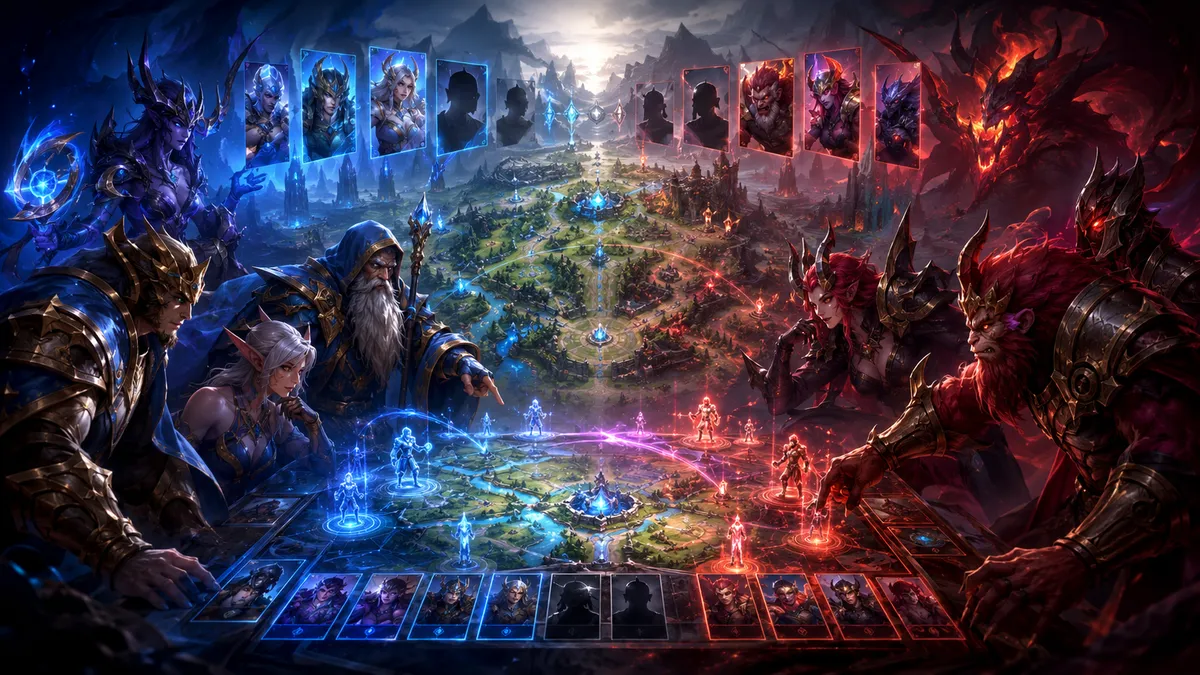
Why Drafting Matters in Ranked Games
Drafting matters because Dota 2 heroes are not equal in every situation. Some heroes dominate lanes but fall off later. Some heroes scale well but need time. Some heroes need protection. Some heroes need early kills. Some heroes need Blink Dagger. Some heroes need a strong laning partner. Some heroes are excellent against illusions. Some heroes are terrible against heavy disables. Picking without thinking can make the match much harder than it needs to be.
A strong draft gives your team answers. If the enemy has a mobile hero, your draft should have reliable lockdown. If the enemy has healing, your team may need anti-heal or burst. If the enemy has strong physical damage, your team may need armor, kiting, disarms, or saves. If the enemy has illusion heroes, you need wave clear and area damage. If the enemy has five heroes that want to fight early, your draft needs to survive early pressure or fight back.
Drafting also decides who controls the map. A lineup with tower pressure can take objectives after winning fights. A lineup with no tower damage may get kills and still fail to progress. A lineup with strong teamfight can defend towers and contest Roshan. A lineup with no initiation may watch enemies farm because nobody can start a fight.
Many ranked games are lost because players pick heroes in isolation. A carry picks a greedy farmer. The mid picks another greedy farmer. The offlaner picks a damage hero with no initiation. The supports pick no disables. Suddenly the team has damage later, but no way to survive the first twenty minutes. Drafting is the skill of seeing the whole team, not only your hero.
Understand Ranked Drafting Rules Before You Pick
Most ranked players play All Pick or Ranked Roles, so understanding the structure helps. In All Pick, players pick heroes over three rounds: two players from each team pick in the first two rounds, then one player from each team picks in the final round. The first two rounds last 25 seconds, the last round lasts 20 seconds, and unpicked players lose gold when the timer expires. Current All Pick also includes automatic bans so that the match reaches a total of 16 banned heroes.
Ranked Roles and Ranked Classic also affect drafting. Valve’s 2020 update explains that Ranked Roles lets players queue for selected roles, while Ranked Classic does not let players select roles before the match. The Dota 2 Wiki currently describes Ranked Roles as a mode where players queue for the role they want, while Role Queue games are earned by searching with all roles selected.
This matters because your drafting responsibility changes based on your pick order and role. If you are a support picking early, you usually want a stable hero that does not get completely ruined by counters. If you are a core picking later, you have more responsibility to answer the enemy draft. If you are last pick mid or carry, your pick can decide whether your team has a clear win condition or a terrible matchup.
Do not waste the draft timer. Look at your teammates’ roles, enemy picks, bans, and what your team is missing. A rushed panic pick often creates problems that last the entire game.
The Biggest Drafting Rule: Pick for the Game, Not for Yourself
The most important drafting rule is simple: pick for the game. Your favorite hero may not be good in every match. A meta hero may not fit your team. A comfort hero may be strong, but only if it solves the current draft.
Picking for the game means asking questions before locking in. What role am I playing? What does my team already have? What does my team lack? What enemy heroes are already visible? What lane will I likely play? What damage type do we need? Do we have stuns? Do we have tower pressure? Do we have a way to start fights? Do we scale? Can we defend early? Can we take Roshan? Can we deal with enemy mobility?
A good pick should answer at least one major draft need. If your team has no disables, pick a hero with control. If your team has no frontline, pick a durable hero. If your team has no tower damage, pick a pusher or objective hero. If your team has four early-game heroes, maybe pick a carry who scales. If your team already has three greedy heroes, do not add another greedy hero.
This does not mean you should pick heroes you cannot play. Comfort matters. But the best ranked pick is usually where comfort and draft need overlap. If you can play three heroes in your role and one fits the match clearly better than the others, pick that one.
Drafting is not about proving you can play anything. It is about giving your team the highest chance to win.
Build a Small Hero Pool Before Drafting Ranked
A good draft starts before the match. If your hero pool is too random, you will struggle to pick well. Many ranked players lose MMR because they try to play every hero. They see a hero in a video, pick it once, lose lane, and blame the draft. This is not smart ranked preparation.
A strong ranked hero pool should be small but flexible. Most players should focus on three to five heroes per main role. Your pool should include safe blind picks, matchup-specific picks, and at least one hero that solves common team problems. If you play carry, you may want one stable carry, one fast farmer, one fighting carry, and one scaling option. If you play mid, you may want one lane-stable hero, one tempo hero, one magic damage hero, and one scaling hero. If you play support, you may want one disable hero, one save hero, one lane-dominating hero, and one teamfight hero.
A small hero pool helps you draft better because you understand matchups. You know when your hero is strong. You know bad lanes. You know item timings. You know which allies help you. You know which enemies counter you. You stop guessing.
Comfort also reduces panic. If your best hero is banned, you should have backup picks. If the enemy picks a counter, you should know your safer alternative. If your team needs a stun, you should have a stun hero prepared.
BoostRoom can help players build ranked hero pools based on role, rank, strengths, and common mistakes. A good hero pool is not only about strong heroes. It is about heroes you can actually win with.
Draft Around Roles First
Every ranked draft needs role clarity. In standard ranked roles, teams usually have position 1 carry, position 2 mid, position 3 offlane, position 4 soft support, and position 5 hard support. This structure matters because each role has different farm priority and responsibilities.
A carry usually provides late-game damage and objective threat. A mid usually provides tempo, damage, control, or scaling from solo levels. An offlaner usually provides initiation, durability, space creation, auras, or teamfight. A soft support usually provides movement, setup, disables, scouting, or early pressure. A hard support usually provides lane protection, vision, saves, disables, and low-farm utility.
Problems happen when players pick heroes that do not fulfill their role. A position 5 that needs too much farm can weaken the team. A position 3 that plays like a second carry can leave the team without initiation. A position 2 that farms passively while the team needs tempo can let the enemy control the map. A position 1 that joins too early without scaling can leave the team without late-game damage.
Role flexibility is part of Dota, but flexibility must still make sense. Valve’s Steam page notes that any hero can fill multiple roles, but that does not mean every hero is good in every role in every match. A flexible pick is strong when it gives your team options. It is weak when it confuses the team’s farm priority and game plan.
Before picking, ask: can my hero actually do the job my role requires in this match?
Draft for Lane Matchups
Ranked games often snowball from lanes. A draft that cannot lane may lose before its stronger timing arrives. You do not need to win every lane, but you need playable lanes.
Safe lane drafting should consider carry and hard support synergy. A weak early carry may need a strong defensive support. An aggressive carry may benefit from a support with a slow, stun, or strong trading spell. A ranged carry may need protection from gap closers. A melee carry may need a support who can help secure creeps and stop harassment.
Offlane drafting should consider pressure against the enemy carry. A strong offlane duo can ruin the enemy position 1’s start. The offlaner and position 4 should have a plan: trade, kill, deny pulls, drag waves, or survive. Picking two passive heroes in the offlane can give the enemy carry a free game.
Mid drafting is often about matchup and tempo. If you pick a hero that cannot lane against the enemy mid, you may lose runes, tower pressure, and early rotations. If you are last pick mid, you should pay close attention to enemy heroes already shown. Do you need wave clear? Can they kill you? Can you pressure them? Can you rotate?
Support players often pick early, so they cannot always know matchups. That is why stable supports with reliable spells are valuable. Core players usually have more information and should use it.
A good lane draft does not guarantee a win, but it gives your team a playable start.
Draft for Stuns and Disables
One of the most common ranked draft mistakes is having too few disables. Dota 2 has many mobile heroes, defensive items, and escape spells. If your team cannot stun or control enemies, fights become difficult.
Reliable disables are especially important against heroes like Storm Spirit, Puck, Queen of Pain, Anti-Mage, Slark, Ember Spirit, Void Spirit, Weaver, Morphling, and other mobile heroes. If you cannot catch them, they will choose when to fight and when to leave. Damage alone is not enough if the enemy can always escape.
Your team does not need five stunners, but it needs enough control to start fights and stop key enemies. Stuns, silences, roots, hexes, slows, leashes, and forced movement can all matter. The more mobile the enemy draft is, the more reliable your control must be.
Supports often provide early disables, but cores can help too. Offlaners with initiation, mids with control, and carries with late-game disables can all solve draft problems. If your team has no control after the first three picks, later picks should strongly consider adding it.
A draft with no stuns can work only if it has a very specific plan, such as overwhelming damage, strong push, or extreme map pressure. In normal ranked games, no-stun drafts are usually hard to execute.
Draft for Damage Balance
A good draft usually has a balance of physical damage, magical damage, and sometimes pure damage or damage-over-time pressure. If your team has only one damage type, the enemy can itemize against it more easily.
If your team is mostly magical damage, enemies may buy magic resistance, BKB, Pipe-style protection, or simply survive your burst later. If your team is mostly physical damage, enemies may buy armor, evasion, Ghost Scepter, disarms, or kiting items. If your team has mixed damage, enemies have a harder time itemizing against everything.
Damage balance also affects timing. Magical damage is often strong earlier because spells scale with levels. Physical damage often scales strongly with items. A team with strong early magic and late physical damage can have a clear progression. A team with only late physical damage may struggle early. A team with only early magic burst may struggle to kill tanky cores later.
When drafting, look at your first few picks. If your supports are both magic damage and your mid is Zeus, maybe your carry should provide reliable physical damage. If your carry and offlaner are both physical damage heroes, maybe your mid should add magic burst. If enemies have high armor heroes, maybe magic damage or armor reduction matters.
Good damage balance makes every phase easier.
Draft for Initiation
Initiation is the ability to start fights on your terms. Many ranked drafts lose because nobody can go first. The team stands together, enemies farm freely, and everyone waits for someone else to make a move.
Good initiation can come from Blink Dagger heroes, mobile mids, long-range stuns, smoke ganks, invisibility, global abilities, or strong frontliners. Offlaners often provide initiation, but not always. Position 4 heroes like Clockwerk, Tusk, Earth Spirit, Spirit Breaker, Nyx Assassin, and Earthshaker can start fights. Mids like Puck, Queen of Pain, Storm Spirit, and Dragon Knight can also initiate depending on items and game state.
A team without initiation must rely on enemies making mistakes. That can work in low ranks, but it is not reliable. If your team already lacks initiation, do not pick another passive hero unless you have a clear reason.
There is also counter-initiation. Heroes like Tidehunter, Enigma, Earthshaker, Winter Wyvern, Warlock, and Magnus-style teamfight heroes can punish enemies who start first. A draft can win by baiting enemies into bad fights instead of always jumping first.
The key is having some way to control when fights happen. If the enemy always decides when to fight, your draft is weaker.
Draft for Saves and Defensive Utility
Saves are extremely valuable in ranked games because many fights are decided by whether one important hero dies quickly. A support save can completely ruin the enemy’s plan.
Save heroes include Dazzle, Oracle, Winter Wyvern, Shadow Demon, Treant Protector, Abaddon, Omniknight-style defensive picks, and many item-based support heroes. Saves can also come from Force Staff, Glimmer Cape, Lotus Orb, Eul’s Scepter, Guardian Greaves, and other utility items.
Drafting a save is especially useful when your team has one main win condition. If your carry is the hero that must survive, a save support can be game-changing. If your mid is a high-impact hero who gets jumped, a save can let them use spells. If the enemy draft relies on bursting one target, saves punish them.
However, too many defensive heroes can create another problem. If your team has saves but no damage or initiation, you may survive without killing anyone. Drafting is about balance. A save is strongest when your team has a core worth protecting and enough damage to punish enemies after they commit.
Do not underestimate defensive utility. Many ranked players pick damage supports, then wonder why their carry dies every fight. Sometimes the best draft improvement is adding one reliable save.
Draft for Wave Clear
Wave clear is the ability to kill creep waves quickly. It is one of the most underrated drafting needs in ranked games. Without wave clear, your team struggles to defend towers, delay pushes, split the map, or recover from behind.
Wave clear is especially important against push lineups, illusion heroes, summon heroes, and teams that want to group early. If the enemy has Broodmother, Lycan, Beastmaster, Chen, Nature’s Prophet, Phantom Lancer, Naga Siren, Terrorblade, or strong tower pressure, your team needs heroes who can clear waves or units.
Wave clear also helps when behind. A team that can clear waves safely can delay high ground and create comeback chances. A team with no wave clear may lose towers even without losing fights.
Supports can provide wave clear with heroes like Jakiro, Grimstroke, Keeper of the Light, Crystal Maiden, Phoenix, or other spell-based heroes. Mids often provide wave clear through spells. Carries may provide wave clear through items or hero abilities. Offlaners can help defend lanes too.
If your draft cannot clear waves, you must win early or risk being trapped. That is a dangerous ranked strategy.
Draft for Tower Pressure and Objectives
Kills do not win Dota by themselves. Objectives win Dota. A good draft should have some way to take towers, Roshan, and eventually high ground.
Tower pressure can come from pushing heroes, summons, strong right-click damage, sustain, aura items, or heroes that force enemies away. Dragon Knight, Leshrac, Luna, Drow Ranger, Shadow Shaman, Death Prophet-style heroes, Lycan-style heroes, Beastmaster-style heroes, and many others can help convert fights into buildings.
Roshan pressure is also important. Some heroes kill Roshan quickly. Some heroes control the area around Roshan. Some heroes protect the hero hitting Roshan. A draft that can take Roshan after winning one fight can snowball strongly.
The common ranked mistake is drafting five heroes that can kill enemies but cannot take towers. Your team wins a fight, then everyone returns to farming because towers take too long. The enemy respawns, and your advantage disappears.
When picking, ask: how do we take objectives after winning fights? If the answer is unclear, your draft may need more tower damage, Roshan damage, sustain, or map control.
A good draft has a way to end the game.
Draft for Scaling
Scaling means how well your heroes become stronger later in the game. Carry heroes usually scale with items, but supports, mids, and offlaners can scale too. Some heroes scale through damage. Others scale through disables, saves, teamfight, auras, talents, or item utility.
A draft needs enough scaling to win if the game goes late. This does not mean every hero should be greedy. In fact, too much greed can lose the early game. The goal is balanced scaling. One or two late-game cores with supports who remain useful is often enough.
A lineup with no scaling must win early. That can work, but ranked games are messy. Teammates may not group at the right timing. Enemies may defend high ground. A small mistake can drag the game late. If your draft has no late-game plan, every delay becomes dangerous.
On the other hand, a lineup with five scaling heroes may lose before scaling matters. If your carry, mid, and offlane all need twenty minutes of farm, your supports may be unable to defend the map.
Good drafting asks: are we stronger early, mid, or late? Then you play accordingly. If your draft is early, group and take objectives. If your draft is late, survive and defend key areas. If your draft has mid-game timing, hit your items and force fights.
Draft for Meta, But Do Not Worship Meta
Meta matters because balance patches change hero strength. Current patch details can affect which heroes are strong, weak, flexible, or newly changed. For example, Patch 7.41 removed Facets from the game and changed innate ability scaling rules, which means players should not draft based on older Facet-era assumptions.
However, meta is not everything. A strong meta hero that you cannot play is usually worse than a comfort hero that fits the draft. A high-win-rate hero can still be terrible in the wrong matchup. A hero that is weak in high-MMR data can still work in your bracket if players do not punish it correctly.
Use meta as information, not as law. Check which heroes are strong, but ask why they are strong. Are they winning lanes? Scaling well? Countering popular picks? Abusing new items? Fitting current map objectives? If you understand the reason, you can draft smarter. If you only copy the name, you may fail.
Comfort plus draft fit plus current patch awareness is the best combination. BoostRoom coaching can help players separate real meta value from random copying.
Blind Picks: How to Pick Early Without Regret
In ranked, supports and sometimes offlaners often pick early. Early picks are risky because enemies can counter you. That is why blind picks should be stable, flexible, and useful even in difficult games.
A good blind support pick usually has reliable spells, decent lane impact, and usefulness without farm. Lich, Jakiro, Crystal Maiden, Lion, Shadow Shaman, Treant Protector, Grimstroke, Bane, and similar heroes can often contribute even if the matchup is not perfect. The exact best options change by patch, but the principle stays the same: early picks should not require perfect conditions.
A good blind core pick is harder. If you must pick core early, choose heroes with fewer extreme counters, stable lanes, or flexible builds. Dragon Knight, Wraith King, Juggernaut, Luna, Centaur Warrunner, Underlord-style heroes, and other stable options can be easier to blind than fragile specialist heroes.
Avoid blind-picking heroes with obvious counters unless you are very confident. Picking Phantom Lancer early may invite heavy illusion clear. Picking Broodmother early may invite wave clear and lane counters. Picking Anti-Mage early may invite early push and lockdown. Picking a fragile mid early may invite direct lane counters.
Early picks should create a foundation. Later picks should sharpen the draft.
Last Picks: Use Information Properly
Last pick is powerful because you have more information. If you get last pick, do not waste it on a random comfort hero without looking at the draft. Your last pick should solve a problem or punish the enemy.
As mid, last pick often decides the lane and tempo. Look at the enemy mid if shown, enemy supports, side-lane threats, disables, damage types, and your team’s needs. Do you need magic damage? Tower pressure? Scaling? A hero that cannot be ganked easily? A hero that punishes their lineup?
As carry, last pick should consider enemy disables, offlane pressure, support matchups, scaling, and whether the enemy can handle your hero. If enemies lack illusion clear, illusion carries become stronger. If enemies lack gap close, ranged carries become stronger. If enemies lack lockdown, mobile carries become stronger.
As offlane, later pick can punish the enemy carry or fix team structure. If your team lacks initiation, choose it. If enemy carry is weak to lane pressure, punish it. If your team needs a frontliner, provide it.
Last pick is not only about countering one hero. It is about completing your team’s win condition.
Counter-Picking: Do It Carefully
Counter-picking is important, but many ranked players misunderstand it. A counter-pick is only good if you can play the hero and the counter actually matters in the game.
For example, picking a hero that counters the enemy carry may be useless if you lose your own lane, cannot farm, or do not understand the matchup. Picking a theoretical counter from a list without practice often backfires. A comfort hero with a decent matchup may be better than a hard counter you barely know.
Counter-picking can happen in several ways. You can counter a lane matchup. You can counter a hero’s teamfight. You can counter a damage type. You can counter mobility with lockdown. You can counter illusions with area damage. You can counter healing with anti-heal. You can counter greedy drafts with early push. You can counter fragile backlines with jump heroes.
The best counters also fit your team. If the enemy has Phantom Lancer and your team has no illusion clear, picking a hero with AoE damage helps. If the enemy has Storm Spirit and your team has no lockdown, picking reliable disable helps. If the enemy has Drow Ranger and no frontline protection, picking jump initiation helps.
Counter-picking is not about winning the draft on paper. It is about creating in-game problems the enemy cannot solve.
Drafting for Team Synergy
Synergy means your heroes work well together. A team with synergy feels easier to play because spells, lanes, and timings connect naturally.
Lane synergy is one example. A carry with a slow works well with a support stun. A support with strong harassment helps a carry farm. An offlaner with a stun works well with a position 4 that adds damage. A mid hero with strong rune rotations works well with side lanes that have setup.
Teamfight synergy is another example. Magnus with physical damage cores. Grimstroke with strong single-target spells. Dark Seer with melee heroes. Oracle with a core who needs saving. Dazzle with heroes that bait low health. Shadow Demon with illusion or setup heroes. These combinations can make fights much easier.
Timing synergy also matters. If your team has three heroes that spike at 15 minutes, you can group and pressure. If your carry spikes at 30 minutes but everyone else falls off at 20, your timing may be awkward. If your supports are strong early but your cores refuse to fight until late, the draft may not use its strength.
Good synergy makes simple plays strong. In ranked games, simple strong plays are valuable because communication is often limited.
Drafting Against Enemy Synergy
You also need to recognize enemy synergy. If the enemy draft has a clear combo, think about how to interrupt it.
If enemies have big area teamfight, spread out and consider heroes that can save or reset. If enemies have global gank, draft heroes with survivability, counter-initiation, or map pressure. If enemies have heavy push, draft wave clear and tower defense. If enemies have one protected carry, draft backline jump or save counters. If enemies have multiple heroes that rely on spells, consider silences, BKB timings, or heroes that punish spell spam.
Sometimes you cannot fully counter enemy synergy in draft, especially if you pick early. Then you need to pick heroes that reduce the problem. A support with save can reduce burst combos. A wave-clear hero can reduce push. A mobile core can avoid slow lineups. A strong laner can slow greedy drafts before they come online.
Recognizing enemy synergy helps you avoid walking into their ideal game. Drafting is not only about what your team wants. It is about stopping what the enemy wants.
Drafting by Damage Type and Enemy Items
A smart draft considers how enemies will itemize. If your lineup has five magic damage heroes, enemy BKBs and magic resistance become extremely valuable. If your lineup has only physical damage, armor and evasion become stronger. If your lineup has no lockdown, mobility items become safer for enemies.
This does not mean you need perfect balance every game, but you should understand the consequences. A magic-heavy lineup must win before BKBs become too difficult or have ways to force BKBs and reset. A physical-heavy lineup may need armor reduction, control, or magic follow-up. A lineup with no building damage must plan objectives carefully.
Support items also matter. If the enemy has many single-target spells, Lotus Orb-style answers may become strong. If the enemy has invisibility, your draft must account for detection. If enemies rely on healing, anti-heal may be important. Drafting and itemization are connected.
Good drafting gives your team multiple ways to win fights, so the enemy cannot counter everything with one item.
Drafting for Your Bracket
The best draft for Herald is not always the best draft for Immortal. Ranked brackets have different common mistakes, game lengths, communication levels, and hero comfort.
In lower ranks, simple reliable heroes are often better than complex meta heroes. Heroes with clear stuns, strong lanes, tower damage, and straightforward teamfight impact can win many games because enemies make positioning mistakes and struggle to punish timings. Drafts with too much complexity often fail because teammates do not execute them together.
In middle ranks, players begin punishing lane mistakes and greedy drafts more often. Drafts need better balance. You should care more about disables, lane matchups, damage types, and objective pressure.
In higher ranks, counter-picks, flex picks, map timing, and role matchups become more important. Players punish weak lanes, poor scaling, and missing disables faster. Meta awareness matters more, but comfort still matters.
Draft for the game you are actually playing. A professional-style draft may fail in solo queue if it requires perfect coordination. A simple ranked draft with stuns, lanes, damage, saves, and objectives can be much stronger.
Common Draft Mistakes in Ranked Games
One common mistake is picking a hero only because it is meta. Meta helps, but comfort and draft fit matter.
Another mistake is picking too greedily. If carry, mid, and offlane all need farm, your team may lose the map before anyone becomes strong.
Another mistake is having no stuns. Damage is not enough if enemies can escape.
Another mistake is having no tower damage. Kills must become objectives.
Another mistake is ignoring lanes. A hero that is good late can still lose the game if the lane is unplayable.
Another mistake is counter-picking with a hero you cannot play. A bad counter is worse than a good comfort pick.
Another mistake is picking supports with no lane impact. If both supports are weak early, your cores may suffer.
Another mistake is picking offlane like a carry when the team needs initiation or a frontliner.
Another mistake is picking mid without thinking about what the team lacks. Mid often needs to solve tempo, damage, or control.
Another mistake is drafting no wave clear. Without wave clear, defending and recovering become much harder.
Another mistake is ignoring enemy win condition. If the enemy clearly wants Roshan, push, illusions, or pickoffs, draft answers.
How to Communicate During Draft
Ranked drafts often have limited communication, but simple communication helps. You do not need long arguments. Short useful messages are better.
Say what you can play. If you are support, tell your carry whether you have stun, save, or lane pressure. If you are offlane, ask for a position 4 that can fight or contest pulls. If you are mid, say whether you need last pick. If your team lacks stuns, type “need disable.” If the enemy has invisibility, remind the team about detection.
Do not flame picks during draft. If a teammate picks something unusual, complaining usually makes the game worse. Instead, adapt. If your offlaner picked a greedy hero, maybe support with stronger early control. If your mid picked scaling, maybe carry or support should help early pressure. Ranked drafting is often about damage control.
Use pings and suggestions calmly. “Need tower damage” is useful. “Don’t pick trash” is not. A team that drafts with basic cooperation often starts with a mental advantage.
Draft communication should reduce confusion, not create tilt.
How to Draft as Carry
Carry drafting is about win condition, lane survival, and scaling. Your hero should fit the team’s plan and the enemy’s threats.
Ask whether your team can protect you. If your team has no frontline and no saves, picking a fragile ranged carry may be risky. Ask whether enemies can kill you. If enemies have many disables, you may need a carry with built-in survivability or a strong BKB timing. Ask whether enemies can handle your scaling. If they lack illusion clear, illusion carries may be good. If they lack gap close, Drow Ranger-style ranged damage may be strong. If they cannot punish greed, scaling carries may thrive.
Do not pick only for late game. If your team already has greedy mid and offlane, picking another slow hero may lose the map. Sometimes a fighting carry is better. Sometimes tower pressure is needed. Sometimes your team needs Roshan damage.
A good carry pick gives your team a clear way to end the game. It should not only farm. It should eventually take towers, Roshan, and fights.
How to Draft as Mid
Mid drafting is often about tempo and matchup. Because mid gets solo levels, your hero can strongly affect early map movement.
Ask what your team lacks. If your team lacks magic damage, pick it. If your team lacks tower pressure, Dragon Knight or Leshrac-style heroes may help. If your team lacks catch, Puck, Storm Spirit, Queen of Pain, or other mobile playmakers may help. If your team lacks scaling, a scaling mid can help, but be careful if your carry is already greedy.
Mid also needs to consider enemy support rotations. A fragile mid may suffer against strong ganking supports. A hero with no escape may need vision and lane control. A greedy mid may get punished if enemies push early.
If you have last pick, use it wisely. Do not pick a losing lane unless your hero provides something extremely important later. A strong mid pick can win lane, pressure side lanes, and create objective timing.
Mid is one of the most draft-sensitive roles because it connects lane, runes, tempo, and map control.
How to Draft as Offlane
Offlane drafting is about pressure, initiation, durability, and team structure. Your hero should make the enemy carry’s game harder while giving your team mid-game impact.
Ask whether your team has initiation. If not, pick it. Ask whether your team has a frontliner. If not, pick one. Ask whether your supports can lane with you. If your position 4 is weak early, you may need a more self-sufficient offlaner. Ask whether the enemy carry can be pressured. If yes, choose a lane bully or kill threat.
Avoid picking a second carry unless the draft clearly supports it. Greedy offlaners can work, but if your team has no one to stand forward or start fights, the game becomes difficult.
Good offlane picks often create space. They push dangerous lanes, force reactions, build team items, and start fights around key timings. A strong offlane draft makes the enemy carry uncomfortable and gives your team a way to move.
How to Draft as Soft Support
Soft support drafting is about movement, lane pressure, disables, and playmaking. Position 4 often helps the offlaner and then influences the map.
Ask what your offlaner needs. If your offlaner wants aggression, pick a hero that can fight. If your offlaner needs help surviving, pick stronger lane presence. If your team lacks catch, pick a roaming disabler. If your team lacks scouting, pick a hero that can provide information. If your team lacks teamfight, add it.
Do not pick a position 4 that only farms if your team needs early action. A soft support should create pressure, not compete with cores for resources.
Good position 4 picks include heroes that can rotate, contest pulls, secure runes, start fights, or punish isolated enemies. The exact hero changes by patch, but the job stays similar: make the map harder for the enemy.
How to Draft as Hard Support
Hard support drafting is about lane protection, vision, disables, saves, and low-farm impact. Since position 5 often picks early, stable heroes are valuable.
Ask what your carry needs. If your carry is weak early, pick protection. If your carry has kill potential, pick setup. If the enemy offlane may pressure hard, pick strong trading or sustain. If your team lacks disables, pick control. If your team has one important core, consider save heroes.
Hard supports should avoid overly greedy picks unless the team can support them. Your job is not to become a fourth core. Your job is to make lanes playable, provide vision, and stay useful with limited gold.
A good position 5 pick can make the whole game easier. It protects the carry, controls the lane, buys time, and provides key spells later.
How BoostRoom Helps With Dota 2 Drafting
BoostRoom can help Dota 2 players improve drafting by reviewing real ranked games and showing why certain picks made the match easier or harder. Many players only judge drafts after losing. A coach can explain the draft before the game snowballs: missing stuns, weak lanes, no tower damage, too much greed, poor damage balance, bad support pairing, or a core pick that did not fit the team.
BoostRoom coaching can help players build better hero pools for carry, mid, offlane, soft support, and hard support. It can also help players understand when to blind pick, when to counter-pick, when to choose comfort, when to follow meta, and when to ignore a tempting pick because the draft needs something else.
Drafting is especially useful to review because it affects every later decision. If your team had no initiation, every fight becomes harder. If your draft had no wave clear, defending becomes harder. If your carry picked into five counters, farming becomes harder. If supports picked no disables, mobile enemies become harder to kill.
Better drafting does not guarantee every win, but it gives you more playable games and fewer matches lost before minute one.
FAQ
What is drafting in Dota 2?
Drafting is the hero-picking phase before the match starts. Players choose heroes for their team while considering roles, enemy picks, bans, lane matchups, counters, synergy, scaling, and team composition.
How do I draft better in Dota 2 ranked games?
Draft better by picking heroes that fit your role, solve team problems, match lane needs, add disables or damage balance, counter enemy strengths, and give your team a clear way to take objectives.
Should I always pick meta heroes in ranked?
No. Meta heroes are useful to know, but comfort and draft fit matter too. A strong meta hero you cannot play is often worse than a comfort hero that fits the game.
What should every Dota 2 draft have?
Most drafts need reliable disables, enough damage, lane stability, initiation or counter-initiation, wave clear, objective pressure, and at least one clear win condition.
What is a good blind pick in Dota 2?
A good blind pick is stable, useful in many games, and not easily ruined by one counter. Supports and durable core heroes often make safer blind picks than fragile specialist heroes.
How important are counters in Dota 2 drafting?
Counters are important, but only if you can play the counter well and it fits your team. Do not pick a hero you cannot play just because it counters one enemy.
How many heroes should I have in my ranked hero pool?
Most players should focus on three to five heroes per main role. A small but flexible hero pool helps you understand matchups, timings, and draft decisions better.
What is the biggest drafting mistake in ranked games?
The biggest mistake is picking only for yourself and ignoring the team. Drafts often fail because they have no stuns, no initiation, no saves, no wave clear, no tower damage, or too many greedy heroes.
How do I draft when my teammates pick badly?
Stay calm and adapt. Pick a hero that fixes the biggest missing piece if possible. If your team lacks stuns, add control. If your team is greedy, add early pressure. If your team lacks saves, add defensive utility.
Can BoostRoom help me improve drafting?
BoostRoom can help with Dota 2 drafting coaching, replay review, hero pool planning, counter-pick advice, role-specific picks, lane matchup analysis, and ranked improvement strategy.
Final Thoughts: Better Drafts Create Easier Games
Drafting is not about finding the perfect hero every time. It is about making better decisions with limited information. In ranked Dota 2, you cannot control every teammate and you cannot predict every enemy pick, but you can still improve your own choices. A better pick can stabilize your lane, fix your team’s weaknesses, counter an enemy threat, create a clear timing, or give your team a real path to objectives.
Start with simple drafting principles. Pick for your role. Build a small hero pool. Do not pick heroes you cannot play. Make sure your team has disables. Think about damage balance. Respect lane matchups. Add wave clear when needed. Add saves when your team has an important core to protect. Add initiation when nobody can start fights. Pick objective damage when your team needs a way to end.
Do not blindly worship meta, but do not ignore the patch either. Dota changes, and drafting changes with it. Learn which heroes are strong, but also learn why they are strong. The best ranked players combine patch awareness with comfort, role understanding, and draft logic.
BoostRoom can help players improve drafting faster by reviewing real games and explaining what each pick created or failed to solve. If you often feel like your games are hard from the start, your drafting may be part of the problem.
A good Dota 2 draft gives your team direction. It tells you how to lane, when to fight, where to play, which objectives to take, and how to win. Pick better heroes, understand the whole lineup, and ranked games will become much easier to play.



