How Pets Work (So Your Pairings Make Sense)
Pets are companions assigned to Heroes. Each Hero can take one pet into battle, and you can swap assignments any time before attacking. Pets unlock through the Pet House, which becomes available at Town Hall 14.
A few mechanics matter a lot for picking pairings:
- Pets follow their Hero, but they behave differently depending on their type (melee, ranged, flying, special abilities).
- Some pets are “support-first,” meaning their value comes from keeping the Hero alive or enabling a specific role (example: Unicorn healing, Spirit Fox invisibility).
- Some pets are “pressure-first,” meaning their value comes from adding damage, control, or disruption to speed up the Hero’s job (example: Diggy stuns, Poison Lizard anti-hero pressure).
- Some pets keep fighting after the Hero dies (in different ways), which can still win an attack that would otherwise fall apart (example: Phoenix revive, Sneezy’s behavior after the Hero falls).
- Pet value depends heavily on strategy. The “best” pet for a Hero can change depending on whether that Hero is doing a Queen Charge, a hero dive, an air push, or a back-end cleanup role.
If you want the simplest mindset:
Pick a pet that fixes the Hero’s biggest weakness in your plan.
That rule alone will give you better results than copying generic lists.
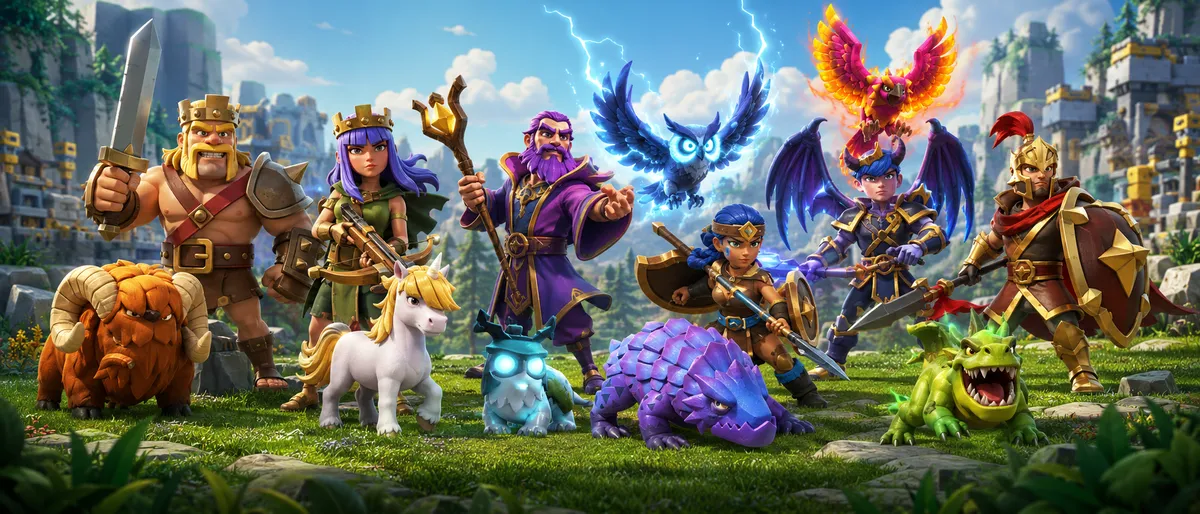
Pet House Unlock Order (TH14 to TH18)
As you upgrade the Pet House, you unlock more pets. In 2026, the commonly referenced progression looks like this:
- Pet House early unlocks: L.A.S.S.I, Electro Owl, Mighty Yak, Unicorn (TH14 era pets)
- TH15 era pets unlocked through higher Pet House levels: Frosty, Diggy, Poison Lizard, Phoenix
- TH16 era pets: Spirit Fox, Angry Jelly
- TH17 era pet: Sneezy
- TH18 era pet: Greedy Raven
Why this matters: when you unlock a new Town Hall, you don’t need to “max everything.” You need to upgrade the pets that actually change outcomes for your main strategies.
Pet Roles: The 8 Jobs Pets Can Do
Instead of memorizing “pet X goes on hero Y,” learn pet jobs. Then you can build the best pairing for any army.
1) Healer Pets
Job: keep a Hero alive so they can do longer, safer value.
Key example: Unicorn (the classic Queen pairing).
2) Control Pets (Stun / Slow / Disrupt)
Job: reduce incoming damage, stop key defenses, or break momentum against your Hero’s push.
Key examples: Diggy (stuns), Frosty (slowing), sometimes Spirit Fox (invisibility disrupts targeting).
3) Revival / Second-Life Pets
Job: give a Hero extra seconds after a “should have died” moment — which often decides triples.
Key example: Phoenix.
4) Anti-Hero Pets
Job: punish defending heroes and defending Clan Castle troops, so your Hero doesn’t get stalled or deleted.
Key example: Poison Lizard.
5) Ranged Support Pets
Job: add steady damage from behind so your Hero’s lane clears faster and more efficiently.
Key example: Electro Owl.
6) Wall Access / Pathing Pets
Job: help a Hero get through walls and into key compartments without spending as many resources.
Key example: Mighty Yak.
7) “Forces Targeting” Pets
Job: modify what your Hero targets, so your Hero becomes more consistent at removing the right defenses.
Key example: Angry Jelly (Brainwash-style behavior forcing defense targeting while attached).
8) Specialized Utility Pets
Job: unique value patterns that aren’t just damage or healing.
Key examples: Spirit Fox (temporary invisibility), Sneezy (summons “Boogers” and changes behavior after Hero falls), Greedy Raven (resource-building targeting with big bonus damage).
Pet-by-Pet Quick Guide (What Each Pet Is Actually Good For)
This section helps you understand each pet’s “true job” so you don’t misuse it.
L.A.S.S.I
Best for: early Pet House progress, wall-hopping lane pressure, simple value in casual attacks.
When it feels bad: high-level war attacks where you need precise control and survivability.
Good with: King (simple edge pressure), sometimes Champion (if you need wall access and don’t have better options).
Electro Owl
Best for: ranged chip damage that follows the Hero, especially when the Hero stays behind the army and lives long.
When it feels bad: when the Hero dives deep and dies early (Owl loses uptime).
Good with: Grand Warden (especially in air), Minion Prince (ranged flying synergy), sometimes Queen (if Unicorn is used elsewhere).
Mighty Yak
Best for: cracking walls and enabling deep Hero entry without spending as many wall tools.
When it feels bad: if your Hero is not meant to push through walls, or if you already have enough wall access in your army.
Good with: Barbarian King (funnel or side dive), sometimes Royal Champion in special setups.
Unicorn
Best for: long-lasting hero survival — especially Queen Charge / Queen Walk styles.
When it feels bad: when the Hero is not supposed to live long (short dive roles) or when the Hero is constantly moving too fast away from danger.
Good with: Archer Queen (default), sometimes Minion Prince (for staying power), occasionally Champion if you are forcing long back-end value.
Frosty
Best for: slowing defenses and creating “soft control” while also adding extra units (Frostmites) that distract and reduce damage spikes.
When it feels bad: if your Hero’s job is instant burst rather than sustained fighting.
Good with: Barbarian King (sustained lane), Grand Warden (ground pushes), Royal Champion (if you want more survivability through control zones).
Diggy
Best for: stunning and smashing defenses, which is huge for “Hero Dive” roles and Champion dives.
When it feels bad: if the Hero isn’t near defenses long enough to apply stuns consistently.
Good with: Royal Champion (classic), Barbarian King (deep dive), sometimes Queen in dive-based attacks (not traditional Queen Charge).
Poison Lizard
Best for: anti-hero and anti-defending troops pressure (slows and damages like a poison effect).
When it feels bad: in pure “base clearance” roles where there aren’t many defending heroes/CC interactions where you need control.
Good with: Royal Champion (hero hunting), Barbarian King (when diving enemy heroes), Minion Prince (if your plan needs help dealing with defending heroes).
Phoenix
Best for: saving a Hero from sudden death and creating clutch value windows.
When it feels bad: if you frequently waste the revive on low-impact moments (example: reviving a hero after they already completed their job).
Good with: Royal Champion (high-value finisher), Minion Prince (keeps flying DPS alive), Archer Queen (risky charge safety), Barbarian King (deep dive), Dragon Duke (clutch finish).
Spirit Fox
Best for: turning the Hero invisible for a short time (Spirit Walk) so the Hero can survive a dangerous zone, slip through targeting, and create high-value plays.
When it feels bad: if your timing and pathing don’t use the invis window well.
Good with: Royal Champion (one of the strongest pairings), Archer Queen (aggressive value plays), Minion Prince (safe reposition), sometimes King (special dives).
Angry Jelly
Best for: forcing the paired Hero to target defenses while attached (Brainwash-style effect), creating more consistent defense removal and reducing “hero gets stuck on trash” moments.
When it feels bad: if your Hero needed to clear buildings for funnel, or if the hero’s best value was not defense-focused in that plan.
Good with: Dragon Duke (popular synergy), Royal Champion (defense-only pressure), Minion Prince (defense weakening role), sometimes Queen for specific defense-sniping plans.
Sneezy
Best for: summoning tanky support units (“Boogers”) that soak damage and help push through districts of buildings, and changing into a more aggressive state after the Hero is defeated (depending on how the battle goes).
When it feels bad: if you expect it to carry an air push by itself — it’s more of a utility pet than a “win condition pet.”
Good with: Minion Prince (support for flying hero), King (extra distraction), sometimes Warden depending on your style.
Greedy Raven
Best for: resource-building priority pressure near the Hero, with a large bonus damage multiplier to those buildings — excellent for farming value and certain targeted value plans.
When it feels bad: if you need pure defensive control or hero survivability for war triples.
Good with: farming heroes (Queen/Prince), certain endgame strategies where quick storage/collector deletion matters, and specific Trophy/Ranked routines depending on your goals.
Best Pet Pairings for Each Hero
This is the main section. You’ll get the best defaults plus the best alternatives depending on your strategy.
Barbarian King: Best Pet Pairings
The King’s most common jobs are: funnel building, tanking a lane, or diving into a compartment to remove key defenses and defending heroes.
Best default pairing (most strategies): Diggy
Why it works: stuns reduce damage spikes, letting the King survive longer in deep compartments while still deleting defenses.
Best for sustained lane value: Frosty
Why it works: slows defenses and adds distraction units, which helps the King grind through a lane without needing constant spell support.
Best for deep wall-breaking dives: Mighty Yak
Why it works: Yak’s wall-breaking enables the King to keep moving into value without requiring additional wall tools.
Best “clutch dive” option: Phoenix
Why it works: Phoenix gives the King extra seconds to finish a compartment or secure a key defense cluster.
When to avoid Unicorn on King
Unicorn is usually wasted on King because his role is often tanking and moving — you typically get more from control or revive than pure healing.
Archer Queen: Best Pet Pairings
The Queen’s common jobs are: long value (Queen Charge), safe funnel, or high-impact defense sniping. Her weakness is dying to focused fire or getting stalled.
Best default pairing: Unicorn
Why it works: Queen Charge becomes dramatically more consistent with extra healing. This is still the most “no-regret” pairing for most players.
Best for high-risk Queen value: Phoenix
Why it works: if your Queen is meant to take huge value and might die to a sudden threat, Phoenix turns disaster into a salvageable win.
Best for aggressive reposition/value tricks: Spirit Fox
Why it works: temporary invisibility helps the Queen survive dangerous targeting windows and slip through bad zones.
Best for defense-only Queen roles: Angry Jelly (situational)
Why it works: if your Queen’s job is not funneling but deleting defenses, forcing defense targeting prevents wasted shots on trash buildings.
Best ranged-support alternative: Electro Owl
Why it works: Owl adds steady damage, especially when you can’t spare Unicorn because another hero must be protected, or you’re running a strategy where Queen isn’t the main survival focus.
Grand Warden: Best Pet Pairings
Warden is usually behind your army. That makes him perfect for pets that need uptime and safe positioning.
Best default pairing (especially air): Electro Owl
Why it works: Warden stays alive and positioned safely, giving Owl maximum uptime. This pairing is simple, consistent, and powerful.
Best for ground pushes that want control: Frosty
Why it works: slows and distraction help your push survive, especially when Warden is walking with a ground army through heavy defense zones.
Best for “stability and insurance” styles: Phoenix (situational)
Why it works: if your Warden is critical to your plan and tends to die late in close attacks, Phoenix can convert near-fails into wins. This is more niche than Owl but can be valuable.
When not to use Diggy on Warden
Diggy’s value depends on being near defenses and staying in the thick of it. Warden is often behind and may not allow Diggy to get consistent stuns.
Royal Champion: Best Pet Pairings
Royal Champion is often the highest-leverage hero in late-game attacks because she deletes key defenses quickly — but she’s also vulnerable to concentrated damage and traps.
Best default pairing: Diggy
Why it works: the stun effect is extremely high value when Champion is under heavy fire. It makes her dives cleaner and safer.
Best high-skill, high-ceiling pairing: Spirit Fox
Why it works: invisibility windows can save Champion from being targeted while she deletes defenses. This pairing is widely considered one of the strongest when executed well.
Best clutch finisher pairing: Phoenix
Why it works: Champion often dies just before she finishes the last key defenses. Phoenix extends her impact window and can secure the last few buildings for a triple.
Best anti-hero pairing: Poison Lizard
Why it works: if defending heroes and defending troops are consistently ruining your Champion value, Poison Lizard adds control pressure.
Best “safe value” pairing: Frosty (situational)
Why it works: slows and distraction can reduce the damage Champion takes while she moves through defense lines.
Minion Prince: Best Pet Pairings
Minion Prince is a flying, ranged hero who wants uptime and safe positioning. He performs best when he can keep firing without being deleted quickly.
Best default pairing: Phoenix
Why it works: Prince’s damage is valuable when it stays on the field. A revive window often secures critical damage and prevents late collapses.
Best synergy pairing: Electro Owl
Why it works: both are ranged and benefit from staying alive behind a push. Owl adds constant chip damage and helps Prince clear faster.
Best survivability pairing: Unicorn (situational)
Why it works: if you’re using Prince for long sustained value and he’s taking consistent chip damage, Unicorn can keep him alive longer than players expect.
Best utility pairing: Sneezy (situational)
Why it works: summoned units can soak damage and help distract defenses, improving Prince’s uptime during difficult zones.
Best anti-hero pairing: Poison Lizard (situational)
Why it works: if Prince is used in situations where defending heroes consistently stall the push, Poison pressure helps.
Dragon Duke: Best Pet Pairings
Dragon Duke is a unique hero with a “solo value” identity: he’s strongest when no other flying troops are near him, and he becomes a powerful side-lane or compartment clearer. That means your pet choice should support his independence and consistency.
Best default pairing: Angry Jelly
Why it works: forcing defense targeting fits Duke’s job (clear defenses efficiently). It also helps reduce “Duke wastes time on trash buildings” moments in his lane.
Best clutch pairing: Phoenix
Why it works: Duke often dies at the moment he’s about to finish a key defense section. Phoenix can turn that into a completed job.
Best safe pairing: Frosty (situational)
Why it works: slowing and distraction can help Duke survive longer in dense defense zones, especially if your strategy doesn’t rely on perfect spell timing.
Best niche pairing: Greedy Raven (farming-focused)
Why it works: if you’re using Duke for resource-focused farming lanes, Raven’s resource targeting can stack value — but this is usually more of a farming/efficiency pairing than a war-triple pairing.
Best Pet Pairings by Strategy (So You Can Adapt Instantly)
If you want a “choose fast” method, use this section. Pick your strategy type, then assign pets accordingly.
Queen Charge / Queen Walk Strategies
Goal: keep Queen alive and stable for a long time.
Best pairings:
- Queen + Unicorn (default)
- Champion + Diggy or Spirit Fox (for late defense removal)
- Warden + Owl (especially if air support exists) or Frosty (ground support)
- King + Frosty or Yak (funnel support)
- Prince + Owl or Phoenix (if used)
Key tip: Don’t waste Spirit Fox on a plan that doesn’t use the invis window. In Queen Charge styles, Unicorn is still the most consistent.
Smash / Ground Push Strategies
Goal: keep the main push together and surviving through heavy zones.
Best pairings:
- King + Frosty (sustained frontline)
- Queen + Unicorn (safe support and cleanup)
- Warden + Frosty (control) or Owl (extra damage)
- Champion + Diggy (stun) or Phoenix (clutch)
- Prince + Owl (range synergy)
Key tip: Smash attacks often fail to time. Pets that keep heroes alive longer (Unicorn/Phoenix) and pets that add steady chip (Owl) reduce time-fail risk.
Air Push Strategies
Goal: clear defenses quickly while keeping heroes safe from concentrated anti-air zones.
Best pairings:
- Warden + Electro Owl (classic air synergy)
- Champion + Diggy or Spirit Fox (remove anti-air and key defenses)
- King + Frosty or Yak (ground funnel)
- Queen + Unicorn or Phoenix (depending on risk level)
- Minion Prince + Owl or Phoenix (if used as a flying damage lane)
Key tip: Air attacks often feel like they “lose control” late. Champion pet choice becomes huge here: Diggy (stability) vs Spirit Fox (higher ceiling).
Hero Dive / “Delete a Compartment” Strategies
Goal: push heroes deep to remove core value, then finish with army.
Best pairings:
- King + Diggy or Phoenix
- Champion + Diggy or Spirit Fox
- Queen + Phoenix (if she’s part of the dive) or Unicorn (if she’s support)
- Warden + Owl (if he stays safe) or Phoenix (if critical to dive plan)
- Prince + Phoenix (if he must survive a critical zone)
Key tip: Hero dives fail when a hero dies 2 seconds too early. Phoenix and Diggy are often the difference between a triple and a painful 2★.
Farming and Daily Efficiency
Goal: consistent wins, quick attacks, resource value.
Best pairings:
- Queen + Unicorn (simple stability)
- Prince + Owl (fast clears) or Raven (resource bias where useful)
- King + Yak (fast wall access) or Frosty (steady clears)
- Warden + Owl (speed)
- Champion + Diggy (fast defense removal)
Key tip: Farming is not the place to “experiment.” Use stable pets and stable armies so you stop wasting time.
Pet Upgrade Priorities by Town Hall (Fastest Progress Plan)
This is the section that saves you months. Don’t upgrade pets evenly. Upgrade what changes outcomes first.
TH14 Pet Upgrade Priority
At TH14 you have the first four pets. For most accounts:
- Unicorn first (it immediately boosts Queen value and overall consistency)
- Electro Owl second (strong value on Warden in many strategies)
- Mighty Yak third (useful for King funnel or entry)
- L.A.S.S.I last (fine early, but usually less impactful than the others later)
If you are a war-heavy player at TH14: Unicorn still remains the best first investment.
TH15 Pet Upgrade Priority
TH15 unlocks pets that are “war defining.” For most players:
- Phoenix (clutch value, saves attacks)
- Diggy (control/stun, huge for Champion and dives)
- Frosty (soft control and distraction)
- Poison Lizard (anti-hero value)
A practical approach:
- Get Phoenix and Diggy to strong levels first, because they directly fix the most common fail condition: heroes dying early.
TH16 Pet Upgrade Priority
TH16 introduces high-skill tools:
- Spirit Fox (invisibility windows for huge value plays)
- Angry Jelly (forces defense targeting while attached)
If you play competitive war or Ranked seriously:
- Prioritize Spirit Fox if you like precise control and high ceiling.
- Prioritize Angry Jelly if your hero value is inconsistent because they target the wrong things.
If you prefer simpler play:
- Keep Phoenix/Diggy strong first, then add Fox/Jelly as secondary power spikes.
TH17 Pet Upgrade Priority
TH17 introduces Sneezy, which is a utility pet with a unique support pattern.
General advice:
- Don’t drop everything to max Sneezy if your Phoenix/Diggy/Fox/Jelly are behind.
- Upgrade Sneezy when it supports your actual strategies — especially if you’re pairing it with a flying hero and you like the distraction/support style.
TH18 Pet Upgrade Priority
TH18 introduces Greedy Raven, which targets resource buildings near its Hero and deals a major bonus to them.
Two smart paths:
- Competitive path: keep your war pets (Unicorn, Diggy, Phoenix, Spirit Fox / Angry Jelly) prioritized; level Raven after your core war pets are strong.
- Efficiency/farming path: if your daily routine is heavy farming and you want faster resource value, invest in Raven earlier — but don’t sacrifice your war essentials if you care about CWL performance.
Practical Rules for Assigning Pets (No Guessing Checklist)
Use this checklist before every serious war hit or Ranked session.
- Rule 1: Assign Unicorn to the hero who must stay alive the longest. Most of the time, that’s the Queen.
- Rule 2: If a hero keeps dying early in your plan, give them Phoenix or Spirit Fox. Pick Phoenix for simpler insurance, Fox for higher-skill invis plays.
- Rule 3: If a hero is diving into defenses, consider Diggy. Stuns reduce damage spikes and increase consistency.
- Rule 4: If your hero wastes time on trash buildings, consider Angry Jelly. Forcing defense targeting can fix pathing and tempo.
- Rule 5: If your hero stays behind and lives long, consider Electro Owl. Uptime is how Owl becomes valuable.
- Rule 6: Don’t duplicate pet jobs unnecessarily. Two healing pets usually means you wasted one. Two revive pets can be fine, but only if both heroes are critical to victory.
- Rule 7: Your “best pet” is the one that improves your weakest part of the plan. Not the one with the best reputation.
Common Pet Pairing Mistakes (And Fast Fixes)
Mistake: Unicorn is always on Queen no matter what
Fix: Unicorn is usually best on Queen, but if your plan doesn’t require a long Queen phase and another hero must survive longer, consider shifting Unicorn temporarily.
Mistake: Diggy is placed on a hero that doesn’t stay near defenses
Fix: Diggy shines when stuns happen repeatedly. Put Diggy on heroes that actually dive into defense lines (Champion, King dives).
Mistake: Spirit Fox used without a plan
Fix: Spirit Fox is strongest when you intentionally use invis windows to cross danger zones or avoid targeting. If you don’t use that, pick Phoenix or Diggy.
Mistake: Angry Jelly used when you needed funnel
Fix: If your hero needed to clear buildings to build funnel, forcing defense targeting can ruin your plan. Use Angry Jelly when defense deletion is the job.
Mistake: Owl used on a hero that dies early
Fix: Owl needs uptime. Put it on Warden or a hero you can keep alive.
Mistake: Upgrading every pet evenly
Fix: Upgrade the pets you actually equip. Strong “core pets” win more attacks than a collection of medium pets.
BoostRoom Promo
If you want the fastest improvement from pets (without wasting Dark Elixir or guessing), BoostRoom can build a personalized hero + pet plan for your account:
- Best pet assignments for your main two attack strategies
- A clear pet upgrade priority list based on your Town Hall and goals (war, Ranked, farming)
- Advice on how your hero equipment and pet roles should match (so your heroes feel consistent)
- Replay-based fixes if a hero or pet keeps losing value in the same way
BoostRoom helps you turn pets into real wins — more consistent stars, fewer time fails, and fewer “why did my hero walk there?” moments.
FAQ
What is the best pet for the Archer Queen?
For most players and most strategies, Unicorn is the best all-around Queen pet because it supports long, consistent Queen value. For high-risk Queen plans, Phoenix or Spirit Fox can be better.
What is the best pet for the Royal Champion?
Diggy is a top default because stuns increase Champion survivability during dives. Spirit Fox is also extremely strong for high-skill Champion plays, and Phoenix is a great clutch option.
What is the best pet for the Grand Warden?
Electro Owl is one of the most consistent pairings because Warden stays alive and positioned safely, giving Owl strong uptime.
Should I upgrade all pets evenly?
No. Upgrade the pets you actually use in your main strategies first. A few strong pets produce better results than many medium-level pets.
When do I unlock pets in Clash of Clans?
Pets unlock at Town Hall 14 through the Pet House, then more pets unlock as you upgrade the Pet House and reach higher Town Halls.
Is Spirit Fox worth upgrading?
Yes if you play war/Ranked seriously and you can use invisibility windows intentionally. If you prefer simpler gameplay, Phoenix and Diggy often give more immediate value first.
Is Angry Jelly good, and what does it do?
Angry Jelly is powerful in the right roles because it forces the paired Hero to target defenses while attached, improving consistent defense removal. It’s best when your hero’s job is deleting defenses, not funneling.
What is Greedy Raven best for?
Greedy Raven prioritizes nearby resource buildings and deals a large bonus to them. It’s great for certain farming and efficiency patterns, and it can fit some endgame routines depending on your goals.
What pet should I use if my hero keeps dying too early?
Phoenix is the simplest “insurance” pet. Spirit Fox is also strong if you can use invisibility to avoid targeting during danger zones.



